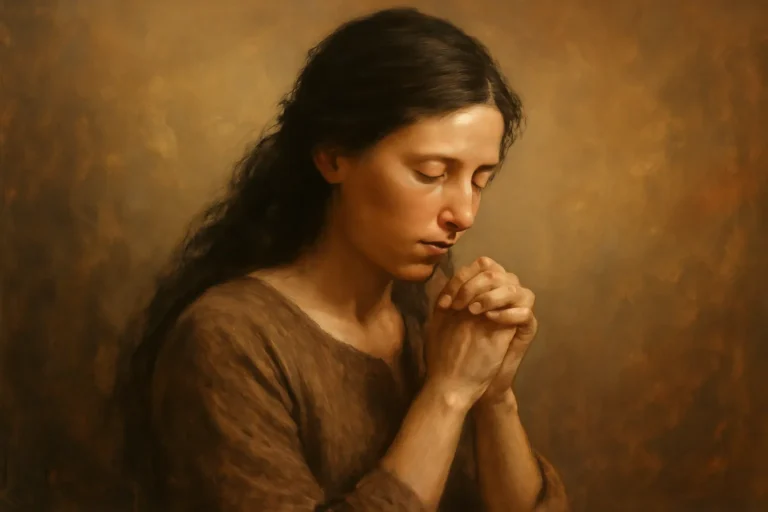

In the quiet hours of morning or the challenging moments of dusk, a single moment of communication with the divine can redirect the entire arc of a human life. The topic of this article is The Turning Point Prayer, a form of prayer often described as a gateway to transformation, a catalyst for life-changing change, and a spiritual initiation into a deeper walk with God. While the exact experience of a turning point prayer can differ from person to person, its essential features tend to resonate across traditions: honesty before the divine, heartfelt surrender, and a renewed orientation toward purpose, virtue, and service. This long-form examination explores the turning point prayer from historical, theological, pastoral, and practical perspectives, offering a comprehensive resource for scholars, clergy, lay readers, and anyone seeking a fuller understanding of how a life-changing prayer can shape faith, morality, and community.
What Is the Turning Point Prayer?
The Turning Point Prayer is best understood as a category of spiritual communication characterized by a decisive moment—often described as a threshold crossed, a wall broken, or a window opened. It is not merely a sentiment or a fleeting emotional surge; it is a form of sustained covenantal dialogue with the divine that invites ongoing action and growth. In many testimonies, this moment is accompanied by a felt sense of release—of guilt, fear, or fatigue—and replaced by a renewed sense of purpose, courage, and hope. In this sense, the turning point prayer becomes a life-changing prayer that reframes a person’s identity, values, and priorities.
The Turning Point Prayer in Historical Perspective
Religious communities across the ages have recognized moments of decisive spiritual encounter. The idea of a transformative prayer resonates in biblical narratives, Patristic writings, medieval devotion, and modern testimonies alike. While the wording and rituals surrounding such moments differ, there is a shared recognition that prayer can serve as a pivot—from self-centered concerns to a God-centered vocation.
Ancient Roots and Early Christian Experience
- Metanoia as a theological term in early Christianity described a fundamental change of mind and heart that leads to a changed life. The turning point prayer is a living expression of metanoia, not merely a cognitive shift but a transformative reorientation.
- New Testament testimonies frequently imply turning points in the lives of apostles and ordinary believers—moments when encounter with Christ recalibrated vocation and ethics. These narratives provide theological signals about what a life-changing prayer can accomplish.
- In the early church, prayer often accompanied sacramental life and acts of service, indicating that a turning point prayer is not isolated from community and mission.
Medieval to Reformation Traditions
- Monastic and contemplative practices emphasized persistent prayer, repentance, and assurance that God’s grace works through the human will toward sanctification.
- During the Reformation era, the emphasis on personal faith and direct access to God highlighted the possibility that a single heartfelt prayer could realign a believer’s loyalties away from worldly power and toward grace and service.
Modern Spiritualities and Personal Testimonies
In contemporary contexts, the turning point prayer appears in personal testimonies, revival movements, and transformative counseling conversations. The language may be different—“recommitment,” “rededication,” “reorientation”—but the underlying claim remains: prayer can inaugurate a life-changing transformation that extends into decisions, relationships, and calling.
Dimensions of a Life-Changing Prayer
To speak of a turning point prayer is to speak of several interwoven dimensions. A holistic understanding sees the turning point as a convergence of confession, grace, faith, surrender, and action. In this sense, the turning point prayer constitutes a comprehensive reorientation that touches thinking, feeling, and behaving.
Confession and Clarity
Many turning point prayers begin with an honest accounting of one’s failures, anxieties, and limitations. Confession is not merely admitting fault; it is an act of aligning the self with truth. Through confession, a person clarifies what must change and names the priorities that must be restored to their rightful place under the ultimate authority of the divine.
Grace and Dependence
Grace is often described in theological traditions as the enabling power that makes transformation possible. A life-changing prayer recognizes dependence on grace—acknowledging that human effort alone cannot guarantee reform, but that divine assistance, mercy, and guidance can sustain a new course of life.
Faith and Trust
The turning point prayer invites faith to grow—not as a guarantee of outcomes, but as trust in God’s character and promises. This dimension grounds the experience in hope, even when the path ahead includes struggle, resistance, or ambiguity.
Surrender and Alignment
True turning points involve surrender—yielding one’s will, plans, and preferences to a larger divine purpose. This surrender is not passive resignation, but a courageous alignment with a vocation that may require sacrifice, perseverance, and humility.
Action and Continuity
A life-changing prayer will consistently lead to action. It is not a single event but a sustained process of discipleship—learning, growing, serving, and bearing witness. The turning point prayer is thus both inward transformation and outward fruitfulness.
Scriptural Foundations for a Turning Point
While the phrase “turning point prayer” is not a canonical term in any single tradition, there are abundant Scriptural stories and teachings that illuminate how prayer functions as a pivot toward holiness, mission, and relational healing. Below are some thematic anchors that many communities cite when elaborating a turning point in prayer.
Faces of Turning Points in Scripture
- Jacob’s encounter at Peniel, where he wrestled with an angel and received a new name and blessing—an emblem of a personal turning-point encounter with divine grace.
- Saul’s conversion on the road to Damascus—an abrupt disruption that redirected a persecutor into a preacher of the gospel and a model of miraculous transformation.
- David’s psalms often begin in distress and confusion and culminate in renewed trust and a recommitment to God’s purposes.
- The prodigal son parable, which presents a turning point in return, reconciliation, and the reclamation of identity within the father’s house.
Theologies of Change: How Different Traditions Understand the Turning Point
Across Christian traditions—evangelical, catholic, orthodox, and charismatic—the turning point prayer is understood as a dynamic encounter with divine grace that remaps life’s compass. Each tradition emphasizes certain dimensions, and together they provide a robust picture of how a turning point prayer functions as life-changing.
Evangelical and Pentecostal Perspectives
In evangelical and charismatic circles, the turning point prayer is often connected with justification, new birth, and later sanctification. The emphasis is frequently on a clear decision of faith, an encounter with the Holy Spirit, and a subsequent life of obedience and mission. The language of conversion, regeneration, and ongoing empowerment undergirds the idea that life-changing prayer opens a new horizon of possibility.
Catholic and Orthodox Emphases
In Catholic and Orthodox contexts, turning-point experiences are framed within sacramental life and a growth in the life of virtue. The turning point is not merely an event but a process of ongoing purification, illumination, and union with God. Confession, Eucharist, and prayerful asceticism may be central to sustaining a lifeline of transformative prayer.
Contemplative and Mystical Traditions
For mystics and contemplatives, the turning point prayer often unfolds within deep experiences of silence, contemplation, and divine encounter that reorient attention from the self toward the divine mystery. This form of life-changing prayer frequently emphasizes attentiveness, humility, and receptivity as agents of change.
Practical Forms: How to Practice a Turning Point Prayer
Practicing a turning point prayer can take many forms, from personal, private devotion to liturgical corporate settings. Below are practical avenues, with guidance for individuals, families, and communities who wish to invite a deeper sharing of grace and a more intentional turn toward God’s purposes.
Personal Practice: A Step-by-Step Guide
- Prepare: Find a quiet space, free from distractions. Set aside a sacred intention for honesty and openness.
- Confess: Name specific struggles, fears, or ways in which life has drifted from your perceived calling. Do so with humility and sincerity.
- Invite Grace: Request divine assistance, recognizing that change is a cooperation between human faith and divine mercy.
- Affirm Identity: Reconfirm who you are in light of your faith—beloved, called, and equipped for service.
- Declare Commitment: Make a concrete commitment to actions that reflect your turning point—repentance, service, or reconciliation.
- Practice Continuity: Establish a rhythm—daily or weekly—where the turning point prayer becomes a recurring renewal rather than a one-off event.
Corporate and Liturgical Contexts
Many communities cultivate turning-point experiences within shared worship, confession rituals, or prayer vigils. A congregational turning-point prayer might involve guided prompts, public repentance, confession of sins that have harmed others, and a communal commissioning for mission and mercy. In such settings, the turning point is not only personal but also relational—a reorientation of group life toward justice, unity, and grace.
Sample Prayers and Variations
To illustrate the breadth of possible expressions, here are several sample prayers that reflect different theological flavors while maintaining the core structure of confession, grace, faith, surrender, and action. These samples are life-changing prayer templates that can be adapted to personal contexts.
Sample Personal Turning Point Prayer
Prayer for confession and renewal
O Lord, you know me completely. I confess that I have allowed fear to guide my choices, and I have pursued comfort at the expense of truth. Please forgive my stubborn ways and cleanse me with your mercy. By your grace, grant me a new heart and a renewed mind. Strengthen my faith so that I may trust your leading even when it is costly. I surrender my plans, my ambitions, and my reputation to your purposes. Teach me to love you above all things and to love my neighbor as myself. From this turning point forward, may my life reflect your kindness, your justice, and your peace. In Jesus’ name, Amen.
Corporate Prayer for a Community Turning Point
Prayer of dedication and mission
Heavenly Father, we stand at the threshold of a turning point for our community. We confess that we have been divided, distracted, and complacent. We ask for your forgiveness and your healing from the wounds that division has caused. Fill us with your Spirit, that we may be united in purpose and generous in mercy. Lead us into acts of justice, mercy, and evangelism that demonstrate the reality of your kingdom. Let this be a time when old patterns give way to new life—where each person discovers a deeper calling and a fuller joy in your service. We commit to daily prayer, scriptural study, and practical acts of love that show the world your transforming power. In your holy name we pray, Amen.
Prayer for Families: A Turning Point of Grace
Prayer for reconciliation and wholesome patterns
Gracious Father, we bring our family before you, asking for your grace to heal wounds and restore trust. Where there is anger, help us to choose forgiveness. Where there is resentment, give us humility. Help us to model patience, honesty, and faithfulness in every season. May our home become a sanctuary of peace, learning, and mutual respect, where each member grows toward their divine calling. Enable us to parent with wisdom, to listen with care, and to celebrate one another’s gifts. We entrust our family’s turning point to your faithful love. Amen.
Common Misconceptions and Pitfalls
As with any powerful spiritual practice, misunderstandings about the turning point prayer can arise. It is helpful to recognize potential pitfalls so that one can pursue a genuine and lasting transformation rather than a sensational or superficially dramatic experience.
- Equating emotion with grace: An intense emotional experience does not necessarily indicate true transformation. Grace often works quietly through steady choices over time.
- Expecting instant outcomes: A turning point prayer is a doorway, not a conveyor belt. The path of change may be gradual and nonlinear.
- Reducing prayer to self-help: The turning point prayer is oriented toward God’s will and neighbor’s good, not merely toward improving personal comfort or success.
- Overemphasizing the moment: The turning point is meaningful in how it begins, but its ongoing fruit depends on continued faithfulness, communities, and disciplines.
Impact on Individuals: Personal Transformations
People who articulate a turning point in prayer often report a shift in identity and in life direction. They describe experiences such as newfound resolve to forgive, a clarified sense of vocation, renewed prayer life, improved relationships, and a sustained sense of hope that persists through trials. These changes are frequently described as life-changing because they touch both inner dispositions and outward actions. The transformative power of such prayer can become a pattern—sowing seeds of virtue in daily life and enabling a resilient stance in the face of hardship.
Psychological and Social Dimensions
Beyond theology, many observers note that turning-point prayers coincide with improvements in emotional regulation, moral reasoning, and social connectedness. When people articulate a turning point as a commitment to love, service, and truth-telling, relationships often improve, as does a person’s ability to cope with stress. This synergy between spiritual renewal and practical living is a hallmark of truly life-changing prayers that endure over time.
Community and Social Implications
When individuals experience a turning point in prayer, they often bring renewed energy to family, church, mosque, synagogue, or temple communities. The ripple effect can affect volunteer work, charity, education, and governance within the community. A group that fosters a culture of honest confession, mercy, and shared purpose can become a living witness to the good that comes from a turning point prayer. In this sense, life-changing prayer serves as a catalyst for communal healing, reconciliation, and social justice initiatives.
Ethical Orientation: From Turned-Point to Everyday Virtue
Transformative prayer is not simply a private experience; it invites ethical alignment with the divine will as understood within one’s tradition. The turning point becomes a pledge to live with integrity, humility, and responsibility. This ethical dimension includes commitments to compassion for the vulnerable, honesty in speech, integrity in finances, faithfulness in relationships, and stewardship of creation. The turning point prayer thus contributes to a holistic anthropology—the sense that human persons are called to become more fully human through love, truth, and service.
Measuring the Fruit: How to Discern Genuine Turnings Point
Discernment is a valuable practice in evaluating whether a turning point prayer has yielded authentic, long-term transformation. Communities may look for observable fruit: patterns of repentance that lead to reconciliation, a sustained devotion to prayer and study, a willingness to forgive, and a life marked by generosity and service. Personal narratives, while compelling, are often enriched when tested by communal accountability and consistent obedience to ethical commitments.
Continuing the Journey: After the Turning Point
The turning point is not the end but the beginning of a lifelong journey. A faithful response to this moment will include ongoing disciplines: regular prayer, Scripture or sacred readings, accountability relationships, service opportunities, and continued education in faith and life. The journey after the turning point is often marked by disciplined perseverance, humility, and resilience as one learns how to apply the insights gained during the turning point to everyday decisions, relationships, and vocations.
Case Studies: Narratives of Life-Changing Prayer
While every human life is unique, certain case studies illustrate how turning-point prayers operate in practice. The following brief sketches are composite portraits drawn from common patterns in testimonies and pastoral histories. They are not exhaustive, but they illuminate how control, surrender, and action cohere in real-life situations.
Case Study A: A Turn to Mercy in a Broken Family
A parent facing estrangement prays for healing and reconciliation. The turning point prayer carries a recognition of personal fault in the relational breakdown and pleads for grace to forgive and to repent. Through sustained conversation, behavioral changes, and consistent engagement in family rituals, bonds begin to mend, and a new cycle of trust and care emerges. This life-changing prayer rarely resolves all conflict overnight, but it realigns loyalties toward love and accountability.
Case Study B: A Career Reoriented toward Service
A young professional experiences a turning point where ambition gives way to service. A prayer about purpose directs their education and career into fields with social impact—education, healthcare, or public service. The shift affects friendships, time management, and priorities. The resulting life is more demanding and more meaningful, embodying a life-changing transformation that has lasting public witness.
Case Study C: A Community Embracing Justice and Kindness
In a neighborhood with tension between groups, turning-point prayers emphasize mercy, truth-telling, and practical acts of neighborliness. The community undertakes cooperative projects, reconciliatory dialogues, and policies that protect the vulnerable. The turning point prayer here becomes a shared anchor for ethical action and mutual care that reshapes the social fabric.
The Turning Point and Contemporary Spirituality
In today’s pluralist context, the turning point prayer is not limited to a single tradition. It can be found in interfaith dialogues, spiritual but not religious movements, and secular communities that speak of turning points as moments of moral recommitment or personal awakening. The universality of the experience—recognition of a pivotal moment that calls one toward higher purposes—appears in many forms. The core idea remains powerful: a moment when a person’s life is reoriented around values greater than themselves, typically including love, peace, justice, and compassion.
Instructional and Educational Uses: Teaching About Turning Points
Educators, pastors, and counselors often teach about turning-point prayer as a way to discuss moral development, spiritual formation, and ethical decision-making. In classroom settings, educators may present a framework that helps students articulate their own turning-point narratives with integrity and humility. In pastoral care, trained counselors can guide individuals through a structured practice that fosters confession, grace, and sustained change, while safeguarding against superficial emotional manipulation.
FAQs: Clarifying the Turning Point Prayer
Here are some frequently asked questions that people have when exploring whether a turning-point prayer could apply to their lives.
What makes a turning-point prayer truly life-changing?
A turning-point prayer becomes life-changing when it leads to consistent shifts in beliefs, decisions, and actions that align with deeper spiritual values. It is not merely an emotional experience but a recommitment enacted through choices, relationships, and service that endure over time.
Is the turning-point prayer the same for everyone?
No. The turning-point prayer is deeply personal and culturally shaped. While its core elements—confession, grace, faith, surrender, and action—are common, the content, language, and emphasis vary according to tradition, personality, and life circumstance.
Can turning-point moments be cultivated, or are they only spontaneous?
Both. Turning-point moments can be cultivated through intentional spiritual practices, such as daily reflection, scripture study, mentorship, and community accountability. Yet, they can also appear suddenly, as God’s grace acts in the moment or in the presence of a crisis that awakens the heart.
Conclusion: The Enduring Value of Turning Point Prayer
The Turning Point Prayer offers a rich and enduring framework for understanding how spiritual life can be redirected toward authentic ends. It captures the sense that a single moment of sincere communication with the divine can unlock a cascade of changes—within the self, within relationships, and within the wider community. By embracing the structure of confession, grace, faith, surrender, and action, communities and individuals can cultivate a life-changing practice that is not merely dramatic in sentiment but steady in virtue. The turning point is not a final destination but a doorway into a renewed life—an invitation to participate in God’s ongoing work of healing, reconciliation, and transformation for the world.
Appendix: Quick Reference Glossary
- Turning Point Prayer: A prayer described as a decisive moment of spiritual encounter that initiates or accelerates life-changing transformation.
- Life-Changing Prayer: A broader descriptor for prayers that result in enduring personal or communal change.
- Metanoia: A Biblical term meaning repentance or a fundamental change of mind leading to a changed life.
- Sanctification: The process by which a believer becomes more holy through divine grace and disciplined practice.
- Conversion: A turning from one allegiance to another—often from self-rule to divine lordship.