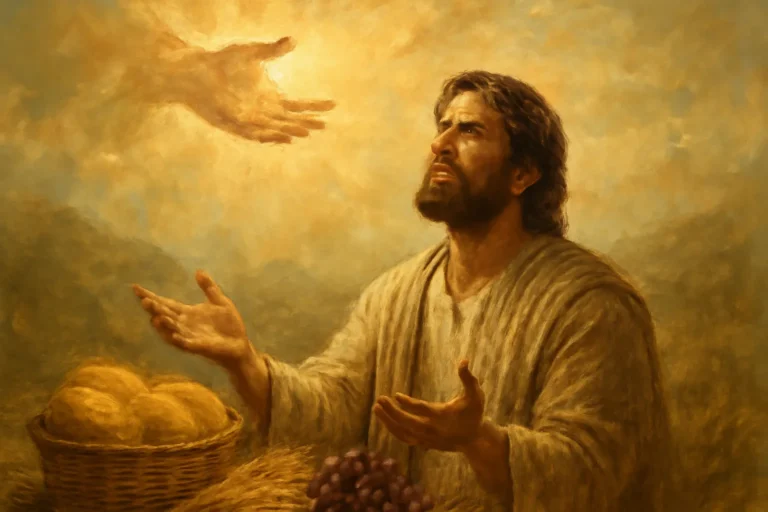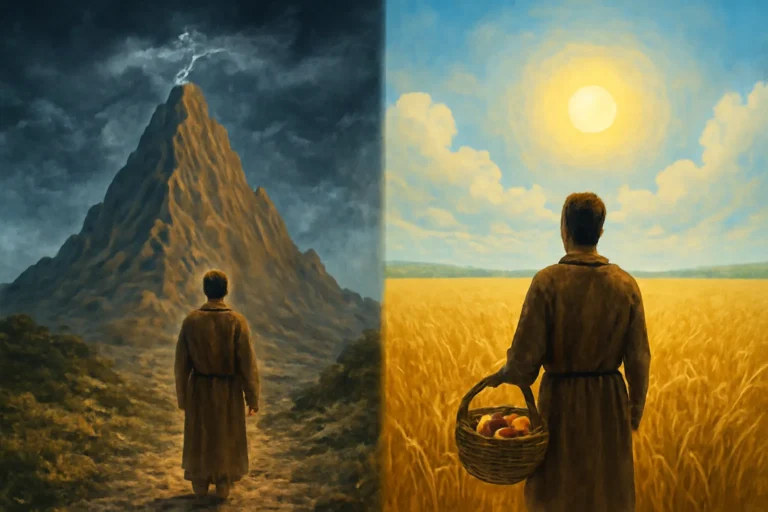

One day at a time is not merely a phrase of popular wisdom; in biblical literature it encodes a profound spiritual posture. The manna narrative, found at the edge of the wilderness and crystallized in Deuteronomy 8:3, invites readers to reframe how they understand sustenance, trust, and the rhythm of daily dependence on God. This long-form article examines manna, its biblical witness, and the theological invitation embedded in the phrase one day at a time—a call to humility, gratitude, and steadfast trust in divine provision. Across Jewish and Christian interpretive traditions, the daily bread of the wilderness becomes a lens for discerning how human beings live by every word that proceeds from the mouth of the Lord.
Historical and Textual Context
To appreciate the significance of one day at a time in Deuteronomy 8:3, it helps to situate the passage within its broader biblical witness. The book of Deuteronomy, presented as a recap and exhortation by Moses before entering the Promised Land, emphasizes covenant fidelity, gratitude, and the awareness that God gives life in ways beyond mere physical fullness. The manna episode occurs during the wandering generation’s time in the wilderness—an era marked by testing, instruction, and revelation.
- Manna as a sign of divine care: The bread from heaven is described as a miraculous provision, unlike anything the Israelites had previously known. It teaches dependence on God in a setting where such reliance is tested and dramatized.
- A daily cadence: The gift of manna arrives each morning, with explicit instructions to gather only what is needed for that day. The one-day rhythm is not a mere logistical detail; it is a theological pedagogy.
- The Sabbath link: The instruction includes a provision for a double portion on the sixth day to cover the Sabbath, subtly teaching the dignity of rest and the sufficiency of God’s care even in rest.
Manna: The Bread from Heaven
The term manna itself emerges as a lexical and experiential focal point in the wilderness narrative. In Hebrew, the word manna (מָּנָּה) sounds like a question, and the text indicates that the people asked, “What is it?”—a response that signals mystery, awe, and a pivot toward dependence on a divine gift.
Theological characteristics of manna
- Miraculous origin: manna appears as a supernatural sustenance, not as a natural crop that could be harvested by ordinary means.
- Temporary allocation: manna is bounded by time and place; it is the provision for the wilderness journey, not a permanent pantry provision for life in the land.
- Plain nourishment: manna is described as bread-like, sustaining nourishment without the surplus that some other foods might provide. The simplicity of the bread underscores a deeper message about dependence on God’s word and benevolence.
Deuteronomy 8:3 in Context
The explicit verse,
“And he humbled you, and suffered you to hunger, and fed you with manna, which you knew not, neither did your fathers know; that he might make you know that man does not live by bread alone, but by every word that proceeds from the mouth of the Lord.”
sits at the heart of a pedagogical arc. The narrative frames hunger and sustenance as a means of spiritual formation: a people are led into an experience that disrupts their assumptions about life, wealth, and power, so that they might learn a more fundamental criterion of living.
The verse invites readers to connect daily provision with a trust in divine word. It is not merely about physical survival but about the larger anthropology of human beings before God. The one-day rhythm, the discipline of gathering only for that day, and the Sabbath double portion all converge to teach a theological anthropology: we are beings who live by trust in God’s ongoing revelation, not by human accumulation or self-sufficiency.
Interpenetration with Exodus and Numbers
The Deuteronomic formulation echoes the earlier exodus accounts (Exodus 16) in which God provides bread from heaven each morning and commands the people to gather only what is needed for the day. The Deuteronomic revision reframes the event within a covenantal framework: the point of the miracle is not merely the miracle itself but what the miracle teaches about the nature of life, obedience, and dependence. The cross-referencing of these texts illuminates how the biblical authors understood sustenance as both a gift and a test.
One Day at a Time: A Theological Reading
The phrase one day at a time resonates deeply in the Deuteronomic meditation on manna. It situates spiritual formation in a cadence that rejects both reckless reckoning and imprudent scarcity. The daily manna ritual teaches a balance: trust God for today’s bread while awaiting tomorrow’s word. This section examines the theological implications of that cadence.
Dependence and the humility of need
The wilderness test places the people in a frame where dependence is not shameful but canonical. One day at a time becomes a stance of humble reception—receiving the gift for this day and entrusting the rest to God. This posture counters the idols of immediate gratification and perpetual accumulation. It points toward a spiritual economy where God’s sovereignty is acknowledged in simple, ordinary rhythms—work, rest, and reliance.
Bread and word as two streams of life
In Deuteronomy 8:3, bread and word are paired in a decisive way. The people are taught that physical sustenance is not the ultimate aim; rather, every word that proceeds from the mouth of the Lord sustains life. This pairing invites believers to read daily bread through the interpretive lens of divine revelation, creating a holistic anthropology: the body’s needs are met in concert with spiritual nourishment.
Ethical dimensions of daily provision
The constraint to gather only what is needed for that day reframes communal economics, generosity, and stewardship. A key ethical implication is restraint: to hoard beyond one day’s needs would breed waste and social inequity, especially when the community has an obligation to provide for the vulnerable. The Sabbath double portion teaches that rest is not merely personal; it is communal justice, a sign of trust that God will continue to provide even when humans cease their labor.
Historical Interpretations: Jewish and Christian Traditions
Across traditions, the manna narrative has provoked a rich array of interpretive movements. The one day at a time rhythm has informed spiritual disciplines, liturgical traditions, and exegetical frameworks. Below are selective reflections that illustrate how this text has shaped faith communities.
Rabbinic and Midrashic Insights
In Jewish interpretation, manna is often read as a sign of God’s intimate care and faithfulness in the wilderness. Some Midrashic traditions emphasize that the manna arrived only to those who obeyed the Sabbath command and kept their gathering within the boundaries of divine instruction. The daily provision becomes a ritual of trust—an invitation to align one’s heart with God’s will in the ordinary, routine hours of life.
Patristic and Medieval Readings
Early Christian writers frequently associated manna with Christ as bread from heaven, arguing that Jesus fulfills and closes the Old Testament sign. The phrase “not by bread alone” is read as a pointer toward the sufficiency of Christ’s word and the necessity of spiritual nourishment beyond the physical. Medieval expositors extended this to a contemplative practice: daily contemplation of God’s provision leads to a conversion of heart from anxiety to trust.
Practical Applications for Modern Faith Communities
The biblical injunction to live one day at a time through the manna narrative has rich implications for contemporary spirituality, pastoral care, and community life. The following practical considerations are offered for churches, synagogues, study groups, and households seeking to translate ancient wisdom into daily practice.
Discipleship Practices
- Daily devotion: integrate a brief daily reflection on bread as a symbol of God’s word. Read a verse from Deuteronomy 8:3 or related passages each morning and notice how today’s “word” shapes action.
- Gratitude rituals: cultivate gratitude for the “daily bread” that sustains life, acknowledging both material provision and the non-material gifts of guidance, courage, and community.
- Provisions for rest: honor the Sabbath as a weekly reset that mirrors the manna double portion logic—rest is not a luxury but a spiritual discipline that trusts God to continue providing even when labor ceases.
Communal and Household Practices
- Generosity cycles: create a rhythm of giving and sharing that mirrors the manna pattern—enough for today, with awareness of tomorrow’s needs, and an eye toward justice for the vulnerable.
- Earth-friendly stewardship: the daily/gathering model can inform ecological stewardship, encouraging sustainable consumption and avoidance of waste.
- Education and catechesis: teach the link between bread, word, and life in a manner accessible to children, youth, and adults alike, so that the moral imagination grows around daily dependence on God.
Symbolic and Typological Readings
Beyond the immediate narrative, scholars and theologians read manna as a symbol with multiple layers of meaning. The interplay of bread and word, of daily provision and Sabbath rest, creates a matrix of symbolism that extends into Christology, ecclesiology, and eschatology.
Christological Interpretations
In Christian theology, Jesus is often presented as the fulfillment of the bread-from-heaven motif. The Gospel of John, for example, presents Christ as the true bread that gives life to the world. The daily bread motif thus becomes a pointer to the sufficiency of Christ’s life and teaching for the daily needs of the soul. In this reading, the manna prefigures the Eucharistic bread—an ongoing, lived encounter with divine mercy.
Eschatological Perspectives
Some interpretive strands look for an eschatological horizon within the daily provision. The wilderness journey—though demanding in the present—also points toward a future fullness of life in God’s presence. The daily rhythm becomes an eschatological pedagogy: the faithful learn to hold both the immediacy of daily needs and the hope of God’s ultimate renewal of all things.
Additional Theological Reflections
The Deuteronomic meditation on manna invites several ongoing theological reflections that can be incorporated into sermons, classroom discussions, and personal devotion.
- Clinical humility: acknowledging dependence on God helps curb arrogance born of self-sufficiency. A daily practice of dependence becomes a spiritual virtue.
- Holistic nourishment: the nourishment of life includes heart, mind, and will. God’s provision is not merely physical; it also forms conscience and character.
- Word-centered living: the life-transforming power lies not only in daily food but in daily encounter with God’s word, which shapes choices and relationships.
Manna in Liturgy and Prayer
Liturgical traditions across faith communities have woven the manna motif into prayers, hymns, and sacraments. The phrase daily bread appears prominently in Christian liturgies and personal prayers, while some Jewish traditions honor the memory of the wilderness wanderings in ritualized readings and prayers that acknowledge God’s providence.
Prayers and meditations inspired by Deuteronomy 8:3
- Gratitude for daily provision prayers that recognize God’s care in ordinary days.
- Petitions for wisdom that daily bread be used for the good of others, not merely one’s own advantage.
- Hopeful anticipation for rest and renewal, trusting that God’s care extends across the cycles of life.
Conclusion: Living Day by Day in Trust and Gratitude
The biblical call to live one day at a time—as illuminated by the manna narrative and Deuteronomy 8:3—invites readers into a durable practice of trust, humility, and reverence. It reframes how we understand sustenance: God provides not simply to fill the stomach but to form the soul. The daily provision becomes a teacher of dependence; the daily word becomes a lamp to guide daily conduct; and the Sabbath rest becomes a sign of trust that, even in cessation, God remains at work.
In today’s world, where the pace of life often presses toward accumulation and instantaneous gratification, the one-day rhythm of manna offers a countercultural path. It invites households and faith communities to cultivate rhythms that promote equity, care for the vulnerable, and a shared memory of God’s faithfulness. The practice of gathering daily bread—paired with reverent attention to the divine word—shapes a life oriented toward God, neighbor, and the created order.
As we reflect on manna, Deuteronomy 8:3, and the call to live day-by-day under divine sovereignty, we find a rich resource for spiritual formation. The invitation is not merely to endure a harsh wilderness but to learn a language of gratitude, trust, and fidelity—the language of a life that survives and flourishes by the grace of God, one day at a time.