
Overview: Defining the Intertestamental Period in Jewish History
The topic Judaism in the intertestamental period—also described in many scholarly works as Second Temple Judaism or Judaism of the intertestamental era—refers to the long arc of years between the canonical Hebrew Bible and the emergence of the Christian scriptures. This era is often dated roughly from the late Persian period (c. 5th century BCE) through the destruction of the Second Temple (CE 70) and the beginnings of rabbinic life in the post-Temple world. In Jewish and Christian studies, this period is crucial because it is the time during which core religious institutions, texts, and interpretive traditions were formed, debated, and reshaped in response to profound political, cultural, and religious pressures. The intertestamental years include not only the homeland of Judea but also a widespread Jewish diaspora that stretched across the Mediterranean and Near East, where synagogues, study circles, and diasporic communities began to take on distinctive forms.
Throughout this article, we will emphasize how this era—often described as a dynamic bridge between the Old Testament world and the New Testament milieu—produced a spectrum of religious life. We will explore how Temple-centered practice and priestly authority converged and diverged with scribal interpretation, oral traditions, and apocalyptic expectations. We will also discuss how linguistic diversity, philosophical engagement with Hellenistic culture, and diasporic realities reshaped judgments about sacred texts, ritual purity, and messianic hope. The intertestamental period in Judaism is thus not a monolith but a mosaic of communities, practices, and ideas, all of which prepared the way for later Rabbinic Judaism and, in a broader sense, for the religious landscape that would frame early Christianity.
Political and Cultural Context: From Persian authority to Hellenistic influence
To understand Judaism in the intertestamental era, we must begin with the shifting political stage. The late biblical and post-biblical worlds were defined by a succession of empires that controlled territory once governed by the Israelites. The Achaemenid (Persian) Empire laid the groundwork for a degree of local autonomy under governors and temple leadership, culminating in the return from exile and the rebuilding of the Temple in Jerusalem (completed around 516 BCE). This period produced the early seeds of a legally and liturgically oriented Judaism that could operate within a provincial framework while maintaining distinctive religious identities.
With the conquests of Alexander the Great and the rise of the Hellenistic kingdoms (notably the Ptolemaic and later Seleucid realms), Jewish life began to interact more intensely with Greek language, philosophy, and cultural norms. The translation of sacred texts into Greek, most famously the Septuagint (LXX), opened Jewish scriptures to a broader audience that included Hellenistic Jews and Gentile readers. Yet this period also brought pressure to secularize or modify religious life to fit a Hellenized environment. The resulting tension between traditional piety and cultural adaptation gave birth to new interpretive communities that would flourish in the centuries to come.
In this context, two major political currents dominated: the Hasmonean revolt and the Seleucid oppression. The Maccabean revolt (167–160 BCE) ignited a sustained period of Jewish self-rule, sometimes described as an independent or semi-independent Jewish polity within the larger Hellenistic world. The ensuing Hasmonean dynasty (c. 140–37 BCE) attempted to consolidate religious and political authority, especially around the Temple and priesthood. These developments had lasting implications for how religious authority and textual authority interplayed within Judaism.
Religious Life in the Post-Exilic World: Temple, Law, and Liturgical Practice
In the intertestamental period, the centrality of the Temple persisted, but the religious landscape expanded to accommodate new forms of practice and study. The Temple remained the focal point of national and religious life for Judeans in Judea and for many diaspora communities. The priestly aristocracy continued to perform sacrifices and oversee ritual purity, yet lay groups and teachers increasingly claimed authority over interpretation of the Torah and the obligations of daily life.
Key features of this religious life include:
- Purity and ritual practice as a daily concern, not only a temple concern, with boundaries around contact with Gentiles and ritual cleanliness.
- Liturgy and sacrifice centered on Temple offerings, but increasingly supplemented by home or community practices, disputations, and study sessions.
- Torah study as a communal enterprise, including the growing importance of oral traditions alongside the written text.
- Synagogue life taking hold in some communities—especially in the diaspora—serving as centers for study, prayer, and communal governance outside the temple precincts.
- Canon formation and interpretive networks that preserved tradition while inviting new ways of understanding the Law, the Prophets, and the Wisdom literature.
Across these developments, the question of authority—who may interpret the Law, how the Law should be applied in new social situations, and how to preserve community identity—was central. The intertestamental period thus becomes a laboratory for how Jewish religious life could endure, reform, and adapt in a complex multi-ethnic world.
Key Movements and Groups: Pharisees, Sadducees, Essenes, and Other Voices
The Pharisees
The Pharisees emerged as a prominent interpretive movement within Judaism during the intertestamental period. They emphasized the binding nature of both Written Torah and Oral Torah, arguing that the law extended beyond the written text to include tradition handed down by generations of teachers. Pharisaic concerns included meticulous ritual observance, a strong emphasis on purity laws, and the belief in the resurrection and divine judgment—topics that would become foundational for later Rabbinic Judaism. In intertestamental Judaism, the Pharisees cultivated study halls and synagogues as settings for ongoing instruction and debate, shaping a form of Judaism that could live outside the Temple while maintaining fidelity to divine commands.
The Sadducees
The Sadducees represented a priestly, aristocratic party centered on the Temple and the adherence to a more strictly literal reading of the Torah, discounting or de-emphasizing the Oral Torah that the Pharisees championed. In the intertestamental context, the Sadducees tended to be conservative regarding doctrine, focusing on priestly lineage, ritual purity, and the sacrificial system as the core of religious life. Their influence waned after the destruction of the Temple in 70 CE, but in the intertestamental period they held a significant voice at the Temple and in political life where priests could align with Hellenistic or Hasmonean power structures.
The Essenes and Other Sects
The Essenes are best known from sources such as the Dead Sea Scrolls, which reveal a community likely centered at Qumran and living a highly ascetic, communally organized life. Although not all scholars agree on the exact identity of the sect, the Essenes are commonly described as emphasizing strict purity, communal ownership, and a distinctive eschatological outlook that anticipated imminent divine intervention. Other movements—such as various scribal schools, younger Torah interpreters, or localized priestly groups—added diversity to the religious landscape.
The Scribes, Sages, and Emerging Rabbinic Voices
Across these currents, scribal scholars and early teachers built networks of study that blended legal interpretation with pastoral guidance. These voices became especially influential in diaspora communities, where synagogues and study circles offered an alternative to temple-centered worship. Over time, some of these figurae would be recognized as precursors to rabbinic leadership after the destruction of the Temple, when the rabbinic method of interpretation and teaching would crystallize into a more formal system of rulings and commentaries.
Scripture, Texts, and Canon: Formation of Texts and Traditions
The Hebrew Bible and Its Readings in the Intertestamental Period
While the biblical corpus was largely fixed in earlier centuries, the intertestamental period saw intensifying debates about interpretation, application, and scope. The Torah remained the core of religious life, but the surrounding books—the Prophets and the Writings—were re-read in contexts of exile, diaspora, political upheaval, and temple questions. The interpretive approach to canonical literature began to diverge among groups, with some advocating stricter literal readings and others promoting flexible, homiletic, or allegorical readings to address contemporary moral and theological questions.
The Septuagint and the Greek Translation
The Septuagint (LXX) is a landmark development in intertestamental Judaism. Translated primarily in Alexandria during the Hellenistic period, the Greek version of the Hebrew scriptures enabled Jews outside the land of Israel, and even some within, to access sacred texts in a universal language of the day. This translation process had two important consequences: it broadened the textual audience and enabled new interpretive approaches, sometimes leading to differences between the Hebrew text and the Greek text in places that shaped later Christian interpretation as well.
The Apocrypha, Pseudepigrapha, and Wisdom Literature
In Judaism of the intertestamental era, a parallel set of writings—often catalogued as apocrypha or pseudepigrapha—circulated among various communities. Books such as Tobit, Judith, and Wisdom of Solomon, though not always included in all canons, circulated widely and informed devotional life, liturgical use, and ethical reflection. These texts provided narratives of divine intervention, moral instruction, and cosmological frameworks that interacted with traditional Torah readings. The existence and reception of such writings reflected a broadening of religious imagination during the intertestamental years and indicated a pluralistic ecosystem of Jewish literature.
The Dead Sea Scrolls and Sectarian Texts
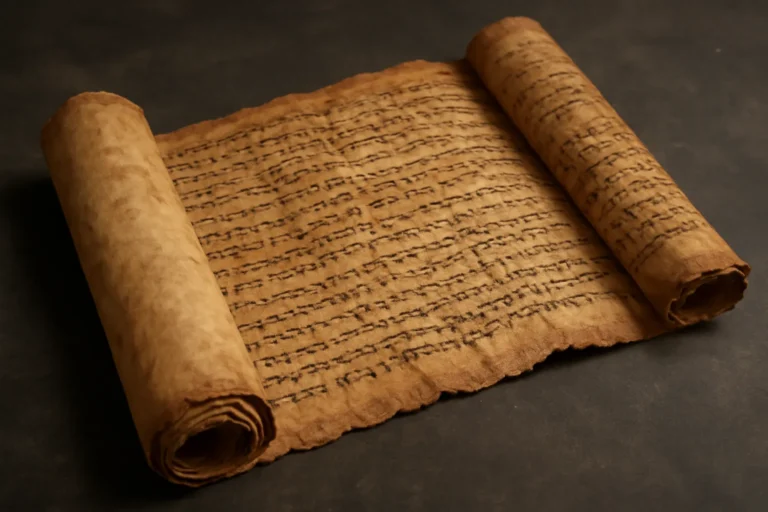
The discovery of the Dead Sea Scrolls at Qumran and related sites opened a window into the diversity of Jewish thought in the second temple period. Scrolls affiliated with the Essenes and other groups reveal community rules, liturgical calendars, biblical translations, and interpretive notes that illuminate the way different groups approached scriptural authority, purity, messianic expectation, and eschatology. For students of Judaism in the intertestamental era, these texts offer invaluable data about how varied communities navigated crises of identity and legitimacy while preserving distinct religious commitments.
Messianic Expectation and Eschatology
Among the most salient features of Judaism in the intertestamental period is the development of varied messianic expectations and eschatological frameworks. The literature of the time reflects multiple strands of hope: a Davidic king who would restore political sovereignty and religious integrity, a priestly reform that would redirect the Temple’s centrality toward righteous worship, and a broader expectation of divine intervention that would vindicate the righteous and judge the wicked. In addition, apocalyptic writings—often linked to the broader milieu of Hellenistic and Near Eastern thought—imagined cosmic battles, heavenly arbiters, and dramatic upheavals preceding a new era of peace and righteousness.
Davidic and Royal Messianism
Many strands of intertestamental Judaism anticipated a renewed Davidic king who would reestablish a unified and independent Jewish polity, restore proper worship, and lead the people in fidelity to the Law. In the Hasmonean era, one may observe a fusion of political and religious leadership that carried messianic overtones, even as the dynasty navigated alliances with larger empires. The expectation of a future king remained a persistent motif in religious discourse and would later influence how early Christian communities framed Jesus as a messianic figure in light of their own interpretive traditions.
Priestly Reform and Eschatology
In other strands, eschatology is intertwined with temple purity, prophetic critique, and social justice. The intertestamental years saw debates about whether the temple and priesthood could be renewed or reimagined within a post-exilic context, and whether an eschatological deliverance would come through priestly reform, prophetic judgment, or a combination of both. The spiritual horizon of eschatology thus was diverse: not a single blueprint, but a spectrum that allowed communities to imagine how divine fulfillment might unfold in history.
Hellenistic Influence and Jewish Adaptation
The intertestamental period Judaism was markedly marked by contact with Hellenistic culture. The encounter was not monolithic: some communities adopted Greek education, language, and philosophical discourse; others resisted, seeking to preserve older forms of piety and social organization. This cultural interplay contributed to significant tensions and creative experiments in religious life.
- Language and education. The shift toward Greek in many communities enabled broader reading and discussion of sacred texts. It also created opportunities for new commentary styles and interpretive questions that would later shape rabbinic discourse.
- Philosophical engagement. For some Jewish thinkers, engagement with Greek philosophy offered tools to articulate ethical teachings, the nature of divine providence, and the problem of human suffering within a monotheistic framework.
- Textual mobility. Greek translations and the circulation of texts beyond their original locale allowed for cross-cultural dialogue and debate, often translating religious questions into new moral and political terms.
- Religious institutions in diaspora. In cities such as Alexandria, Antioch, and other urban centers, synagogues and study circles became robust centers that helped maintain identity while negotiating local norms, which, in turn, broadened the range of religious expression during the intertestamental period.
In this environment, the intertestamental years were less about a single uniform tradition and more about a spectrum of practices and beliefs. The interplay between traditionalist currents and innovative currents contributed to a durable religious memory that would survive even after the Temple’s fall and inform both post-biblical Judaism and early Christian movements.
Diaspora, Land, and the Shape of Jewish Religious Life
The narrative of Judaism in the intertestamental period cannot be reduced to a single geographic center. Diasporic communities—especially in Egypt, Mesopotamia, and the Hellenistic core of the Mediterranean—developed distinctive forms of worship, education, and communal governance. Meanwhile, in Judea and Galilee, life continued to hinge on the Temple, the priesthood, and the legal authorities that sustained civil order and religious fidelity.
Diaspora communities and synagogue life
In the diaspora, the synagogue began to function not only as a place of prayer but as a hub for study and community leadership. The synagogue provided a means for Jews living outside the land of Israel to observe the Law, to read Torah publicly, and to foster ethno-religious solidarity across languages and cultures. The democratization of religious life in this context, which often emphasized interpretation and discussion, contributed to the authority of the teacher and the scholar over ceremonial exclusivity.
The Land of Israel and the Temple’s centrality
In the land of Israel, the Temple remained the center of life, but it existed alongside powerful political factions and shifting external governance. The Hasmonean era brought a degree of national sovereignty and religious reform around the Temple, priestly duties, and ritual practices. The intertwining of sovereignty with sanctity gave birth to debates about who controlled the Temple, how it should operate, and what role lay leaders should play in guiding people’s worship. The intertestamental years thus delivered a robust religious culture that could translate the ideals of Torah fidelity into political and social action.
Legacy of Texts and Traditions: From the Intertestamental Era to Rabbinic Judaism
The intertestamental period was not only a time of crisis and reform but also a time of literary and doctrinal consolidation. The orchestration of texts, interpretive traditions, and communal practices laid the groundwork for rabbinic Judaism in the centuries after the Temple’s destruction. Several strands of this legacy are especially significant:
- Oral Law as a vehicle for continuity. The growing sense that the Law includes interpretive streams passed down through generations helped preserve religious identity when temple worship was restricted or eliminated.
- Canonical debates and canon formation. The question of which writings were authoritative persisted in various communities, and the process of reading and evaluating scripture matured in diverse settings.
- Textual plurality and cross-pollination. The Septuagint, the Dead Sea Scrolls, and other textual traditions created an interwoven landscape in which Jews in the intertestamental period could draw on multiple textual resources for liturgy and ethics.
- Institutional evolution. The rise of synagogues, study circles, and local councils began to shape religious leadership, doctrinal interpretation, and communal norms that would echo in Rabbinic authority after 70 CE.
In this manner, the intertestamental years function as a hinge: they preserve the memory of a temple-centered world while revealing the emergence of a more literate, interpretive, and community-oriented Judaism that would later be called Rabbinic Judaism. The religious life of Judaism in the intertestamental period thus becomes a bridge connecting biblical-era ritual practice with post-temple religious life, shaping the terms by which Jewish communities could pursue fidelity, identity, and hope in changing historical circumstances.
Intertestamental Period Judaism and New Testament Contexts: A Theological and Historical Bridge
Scholars often stress that Judaism in the intertestamental period set the stage for the environment in which early Christianity emerged. The religious vocabulary, practices, and expectations circulating during the years between the two testaments provided a backdrop for interpreting Jesus’ ministry, eschatological expectations of his followers, and the early Christian movement’s self-understanding as a reform movement within or alongside Judaism. This is not a claim about origin stories alone; it is a claim about how religious intuitions, liturgical practices, and textual commitments shaped the dialogue between early followers of Jesus and the diverse expressions of Second Temple Judaism.
From a theological standpoint, this bridge is visible in several places:
- Temple and eschatology remained central to both Jewish and early Christian discussions, and debates about messianic expectations were interpreted within shared biblical frames.
- Law and righteousness were debated across communities—some emphasizing strict Torah observance in a way that paralleled the Pharisaic approach, others privileging temple purification and cultic elements that the Sadducees also stressed.
- Scripture and interpretation—the Septuagint’s availability and the surrounding interpretive schools created common points of reference for Christians and Jews alike, albeit with divergent reading strategies.
- Ethical and eschatological outlooks—apocalyptic and prophetic visions influence both late Second Temple Jewish writers and early Christian writers who drew upon analogous themes of divine justice, vindication, and the renewal of creation.
Understanding Judaism in the intertestamental period helps illuminate why certain early Christian texts adopt or adapt familiar Jewish motifs, how they address questions of ritual life, and how they conceive of a faithful community under political calculation and religious reform. It is, in a sense, the matrix in which both continuity and change are produced, a matrix that continues to be debated and interpreted by scholars, clergy, and lay readers interested in the religious landscape of late antiquity.
Glossary of Core Concepts and Terms in the Intertestamental Era
To navigate the terrain of intertestamental Judaism with greater clarity, here is a concise glossary of recurring terms and ideas you will encounter in discussions of the period:
- Second Temple Judaism — The religious environment and practice surrounding the Temple in Jerusalem from the late 6th century BCE through 70 CE.
- Hasmonean dynasty — The priestly family-led rulers who established a period of Jewish autonomy and expanded temple-based reform after the Maccabean revolt.
- Pharisees — A movement emphasizing the Oral Torah and interpretive tradition alongside the Written Torah, shaping post-Temple Jewish life.
- Sadducees — A priestly, temple-centered group that favored a more literal reading of the written Torah and joined political alliances with Hellenistic rulers.
- Essenes — A sect associated with qumran-like communities and a distinctive approach to purity, community life, and scriptural interpretation.
- Septuagint (LXX) — The Greek translation of the Hebrew scriptures, produced in the Hellenistic world and influential in Jewish and early Christian reading.
- Dead Sea Scrolls — A corpus of texts from Qumran and related sites revealing sectarian, liturgical, and ethical materials that illuminate intertestamental Judaism.
- Canon formation — The process by which communities determined which writings would be treated as authoritative for faith and practice.
- Oral Torah — The body of interpretive traditions believed to have been handed down in parallel with the Written Torah, central to Pharisaic Judaism.
- Apocrypha and Pseudepigrapha — Non-canonical Jewish writings circulated in various communities that informed devotional life and ethics during the intertestamental years.
Concluding Reflections: The Intertestamental Period as a Religious Bridge
In sum, the period between the Old Testament and the New Testament—often labeled the intertestamental era or, within Jewish scholarship, the era of Second Temple Judaism—represents a time of transition, diversification, and creative energy. It was a time when Temple-centered authority and scribal interpretation learned to live with diaspora life and cultural exchange, when language shifts and textual pluralism expanded the repertoire of religious life, and when messianic anticipation and eschatological hope remained salient across communities. Crucially, the intertestamental years produced a repertoire of ideas, institutions, and practices that would shape later Jewish life—culminating in Rabbinic Judaism—and would also leave a lasting imprint on how Christians read the Hebrew scriptures and understand the historical development of early Christian communities.
When we speak of Judaism in the intertestamental period, we mean more than a chronological label. We mean a complex, living tradition adapting to new political realities, new languages, and new ways of thinking about law, purity, worship, and the future. The dialog between the Old and the New Testament frameworks thus reveals not a rupture but a rich continuity: a people and a faith continually negotiating with history while preserving a sense of divine vocation, communal identity, and hope for the coming of God’s kingdom. The intertestamental era, carefully studied, thus offers essential insights into the texture of Jewish religious life—insights that illuminate both the past and the continuing conversation about what it means to belong to a people with a sacred text and a living tradition.