
Introduction: The Great Commission as a Living Mandate for Every Believer
Across centuries, the Christian faith has carried a singular, defining mandate that has shaped communities, inspired mission, and reoriented individual lives. The clear invitation is not merely to assent to a set of beliefs, but to participate in a dynamic, ongoing process: the Great Commission. Often articulated as a summons to “go and make disciples of all nations,” it is, at its core, a discipleship invitation that moves from personal faith to community formation across generations. In this article, we explore what it means to live out the wide-ranging call to disciple-making, not as a one-off event, but as a lifestyle that consistently produces disciples who make disciples.
The promise embedded in this mission is not simply about numbers or baptisms; it is about a transformational process whereby learners become learners who teach others to follow Jesus. This long view requires patience, relational intentionality, theological clarity, and practical adaptability. As we examine the expansive terrain of multiplying disciples, we will trace the biblical roots, survey historical patterns, outline practical strategies, and engage the real-world challenges that emerge when churches and individuals commit to a disciple-making mandate.
Theological Foundations: Authority, Spirit, and the Goal of Discipleship
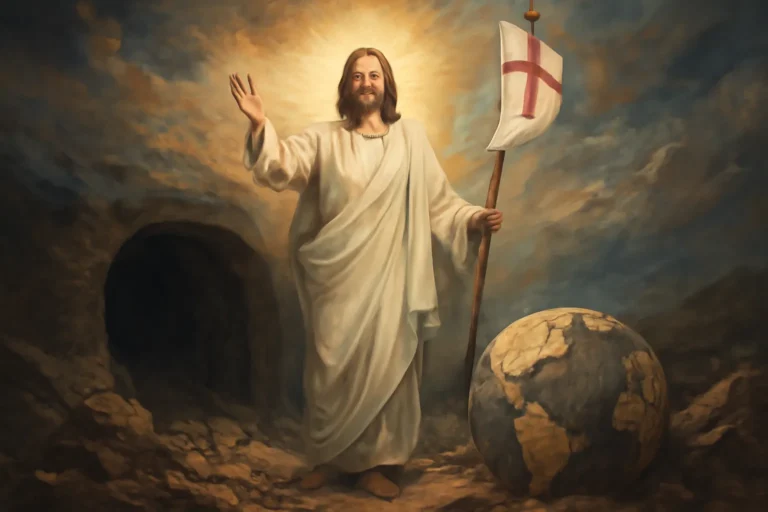
The authority for the mission lies in the risen Christ, whose final words to his followers established a framework for ongoing obedience. Matthew 28:18–20—the passage popularly known as the Great Commission—embodies four essential elements that shape the theology and practice of disciple-making:
- All authority in heaven and on earth is given to Jesus, which grounds the mission in divine sovereignty.
- The call to “go” indicates movement—outward mission coupled with inward formation.
- The instruction to make disciples emphasizes multiplication—not merely conversions but lifelong apprenticeship.
- The triadic practice of baptizing and teaching points to identity formation (sonship in Christ) and ongoing obedience (lifelong learning).
A robust understanding of the Great Commission goes beyond a single moment of evangelism. It envisions a discipleship ecosystem in which new believers are integrated into a community that models and multiplies the habits of Jesus. This demands not only proclamation but also character formation, spiritual disciplines, and a shared life that embodies the values of the Kingdom.
From Command to Lifestyle: The Discipleship Rhythm
The commission also implies a rhythm that believers can adopt in ordinary life. A helpful way to describe this rhythm is to think in terms of four moving parts:
- Relationally connect with people who are far from God and with those who are seeking to grow in faith.
- Mentor individuals through modeling, coaching, and guided practice in the ways of Jesus.
- Multiply by training new disciplers who can then train others, creating an ever-expanding chain of growth.
- Evaluate as communities discern what is working, celebrate progress, and adjust approach with humility and gospel-centered discernment.
This rhythm is not a rigid formula but a flexible framework designed to be incarnated in diverse contexts—urban neighborhoods, rural towns, campus communities, diaspora settings, and cross-cultural missions. The objective remains: to see disciple-making become a shared, reproducible pattern that yields disciples who make disciples, generation after generation.
Historical Perspectives: How the Church Has Practiced Discipleship Across Ages
The impulse to multiply followers of Jesus has ancient roots that stretch from the earliest Christian communities to modern mission networks. Studying the arc of church history helps illuminate how a commission to make disciples has been understood, adapted, and renewed in different seasons. While cultures, technologies, and languages change, the core aim—formation into the image of Christ through relational apprenticeship—remains remarkably constant.
Early Church Practices and Patterns
In the first centuries, the apostolic church intentionally integrated teaching, table fellowship, and mission. Small groups gathered for catechesis, mutual accountability, and service. The Apostle Paul’s letters reveal a model of mentored leadership and multiplying churches through a network of trained elders and deacons. The idea of training “trusted men” who can teach others underscores a timeless truth: discipleship is reproducible within the church community.
- Mentorship relationships where seasoned leaders shepherd younger believers.
- House churches and small group settings that allowed intimate accountability and rapid succession of leadership.
- Traveling itinerant ministers who planted churches and established leadership pipelines.
The early pattern of church planting and apprenticeship demonstrates that disciple-making is not merely informational; it is relational, practical, and missional.
Medieval to Reformation Shifts
Over time, the church’s approach to discipleship evolved in response to cultural shifts and theological debates. Monastic traditions preserved and transmitted spiritual disciplines, while reformers emphasized scripture-centered formation and lay engagement. Across these transitions, a throughline remained: discipleship as a transformative encounter with Jesus, expressed in communities that live out the faith in ordinary life and mission.
Modern Missions and Global Multiplication
The modern era broadened the horizon from local congregations to global networks. Missionaries and church planters crafted training models, such as short-term intensives, apprenticeship tracks, and rapid church planting strategies, all aimed at producing multipliers who can reproduce discipleship communities in new contexts. In many settings today, the objective is no longer simply to evangelize a crowd but to nurture a chain of mentors who are equipped to train others to replicate. This shift reflects the enduring truth that the Great Commission—whatever cultural flavor it takes—invites a discipling culture that multiplies.
Key Frameworks: Understanding Disciple-Making in the Local Church and Beyond
Across contexts, several frameworks help clarify what it means to live out the mission. These frameworks are not mutually exclusive; rather, they illuminate different facets of the same calling: to form faithful followers who are equipped to guide others toward maturity in Christ.
Discipleship as Formation and Mission
A helpful way to think about disciple-making is to see it as both formation (who we become in Christ) and mission (what we do for the sake of others). In this view, discipleship involves:
- Learning to know Jesus more deeply through Scripture and prayer.
- Living out the gospel in daily life, relationships, and work.
- Equipping others to know Jesus, love him, and follow him in their own contexts.
Discipleship as a Reproducing Chain
A growing church understands discipleship as a reproducing chain, where each disciple becomes a teacher and trainer to others. The aim is not merely to grow individuals but to cultivate communities of practice that sustain and extend the mission.
Respecting Context: Bible, Belief, and Practice
Context matters. The same gospel truth may need different expressions in different languages, cultures, and generations. The Great Commission remains constant, but the methods of engaging people with the gospel and shaping their lives may vary. Effective disciple-making is both faithful to the gospel and attentive to context, balancing doctrine with practice.
Practices of Disciple-Making: A Practical Framework for Everyday Life
In real-life ministry, the question is not only what to teach but how to teach it in ways that are memorable, transferable, and reproducible. Below is a practical framework designed to help churches and individuals cultivate a culture of disciple-making that produces disciples who make disciples.
A Practical Framework: Teach, Model, and Replicate
- Teach with clarity: Clarify the essentials of the faith, the implications of following Jesus, and the expectations of discipleship. This includes foundational doctrine, a robust understanding of grace, and a practical ethic of love and justice.
- Model a lifestyle: Demonstrate Jesus-centered living in community, service, and worship. Learners should see integrity, compassion, and courage in action.
- Coach for growth: Provide relational coaching, feedback, and accountability. Teach through questions, not only lectures, and invite learners into guided practice.
- Multiply leaders: Identify potential disciplers, invest in their development, and release them to train others. The aim is not dependence but empowerment and reproducibility.
- Embed in the life of the church: Infuse disciple-making into worship, small groups, service projects, and missional endeavors so that it becomes ordinary, not exceptional.
Theological Anchors for Practice
While the practical steps above are essential, it is equally important to ground them in durable theological anchors:
- Scripture centrality: The Bible is the primary curriculum for formation and the standard by which all practice must be measured.
- Grace-driven motive: The motivation for disciple-making flows from grace received, not guilt or obligation.
- Community accountability: Healthy discipleship unfolds within the safety and challenge of community.
- Holistic maturity: Discipleship touches belief, behavior, relationships, and vocation.
- Missional generosity: The end goal of formation is not self-satisfaction but service to others and expansion of God’s Kingdom.
Multiplication Models: Training for Reproducibility
Reproducibility is the heartbeat of the Great Commission in practice. Several models have proven effective in various settings. Churches can adopt, adapt, or combine approaches to fit their unique contexts while preserving the core aim: multiplying faithful followers who, in turn, mentor others.
Model 1: The Mentor-Mlearner Cycle
This model emphasizes one-to-one or small-group mentorship where a seasoned believer intentionally disciples a few younger believers, who then mentor others. It is relational, scalable, and often deeply personal.
- Initial relationship built on trust and shared life
- Structured coaching with observable practices
- Regular multiplication by releasing learners to mentor others
Model 2: The Training-Of-Trainers Cycle
In this approach, a cohort of learners completes a structured curriculum and graduates with the authority and responsibility to train others. It creates a ripple effect and is particularly effective in contexts with larger groups.
- Curriculum-based training with practical assignments
- Certification or credentialing for trained mentors
- Formal occasions to commission new trainers for ongoing cycles
Model 3: The Life-on-Life Apprenticeship
This model centers on living out faith together in everyday life—workplaces, neighborhoods, and service projects—while intentionally guiding new disciples toward maturity. It is less about formal seminars and more about lived example and shared mission.
Living the Great Commission in Diverse Contexts
Christians across the globe encounter different realities—cities with diverse populations, rural communities with limited access to resources, and cross-cultural contexts where language and tradition require careful sensitivity. The Great Commission, in all its variants, calls people to carry a robust message of transformation into these settings, while paying attention to local gifts, challenges, and needs.
Urban Contexts: Cultivating Multicultural Discipleship
In cities, the harvest is often diverse and time-sensitive. Urban discipleship benefits from:
- Relational infrastructure that connects people across ethnicities and social networks
- Accessible training through local gatherings, online resources, and micro-mentoring
- Public witness that demonstrates the gospel through justice, mercy, and compassion
The goal is not merely converts but the formation of multicultural disciples who can mentor peers within their own communities and beyond, thereby expanding the reach of the Gospel through authentic relationships.
Rural Contexts: Faith, Family, and Community Vitality
In rural settings, disciple-making often integrates with family networks, agricultural cycles, and community life. Practical considerations include:
- Longitudinal engagement that respects seasonal rhythms and life stages
- Shared service projects that strengthen communal bonds
- Localized leadership pipelines that identify and train leaders from within the community
The effectiveness of discernment, patience, and consistent presence cannot be overstated in rural contexts. When the disciple-making mandate is lived out in familiar environments, the impact can be enduring and deeply transformative.
Cross-Cultural Contexts: Language, Translation, and Respect
Cross-cultural missions demand humility, linguistic sensitivity, and a willingness to learn from local believers. Key practices include:
- Language immersion and localization of teaching materials
- Contextualized leadership training that respects local authority structures and cultural norms
- Partnership models that emphasize mutual accountability, shared decision-making, and long-term commitment
In cross-cultural ministry, the goal remains clear: to cultivate disciple-makers who can translate the gospel into meaningful life outcomes within their own cultural frame, thereby producing disciples who make disciples in perpetuity.
Discipleship Pathways: From Sowing to Reproducing
A coherent pathway helps believers understand where they are on the journey and what comes next. The journey toward becoming a reproducing disciple typically involves phases that can be adapted to different contexts and ages.
Phase 1: Sowing Faith and Curiosity
The initial phase centers on introducing people to Jesus and inviting them into the rhythm of life with a community of faith. Elements of this phase include:
- Presenting the gospel with clarity and compassion
- Welcoming newcomers into belonging communities (small groups, hospitality, service opportunities)
- Modeling the faith through simple, observable practices (prayer, Bible reading, service)
Phase 2: Growing into a Disciple
As faith deepens, individuals are invited into intentional discipleship relationships. Key practices are:
- Guided Bible study with a focus on life transformation
- Regular spiritual disciplines (prayer, fasting, worship)
- Participation in mission-oriented activities that require teamwork and accountability
Phase 3: Training for Leadership and Reproduction
Growth becomes multiplication when learners are trained to guide others. Core components include:
- Leadership development plans aligned with local contexts
- Mentoring and coaching frameworks to equip new disciplers
- Opportunities to lead small groups, teach, or partner in outreach
Phase 4: Reproducing Disciples and Their Communities
The mature phase involves establishing new disciple-making teams, launching new communities, and creating structures that enable ongoing replication. Emphasis falls on:
- Sustainable leadership pipelines
- Interdependent networks that extend reach
- Metrics that honor faithfulness, fruitfulness, and fidelity to the gospel
Measuring Disciple Making: Metrics That Preserve Faith, Not Erode It
Evaluation is essential to accountability and ongoing improvement, but it must be done in ways that honor the integrity of faith and preserve the dignity of people. Effective measurement balances quantitative indicators with qualitative signals of transformation.
Healthy Metrics for Disciple-Making
- Depth indicators: engagement with Scripture, prayer, and spiritual disciplines; increased biblical literacy
- Character indicators: growth in Christlike virtues, such as love, humility, and self-control
- Relational indicators: healthy, reproducing mentoring relationships; diversity in mentorship
- Missional indicators: participation in outreach, community transformation, and service
- Reproduction indicators: number of new disciplers trained and deployed to train others
Qualitative Approaches
In addition to numbers, stories matter. Case studies, testimonies, and narrative evaluations provide a window into the ways lives are being changed by the gospel and how the discipling process is working in real communities.
- Story-based evaluation sessions that capture transformation moments
- Reflection on challenges and breakthroughs in mentoring relationships
- Feedback loops between churches, mentors, and new disciples to refine training
Challenges and How to Overcome Them in the Pursuit of Multiplication
The journey of disciple-making is rewarding but not without hurdles. By anticipating common obstacles and cultivating robust practices, churches can sustain momentum over the long haul.
Common Challenges
- Time constraints for busy families, workers, and leaders
- Resistance to change or comfort with established programs
- Cultural barriers that complicate sharing faith across contexts
- Resource gaps for training, travel, and materials
- Burnout among mentors due to high relational load
Strategies for Resilience
- Adopt low-cost, high-impact mentoring models that fit existing rhythms
- Build strong teams of co-mentors to share the load
- Prioritize sustainable leadership development, not just event-driven programs
- Create inclusive environments that welcome diverse gifts and callings
- Encourage experimentation and learning to adapt to changing contexts
Case Studies: Illustrations of Disciple-Making in Action
Real-world stories illuminate how the Great Commission takes shape in local churches, mission partnerships, and individual lives. The following brief vignettes illustrate principles discussed in this article.
Case Study A: A Local Church in a Multicultural Neighborhood
In a city neighborhood with rising diversity, a church launched a disciple-making cohort that invited residents from different backgrounds to study the Bible, serve together, and practice leadership in community projects. Through a structured mentorship cycle, several participants became mentors themselves, forming a network that catalyzed the planting of two new small groups within a year.
Key takeaway: When discipleship is designed to be inclusive, relational, and action-oriented, it becomes a catalyst for multiplication rather than a one-off event.
Case Study B: Cross-Cultural Partnership in Southeast Asia
A partnerships-based approach focused on translating curriculum into local languages and entrusting leadership to local believers. The program emphasized listening, humility, and co-creation of training materials. Over time, local leaders emerged who could train others in their own communities, resulting in a sustainable cycle of disciples who disciple.
Case Study C: Youth Ministry as a Reproduction Engine
A high school and college ministry created a discipleship pipeline that began with core students who actively invited peers, mentored younger students, and participated in community service. The approach balanced evangelism with deep discipleship, leading to a noticeable increase in student leaders who continued to train others.
Conclusion: Living the Great Commission as a Shared, Long-View Obedience
The call to go and make disciples of all nations remains a compelling invitation for every generation. If we understand the Great Commission as the great commission of multiplication, then discipleship becomes a durable, reproducible practice that extends beyond personal faith into the life of the church and into society at large. The vision is not merely to convert individuals but to cultivate disciples who make disciples—people who model the character of Christ, teach others to know him, and empower the next generation to carry the torch with fidelity and joy.
As you reflect on this comprehensive path, consider how you can participate in a disciple-making culture wherever you are—from family dinner tables to boardroom meetings, from neighborhood covenants to global partnerships. Whether you are a student, a professional, a parent, or a pastor, your involvement matters. The Great Commission is not a static commandment; it is a living invitation to join God in the ongoing work of transforming people, communities, and cultures through discipleship as mission.
In closing, the enduring invitation remains: be a person who loves well, teaches faithfully, and mentors others in a way that sustains a growing, reproducing movement. When every believer participates as a disciple-maker, the Church becomes a robust, resilient organism—producing disciples who make disciples and extending the reach of the gospel across generations, languages, and borders. The Great Commission, in its essence, is a call to partnership with the Spirit in the mission of Jesus, a lifelong journey of obedience, joy, and transformative impact.