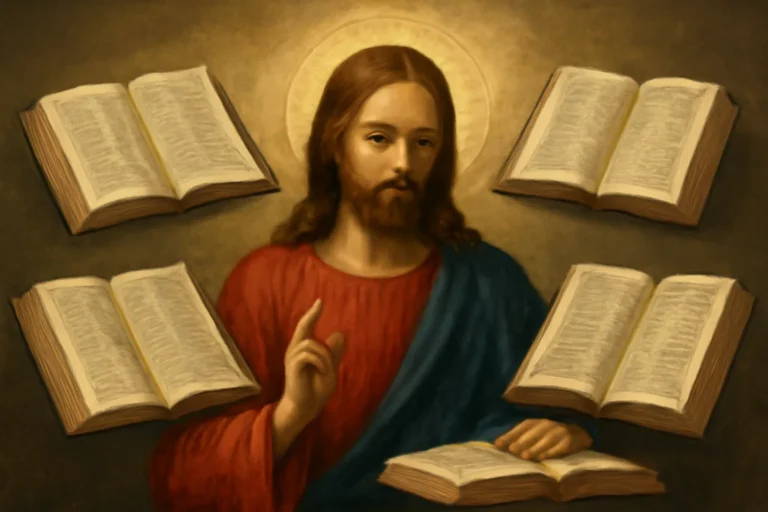

Introduction: The Miracles as a Window into the Kingdom
Across the centuries, Christians have looked to the miracles of Jesus as more than
remarkable occurrences; they are understood as powerful signs that inaugurate and reveal
the Kingdom of God. In the Gospels, these acts of compassion, authority, and
revelation are presented not as isolated spectacles but as divine communications
about who Jesus is, what he brings, and how God intends to renew creation. The stories are
nested in narratives of faith, conflict, invitation, and hope, inviting readers to respond with
trust, repentance, and devotion.
This article surveys the scope, structure, and interpretation of Jesus’ miracles, while
considering their theological significance, their place within the gospel
narratives, and their ongoing resonance for worship, teaching, and spiritual practice. We will
explore categories of miracles, notable episodes, and the various scholarly and devotional
perspectives that have shaped the church’s understanding of these extraordinary events.
What We Mean by a Miracle: Definition, Sign, and Authority
The term miracle has a long and nuanced history. In biblical usage, miracles are
extraordinary events that transcends natural expectation because they are carried out or permitted
by God through Jesus. Yet many scholars prefer the term sign to emphasize that
the miracle points beyond itself to a greater reality: the reign of God, the vindication of Jesus’
central person and mission, and the dawning of a new creation.
A robust way to think about the miracles of Jesus includes several intertwined claims:
- Divine authority: Jesus acts with the authority of God; his word and touch bring about
transformation that only God can effect. - Compassion and kinship: Miracles frequently respond to human need, suffering, and longing,
revealing the depth of God’s mercy toward the marginalized and afflicted. - Revelation of the Kingdom: The miracles demonstrate that the long-awaited renewal of all things has begun
in Jesus; they are a foretaste of the eschatological future. - Faith and response: The narratives often connect the miracle to faith—sometimes sustained faith,
sometimes faith that is still forming under ambiguity or misunderstanding.
Categories of Jesus’ Miracles: A Structural Overview
Nature miracles
These events reveal Jesus’ mastery over the physical world and signal the entrance of divine order into
creation. They often disclose God’s solidarity with the vulnerable by providing abundance, safety, and
wonder.
- Water into wine at Cana: An inaugural sign that reveals Jesus’ glory and signals the abundance of
the new covenant kind of joy (John 2:1–11). - Calming the storm: Jesus quiets the sea, teaching that fear and chaos are not ultimate;
his authority reorders creation (Mark 4:35–41; Matthew 8:23–27; Luke 8:22–25). - Walking on water: A dramatic display of sovereignty over the elements and a gentle invitation to trust (Matthew 14:22–33;
Mark 6:45–52; John 6:16–21). - Multiplication of loaves and fishes: A sign of provision that prefigures the eschatological banquet and the
gracious nourishment of the crowd (Matthew 14:13–21; 15:32–39; Mark 6:30–44; Luke 9:10–17; John 6:1–14).
Healing miracles
Healing acts are among the most frequent and beloved miracles in the gospels. They restore bodily health,
dignity, and social belonging, while often conveying deeper spiritual restoration and reconciliation with God.
- Lepers cleansed and other cleansing miracles that restore ritual and social standing (e.g., Matthew 8:1–4).
- Paralytic healed and forgiven sins: a composite miracle that demonstrates the unity of physical healing and
spiritual forgiveness (Mark 2:1–12; Luke 5:17–26). - Blind, deaf, and mute healing and restoration of sight (e.g., Bartimaeus in Mark 10:46–52;
John 9:1–12). - Healing the woman with a hemorrhage and the synagogue ruler’s daughter (Luke 8:40–56; Mark 5:21–43;
Matthew 9:18–26).
Exorcisms and liberation from demonic power
Jesus’ exorcisms are frequently set in the context of a larger proclamation of the imminent
in-breaking of God’s rule. They reveal his authority over spiritual powers and provide healing for
individuals oppressed by evil.
- The Gerasene demoniac: a dramatic confrontation with a multitude of demons who acknowledge Jesus’ authority (Mark 5:1–20;
Matthew 8:28–34; Luke 8:26–39). - Exorcisms in healing narratives where unclean spirits are cast out to restore speech, mobility, and relational harmony
(e.g., Mark 1:23–26; Luke 4:33–36).
Raising the dead
Raising people back to life affirms Jesus’ sovereignty over life and death and invites
contemplation of ultimate resurrection hope.
- Jairus’s daughter restored to life (Mark 5:21–43; Matthew 9:18–26; Luke 8:40–56).
- The widow’s son at Nain (Luke 7:11–17): a poignant act of mercy that foreshadows the future reversal of death’s effects.
- Lazarus revived after four days (John 11:1–44): a climactic sign in John’s gospel with deep theological signaling about life, love, and divine timing.
Forgiveness and signs of inner transformation
While not always categorized as miracles in a mechanical sense, Jesus’ healings often accompany
declarations of forgiveness or the release of a person from shame and guilt. These moments
demonstrate that God’s mercy invites a holistic restoration—body, mind, and soul.
Notable Narratives and Theological Readings
Cana: The first public sign
The miracle at Cana, where water is transformed into wine, is frequently treated as the Gospel
of John’s inaugural sign that reveals Jesus’ glory. It points to the abundance and blessing of the
new covenant, where joy is not scarce but plentiful, and where Jesus’ presence inaugurates a
transformed order. The event invites readers to trust in Jesus as the giver of authentic joy and
to recognize that the miracles are signs that lead to belief (John 2:1–11).
Calming the Sea: Mastery over chaos
When the disciples fearfully cry out amid a raging storm, Jesus speaks a word and the wind and
waves obey. This story is often cited as a model of trust in divine sovereignty amid life’s storms.
The miracle foregrounds not only Christ’s power over nature but also his role as teacher of faith: a
crisis becomes a lesson about recognizing Jesus’ presence, authority, and care (Mark 4:35–41;
Matthew 8:23–27; Luke 8:22–25).
Feeding the Multitude: Sustenance as sign and mission
The miraculous feeding of thousands highlights God’s provision and invites a response of
gratitude, sharing, and mission. In the synoptic gospels, the feeding stories foreshadow the
Eucharistic meal and the generous abundance of God’s reign. The parallel episodes across the
gospels demonstrate that Jesus’ power to provide parallels a deeper invitation to follow him in
trust and service (Matthew 14:13–21; Mark 6:30–44; Luke 9:10–17; John 6:1–14).
Healing as Restoration of Whole Persons
Across the gospel accounts, healing is not simply a matter of physiological cure. It is
restoration to community, access to worship, and renewed relationship with God. The healing of
the paralytic, the blind man’s sight, and the woman with a chronic illness each illustrate how the
physical and spiritual dimensions are braided together in Jesus’ healing ministry. These narratives frequently culminate in
an exuberant witness: the healed person returns to praise God, to testify, and to become a beacon of hope for others.
The Gospel Portraits: Synoptic vs. Johannine Emphases
The synoptic gospels (Matthew, Mark, Luke) emphasize Jesus’ miracles as public signs that
validate his authority and reveal the balance of compassion and power present in his ministry.
The Gospel according to John, often described as a book of signs, presents a curated
sequence of demonstrations that are theological pointers to who Jesus is—the bread of life,
the light of the world, the good shepherd, and the resurrection and the life.
In John, the miracles are linked to extended discourses and I AM sayings that unfold the identity of Jesus
with explicit christological significance. In the synoptics, miracles frequently occur within a narrative arc
that culminates in the Passion and Resurrection, where the purpose of the signs is to invite faith and
to reveal God’s redemptive plan in history.
Major Miracle Themes in Theological Reflection
Authority and identity of Jesus
Miracles in the gospel tradition serve as a credible testimony to Jesus’ identity as the Messiah and
Son of God. They authoritatively interrupt the ordinary course of life and demonstrate that the
divine presence is active in history. The deliberate pairing of miracles with teaching highlights
that Jesus’ authority is not merely magical power but a revelatory action that discloses God’s reign.
Compassion, mercy, and social renewal
A central feature of Jesus’ miracle stories is the compassionate character of God. Many
acts of healing occur in contexts of social vulnerability—disease, disability, poverty, and moral
longing. The miracles thus function as a counter-claim to exclusion, showing God’s desire that all
persons be included in the community of mercy and worship.
Prophetic fulfillment and eschatological expectation
The miracles point to the fulfillment of prophetic expectations about the coming kingdom. They anticipate
what the prophets described as a time when tears will be wiped away, sickness will be ended, and all creation
will be restored. As such, miracles are not merely events of the past but living invitations to
align our present lives with God’s future purposes.
Faith, doubt, and human response
The gospel miracles often engage readers with questions about faith: Will people believe when the signs
appear? How does one respond to healing, restoration, or even withholding healing in certain contexts?
The narratives reveal a spectrum of responses—from eager belief to cautious skepticism—and remind readers
that faith is a journey, sometimes clarified, sometimes tested by the mystery of God’s providence.
Raisings and Reconciling Death: The Eschatological Layer
The miracles that raise the dead assume a striking role in Christian theology. They offer a glimpse
of resurrection hope that transcends individual life and points to the ultimate victory of God over death.
Jairus’s daughter, the widow’s son, and Lazarus each provide a different narrative emphasis—immediacy,
compassion for the grieving, and the reveal of Jesus as the Resurrection and the Life. These episodes
invite contemplation of God’s final compassion at the end of history and the hope that believers hold
in Christ.
Miracles in Practice: Faith, Prayer, and Worship
Prayer and expectancy
In Christian practice, miracles are not a choreography of manipulation but an invitation to
prayerful dependence on God. The spiritual discernment around miracles emphasizes humble, faithful
petition, gratitude in abundance, and a reverent reception of divine will. Communities often gather
to seek healing, comfort, and courage, acknowledging that God’s timing is perfect even when
human longing remains for immediate relief.
Liturgy and sacramental life
The miracle stories influence Christian worship and the sacramental life in several ways. For
instance, the feeding miracles inform attitudes of generosity and social responsibility. In the
Eucharist, the themes of bread and life resonate with the miracles of nourishment and life-giving
presence. In many traditions, healing prayers, anointing with oil, and laying on of hands reflect a
continuity of the Gospel’s compassionate healing ministry within the church’s ministry today.
Pastoral reflection and ethical implications
Beyond the sensational, the miracles invite ethical reflection on human need, power, and
responsibility. They encourage believers to pursue justice for the poor, healing for the brokenhearted,
and solidarity with those on the margins. The miracles, thus, are not only indicators of divine
intervention but also ethical demands that shape how communities live in light of God’s reign.
The Diversity of Accounts: An Invitation to Careful Reading
Readers encounter a broad landscape of miracle narratives. The four Gospels present each miracle
with a distinct emphasis, theological aim, and narrative texture. Some episodes are tightly
contextualized within local settings (e.g., healings in Galilee and Judea), while others move readers
through a chain of wonder across diverse regions. This diversity invites careful reading that honors
each gospel’s voice while recognizing the common thread: Jesus embodies the presence and power of God
for the sake of healing, liberation, and new creation.
The Miracles and the Christian Consciousness: Key Takeaways
- Jesus is portrayed with divine authority, capable of commanding nature, expelling hostile powers, restoring life, and forgiving sins.
- Compassion stands at the center of the miracle stories; acts of healing and mercy reveal God’s heart for the vulnerable and the excluded.
- The miracles authenticate Jesus’ messianic mission in ways that invite faith and response from witnesses and readers.
- The narratives point beyond themselves to the coming fullness of God’s kingdom—a future of justice, peace, and restored creation.
- Faith is not a magical variable; it is a trust-filled relationship that acknowledges God’s sovereignty, even amid mystery and delay.
Representative Timeline: A Condensed Catalogue of Miracles
While a complete catalog would be expansive, the following concise outline introduces some of the major miracle episodes
and their thematic significance across the gospel narratives.
- Cana, water into wine — sign of abundance and transformed joy (John 2).
- Calming the storm — authority over nature and reassurance in fear (Synoptics).
- Walking on water — divine trust and disclosure of Jesus’ identity (Synoptics).
- Feeding the 5,000 and the 4,000 — generosity, sustenance, and messianic expectation (Synoptics).
- Healing the paralytic — forgiveness and restoration (Mark 2; parallel accounts in Matthew and Luke).
- Healing the blind, the mute, and the lame — restoration of wholeness and social inclusion.
- The Gerasene demoniac — liberation from spiritual bondage and the ascription of Jesus’ authority to heal (Mark 5; parallel in Matthew and Luke).
- Raising Jairus’s daughter and the widow’s son — life-restoring compassion in moments of loss.
- Lazarus raised from the dead — a climactic sign pointing to Jesus as the source of life and the destiny of future resurrection (John 11).
A Note on Interpretation: How the Church Has Read These Signs
The church has approached the miracles through various interpretive lenses. The
early Christian tradition often read the sign-work as a proclamation that God’s realm has begun in
Jesus and that believers should anticipate and participate in that realm through faith and obedience. The
medieval and Reformation periods offered reflections on how miracles reveal God’s power and glory while
challenging believers to reevaluate human wisdom, moral living, and the meaning of suffering. In contemporary
theology, some read miracles as encounters with a personal God who chooses to intervene in history, while
others emphasize the symbolic and christocentric significance of the signs within the larger narrative of
salvation. Across these perspectives, the core conviction remains: the miracles are genuine acts of God that
reveal Jesus as the bearer of God’s presence in the world and invite human response.
Further Reflections for Study and Teaching
- Cross-referencing: Compare accounts of the same miracle across the Gospel writers to observe nuance and emphasis.
- Contextual reading: Consider the social, political, and religious context of the first-century audience to understand responses to Jesus’ signs.
- Theological application: Explore how each miracle speaks to themes such as faith, hope, justice, and mercy in contemporary life.
- Pastoral use: In teaching or counseling contexts, reflect on the healing narratives as invitations to care for the whole person—body, mind, and spirit.
Conclusion: The Miracles as Living Witness
The miracles of Jesus stand at the intersection of history, faith, and worship. They are not only
recorded events but living testimonies that invite readers to encounter Jesus, trust his authority, and align
their lives with the values of the Kingdom of God. Whether encountered in quiet study, public preaching, or
moments of communal prayer for healing and renewal, these signs continue to shape the Christian imagination.
They remind believers that God’s love is active in the world, that compassion has power to redeem, and that
hope in Christ transcends circumstance.