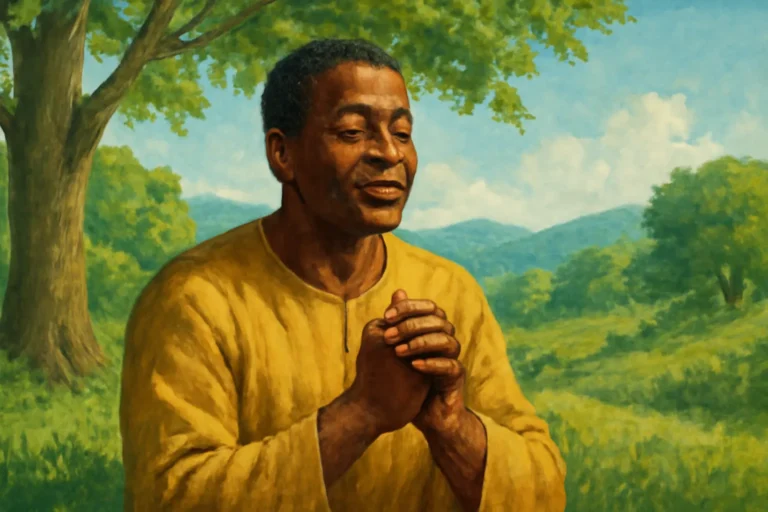

Introduction: A Prayer for Sanctuary in the Wind and the Quiet
In a world that often feels noisy, hurried, and unstable, many people search for a harbor where the heart can breathe, the mind can rest, and the soul can regain its gaze. For believers across generations, that harbor has frequently been described not as a place of stone or steel, but as a person, a Presence, and a promise. Let God be my sanctuary is more than a motto; it is an invitation to reframe experience—to move from fear or fatigue to trust in the divine dwelling among us. The idea of sanctuary—that which surrounds, shelters, and preserves—has deep roots in sacred literature and lived faith. When loneliness presses in, when desolation seems to echo within, the sacred language of sanctuary offers a counter-narrative: you are not deserted; you are invited to dwell near God, who is with you in every season.
This article explores the concept of God as sanctuary from multiple angles: biblical foundations, historical expressions, personal spirituality, and practical discipline. It offers interpretive insights, theological reflections, and actionable practices to cultivate the sense that Let God be my sanctuary is not only a belief but a lived experience—one that can steady the heart when loneliness is real, and enlarge the soul when longing for companionship lingers.
Foundations: Theological and Scriptural Anchors
The language of sanctuary appears throughout sacred tradition. In the Hebrew Bible, the sanctuary is a tangible sign of God’s presence among a people on a pilgrimage toward promised life. In the New Testament, the concept expands to include the temple of the body, the community of believers, and the spiritual dwelling of the Holy Spirit. Across these layers, God as sanctuary communicates both proximity and protection: a dwelling place in which one can find safety, solace, and orientation for the journey.
Subsection: The biblical imagery of sanctuary
Sanctuary is not merely a building; it is a relational state. In Psalm 46, the familiar verse proclaims, “God is our refuge and strength, a very present help in trouble.” The word “refuge” here captures the sense of a sheltering wall and a steadfast guardian. When readers say, Let God be my sanctuary, they are aligning themselves with a tradition that discovers safety within the divine presence, even amid chaos.
The Tabernacle and later the Temple in Israel stood as concrete signs of this sanctuary theology: places where the people could approach, confess, worship, and be restored. For many readers, the sanctuary is both a symbol and a spiritual practice—an ongoing invitation to reorient life toward God’s nearness.
Subsection: The sanctuary as habitation and vocation
The sanctuary motif also speaks to vocation. If one’s life becomes a dwelling-place for God through worship, justice, mercy, and humility, then God as sanctuary is not only about personal solace but about a call to embody divine presence in daily living. Theologies of indwelling remind us that the sacred can take up residence in ordinary moments—in acts of listening, in patient friendship, in the discipline of time set apart for prayer.
The Intimate Experience: Loneliness, Longing, and Sanctuary
Loneliness is not simply the absence of people; it can be a felt gap where the soul senses its need for enduring companionship. In seasons of isolation—whether emotional, geographical, or spiritual—the invitation to Let God be my sanctuary becomes not a retreat from reality but a way to face reality with courage and trust.
Subsection: Loneliness as spiritual signal
Throughout religious history, loneliness has been interpreted in varied ways. Some traditions understand it as a call to prayer; others as a crucible that purifies desire for the ultimate companionship found in the divine presence. In the Christian trajectory, the longing to be held and known can become a doorway into deeper relationship with God. When loneliness rises, it can reveal the heart’s longing for a sanctuary beyond self and circumstance.
Subsection: Practical responses to desolation
People who learn to say Let God be my sanctuary in moments of desolation often discover several helpful patterns:
- Name and acknowledge the loneliness without overspiritualizing or pathologizing it. Naming helps set boundaries and invites discernment.
- Pause and presence: cultivate a rhythm of stillness, even for a few minutes, to sense the divine nearness.
- Scripture and prayer: allow prayers of lament to mingle with words of trust; both can coexist in a sanctuary-oriented posture.
- Communal memory: recall times when others stood with you in prayer or service, reinforcing the sense that sanctuary is both gift and practice.
- Concrete acts of mercy: extending care to others can paradoxically refill one’s own sense of shelter and belonging.
Paths to Experience Sanctuary Today
If God as sanctuary is a living condition, how might one cultivate it in contemporary life? Below are practical pathways that honor tradition while inviting personal relevance. These are not exhaustive directives but flexible practices that can be adapted to different contexts and temperaments.
Subsection: Prayer as a door into sanctuary
Prayer is not a magic spell but a relationship in which human longing meets divine faithfulness. Variations of the phrase Let God be my sanctuary appear naturally in prayer as believers articulate their need for shelter, guidance, and peace. Some prefer liturgical forms; others seek contemporary, conversational language. In all cases, prayer becomes a doorway through which the heart enters a sanctuary that transcends circumstance.
Subsection: Scripture as a map to sanctuary
Reading sacred texts can reorient perception and awaken gratitude. Passages that describe God as dwelling place, fortress, rock, or tower can reshape how loneliness is interpreted. A deliberate cycle of reading, reflection, and response—perhaps a short daily Psalm or a Gospel reading—can anchor the soul in the reality that God’s presence never abandons the lonely heart.
Subsection: Silence, solitude, and listening
Silence is not emptiness; it is a space where the voice of the divine can be heard more clearly. In solitude, one learns to discern between internal noise and the still, small voice that invites trust. In such moments, the conviction that God is my sanctuary can take deeper root—an inner chamber where fear is met by fidelity and where longing is welcomed into the cycle of prayer and presence.
Subsection: Worship and music as sanctuary-making activities
Worship—whether in a liturgical setting, a house church, or personal devotion—can transform space into sanctuary. Music, imagery, and shared rituals create atmospheres where the heart learns to rest in God’s embrace. The phrase let God be my sanctuary may surface in the cadence of a song, a whispered prayer, or a corporate confession that acknowledges human frailty while declaring divine faithfulness.
Subsection: Nature as sanctuary and teacher
Many find that creation itself speaks of sanctuary. The trees, the wind, the quiet of a shaded path—all can become portals to the presence of God. The sensory richness of nature can reconcile a lonely heart to the truth that God’s dwelling extends beyond human-made walls. In that sense, God as sanctuary can be encountered in the chorus of birds, in the hush after rain, and in the vastness of a night sky where one feels small yet held.
Sanctuary in Community: The Shared Dwelling
While personal devotion is essential, sanctuary is also found within communities that embody God’s care for the vulnerable and the marginalized. The Christian tradition, for example, has long understood the church as a sanctuary not only for believers but for all who seek shelter, truth-telling, and justice. The phrase Let God be my sanctuary thus expands into a commitment to cultivate environments where loneliness is recognized, listened to, and transformed by presence, solidarity, and service.
Subsection: The church as sanctuary
A church community can function as a real-life sanctuary when it offers hospitality, honest confession, and accountable love. In practice, this looks like shelters for the weary, programs for the marginalized, and spaces where people learn to bring their whole selves—pain, doubt, hope, and aspiration—before God and others who also long to dwell in a shared sanctuary.
Subsection: Liturgy and ritual as communal shelter
Shared rituals—baptism, communion, confession, and seasonal rites—mediate the experience of sanctuary by binding individuals into a story larger than themselves. When a church or gathering or family repeats sacred acts with intention and humility, they become a sanctuary of belonging in a world where loneliness often competes with connection.
Subsection: Service as sanctuary-building
A powerful way to experience sanctuary is to extend shelter to others. Service—whether helping a neighbor, feeding the hungry, or offering time to a person in distress—becomes a practical expression of the divine presence. In giving, one may discover that loneliness recedes as relationship and purpose return, revealing the truth that God’s dwelling is found where love is enacted.
Variations of the Phrase and Semantic Breadth
To deepen the semantic breadth of sanctuary language, it is helpful to explore variations on the core invitation. These phrases, while distinct in emphasis, point to a shared conviction: the divine proximity is a real resource for the soul in need. Here are some variations and the nuances they carry, each inviting a form of trust and a stance toward solitude.
- Let God be my refuge: Emphasizes protection and safe harbor in distress.
- Let God be my shelter: Highlights immediate cover and warmth in the storm.
- Make God my sanctuary: A deliberate choice to orient life around divine presence.
- Let the divine dwell with me: Acknowledges intimate nearness and companionship.
- God is my fortress: Conveys strength, endurance, and strategic steadiness in conflict.
- God as dwelling place: Focuses on habitation, continuity, and sustained attention.
- Let God be my hiding place: Suggests a gentle withdrawal into safety and trust.
- Let God guard my heart: A tender form of sanctuary that protects vulnerability.
In prayerful readings or meditative practice, readers often braid these variations with personal experience. For someone wrestling with loneliness, saying Let God be my sanctuary in one moment and God is my fortress in another may reflect a nuanced journey: from longing for intimate closeness to appreciating divine strength as a stabilizing force. The semantic breadth here is not mere vocabulary; it is a map of spiritual resilience that helps a person articulate a complex interior landscape.
Challenges and Cautions: Parenting the Notion of Sanctuary
While the language of sanctuary is a puissant beacon, it is also essential to recognize its limits and the potential misuses. Sanctuary is not a withdrawal from responsibility, nor is it an escape from hardship. Instead, it invites a re-encounter of reality—where the soul can endure, heal, and re-engage with love and mission. Some cautions to bear in mind:
- Guard against isolation in the name of sanctuary. True sanctuary invites presence with others, not detachment from the world.
- Balance interior contemplation with outward action. A sanctuary that remains inward and passive can become stagnation rather than life.
- Acknowledge that pain and the cry for help may persist. Sanctuary is a steady companionship, not a guarantee of immediate resolution.
- Maintain honest expectations about human fallibility. God’s sanctuary is perfect, but human communities are imperfect; grace and patience are essential.
In addressing loneliness or distress, many faithful communities emphasize practical steps—reaching out, seeking counsel, joining supportive groups, and ensuring daily rhythms that nurture faith. The phrase let God be my sanctuary can serve as a guiding principle in these efforts: a reminder that the divine presence sustains, even as we work to find and foster meaningful shelter in tangible ways.
Testimonies and Interpretive Voices
Across cultures and eras, people have offered varied testimonies about how God served as sanctuary in difficult times. Some recount seasons of spiritual dryness in which the sense of God’s nearness felt distant, yet the very struggle became a school of trust. Others describe moments of breakthrough when loneliness was transfigured into a deeper sense of belonging within the divine economy of grace.
- In a time of exile, one spoke of dwelling in God’s presence as a way to survive displacement and loss.
- A caregiver described discovering God as sanctuary while tending to the sick, realizing that mercy itself could become a dwelling place for vulnerability.
- A student of theology found that prayer in solitude—paired with a community of mutual encouragement—created a sanctuary where thought and faith could be tested and strengthened.
- In the face of anxiety, a family learned to recite short prayers aloud, turning the home into a sanctuary where fear could be named and grace could be trusted.
These testimonies remind readers that sanctuary is not a single technique or a fixed formula. It is a dynamic, relational reality that unfolds through prayer, worship, service, study, and mutual care. The guiding line remains: Let God be my sanctuary, and let that conviction shape both interior life and outward action.
Practical Tools: Building a Personal Sanctuary
To translate the idea of sanctuary into daily life, one might adopt a toolkit of simple, repeatable practices. Below is a practical framework to help cultivate a sense of divine dwelling amid the pressures of modern life.
- Create a dedicated sanctuary space at home—a small corner or room set apart for prayer, reflection, and reading. Even a few minutes daily in this space can become a habit that anchors the heart.
- Practice breathing prayers—short, rhythmic prayers tied to breath to slow the pace of the day and re-center attention on God’s nearness.
- Keep a sanctuary journal—write down moments when you felt God’s presence, times of loneliness, and ways you witnessed grace breaking through.
- Engage in regular Scripture listening—listen to a psalm or passage as you walk or drive, allowing the words to reshape perception and mood.
- Offer hospitality—invite someone into your sanctuary space, whether physically or virtually, to share in gentleness and support.
- Foster silence—dedicate a few minutes of daily silence, resisting the impulse to fill it with noise or distraction.
- Practice gratitude—even in loneliness, identify three things for which you are grateful; gratitude expands the sense of divine presence.
In these practices, the word sanctuary becomes something you cultivate through discipline and grace. When you say, Let God be my sanctuary, you commit to a stance that welcomes the divine into the real weather of life, including storms of loneliness and seasons of longing.
Conclusion: Let God Be My Sanctuary—A Lifelong Journey
The invitation to Let God be my sanctuary is not a single decision but a lifelong practice of recognizing and responding to God’s presence. It is a way of living with the truth that God’s dwelling is near, and that you can inhabit that dwelling wherever you are—whether in quiet personal devotion, in the sacred chorus of communal worship, or in the patient and generous companionship you offer to others. The journey toward sanctuary involves a steady pace: listening, lamenting when necessary, trusting without guarantees, and acting with love that echoes the divine presence.
For the lonely heart, sanctuary becomes a compass. It points toward trust in God’s steadfast care, toward communities that welcome and uphold, and toward a personal life that seeks to be a dwelling place for mercy and truth. The enduring refrain remains: God is my sanctuary—a statement of faith, a source of courage, and a promise that can transform the way one endures, hopes, and loves. Whether you whisper, Let God be my sanctuary in prayer, or declare it in a chorus of song, or live it out in acts of kindness, the practice invites you into a larger story—one in which loneliness is not the final word, and in which the divine Presence is never far away.