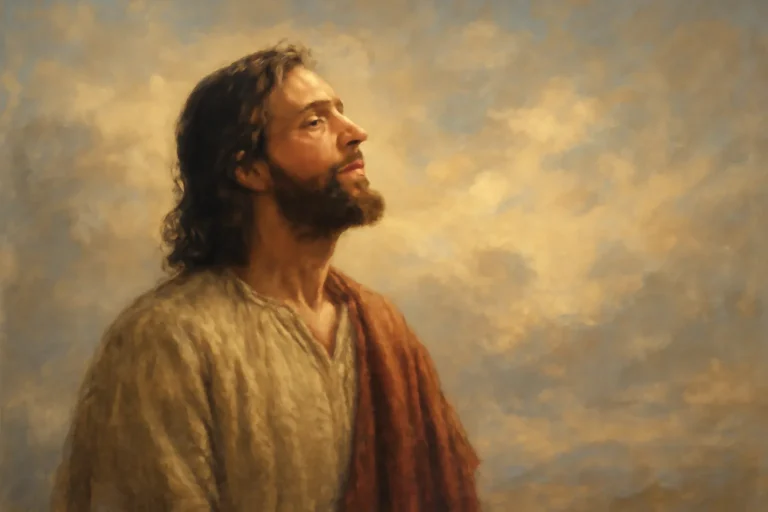

Introduction: Framing a Study of Jesus’ Prayer Life
The organic prayer patterns of Christ refer to the way Jesus engaged with God in prayer as a living, evolving practice rather than a rigid, ritualized system. In the gospel narratives, Jesus models a prayer life that is intimate, disciplined, contextual, and mission-shaped. Rather than presenting prayer as a static duty, the biblical portrait reveals prayer as a dynamic relationship—an exchange of longing, obedience, trust, and discernment. This long-form study surveys the textual witnesses to Jesus’ prayer, interprets the rhythms that emerge, and considers how these organic prayer patterns can inform contemporary devotion, pedagogy, and pastoral practice.
The aim here is not to dictate a single method but to illuminate a spectrum of patterns that appear across occasions and settings. By exploring organic prayer patterns of Christ—the natural, unconstrained ways in which Jesus approaches the Father—we can gain theological insight, historical awareness, and practical guidance for cultivating a prayer life that is faithful, flexible, and fruitful.
Defining Organic Prayer Patterns of Christ
To speak of organic prayer in relation to Jesus means recognizing a number of coordinating features:
- Prayer that arises naturally from life circumstances—joy, sorrow, mission, conflict, and longing.
- Prayer that is relational, not merely ritualistic—dialogue, listening, and discernment embedded in the dialogue with the Father.
- Prayer that is both private and public, situated in time and place yet streaming into the broader work of ministry.
- Prayer that embodies dependence and obedience—“not my will, but yours be done.”
- Prayer that deepens formation—shaping character, priorities, and perception of God’s kingdom.
Across the four canonical Gospels, these patterns appear with notable regularity, even as Jesus adapts his approach to the needs of the moment. The expression organic prayer thus captures both continuity (a recognizable core set of practices) and elasticity (the sense that prayer is lived within the flow of life and mission).
Contexts and Historical Background
The study of Christ’s prayer life must take into account the first-century Jewish setting, the Jewish law and temple traditions, and the landscape of Second Temple Judaism in which Jesus lived and ministered. Prayer in this milieu combined liturgical rhythms, scriptural meditation, and spontaneous petition. Jesus neither rejects tradition nor reduces it to mere formula; he reinterprets and expands expectation. When we speak of organic prayer patterns of Christ, we are describing a life that moves between the ordinary hours of a carpenter’s son and the extraordinary moments of cosmic significance.
Gospel Portraits and their emphases
The Gospels present several clusters of prayer-oriented episodes:
- Solitary prayer in remote or quiet places, often preceding or following intensive ministry.
- Teachings on prayer that provide a framework for disciples’ practice (for example, the Lord’s Prayer in Matthew 6 and Luke 11).
- Prayer in moments of crisis or decision, including spiritual struggle and submission to the Father’s will (e.g., the Garden of Gethsemane in Luke 22 and Mark 14).
- Intercessory and compassionate prayer on behalf of others, including faith, healing, and mercy.
- Corporate and communal prayer among the disciples and with the people of God.
Core Elements of the Organic Prayer Life
Across the narratives, several core elements emerge as consistently braided into the organic prayer patterns of Christ:
- Solitude and silent listening as a baseline habit.
- Dependence on the Father and a posture of submission.
- Worship and adoration that acknowledge God’s sovereignty and intimate closeness.
- Petition and confession when needed, with humility and reverence.
- Discernment of the Father’s will, especially in decision-making and mission.
- Intercession for others, from healing to mercy to justice.
- Public engagement with prayer in the rhythm of teaching, healing, and proclamation.
Solitude and Silence
One of the most striking features of Jesus’ prayer life is its frequent inclination toward solitude. He withdraws from crowds, returns to the Father, and luxuriates in a space where his interior life and external mission converse with integrity. This solitude-prayer pattern is not withdrawal for its own sake but a deliberate recalibration of his will toward the Father’s agenda.
Dependence and the Will of the Father
A recurring statement Jesus makes in prayer is a submission to the Father’s will. The famous words, “Thy will be done,” reframe conflict, temptation, and ministry as fields of obedience rather than opportunities for self-assertion. This dependence-based pattern anchors his prayer life in trust and fidelity.
Public and Private Prayer
The organic prayer patterns of Christ do not isolate private devotion from public proclamation. Jesus teaches his disciples to pray, demonstrates public prayer in moments of crisis, and models consistent prayer before and after public ministry. The Lord’s Prayer functions as a synthesis—a homiletic and liturgical prayer that can guide both personal devotion and corporate worship.
Pattern 1: Private Prayer and Solitude
The earliest and most frequent pattern in Jesus’ life is private prayer, especially in places of retreat or wilderness. These moments are not mere pauses; they are formative dialogue with the Father that calibrates his mission, clarifies priorities, and fosters resilience in the face of opposition.
- Luke 5:16 emphasizes that Jesus often withdrew to lonely places to pray. This recurrent motif presents solitude as a deliberate spiritual practice, not a passive escape.
- Mark 1:35 situates Jesus before dawn seeking communion with the Father, demonstrating a discipline of start-of-day prayer and alignment.
- Luke 6:12-13 describes Jesus spending the night in prayer before choosing the twelve apostles, highlighting how private prayer precedes corporate commissioning.
- Establish regular personal times of quiet prayer that invite listening and discernment.
- Recognize solitude as not merely absence of activity but a space where God reshapes priorities.
- Honor cyclical patterns—daily, weekly, seasonal—without substituting form for relationship.
Pattern 2: Communal Prayer and Teaching
- Establish regular personal times of quiet prayer that invite listening and discernment.
- Recognize solitude as not merely absence of activity but a space where God reshapes priorities.
- Honor cyclical patterns—daily, weekly, seasonal—without substituting form for relationship.
Pattern 2: Communal Prayer and Teaching
Jesus does not confine prayer to solitary moments; he also embodies a public and communal prayer life. The Sermon on the Mount includes a model prayer, and Jesus teaches his disciples to address God as Father while inviting a posture of reverent intimacy and courageous trust. In this pattern, prayer becomes a public pedagogy—an invitation into a way of life shaped by God’s reign.
The Lord’s Prayer (Matthew 6:9-13; Luke 11:2-4) is not a rote formula but a prayer framework that reveals the architecture of authentic petition:
- Hallowed be Your name — worship and reverence as the starting posture.
- Your kingdom come — alignment with the divine mission and anticipatory trust in God’s redemptive plan.
- Give us this day our daily bread — dependence on daily provision and humility before God’s generosity.
- And forgive us our debts — confession and reconciliation as ongoing spiritual discipline.
- Lead us not into temptation — a plea for spiritual protection and sanctification.
- Deliver us from evil — ultimate trust in God’s power to rescue and restore.
Jesus’ public instruction on prayer emphasizes sincerity, avoidance of showmanship, perseverance, and the expectation that the Father hears and responds. This pedagogical pattern shapes the rhythm of communal worship and invites believers into intercessory faith that participates in God’s purposes for the world.
Pattern 3: Agonistic Prayer in the Garden
The Garden of Gethsemane presents a profound instance of what might be described as agonizing prayer, a struggle that nevertheless moves toward submission. In Luke 22:39-46 and Mark 14:32-42, Jesus prays with agony, asks for strength, and ultimately yields to the Father’s plan. This moment is not a break from the other patterns but an intensification and depth of the same relational posture: honesty before God, dependence, and obedience.
- Honest lament before God in the face of fear and cost.
- Seeking strength in the face of imminent trial, not avoidance.
- Recognition of God’s sovereignty and acceptance of divine will.
- Disclosure of human vulnerability coupled with trust in the Father’s care.
The Garden scene challenges simplistic expectations about prayer as a guarantee of escape from pain. Rather, it presents prayer as fidelity under trial. The organic pattern here demonstrates that prayer can be a locus of suffering transformed into obedience, a key feature of Jesus’ approach to prayer that remains relevant for believers who face testing moments.
Pattern 4: Intercessory and Compassionate Prayer
Intercession stands as a distinctive dimension of Jesus’ prayer life. He prays for others—healing the sick, granting mercy, and sustaining faith in those he loves. This pattern reveals a broader scope of prayer that extends beyond personal need to the flourishing of neighbors and the community’s welfare.
- Praying for Peter’s faith to endure in Luke 22:32.
- Blessing and healing prayers for individuals as in various healing accounts, where prayer functions as authority and compassion.
- Prayers for the crowds—recognizing their hunger and spiritual needs, and inviting them into God’s Kingdom.
The intercession pattern teaches believers that prayer is not merely a private therapy but a public vocation. Christians are invited to participate in God’s advocacy for justice, mercy, and restoration. In this sense, intercessory prayer is a concrete extension of the organic life of Christ into the church’s life.
From the outset, Jesus’ prayer life is inseparable from his mission. The organic prayer patterns of Christ consistently return to alignment with the Father’s will and the kingdom project. Prayer becomes a relational and cognitive process through which Jesus discerns, confirms, and deploys the Father’s agenda.
- Before selecting the apostles, Jesus prays for discernment and alignment with divine purpose (Luke 6:12-13).
- In preparation for the cross, Jesus prays to receive courage, clarity, and obedience (Gethsemane narrative).
- When confronted with opposition, Jesus resumes prayer as a source of steadiness and direction (various gospel accounts).
This pattern emphasizes that prayer and mission are mutually informing. Prayer is not a private add-on to a public life; it is the posture that sustains mission with divine orientation. The mission-focused dimension of Jesus’ prayer life demonstrates how prayer can cultivate discernment about priorities, empower boldness for action, and sustain faith in moments of trial.
A robust study of Christ’s organic prayer patterns intersects with theology of God, creation, revelation, and redemption. A few key theological themes emerge:
The Father–Son relationship provides the archetype of all prayer. Jesus models a trust-based, intimate conversation with God that is accessible to all who are in him. The organic rhythm of call and response in this relationship forms the spiritual grammar of a life oriented toward God.
Prayer as submission—“not my will, but yours”—is not passive fatalism but active trust. It recognizes God’s sovereignty and invites human agency to participate in divine purposes. This posture is a crucial element of the organic prayer life because it grounds action in divine authorization.
In Jesus’ model, prayer reveals a true anthropology—human beings as creatures dependent on God yet called to participate in God’s work. The organic prayer patterns illuminate the human longing for connection with the transcendent, while also directing that longing toward concrete acts of mercy, justice, and reconciliation.
For scholars, pastors, and lay readers, there are multiple avenues to engage with the prayer life of Jesus. This section offers methodological approaches, devotional practices, and pedagogical strategies that respond to the call to imitate Christ’s prayer.
- Conduct a close reading of key passages (Luke 5:16; Luke 6:12-13; Matthew 6:9-13; Luke 11:2-4; Luke 22; Mark 1:35).
- Compare Gospel portraits to identify patterns that recur, then note any significant variations in setting, audience, and purpose.
- Use cross-references to trace how prayer shapes the narrative arc of Jesus’ ministry.
- Adopt a disciplined routine that includes times of silence, Scripture meditation, and petition aligned with the Father’s will.
- Practice the Lord’s Prayer as a living template, not only as conceivably memorized lines.
- Integrate intercession for others as a daily practice—beginnings of social prayer that connects personal devotion to public mercy.
- Adopt a disciplined routine that includes times of silence, Scripture meditation, and petition aligned with the Father’s will.
- Practice the Lord’s Prayer as a living template, not only as conceivably memorized lines.
- Integrate intercession for others as a daily practice—beginnings of social prayer that connects personal devotion to public mercy.
Courses on prayer life can be structured around the pattern diversity heard in the Gospels. Students can analyze case studies of private and public prayer, role-play intercessory scenarios, and design retreats that embody the organic prayer patterns Jesus demonstrates.
A holistic approach to Jesus’ prayer life invites readers to see prayer as scripture-shaped and scripture-saturated. Teachers can model how to interpret prayer episodes in a way that honors their literary context (narrative function, speech acts, and covenantal themes) while also extracting practical implications for modern disciples.
- Assign readings that focus on each pattern and require students to identify the textual cues that suggest a particular mode of prayer.
- Encourage reflection journals on moments when personal life intersected with acts of prayer that resembled Jesus’ patterns.
- Host a retreat that alternates between solitude prayer, communal prayer, and guided intercession, followed by discussion on what was learned.
No study of the organic prayer patterns of Christ is without tensions. Some of the most fruitful questions include how to interpret the Garden moment without over-spiritualizing fear, how to translate a first-century model into twenty-first-century contexts, and how to balance prayer, action, and contemplation without conflating the three.
- How does Jesus’ model of solitude balance with his call to mission and public ministry?
- What is the relationship between prayer and discernment in the selection of leaders and the execution of ministry?
- How can a diverse faith community interpret and practice intercessory prayer in ways that honor conscience, integrity, and accountability?
Beyond theory, the organic prayer patterns of Christ invite believers to a way of life that remains practical, compassionate, and transformative. The aim is not to replicate a stereotyped method but to cultivate a spiritual tact that naturally draws the individual and the community into deeper communion with God and more faithful witness to the world.
Integrated living means that prayer informs decision-making, relationships, and service. The rhythms of silent listening, petition, confession, and intercession become a background refrain to daily duties—parenting, work, ministry, and civic engagement. The organic patterns are meant to saturate life, not segregate it.
Churches can benefit from recognizing multiple layers of prayer: personal devotion, communal liturgy, and mission-oriented intercession. By creating spaces—retreat rooms, prayer circles, and guided intercession teams—the church can foster an environment where the organic prayer life of Christ becomes a shared reality rather than a solitary aspiration.
The study of the organic prayer patterns of Christ reveals a model of prayer that is robust, flexible, and profoundly relational. Jesus teaches that prayer is neither a superstition nor a mere routine; it is a living dialogue that forms the inner life, shapes outward action, and sustains the mission of God in the world. The patterns discussed—solitude, dependence, public teaching, garden-like struggle, intercession, and mission alignment—offer a language for both private devotion and public witness. They invite readers to cultivate a prayer life that is organic in its vitality, theological in its depth, and pastoral in its reach.
In the end, the organic prayer patterns of Christ are not a manual for control but an invitation to partnership with the Creator. They call believers into a disciplined freedom—freedom to breathe in God’s presence, to speak with truth and humility, to listen for the Father’s voice, and to move forward in mercy and justice. As such, Jesus’ prayer life remains not only a historical portrait but a living resource for communities seeking to embody the gospel in a world hungry for hope.