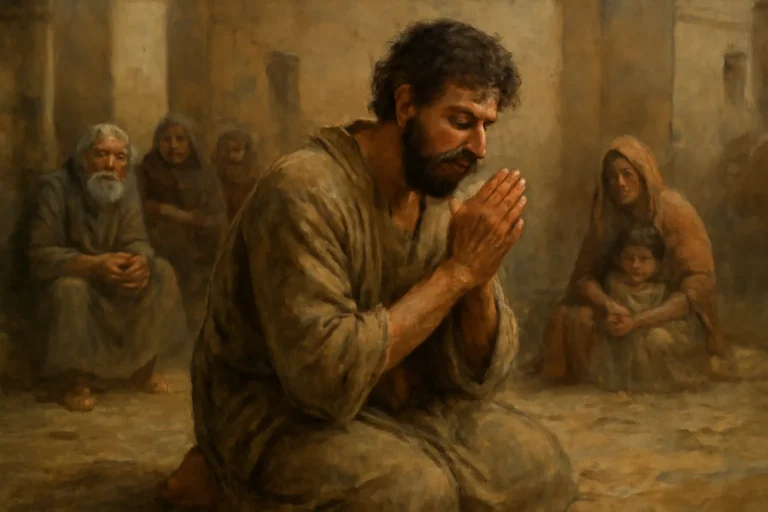

The Beatitudes are among the most widely recognized and studied portions of the Christian spiritual heritage. Found in the Sermon on the Mount, these compact sayings attributed to Jesus articulate a vision of blessedness that overturns conventional ideas of success and power. They invite readers and listeners into a way of living marked by humility, mercy, righteousness, and hopeful anticipation of God’s action in history. This article offers a thorough, multi-faceted exploration of the Beatitudes, including their biblical contexts, linguistic nuances, theological interpretations, historical reception, and practical implications for faith communities today.
The Beatitudes in the Biblical Context
To begin, it is essential to orient ourselves to the biblical settings of these sayings. The Beatitudes appear in two canonical locations: the Gospel of Matthew and the Gospel of Luke. Both present blessings, but they differ in emphasis, audience, and literary shape. In most Christian traditions, the canonical list most often associated with the Beatitudes is the eight-beatitude collection in Matthew 5:3–12, presented within the larger narrative of the Sermon on the Mount. In Luke 6:20–23, a parallel collection features a slightly different set of blessings addressed to a discipleship audience, often framed in the context of a sermon on the plain rather than a mountainside setting.
Scholars commonly note that the Beatitudes are not merely a list of ethical injunctions; rather, they are pronouncements of divine favor that reveal the character of the end-time kingdom Jesus proclaims. The Greek term behind the word “blessed” is makarios, which carries layered sense: happiness, felicity, fortunate status, and a beacon of divine approval. The Beatitudes thus function on multiple levels—ethical, eschatological, spiritual, and communal. Throughout Christian history, interpreters have variously emphasized the personal comfort of the afflicted, the social critique of entrenched systems of power, and the ethical discipline required of those who would embody the reign of God.
In both Matthew and Luke, the Beatitudes invite readers to reframe what counts as true blessing. By placing virtues such as poverty in spirit, mercy, and purity of heart at the center, the text challenges prevailing narratives that equate prosperity with blessing and persecution with failure. This inversion principle—where the last become first and the humble are exalted—has been one of the most enduring theological motifs in Christian thought. As you read, bear in mind that the Beatitudes function as a lived program for a community oriented to God’s compassionate activity in the world.
Matthew’s Eight Beatitudes: Text, Meaning, and Theological Significance
In Matthew 5:3–12, the Beatitudes form a cohesive cluster that begins with the blessings announced upon those who are spiritually and socially humble, then proceeds to describe the moral dispositions and eschatological hopes that accompany those dispositions. The sequence is carefully ordered to reveal the inner life of the disciple and the outward outcomes that follow from such inner transformation. Below is a structured exploration of each line, followed by observations about the overall architecture of the passage.
The Beatitude One: “Blessed are the poor in spirit, for theirs is the kingdom of heaven.”
Key themes: poverty in spirit, dependence on God, anticipation of divine rule. The phrase “poor in spirit” signals an interior posture rather than material deprivation alone. It points to a humble recognition of one’s need for God and of the gracious gift of the Kingdom. The promised blessing—theirs is the kingdom of heaven—identifies the ultimate ownership of the future realm as belonging to those who rely not on themselves, but on God.
Historically, this opening beatitude is often read as a radical invitation to adopt a posture counter to the impulses of power and wealth in first-century Judea, and by extension, in modern societies where personal autonomy is celebrated. Theologically, it foregrounds the grace that enables the disciple to participate in God’s reign before any social achievement is recognized by conventional standards.
The Beatitude Two: “Blessed are those who mourn, for they shall be comforted.”
Mourning here is not only personal grief but a broader lament that encompasses sorrow over sin, human brokenness, and the injustices that wound communities. The blessing asserts that suffering is not the final word; rather, it is the space in which God’s comfort enters. The promise of comfort foregrounds God’s compassionate presence and the restoration that follows repentance and communal healing.
The Beatitude Three: “Blessed are the meek, for they shall inherit the earth.”
Meekness, in the biblical corpus, is strength under control, courage joined with humility. The promise that the meek “shall inherit the earth” reframes power dynamics: guardians of strength are to exercise it gently for the good of others. This beatitude has often been linked to the expectation of a new social order established by divine sovereignty, a reallocation of resources and authority in which the vulnerable are safeguarded and dignified.
The Beatitude Four: “Blessed are those who hunger and thirst for righteousness, for they shall be filled.”
Here, righteousness encompasses both personal virtue and public justice. The imagery of hunger and thirst emphasizes a deep and persistent longing for God’s right order to prevail in history. The consummation—being “filled”—signals not merely satisfaction but a sustained, transformative experience of divine provision that aligns a person’s inner life with God’s aims for the world.
The Beatitude Five: “Blessed are the merciful, for they shall obtain mercy.”
Mercy is a relation of compassion that extends beyond mere sentiment to actionable kindness. The reciprocal structure of this beatitude invites believers to practice mercy as a lifestyle, confident that they will receive mercy in turn. Mercy here is not passive sympathy; it is proactive solidarity with those who suffer or are marginalized.
The Beatitude Six: “Blessed are the pure in heart, for they shall see God.”
Purity in heart concerns interior integrity, unmixed motives, and fidelity to God’s call. The prospect of seeing God is a classic biblical expression of intimate divine encounter. The Beatitude links moral integrity with a heightened spiritual perception, suggesting that inner cleanliness opens a vision accessible to the faithful.
The Beatitude Seven: “Blessed are the peacemakers, for they shall be called children of God.”
Peacemaking is presented as a divine vocation, not merely the absence of conflict. It involves reconciling relationships, addressing injustice, and promoting harmony that reflects God’s own character. The promise that such workers “shall be called children of God” ties ethical action to a new familial identity in the divine household.
The Beatitude Eight: “Blessed are those who are persecuted for righteousness’ sake, for theirs is the kingdom of heaven.”
Persecution is framed as a real possibility for those who pursue justice and fidelity to God in the face of opposition. The repetition of the kingdom-of-heaven promise at the end of the sequence emphasizes the continuity of blessing from the initial beatitude and reassures readers that God’s reign upholds the righteous path even under duress.
Overall, the Matthew collection is structured to form a coherent spiritual anthropology: a community shaped by humility, afflicted with lament, strengthened by meekness, hungry for justice, merciful in action, pure in motive, engaged in peace, and steadfast under pressure. The Beatitudes thus function as a radical curriculum for discipleship that redefines success, virtue, and blessedness in light of God’s coming reign.
The Lukean Beatitudes: Context, Focus, and Distinctions
Luke’s version, often called the Sermon on the Plain or the Beatitudes in Luke 6:20–23, presents a somewhat compressed and contextually distinct set of blessings. While Matthew offers eight proclamations addressed to a broad audience, Luke places emphasis on the social dimension of poverty, hunger, mourning, and persecution among the disciples themselves. Luke’s beatitudes are frequently paired with corresponding woes, a rhetorical device that sharpens the ethical weight of the statements by contrasting present realities with divine future judgments.
Key elements in Luke’s form
- Audience and setting: Luke situates the sayings in a plain, addressing a broad group that includes the poor and marginalized as primary recipients.
- Economy of words: The Lukean list tends to present fewer items, focusing on the essential contours of blessedness and hardship.
- Woes as counterpoint: The parallel woes in Luke 6:24–26 intensify the ethical warning against wealth, security, and societal self-satisfaction without God.
Luke’s beatitudes highlight the countercultural pattern of Jesus’ ministry: the poor are honored, the hungry are satisfied, the weeping are comforted, and the persecuted are blessed. The tone is practical and pastoral, and the emphasis on the present experience of poverty and need resonates with Luke’s broader gospel’s concern for marginalized persons and social justice. The Lukean version invites communities to identify with those who lack power, and it challenges readers to find their true security in God’s vindication, rather than in prestigious status or material abundance.
Theological Themes Across the Beatitudes
Although the Beatitudes can be read as a set of individual blessings, a number of overarching theological motifs emerge when reading them together. The following themes recur across both Matthew and Luke, contributing to a robust, interconnected theological vision.
- Kingdom orientation: The blessings consistently point toward the kingdom of God, a realm in which God’s reign is recognized, realized, and embodied in community life.
- Humility and dependence: The call to spiritual poverty and meekness reframes strength as humility in relation to God.
- Hope amid suffering: Mourning, persecution, and hunger for righteousness are tethered to the assurance that God acts decisively on behalf of the afflicted.
- Ethical integrity: Purity of heart and mercy translate belief into just and compassionate action toward others.
- Shalom and reconciliation: Peacemaking foregrounds God’s reconciling work and invites humans to participate in it as an expression of divine family identity.
In theological interpretation, these themes can be elaborated in several modes, including soteriology (the doctrine of salvation), ecclesiology (the understanding of the church’s mission), and eschatology (the study of end times). The Beatitudes thus serve as a bridge between the life of Jesus and the lived faith of communities, inviting both personal transformation and cooperative social witness.
The Beatitudes have elicited a wide range of interpretations throughout Christian history. Church Fathers, medieval mystics, Reformation theologians, and contemporary theologians have each drawn out different facets of blessedness, depending on their doctrinal and pastoral priorities. Below are some representative lines of reflection that show how the Beatitudes have been engaged in the life of the church across time.
Patristic and medieval perspectives
Early Christian writers often connected the Beatitudes with baptismal catechesis, sacramental life, and the church’s mission to the poor. The phrase “poor in spirit” was read as a cue to trust in God rather than in wealth or status, an ethic echoed in monastic traditions that pursued poverty, humility, and dependence on God’s providence. The idea that the meek shall inherit the earth connected with early Christian hopes for a renewed creation and the transformation of social hierarchies in light of the Gospel. During the medieval era, contemplatives and reform-minded leaders highlighted the inward spiritual discipline of purity of heart and the outward work of mercy as twin dimensions of the Christian life.
Reformation and post-Reformation interpretations
With the Reformation came a renewed emphasis on the gospel’s liberating message and a more explicit critique of social power structures that marginalized the vulnerable. Reformers often framed the Beatitudes in terms of faith, grace, and the interior righteousness that flows from a transformed heart. The Sermon on the Mount, including the Beatitudes, became a touchstone for debates about how the church should engage with the world—ethically, politically, and pastorally. In modern theological discussions, these lines continue to be read through lenses of social justice, liberation theology, and personal spiritual formation, showing the Beatitudes’ enduring capacity to speak to new historical circumstances.
Contemporary practical and spiritual readings
In contemporary theology and pastoral practice, the Beatitudes are frequently used as a framework for sermons, spiritual formation programs, and social outreach initiatives. The practical question often asked is how a faith community can embody these blessings in concrete ways: how might a church cultivate a culture of humility, mercy, and nonviolent, constructive conflict resolution? How can congregations advocate for the poor and feed the hungry in a manner that respects human dignity and fosters reconciliation? These questions reflect the Beatitudes’ enduring relevance for churches seeking to live out the implications of Jesus’ teaching in today’s complex societies.
Beyond doctrinal analysis and pastoral application, the Beatitudes have deeply influenced liturgy, hymnography, art, and devotional practices. Their poetic cadence and paradoxical assurances lend themselves to memorable creedal formulations, meditative practices, and communal prayers. Here are some ways the Beatitudes show up in religious life.
Liturgical usage
- In many Christian liturgies, the Beatitudes are read as a scriptural refrain during seasonal celebrations, such as Advent and Lent, when the church contemplates human need and God’s coming deliverance.
- Blessedness language is sometimes woven into prayers of blessing for the poor, the grieving, and the persecuted, linking personal prayer with social advocacy.
- In some traditions, the Beatitudes accompany baptismal vows or confirmation rites, reinforcing the candidate’s call to live under God’s reign and to participate in the life of the church community.
Artistic and devotional expressions
- Iconography and visual art often depict the Beatitudes with symbolic imagery (light, broken bread, open hands, and other motifs) that invites contemplation of each blessing’s meaning.
- Hymns and spiritual songs have been composed around the Beatitudes, transforming their text into a cadence of prayerful repetition that aids in meditation and worship.
- Medieval and modern poetry has used the Beatitudes to articulate mystical experiences of God’s presence, as well as social visions for justice and mercy in the world.
For readers seeking to translate the Beatitudes into daily life, a number of concrete pathways emerge. The following sections offer a practical toolkit for spiritual formation, community life, and public witness grounded in the Beatitudes’ vision.
Spiritual formation and personal growth
- Cultivating humility: Practice mindful reflection on one’s weaknesses and weaknesses in the world, recognizing God’s grace as the true source of strength.
- Developing mercy: Create habits of compassion toward those who suffer, supporting acts of service, and advocating for those who lack voice in society.
- Seeking righteousness: Engage in personal integrity and ethical action, aligning motives and choices with the common good and God’s purposes.
Personal devotion might include journaling about times of mourning and how one experienced comfort, or a practice of self-examination to uncover impure motives that hinder spiritual clarity. The Beatitudes invite ongoing repentance and renewal, not as a one-time event but as a sustained, communal journey.
Community life and social ethics
- Mercy-centered ministry: Build programs that reflect mercy in action—food ministries, shelters, counseling, and trauma-informed care that honor the humanity of those in need.
- Peacemaking in daily life: Learn nonviolent communication, conflict resolution, and restorative practices that repair broken relationships in families, workplaces, and neighborhoods.
- Advocacy for the vulnerable: Engage in social justice initiatives that address structural injustice and advocate for policies that promote dignity and equity.
The Beatitudes do not prescribe a single, uniform program; rather, they invite discernment within each community to identify the most faithful ways to embody the values of the Kingdom. This flexibility allows diverse expressions across cultures, while preserving the core aim: to live as citizens of the Kingdom of God in a world that often operates by different logic.
Education and catechesis
- Curricular modules: Develop curricula for different age groups that explain each beatitude, its Hebrew and Greco-Roman background, and its New Testament significance.
- Scriptural literacy: Encourage study of the Beatitudes alongside broader biblical themes such as justice, mercy, and faith, to foster integrated understanding of salvation history.
- Interfaith dialogue: Use the Beatitudes as a starting point for conversations about shared values with other religious traditions, especially regarding compassion, humility, and service to the poor.
Finally, the Beatitudes offer a theological lens through which to interpret the entire Christian narrative. They help frame discussions about salvation, grace, and human flourishing, and they invite believers to consider how God’s reign shapes every facet of existence—from interior life to social structures. The Beatitudes thereby function as a small, potent doctrinal kit that yields large implications for how a person understands God, neighbor, and self.
Translations of the Beatitudes vary subtly across Bible versions, and those variations influence interpretation. The Greek term behind “blessed” can be translated as makarios or similar terms in other field-specific contexts, and the phrase “theirs is the kingdom of heaven” may appear as “the kingdom of God” in some punctuations or manuscripts. The translation choice can affect theological emphasis: whether the focus is on God’s rule in the future, on present experience of divine favor, or on the ethical implications of living within that rule here and now.
Competent exegesis acknowledges these nuances, while also recognizing the shared core: blessedness is grounded in belonging to God’s project, and it is revealed through a lifestyle oriented to the needs of others and to justice in the social order. Whether one reads “kingdom of heaven” or “kingdom of God,” the essential claim remains that the faithful are invited into a reciprocal relationship with God that reshapes every aspect of life.
No discussion of the Beatitudes would be complete without engaging with criticisms and challenges. Some readers worry that the Beatitudes may appear to idealize suffering or to place an unfair burden on marginalized communities. Others worry about how these lines interact with moral prescription and social policy in pluralistic societies. A balanced approach to these concerns considers the following points.
- Non-abstract piety: The Beatitudes call for concrete action rooted in compassion and justice, not merely interior piety or private consolation.
- Contextual justice: Interpreters must weigh historical context—particularly First-Century Jewish and Greco-Roman political realities—while staying faithful to the universal ethical implications of the text.
- Pastoral tenderness: In pastoral settings, the Beatitudes should offer genuine hope to those who mourn, suffer, or face persecution, ensuring that proclamation of blessing does not dismiss or minimize harm but points toward divine consolation and righteous action.
In ecumenical and interfaith settings, the Beatitudes can serve as a powerful bridge for ethical reflection and shared concern for human dignity, while also respecting doctrinal differences that shape how communities understand blessedness and divine favor.
Across centuries and cultures, the Beatitudes remain a luminous guide to the Christian life. They offer a theological anthropology that reframes what it means to be blessed, emphasizing dependence on God, compassionate action toward others, and a hopeful certainty about God’s coming rule. They invite individual believers to cultivate interior dispositions—humility, mercy, righteousness, purity of heart—that culminate in tangible outcomes: comfort for the sorrowful, justice for the hungry, and reconciliation for communities otherwise divided by conflict and inequality. In their distributive pattern, the Beatitudes remind disciples that their identity as followers of Jesus is inseparably linked to the transformation of society and the renewal of creation.
To study the Beatitudes is to participate in a long conversation about the good life under God. The insights offered by Matthew and Luke provide complementary pictures of what it means to live in the presence of the divine, under the promise of divine justice, and toward the realization of a world where peace, mercy, and righteousness finally triumph. This comprehensive exploration has sought to illuminate the multiple layers—linguistic, historical, theological, ethical, liturgical—through which this compact, powerful set of sayings continues to shape faith, worship, and action in the modern world.