
What We Know in Uncertain Times is not a simplistic slogan but a living inquiry that spans reverence, reason, and responsibility. In moments when outcomes feel unpredictable, when systems wobble, and when fear or fatigue cloud judgment, religious life often offers a durable guide. This guide is not a guarantee of ease, but a framework for discernment, consolation, and moral action. Across traditions, the question remains: how do we orient our beliefs, practices, and communities toward truth, goodness, and mercy when the horizon seems unclear?
In this long-form exploration, we consider what faith communities, theologians, educators, and lay practitioners have learned about navigating uncertainty. We will emphasize one enduring truth expressed in manifold voices: that faith, trust, and hope are not naïve responses to risk, but disciplined commitments that shape thought and life. By examining doctrine, lived practice, and communal wisdom, this article seeks to illuminate how we know what we know when uncertainty is the prevailing weather. We will attend to scripture and tradition, to reason and critique, to ritual and care, and to the ways in which different faiths illuminate common ground without erasing difference.
The Nature of Uncertainty in a Religious World
Uncertainty arises not only from external events—war, illness, climate disruption, economic upheaval—but also from the interior life: questions about meaning, vocation, and justice. The religious response often begins with naming what cannot be known in full, while insisting on what can be known in part. The piety of multiple traditions holds that humility before mystery is compatible with strenuous pursuit of truth. In uncertain times, religious communities tend to emphasize several interconnected realities:
- Providence and sovereignty: a conviction that the divine order includes human history, even when it feels opaque.
- Compassion and neighbor-love: that moral energy directed toward others provides stability when systems fail.
- Tradition and reform: the tension between inherited wisdom and fresh discernment in response to new circumstances.
- Ritual and memory: routines that anchor identity and offer continuity across generations.
- Reason and critique: the belief that truth claims should be tested with evidence, reasoned argument, and ethical reflection.
Throughout history, crises have tested but also taught the church, synagogues, mosques, temples, and faith-based communities to distinguish between certainty that is deservedly tempered and certainty that becomes a form of coercion. The balance between intellectual honesty and spiritual hope is not a contradiction; it is a family of virtues that helps believers live with both courage and care. In this sense, uncertainty is not merely a problem to endure but a field for spiritual growth, moral imagination, and communal solidarity.
Humble beginnings and hopeful pathways
Few premises are more reliable in uncertain times than the idea that humility is a foundational posture. Humility does not equal passivity; it is an active acknowledgment that our knowledge is bounded while our ethical obligations are urgent. This humility invites a learned optimism—an informed hope grounded in spiritual resources that have proven resilient across places and periods.
Different religious communities phrase this vitality in distinctive idioms, yet the overall trajectory is similar: recognize limits, seek guidance through study and prayer, and commit to actions that alleviate suffering and promote justice even when outcomes are uncertain.
One Thing We Know in Uncertain Times (and its Variations)
Across traditions, there is a shared conviction that can be articulated in many ways. We could name it as trust in the sacred order, or fidelity to divine promises, or simply the trustworthiness of the good. In this section, we explore how this single conviction expands into variations that illuminate different dimensions of religious life.
Faith as a steadfast posture
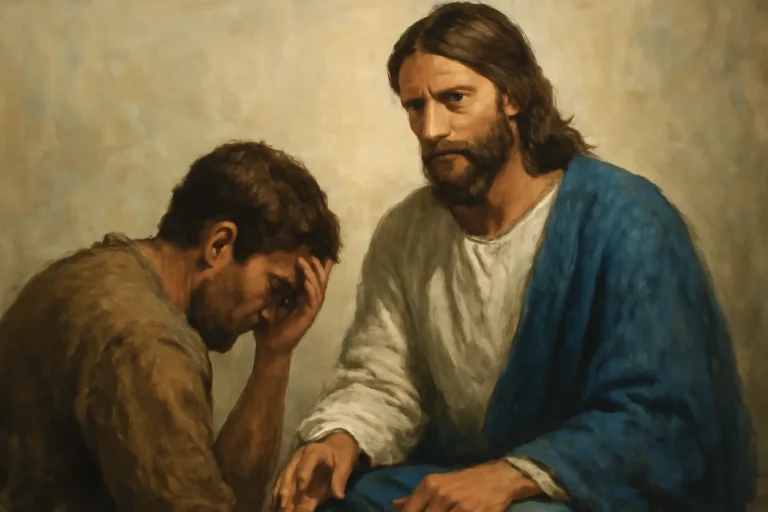
We know that faith endures even when situations seem unpredictable. Faith here is not merely belief in propositions; it is a lived disposition that sustains courage, clarifies priorities, and anchors action in the face of fear. When uncertainty intensifies, faithful practice often becomes a daily practice of recommitment: prayer, study, and listening to those who suffer.
Trust as a moral habit
Trust in divine wisdom and in the goodness of others becomes a social virtue as well as a private virtue. Trust is not naive optimism; it is a disciplined confidence that invites responsibility. When leaders falter or systems fail, trust in the community’s shared commitments helps people maintain solidarity and continue to pursue the common good.
Hope as a hopeful realism
Hope is not blind; it is a hopeful realism that anticipates better possibilities while acknowledging present harm. Theological hope looks not only to a distant future but to concrete acts in the present that disclose glimpses of the future within the now. This is why many traditions center hope on acts of mercy, justice, and reconciliation that reshape communities even in small, tangible ways.
Assurance as spiritual confidence
In times of crisis, moments of assurance—assurance of God’s care, of communal belonging, or of moral rightness—provide emotional and spiritual ballast. Assurances are not a license to neglect critique; rather, they can empower courageous discernment, enabling people to test claims, admit error, and reform while remaining anchored in something larger than themselves.
Reliance on sacred memory
Religious memory—stories of liberation, mercy, and faithful watching—functions as a reference point when present circumstances blur. The repeated retelling of sings of deliverance becomes a resource for interpretation and action, inviting communities to imagine themselves within a long line of neighbors who faced uncertainty with courage.
Constancy of divine love
Perhaps the deepest variation of the one thing we know is the conviction that divine love remains constant even when the world shakes. This constancy does not erase pain or deny doubt, but it reframes experience: suffering can be understood within a larger story of care and eventual renewal.
Scriptural and Doctrinal Foundations for Uncertain Times
Religious traditions anchor their guidance in sacred texts and doctrinal norms. While contexts change, the interpretive project often remains the same: read, reflect, respond. We highlight a few representative themes that recur with variations across different faith communities.
Christian reflections on providence, wisdom, and care
In Christian thought, providence is a key term that expresses divine direction of history. The books of wisdom emphasize discernment and prudence in decision-making, even when outcomes are uncertain. The overarching message is that God’s fidelity can be trusted to accompany the faithful through trials, guiding them toward justice and mercy. Christian pastors and scholars often emphasize the practice of discernment through prayerful study, communal listening, and ethical action that bears witness to love.
Jewish wisdom literature on resilience and collective responsibility
In Judaism, uncertainty has been a constant companion through exile, persecution, and diaspora. The wisdom found in the Psalms, Proverbs, and later rabbinic teaching highlights steadfastness, communal prayer, and ethical action as the paths through ambiguity. The notion that God desires justice and mercy becomes a motive for advocacy, care for the vulnerable, and durable hope that history is not the final word.
Islamic perspectives on trust (tawakkul) and human responsibility
Islam presents a nuanced balance between trust in God (tawakkul) and active engagement in the world. The Quran and prophetic traditions emphasize patience, prayer, and perseverance, while also urging righteousness, zakat (charitable giving), and steadfast community life. Uncertainty becomes a test that can refine one’s faith and strengthen collective obligation toward the less fortunate.
Hindu and Buddhist approaches to uncertainty, dharma, and liberation
Hinduism offers a spectrum of responses, from devotional surrender (bhakti) to disciplined action (karma yoga) and wise discernment (jnana). The idea of dharma—right order and duty—provides a framework for navigating disorder without collapsing into despair. In Buddhist thought, uncertainty is often met with mindfulness, the Four Noble Truths, and the cultivation of equanimity. The aim is not to escape reality but to transform one’s relationship to it so that suffering becomes a teacher rather than a trap.
Interfaith converge: common motifs in diverse waters
Across these streams, several motifs recur: compassion, truth-telling, communal responsibility, and a hopeful horizon. While the terminology varies, the practice often includes listening to the marginalized, pursuing justice, safeguarding the vulnerable, and sustaining rituals that remind communities of their highest commitments.
Practices that Ground Us in Uncertain Times
Belief without practice becomes abstract; practice without belief becomes lifeless. The religious life in uncertain times thrives when there is a fruitful synthesis of both. Here are essential habits and disciplines that many communities enact to stay steady amid the storms.
Prayer, contemplation, and liturgical rhythm
Prayer remains a central anchor for individuals and communities. Whether it is liturgical prayer, contemplative silence, or spontaneous petition, prayer is a means of surrender and petition—a recognition that some realities exceed human planning and deserve divine attention. Regular rhythms—daily offices, sabbath rest, seasonal feasts—provide predictable structure in unpredictable times.
Study and conversation as a path to clarity
Study circles, sermons, sermons, and interfaith dialogues nurture rational courage. In uncertain times, robust intellectual engagement—studying sacred texts, ethical treatises, and contemporary reflections—helps believers distinguish rumor from evidence, rumor from witness, and rumor from reliable guidance.
Charity, service, and communal responsibility
Acts of charity and justice-seeking are not add-ons; they are essential to religious life when uncertainty calls forth moral action. Food banks, medical outreach, shelter, climate stewardship, and advocacy for vulnerable populations translate faith into tangible care. Service underlines the claim that belief should be visible in the world as compassion enacted.
Ritual memory and ritual reform
Ritual memory connects generations, helps preserve identity, and communicates values across boundaries. Yet rituals can and should be reimagined in light of new knowledge and social needs. The healthiest religious communities maintain a living balance: they honor tradition while welcoming reform that makes worship more just, inclusive, and accessible.
Ethics under pressure
Ethical decision-making in uncertain times requires prudence, justice, and mercy. This section highlights three guiding questions: Who is affected? What is the most compassionate response? What does truth demand in the long term? These questions help communities avoid shortcuts rooted in fear or favoritism and instead adopt policies and practices that endure beyond the immediate crisis.
Education and Transmission in Uncertain Times
Religious education is not only about delivering content; it is about forming persons who can navigate ambiguity with integrity. The transmission of belief and practice must cultivate both depth and breadth, preserving essential convictions while equipping learners to engage with science, history, and plural perspectives.
Pedagogy that respects faith and questions
Effective religious education invites questions in a respectful climate. It emphasizes critical literacy, historical awareness, and empathy for diverse experiences. A robust pedagogy helps students distinguish between essential theological commitments and culturally conditioned customs, guiding them toward a mature and nuanced faith.
Narratives of resilience for younger generations
Stories of resilience—from ancient exodus narratives to contemporary testimonies of marginalized voices—provide models for how communities have faced uncertainty without losing hope. Such narratives encourage learners to imagine themselves as agents of change within a sacred story that is bigger than any single lifetime.
Interdisciplinary bridges
Connecting religious education with science, ethics, history, and civic life deepens understanding. Debates about climate ethics, bioethics, and human rights benefit from a religious lens that foregrounds human dignity and responsibility toward creation. By building bridges, educators reinforce the idea that truth is plural and complementary, and that faith communities can contribute constructively to public discourse.
Interfaith Dialogue and Cooperation in Uncertain Times
Global uncertainty often requires rising cooperation among diverse religious communities. Interfaith engagement seeks to foster mutual understanding, reduce suspicion, and coordinate compassionate action. The aim is not to erase differences but to translate them into constructive collaboration for peace and justice.
Principles that guide constructive dialogue
- Listening first—seeking to understand the sacred claims and lived experiences of others before offering critique.
- Honoring integrity—recognizing that communities undertake beliefs, rites, and laws with sincere intentions.
- Common good—identifying shared aspirations such as safety, dignity, and opportunity for all people.
- Witness through action—converting dialogue into visible acts of service and advocacy.
Practical templates for cooperation
- Joint service projects that address hunger, homelessness, or disaster relief.
- Educational panels that explore ethical questions from multiple traditions.
- Community dialogues that create safe spaces for vulnerable voices to be heard.
- Social initiatives that protect religious freedom while promoting universal rights.
In such efforts, we repeatedly encounter one thing we know in uncertain times expressed in varied idioms: that compassion binds communities and that truth-telling strengthens trust across boundaries. These commitments do not erase differences; they create a shared platform from which diverse traditions can advocate for justice amid ambiguity.
Practical Theology: What Do We Do Now?
Practical theology translates doctrine into action. It asks how beliefs inform choices in governance, family life, education, and public witness. In uncertain times, practical theology helps believers translate nuanced convictions into bold kindness, clear ethics, and prudent leadership.
Family life and daily worship
Within families, rituals of gratitude, forgiveness, and shared meals become a microcosm of ecclesial virtue. Parents and guardians model resilience by balancing routine with flexibility, teaching children that even when plans shift, the commitments to care and respect endure.
Pastoral leadership in crisis
Leaders bear a heavy responsibility: to shepherd, to listen, and to act with integrity. A pastor, imam, rabbi, priest, or spiritual guide in unstable times often emphasizes transparency and advocacy, creating spaces where truth can be spoken responsibly and hope can be cultivated without masking pain.
Community resilience and social witness
Communities that survive uncertainty often do so by building social capital—trust, mutual aid, and shared rituals that create a sense of belonging. This social fabric enables collective action that can address emergencies, defend the vulnerable, and cultivate hope across generations.
Suffering, Theodicy, and Meaning in Uncertain Times
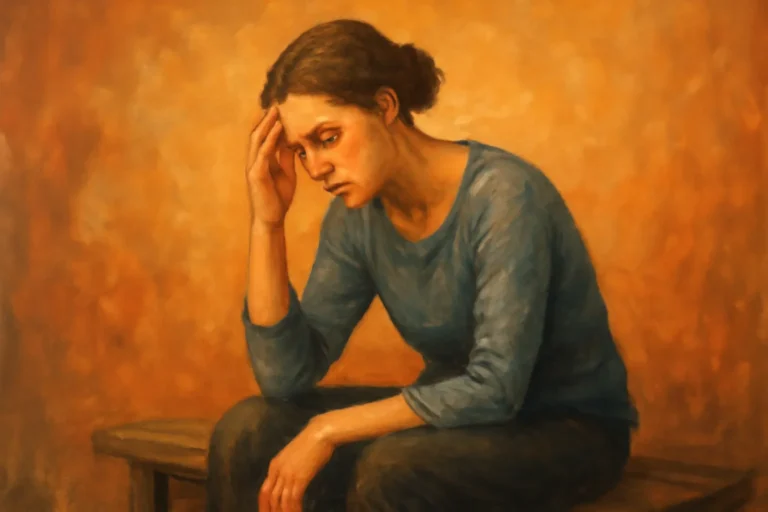
Uncertainty is inseparable from human suffering. Theologies across traditions offer different responses to the problem of pain and the presence of evil. Rather than pretending there is a single universal answer, many religious traditions propose a landscape of questions that helps people endure, interpret, and transform suffering.
Facing pain with honesty
Honest awakening to suffering—whether personal, communal, or global—prepares the heart for authentic worship and constructive response. Pain becomes a teacher when the community sustains one another and maintains commitments to justice even in the absence of easy explanations.
Meaning-making through communal memory
In times of crisis, storytelling within a faith community becomes a powerful means of meaning-making. Shared narratives about mercy, rescue, or restoration provide symbolic resources that help people see beyond the immediate horizon and recognize a longer arc of healing and renewal.
Theodicy, mystery, and moral imagination
Many thinkers prefer to hold mystery rather than settle for pat answers. The aim is not to deny pain but to expand moral imagination so that people can respond with greater justice, compassion, and solidarity. This approach invites believers to ask: How can we do better in light of what we cannot fully explain?
Conclusion: A Shared Compass for Uncertain Times
What we know in uncertain times is not a single rule but a living compass that points toward humility, courage, and care. Across religious traditions, the core claim remains: divine fidelity and human responsibility work together to sustain life, nurture justice, and heal wounds. The variations in language—trust, faith, hope, assurance, fidelity—are not contradictions but different facets of a single, enduring commitment: to seek the good, in solidarity with all beings, even when the path is not fully visible.
The practical implication for communities today is clear. We must cultivate environments that combine rigorous inquiry with compassionate practice; that hold fast to tradition while remaining open to reform; that teach the importance of listening to the voices of the vulnerable; and that commit to action—praying with feet and hands, not merely with words. In doing so, we embody the best of religious life: a hopeful fidelity that remains steady in uncertainty and generous toward the changing needs of our neighbors.
In uncertain times, the path forward is not a single revelation but a shared discipline. By honoring the different ways our traditions express this discipline—through theology, liturgy, ethics, protest, service, and scholarship—we create communities that endure, adapt, and illuminate the way for others. The timeless rhythms of faith—prayer, study, service, memory, and hope—continue to guide us toward a more just and humane world, one step at a time.
May we carry forward with courageous honesty, compassionate courage, and unshakeable hope, trusting that even amid disruption there is a divine love that sustains, a sacred order that invites partnership, and a neighbor who awaits our care.