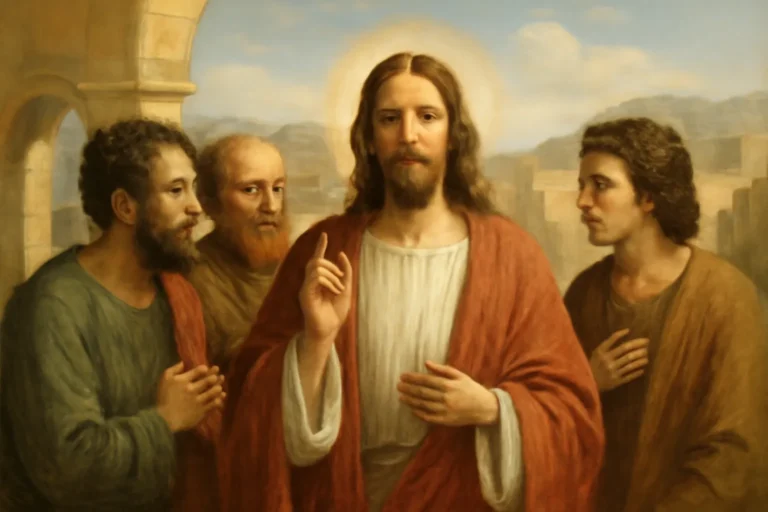
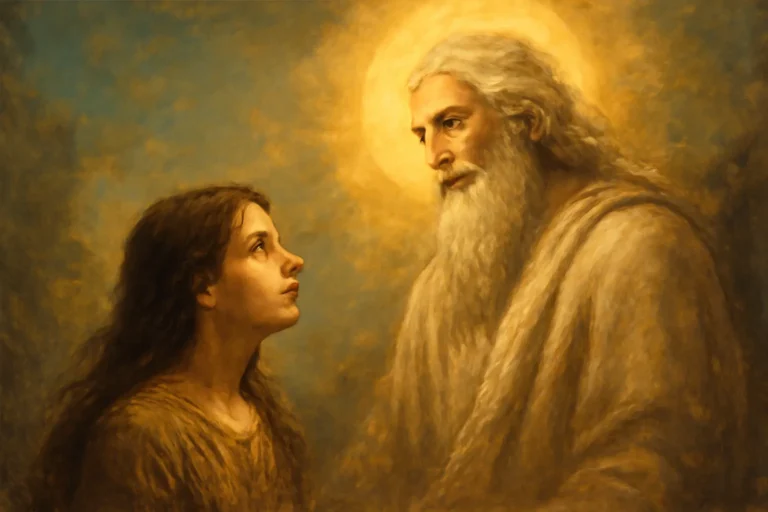
Opening Reflection: The Question That Crosses Time and Faith
Why am I here? is not a question limited to a single tradition or moment in life. It is a perennial inquiry that has echoed through temples, synagogues, churches, mosques, monasteries, and quiet meditation halls. It is asked by poets at dawn and by physicians at the bedside, by students staring at a blank page and by elders who have seen many seasons pass. In religious contexts, this question often becomes a doorway into theological anthropology: what does it mean to be human before the divine, and what is the place of a single human life within a vast cosmic drama? This article invites you to explore that question from multiple religious perspectives, while offering practical pathways for discernment and growth. Throughout the text, you will encounter variations of the same core inquiry, such as What is my purpose? or What is my calling?, posed in different languages, scriptures, and spiritual philosophies. The goal is not to present a single answer but to illuminate how faith communities describe the shape of a life that is meaningful, morally grounded, and oriented toward the good.
The Core Question Across Traditions: Why Am I Here?
Every spiritual tradition wrestles with the same essential insight: human life is not merely a sequence of pleasures and pains, but a narrative with shape and direction. The central question often unfolds along four interlocking themes:
- Creation and origin: Why did God, or the divine, bring me into existence?
- Relation and vocation: To whom am I answerable, and what is my role in the community or cosmos?
- Ethical formation: How should I live, so that my presence contributes to goodness, justice, and mercy?
- Destiny and ultimate hope: What is the end toward which my life moves?
As you read, notice how each tradition names the source of meaning differently—some frame it as divine command, others as cosmic order, others as karmic law, and others as relational love. Yet all underline that a purpose-filled life is not accidental but oriented toward benevolence, truth, and transcendence.
Section 1: A Christian Perspective on Purpose, Calling, and Identity
Creation, Vocation, and the Image of God
In many strands of Christian thought, the question “Why am I here?” begins with the creation narrative. Humans are made in the image of God (Genesis 1:26-27), a status that confers dignity, responsibility, and the potential for relationship with the Creator. The catechesis of humanity emphasizes not only being but becoming—becoming agents of love, truth, and stewardship. The goal is a life aligned with God’s will, a life that mirrors divine generosity in a broken world.
Key ideas include:
- The imago Dei as a vocational invitation: to exercise stewardship, creativity, and compassion.
- Creation as a calling to relation—with God, with others, and with creation itself.
- Freedom and responsibility: freedom is not license but the ability to choose what is good and true.
Incarnation, Mission, and Theological Purpose
In Christian understands of purpose, the coming of Christ reframes existence not as self-salvation alone but as participation in God’s mission of reconciliation. The Christian life is often described as a response to the divine initiative—the grace by which individuals are drawn into a larger story that transcends personal comfort. The question “What am I here for?” becomes, in Christology, a question of alignment with the Kingdom of God: love for neighbor, justice for the oppressed, mercy for the vulnerable, and a witness to hope in a broken era.
- Discernment through prayer and Scripture: listening for the voice that calls you to love and serve.
- Formation in virtue: patience, humility, courage, and truth-telling.
- Service as a concrete expression of calling: acts of mercy, advocacy, and stewardship of creation.
Practical Practices: How Christians Discern Their Path
Many communities encourage a routine of practice to cultivate a sense of vocation. Consider these elements as an experiential map for the question “Why am I here?” within a Christian frame:
- Regular prayer or contemplative reading to hear God’s direction.
- Careful engagement with sacred texts, especially passages about love, justice, and neighbor care.
- Participation in a local church, ministry, or mission that matches one’s gifts, talents, and interests.
- Mentoring relationships with elders, pastors, or spiritual directors who help interpret signs of vocation.
Section 2: Jewish and Islamic Conceptions of Purpose and Presence
Judaism: Purpose in Covenant, Tikkun Olam, and Everyday Sanctity
In Jewish thought, the question “Why am I here?” often lands in the language of covenant, mitzvot (commandments), and the ongoing task of tikkun olam—the repair of the world. Human life is held as a partnership with God in the repair and sanctification of creation. Jewish tradition emphasizes that every person has unique gifts and responsibilities that contribute to the communal and cosmic order. The purpose is not only personal fulfillment but communal healing and fidelity to divine statutes, interpreted through study, prayer, and acts of kindness.
- The divine-human relationship is cultivated through mitzvot, study, and ethical action.
- Vocation is often expressed through family life, learning, and social responsibility.
- Meaning emerges in the tension between divine commandments and human flourishing in the world.
Islam: Fitrah, Submission, and God-ward Existence
In Islam, the primary frame for the question “What is my purpose?” is submission (Islam) to the will of God (Allah) as manifested in the Qur’an and the Sunnah. The concept of fitrah suggests an innate disposition toward recognizing the Creator and pursuing what is right. A Muslim’s life is thus a daily course of submission to God, remembrance of God (dhikr), prayer (salat), fasting (sawm), charity (zakat), and pilgrimage (hajj) when possible. The overarching sense is that human beings are stewards on earth, entrusted with responsibilities to care for others, to seek justice, and to cultivate righteousness.
- Recognize the Creator’s sovereignty and respond with worship and obedience.
- Live with intention through daily acts that reflect compassion and mercy.
- Engage in community, learning, and service that align with the moral arc of the sharia (divine guidance).
Section 3: Hindu and Buddhist Perspectives on Life Purpose
Hinduism: Dharma, Karma, Moksha, and the Many Paths
Hindu thought approaches the question “Why am I here?” through the intertwined lenses of dharma (righteous duty), karma (causal law of action), and moksha (liberation). Existence is viewed as a journey through roles, responsibilities, and spiritual realization. A person’s dharma is not fixed to a single job but to a coherent way of living that upholds truth, nonharming, and service. The idea of multiple paths—jnana (knowledge), bhakti (devotion), karma (action), and raja (meditative discipline)—offers generous ways to answer the question “What am I here for?” depending on one’s temperament and circumstances.
- Life is a school in which virtue and wisdom are learned through experience.
- Each person’s path is legitimate when it aligns with dharma and benefits others.
- Ultimately, moksha points beyond temporary roles to the highest truth—the unity with the divine.
Buddhism: Meaning Through Mindfulness, Wisdom, and Compassion
Buddhist reflections reframe the question “Why am I here?” in terms of suffering, its causes, and its cessation. The Four Noble Truths teach that life is permeated by suffering, but that suffering can be understood, relinquished, and transcended through the Eightfold Path. In this frame, purpose emerges as the cultivation of wisdom, ethical living, and mental discipline. Rather than a fixed destiny, meaning arises from how one responds to impermanence, craving, and interdependence. The practical approach invites one to practice mindfulness, develop compassion for all beings, and work toward enlightenment for oneself and others.
Section 4: Sikhism, Jainism, and Other Traditions on Life’s Direction
Sikhism: Hukam, Seva, and Living in the Light of the Divine Will
In Sikh thought, the core question “Why am I here?” is answered by the concept of hukam—the divine will that orders all creation. Human beings are called to align their actions with God’s will by practicing seva (selfless service), devotion through remembrance of God, community life, and ethical conduct. The purpose is realized when life becomes a path of compassion that uplifts others, especially the vulnerable, and when one surrenders personal ego to the service of the greater good.
Jainism: A Life of Nonviolence, Truth, and Discipline
For Jains, purpose is intimately linked with ahimsa (nonviolence), aparigraha (non-attachment), and ascetic discipline. The life of a Jain is an effort to reduce harm, purify consciousness, and advance along the path of liberation. The question “What am I here for?” is answered by a commitment to ethical living, deep meditation on karma, and acts that promote ecological and social harmony. Each life is a thread in the cosmic fabric, and the goal is to disentangle oneself from the cycles of birth and death through right knowledge, right faith, and right conduct.
Section 5: Practical Discernment: How to Seek Your Calling in Daily Life
A Multifaith Toolkit for Exploring Purpose
Across traditions, there is a shared emphasis on discernment—the patient, ongoing process of listening, testing, and acting in light of one’s faith commitments. The following toolkit offers practical steps you can adapt to your context, whether you are a student, a professional, a parent, or a seeker.
- Prayer, contemplation, or meditation: Set aside regular time to listen for inner direction, to question motives, and to invite God, the Divine, or ultimate truth to speak in your life.
- Study and reflection: Read sacred texts, commentaries, and theological reflections that address the question “What am I here for?” in ways that resonate with your tradition and your experiences.
- Community discernment: Seek mentors, spiritual directors, or trusted friends who can name strengths, blind spots, and signs of vocation observed in your life.
- Service and practical steps: Engage in acts of charity, justice, and hospitality that align with your gifts, even if the outcome is uncertain.
- Experimentation within time-bound commitments: Try different forms of service or study to see where you feel most alive and where your talents prosper.
- Ethical alignment: Ensure that your path honors core values like dignity, mercy, truth, and peace, and that it avoids harm to others.
- Continual re-evaluation: Understand that vocation can evolve with life stages, circumstances, and spiritual growth.
Common Practices Across Faiths for Clarifying Purpose
Although the rituals differ, many religious communities share these common practices that aid discernment:
- Regular engagement with sacred stories that illustrate vocation.
- Forming habits of gratitude and humility to keep pride in check.
- Employing ethical questions before decisions, such as, Does this choice promote life, justice, and peace?
- Listening to the marginalized in your circle to understand where help is most needed.
Section 6: The Role of Suffering, Silence, and Hope in Meaning-Making
The Season of Suffering: Transforming Pain into Purpose
Across traditions, suffering is not dismissed as meaningless. Instead, it is often interpreted as a crucible that shapes character, deepens faith, or awakens compassion. The question “Why am I here?” during times of grief or hardship can lead to revelations about resilience, solidarity, and the ways God or the divine presence sustains life even in the darkest moments. Theologically, pain may be framed as a call to solidarity with the vulnerable, a reminder to forgive, or an invitation to persevere toward a hope that transcends present trouble.
Silence as a Teacher
Silence in spiritual disciplines can be a powerful teacher. When external noise fades, the inner voice—whether described as conscience, divine guidance, or the still small voice of Spirit—can become clearer. The practice of silence helps a seeker distinguish personal preferences from divine calls, which is itself a crucial skill in answering “What am I here for?”.
Hope and the Long Arc of Salvation
Many traditions emphasize that individual purpose is not a private project but part of a cosmic arc toward healing, justice, and reconciliation. The believer may hold that their life participates in a divine drama of restoration—personal sanctification intertwined with the transformation of communities and systems. Hope becomes the energy enabling sustained fidelity, even when outcomes are uncertain or delayed.
Section 7: Challenges, Misunderstandings, and Nuances
When Purpose Feels Elusive
There are seasons in which the search for purpose feels murky. This is a normal experience in spiritual life. It can be caused by illness, unemployment, tragedy, doubt, or social upheaval. In these times, religious communities often teach patience, trusted companionship, and small, ethically grounded actions that reaffirm meaning even when grand answers are not yet visible. The question “Why am I here?” can slowly morph into a set of daily commitments that cultivate steadiness and character, rather than a single definitive vocation.
Balancing Individual Vocation with Community Needs
A common tension arises between pursuing a personal sense of calling and serving the needs of others. Healthy discernment seeks occasions where personal gifts harmonize with community needs. The Sanskrit term svadharma in Hindu thought—one’s own duty—reminds seekers to honor their unique path while recognizing that community welfare often requires collective action. The Christian tradition, too, emphasizes balancing vocation with service to the poor, vulnerable, and marginalized as an essential expression of faith.
Section 8: A Synthesis: Living a Purposeful Life in Community and Cosmos
Interweaving Faith, Reason, and Experience
A robust understanding of why I am here emerges when belief, reason, and lived experience are allowed to converse. Theologians, philosophers, scientists, poets, and laypeople alike contribute to a tapestry in which meaning is not reduced to a single rule but expanded through dialogue. In such a synthesis, many people discover that their ultimate purpose involves cultivating love—toward God, toward neighbor, and toward creation itself. The ethical call to care for the vulnerable, uphold justice, and seek truth remains the common thread across traditions.
The Shape of a Purposeful Life
While the specifics vary across religious frameworks, the shape of a life oriented toward purpose often shares these features:
- Relationship: A concrete relationship with the divine or ultimate reality, as well as with others.
- Commitment to virtue: Regular practice of compassion, truthfulness, humility, and courage.
- Service and stewardship: Active engagement in acts of mercy, advocacy, and care for creation.
- Discernment as ongoing practice: A life-long process of listening, testing, and refining one’s path.
Concluding Reflections: Embracing the Journey
Ultimately, the question “Why am I here?” is less about extracting a single, final answer and more about entering into a living conversation that transforms how you live. Across traditions, the answer often points toward something larger than the self: a relationship with God or the divine, a commitment to a relational, moral vision, and a sustained hope that one’s life can contribute to healing and holiness in the world. The path to this understanding is not a straight line but a braided path made of study, practice, and responsible engagement with others. It invites you to explore, experiment, lament, celebrate, and keep returning to the core questions: What is my purpose? What is my calling? What am I here for? What does God want from me? What is the meaning of my life? In articulating and living these questions, you may discover that your life is not an accidental presence but a deliberate offering to the sacred.
Remember that every tradition offers tools for discernment, but the invitation remains personal. If you listen deeply and act with compassion, you may find that the answer to the question “Why am I here?” is not a static declaration but a living vocation that grows with you as you walk your path—through joy and struggle, light and shadow, in faith and in doubt. And in this ongoing journey, you might discover that the true answer is not only in a destination but in the way you travel: with integrity, courage, and a humble, generous heart.