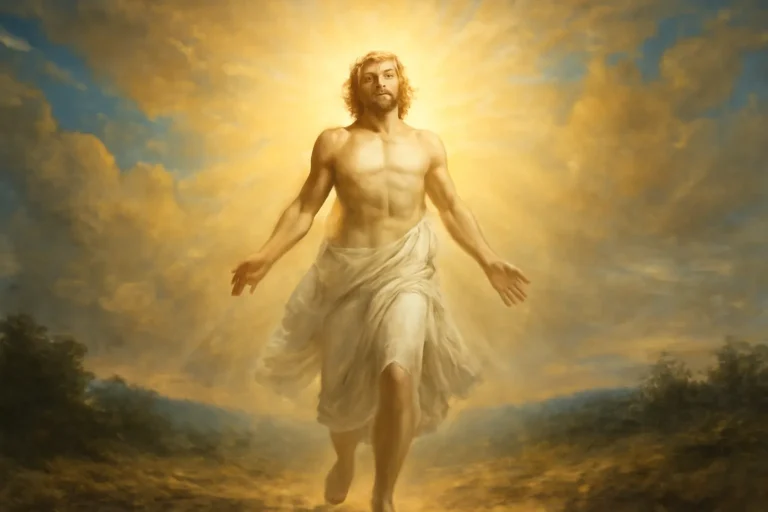

The Introduction to a Sacred Archetype: Who is the God of Salvage?
In religious imagination, a figure commonly named the God of Salvage or its many semantic variants serves as a symbolic and sometimes cultic focus for
the processes of rescue, restoration, and renewal. This article treats the idea not as a single, universal doctrine but as a range of
theological motifs in which divine intervention becomes a sacred instrument of salvage—where what has been damaged, discarded, or forgotten is retrieved,
repaired, or repurposed for higher meaning. Throughout this exploration we will refer to a constellation of terms—the Salvager, the Salvator, the Salvific God,
the Rescuer, the Restorer—to emphasize how different traditions narrate the same fundamental reality: divinity acts to recover what is endangered and to reconstitute what is broken.
The word salvage itself carries a dual sense: it can denote the practical act of saving resources from danger, and it can denote the spiritual act of saving a person’s life, soul, or worth.
In religious languages, these two senses illuminate one another. The God of Salvage is thus not merely a mythic figure who performs miracles;
he or she becomes a semantic symbol for divine intervention that rescues persons from despair, recovers communities from collapse, and restores creation after calamity.
Our aim is to map how this archetype appears, evolves, and functions across faiths and ages—how salvation morphs into salvage in sacred discourse,
and how believers might encounter the Salvager in worship, ethical choice, and collective memory. We will examinenarrative motifs, ritual practices, textual passages, and artistic representations
that foster a sense of divine return from ruin. The discussion respects pluralism, acknowledging that the God of Salvage is interpreted differently by diverse communities, while also “hearing” the common heartbeat
of longing that all humans share: a desire to be rescued, reoriented, and rejoined to what is good.
The following sections will proceed in a structured manner: first, we will survey historical and mythic contexts; then we will unpack attributes, titles, and rituals;
we will examine scriptural motifs and interpretive frameworks; we will consider ethical implications, art and symbol, and finally contemporary applications in lived faith.
Throughout, bold emphasis will mark key concepts, while semantic variants of the Salvager will help illuminate the breadth of the sacred idea.
Historical and Mythic Contexts of a Salvage-Oriented Divinity
The archetype of a divine rescuer appears across cultures and eras, often linked to crises—flood, famine, exile, war, plague, or moral collapse.
In some traditions, the Salvager is an active agent who intervenes in history; in others, the divine presence is a more interior, transformative force that awakens resilience
and mobilizes communities toward repair. We can sketch a few broad lines of development without claiming static, universal forms.
Ancient Near Eastern and Mediterranean Precursors
In ancient mythologies, deities associated with rescue and restoration appear as patrons of renewal after catastrophe. A divine salvific figure may be imagined
as a guardian of borders—protecting travelers, merchants, and voyagers from ruin—or as a deity who intervenes in calamities that threaten the life of the city.
The language of salvage in these contexts often intertwines with kingship, covenant, and justice: a people’s survival is framed as a sacred mission to preserve divine order.
Greco-Roman Echoes and Adaptations
In classical myth and later Christian interpretation, salvific energy is frequently expressed through images of rescue and restitution. A Redeemer figure may be described
as one who sifts through wreckage to raise the fallen, restore the broken, and rewrite the narrative of loss.
The language of saving, redeeming, and restoring becomes a vocabulary that later Christian theologians map onto the concept of salvation from sin and death.
Eastern and Subcontinental Parallels
Across Asia, salvage-themed divine figures often appear in the forms of compassionate guardians, rescuers of pilgrims, and protectors of the vulnerable. In some traditions, the salvific
impulse is inseparable from cosmic order—the maintenance of dharma or righteous living, which preserves the fabric of society and prevents it from dissolving into chaos.
The God of Salvage in such contexts may be described as a restorer of harmony, a renewer of cycles, and a shepherd of transition.
Indigenous and Local Sacred Traditions
Indigenous religious cultures often foreground salvage-like motifs in the person of a guardian spirit who gathers fragments of life, retrieves what was cast aside, and reconstitutes
community bonds after disruption. In these narratives, salvage is not merely an individual salvation but a communal practice—an ethic of care that rebuilds the social fabric,
honors ancestors, and preserves memory as a resource for the living.
Across these contexts, the Salvager figure is not purely a force of destruction or rescue in isolation; rather, he or she embodies the moral economy by which human beings
cope with contingency, loss, and harm. The divine Salvage-Power becomes an invitation to participate in acts of repair, often through ritual, sacrifice, and fidelity to shared values.
Cross-Cultural Synthesis: A Core Saga
A recurring pattern emerges: calamity meets mercy; fragmentation encounters restoration; exile yields a return. This is not merely top-down divine intervention, but a relational
drama in which communities align themselves with a salvific intention—participating in recovery, offering gratitude, and learning humility in the wake of disaster.
The Attributes, Names, and Ritual Expressions of the Salvage-Deity
A robust understanding of the God of Salvage requires attention to the ways in which the deity’s attributes are named, described, and enacted. The Salvager’s power is often
characterized by both strength and tenderness, by the capacity to cut away what harms and to heal what is broken. Below are common clusters of attributes that recur in varied
traditions associating with this divine archetype.
- Rescue and Recovery — The Salvager specializes in rescuing people from peril, and in recovering dignity, memory, and possibility after devastation.
- Restoration and Renewal — The Salvific power reconstitutes broken relationships, communities still in distress, and landscapes scarred by violence or neglect.
- Compassion and Mercy — The divine agent is moved by pity and acts in solidarity with the vulnerable.
- Wisdom and discernment — Salvage operations are guided by prudence, justice, and ethical reflection about who benefits from restoration and how resources are allocated.
- Agency and Trust — The Salvager invites human cooperation, teaching believers to participate in rescue missions, cleanup, and rebuilding efforts.
In ritual language, you may encounter titles and epithets such as the Salvator, the Restorer, the Rescuer, the Salvage-Patron, and
the Keeper of the Recoveries. Each title emphasizes a different facet of divine salvific action—whether it is the act of saving a life, preserving heritage, or guiding
a community through reconstruction after crisis.
Ritual Expressions and Sacred Practices
Rituals associated with the God of Salvage commonly include acts of cleansing, renewal, and solidarity. Some illustrative forms include:
- Purification rites that purge corruption and make space for renewal.
- Consecration ceremonies for new beginnings—housing, infrastructure, or social institutions rebuilt after disaster.
- Remembrance liturgies that honor those who perished and highlight the value of salvaged memory.
- Communal works of mercy—volunteer service, disaster relief, and restorative justice measures.
- Healing rites for individuals who bear trauma, with prayers for resilience and restoration of meaning.
In many communities, art and symbol play a central role in the worship of the Salvage-Deity. Symbols of salvage—such as a net catching broken fragments, a boat returning safely
to shore, or a beacon guiding ships through a fog—carry spiritual weight and become focal points for meditation on divine rescue.
Scriptural Motifs and Theological Interpretations
Textual traditions often deploy salvage-oriented imagery to articulate the divine project of salvation. In some scriptures, the Salvager acts as a midwife of renewal, ushering people
from danger into safety, from death into life, from despair into hope. In others, the divine presence is imagined as a craftsman who rebuilds what corruption has wounded and strengthens
what neglect has left fragile.
Key Motifs in Sacred Writings
- Recovery from ruin—Passages describe a journey from devastation to restoration, emphasizing divine initiative and human cooperation.
- Deliverance from bondage—Stories of liberation are framed as acts of salvage, with rescue weaving back into covenantal fidelity.
- Reconstitution of community—Salvor-like language highlights social healing, justice, and the reintegration of marginalized voices.
- Ritual cleansing and renewal—Textual images of rivers, baths, and sanctified spaces foreground purification as a prerequisite for blessing.
- Covenantal memory—Salvage memory binds past loss to present responsibility, urging future care and stewardship.
Interfaith Readings and Interpretive Lenses
Across traditions, readers may interpret salvage motifs through several theological lenses:
- Providential theology — Salvage is part of a larger divine plan that orders history toward the ultimate good.
- Ethics of care — Salvaging lives and communities is a moral obligation rooted in neighbor-love and social justice.
- Esoteric symbolism — Salvage acts as a metaphor for inner transformation—recovering the true self from the wreckage of fear and ignorance.
- Ecclesial restoration — The church or faith community participates in salvage by rebuilding institutions, liturgy, and ministry that nurture resilience.
A central question for theology is: when does salvage become salvation? And how do communities discern the divine will in choosing which damage to repair and which to let go? The God of Salvage
provides a horizon for answering these questions by compelling attention not only to outcomes (safety, stability, order) but to processes—accountability, humility, and shared courage.
Ethical Dimensions: Salvage as Sacred Duty
To speak of the God of Salvage is to speak of a compassionate framework in which moral action overlaps with divine intention. Salvage ethics invites believers to view loss as a
call to responsibility, and restoration as an ongoing discipline rather than a one-time event. This reframing holds implications for social policy, personal conduct, and ritual life.
Duty to the Vulnerable
A foundational principle in salvage-focused theology is the duty to protect the vulnerable. If the Salvager’s aim is to restore what has been harmed,
then communities are obligated to identify and safeguard those most at risk, ensuring that rescue is accessible, equitable, and just.
Stewardship of Resources
Salvage narratives emphasize prudent use of resources—people, land, capital, and time. The Restorer-god does not dispense miracles in a vacuum; rather, divine guidance is
read as wise stewardship that channels what remains toward healing and durable reconstruction.
Humility and Accountability
The Salvager’s power must be tempered by humility. When communities interpret divine Salvage-power as license to dominate or to ignore those who have suffered, salvage
becomes damage again. The ethical path honors accountability, recognizes limits, and invites ongoing repentance and correction.
Justice and Reconciliation
The God of Salvage often appears in tandem with justice. Salvage theology holds that true restoration includes acknowledging harm, repairing relationships, and rebuilding structures in
ways that eradicate repeating cycles of injury. Reconciliation becomes both a spiritual discipline and a political project.
Practical Implications for Worship and Community Life
- Design worship spaces and services that emphasize resilience, mercy, and communal healing.
- Fund and coordinate relief efforts—food banks, shelter programs, mental health support—that align with salvific intention.
- Promote education about resilience, preparedness, and sustainable recovery.
- Provide space for lament, memory, and hope in the same liturgy, recognizing that salvage and salvation often walk together in human experience.
Artistic Representations and Symbolic Language
The God of Salvage becomes a muse for artists and a teacher for theologians through symbols, stories, and performances. Visual art, music, poetry, theater, and ritual drama can
translate the abstract idea of rescue into embodied experience. The symbolism of salvage—fragments, anchors, lifelines, and rebuilding—helps communities grasp the mystery
of how the divine work intersects with human hands.
Icons, Motifs, and Sacred Art
Common motifs include a net catching fragments, a beacon of light in fog, hands lifting broken shards, and a vessel returning to shore with salvaged cargo. Each image
invites contemplation of divine intervention and human cooperation. In liturgical arts, the Salvager’s story can be staged as a parable of gathering, cleansing, and renewal.
Music and Liturgy
Hymns and plainsong often celebrate deliverance and the return to safety. The musical arc might parallel the journey from danger to security, with refrains that emphasize
steadfastness, communal solidarity, and hope in the unforeseen future.
Literature and Narrative
Prose and poetry can reframe personal trauma as a site of salvific encounter. A narrative may trace a character through loss toward a reconstituted sense of purpose, guided by
the divine Salvager who whispers courage, resilience, and responsibility. Through story, readers encounter the tension between fragility and strength, and the conviction that salvage
is not merely physical recovery, but a re-authoring of meaning.
Contemporary Applications: The God of Salvage in Modern Faith Communities
In contemporary settings, the Salvage-deity model translates into practical, lived faith that seeks to repair social rupture and personal despair. Communities may adopt salvific
rhetoric to frame public service, disaster response, and community organizing. At the same time, this model invites critical reflection: what counts as salvage, who benefits, and how
do structures of power influence recovery?
Syncretism and Dialogue
Modern faith communities increasingly engage in interfaith dialogue around salvage themes. By hearing the Salvager’s voice in many traditions, believers discover
shared commitments to mercy, service, and justice. This ecumenical or interreligious approach can augment humanitarian efforts while preserving distinct doctrinal identities.
Pastoral Care and Community Healing
Pastoral care often centers on salvific language: comforting the broken, guiding survivors through grief, and helping communities reconstruct after collective trauma.
The language of rescue, restoration, and renewal offers a framework for counseling, spiritual direction, and communal healing groups.
Environmental and Economic Restoration
Salvage theology has practical resonance in environmental stewardship and sustainable development. Caring for the land, restoring degraded ecosystems, and rebuilding infrastructure
after disasters can be described as acts of divine salvage, inviting believers to participate in a sacred economy of repair rather than exploitation.
Ethical Debates and Theological Boundaries
Some debates center on the scope and limits of salvage power: Does salvific intervention absolve human responsibility, or should it intensify it? How do communities discern the
right objects of salvage—lives, institutions, or memories—and how do they avoid coercive rescue that displaces local agency? Thoughtful engagement with these questions helps
faith communities maintain humility, accountability, and creative courage.
Glossary of Key Terms and Semantic Variants
To aid comprehension, here is a concise guide to recurring terms used to discuss the Salvage-Deity across traditions.
- Salvager — A term emphasizing action: the divine agent who gathers, rescues, and rebuilds.
- Salvator — A Latin-inspired epithet stressing salvific power and salvific role in salvation history.
- Rescuer — A practical, immediate sense of rescue from danger or harm.
- Restorer — Focuses on repair, reconstitution of broken things, and renewal of relationships.
- Redeemer — A language of deliverance from bondage, sin, or despair with a covenantal frame.
- Salvific God — A theological phrase underscoring the salvific nature of divine action.
- Keeper of Recoveries — A guardian role that preserves salvaged memory and assets for future generations.
- Divine Rebuilder — Emphasizes reconstruction after catastrophe, both physical and moral.
These terms do not always map one-to-one across traditions; instead, they highlight the spectrum of salvific language that fosters a richer morally imaginative landscape.
Conclusion: Salvage as a Sacred Path toward Meaning
The figure of the God of Salvage serves as a spiritual heuristic—an invitation to perceive divine activity in the world as rescue, renewal, and responsible recovery.
In this sense, salvage is not merely a technical term for salvage operations; it is a theological grammar for interpreting suffering, loss, and restoration. Where ruin threatens
to displace memory and hope, the Salvager stands as a divine presence who gathers what is broken, breathes new life into the neglected, and helps communities become capable
of sustaining themselves through hardship and beyond.
By examining historical contexts, attributes, ritual practices, ethical implications, and contemporary applications, we encounter a robust, persistent, and adaptable
framework for understanding divine intervention in times of distress. The God of Salvage is a comprehensive symbol: it communicates mercy and might, authority and humility,
judgment and consolation, rupture and repair. In this sense, salvage is a spiritual discipline as well as a social vocation—an ongoing practice of turning wreckage into reminder, loss into legacy,
and fear into hopeful action.
As communities continue to face crises—whether personal hardship, societal strife, or environmental peril—the salvific imagination can offer resilience, solidarity, and clarity.
May the Salvager’s example encourage acts of mercy, inspire structures of justice, and foster a culture of care in which all people participate in the grand work of restoration.