Understanding the Holy Spirit’s Role in the Trinity: A Comprehensive Exploration
In Christian theology, the Holy Spirit is not a distant or abstract concept, but a central, living reality within the Trinity. This article offers a thorough survey of the Spirit’s role, exploring biblical foundations, historical development, doctrinal formulations, and practical implications for worship, life, and mission. While the language of the early church helps illuminate the topic, the aim here is to engage contemporary readers with a coherent picture of how the Spirit relates to the Father and the Son and how that relationship shapes Christian faith and practice.
Foundational Questions: Who Is the Holy Spirit?
To speak of the Holy Spirit is to speak of a personal divine being who is fully God, coequal with the Father and the Son, yet distinct in personhood within the one Godhead. The ancient Church consistently defended that the Spirit is not merely an influence, a force, or an impersonal power, but a distinct Person who can be grieved, taught, promised, and adored. This assertion has crucial implications for how Christians understand revelation, salvation, prayer, and the life of the church.
- Personhood and divinity: The Spirit is described with personal attributes—will, knowledge, and emotion—while also being identified as God. This combination anchors the Spirit in the divine identity without collapsing the Trinity into a single personality.
- Relational economy: Within the Trinity, the Spirit relates to the Father and the Son with a distinct role that complements their shared work. The Spirit’s presence makes possible a living relationship between God and humanity.
- Historical continuity: From the creation narratives to the apostolic preaching, the Spirit remains active in creation, covenant renewal, revelation, and the life of the church. The Spirit’s work is continuous with God’s self-revelation in Scripture.
Scriptural Foundation: The Bible and the Spirit in the Triune Economy
Any robust account of the Holy Spirit begins with Scripture. The New Testament presents the Spirit as the agent of creation’s renewing power, the contributor to a believer’s new birth, and the indwelling presence that sustains the church in mission. The Old Testament also bears witness to the Spirit’s activity—anointing, empowerment for prophetic and royal tasks, and the Spirit’s role in sustaining creation. The work of the Spirit in each testament contributes to a coherent Trinitarian drama: Father, Son, and Spirit acting together in the drama of redemption, each in a distinct but inseparable way.
Selected biblical motifs and titles
- Spirit of God (Ruach Elohim): Creation, inspiration, and empowerment are associated with the divine Spirit throughout Scripture.
- Paraclete or Comforter: Jesus’s description of the Spirit as one who comes alongside to aid, teach, convict, and guide (John 14–16).
- Spirit of truth: The Spirit’s role in guiding believers into all truth and guarding them from error (John 16:13).
- Gift-bearing Spirit: The Spirit dispenses gifts for edifying the church (1 Corinthians 12–14).
- Water and life imagery: The Spirit as the source of life, renewal, and the new birth (John 3:5–8; Titus 3:5).
Key biblical passages frequently cited in discussions of the Spirit’s role in the Trinity include the baptismal formula in Matthew 28:19, Paul’s discussions of life in the Spirit (Romans 8), and the profound christological confession in 2 Corinthians 3 regarding the Spirit and the new covenant. Across these texts, the Spirit is portrayed as God’s personal presence among the people of God, the one who makes the life of the risen Christ accessible to believers, and the one who sustains the mission of the church in the world.
Theological Framework: Three Persons, One Essence
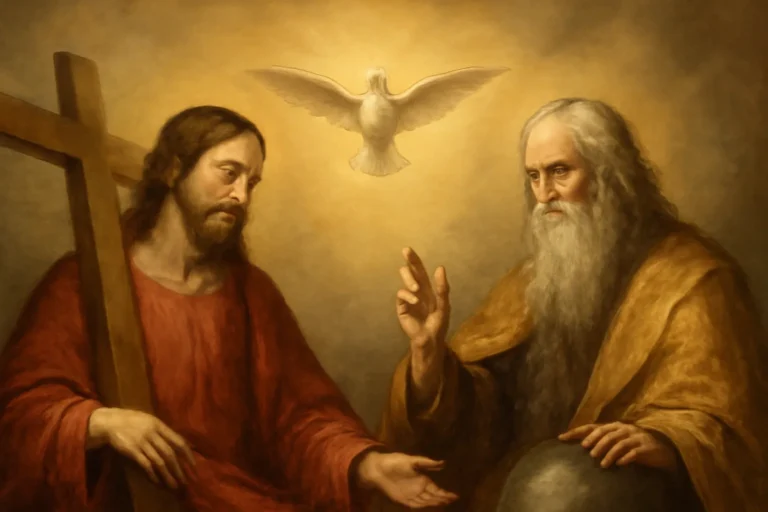
A central challenge for Christians has been articulating how the Trinity functions with three Persons in one divine essence. The Holy Spirit belongs to the Trinitarian economy as a distinct Person who proceeds from the Father (and, in some traditions, from the Son as well, through the Filioque clause). The classic formulation posits that the Spirit is eternally proceeding from the Father and is sent by the Father and the Son to fulfill the Father’s saving purposes in creation, revelation, redemption, and eschatology. This framework emphasizes both unity and distinction within the Godhead and seeks to prevent undue emphasis on the Spirit as mere force or power.
The Spirit’s place within perichoresis
Perichoresis, or mutual indwelling, captures the deep interconnectedness of the Trinity. In this view, the Spirit is not distant from the Father or the Son but dwells in perfect, relational union with them. This unity shapes how the church experiences the Spirit—not as a standalone agent but as the living presence that ties the Father’s love to the Son’s work and extends that relationship into the world through believers. The Spirit’s missionary impetus flows from this intimate union, energizing proclamation, reconciliation, and transformation.
The Spirit’s Role in Creation, Covenant, and Prophecy
From the opening pages of Scripture, the Spirit is depicted as the active agent who brings forth life, orders creation, and anoints leaders for service. In the Christian reading, these actions point forward to a fuller, fulfilled expectation in Christ and in the Spirit’s ongoing work in the church.
- Creation and sustaining power: The Spirit is described as hovering over the waters in Genesis and as the Breath by which God gives life. The Spirit’s power sustains the ordered life of the cosmos and peoples.
- Empowerment for leadership: Prophets, judges, and kings are equipped by the Spirit for their roles within God’s covenant people, enabling bold testimony and courageous action.
- Prophetic inspiration: The Spirit dwells within the prophets, enabling them to declare God’s will and reveal the divine plan to future generations.
In the Christian faith, the Spirit’s activity in creation and revelation continues as believers encounter the gospel and are drawn into the life of the church. The Spirit’s presence ensures that divine truth is not merely a line of argument but a living reality that shapes minds, affections, and wills toward God.
The Spirit and Salvation: Regeneration, Sanctification, and Adoption
One of the central concerns of Christian life is salvation, and the Holy Spirit plays a foundational role in every stage of God’s saving work. The Spirit’s activities here are sometimes described with technical terms, but the aim is to describe the reality of God’s transformative presence in a believer’s life.
Regeneration and new birth
Jesus speaks of being “born of the Spirit,” a phrase that denotes an inner renewal by which a person enters the kingdom of God. The Spirit awakens the dead heart, gives spiritual life, and initiates a new identity in Christ. This regeneration is not something earned by human effort; it is a gracious gift that accompanies the gospel message and faith.
Justification and sanctification
Within the broader stream of Pauline theology, the Spirit’s work intersects with justification by faith in that the Spirit applies Christ’s saving work to the believer. Yet the Spirit also leads into sanctification—the ongoing transformation into the image of Christ. This transformation manifests as growth in holiness, courage in witness, and increasing conformity to the will of God.
Adoption and intimate relationship with God
The Spirit not only regenerates but also adopts believers into God’s family. The Spirit bears witness with our spirit that we are God’s children, producing a sense of fatherly care and intimate companionship with the Triune God. This adoption creates a new dynamics of communion: prayer, worship, and dependence on the Father through the Son, all enabled by the Spirit’s presence.
Baptism in the Spirit andIntegration into the Body of Christ
Many Christian traditions speak of baptism with the Spirit as a distinct experience that accompanies or follows conversion, while others understand it primarily as the Spirit’s initial act of incorporating a believer into the one Body of Christ. Regardless of the tradition, the baptismal reality underscores that the Spirit unites believers to Christ and to one another, forming a spiritual community that embodies the gospel in mission and service.
The Spirit and Spiritual Gifts: Gifts, Fruits, and the Life of the Church
The Spirit’s gifts are a distinctive feature of the church’s life. These gifts of the Spirit equip believers for service, edify the church, and demonstrate the presence of the risen Christ in the world. Simultaneously, the Spirit produces fruit—character qualities that reflect the Spirit’s transformative work in a believer’s life.
Gifts of the Spirit
Within the biblical tradition, the Spirit empowers a range of abilities for ministry—proclamation, healing, wisdom, discernment, speaking in tongues or other signs, and leadership among the community of faith. The diverse gifts are meant to serve the common good, build up the church, and advance the gospel in every cultural setting. A balanced approach to gifts recognizes the Spirit’s sovereignty, promotes order in worship, and keeps the primary aim on loving neighbor and glorifying God.
Frugality and fruit: the evidence of life in the Spirit
In Galatians 5, Paul clarifies that the “fruits of the Spirit” are moral and relational dispositions that bloom when the Spirit abides in a person. These fruits—love, joy, peace, patience, kindness, goodness, faithfulness, gentleness, and self-control—serve as a practical test of Spirit-filled life. The presence of these fruits is not mere moral success but a sign of genuine communion with God and alignment with Christ’s character.
The Spirit in Worship, Liturgy, and Sacraments
Worship and the sacraments are core means by which Christians experience the presence and action of the Holy Spirit. The Spirit’s work in worship involves awakening trust in Christ, guiding prayer, illuminating Scripture, and uniting the church in a shared life of devotion.
- In Scripture reading: The Spirit illuminates the text, enabling believers to discern God’s truth in a way that transcends mere human understanding.
- In prayer: The Spirit helps believers pray with groanings too deep for words and intercedes according to God’s will (Romans 8:26–27).
- In baptism and the Eucharist: The Spirit participates in the sacramental life, applying the benefits of Christ’s saving work to believers and sustaining their union with the church.
- In worship practice: The Spirit fosters unity, reverence, and awe, shaping a worshiping community that embodies the love of the Father and the provided grace of the Son.
Christians emphasize that the Spirit’s activity in worship is not a distraction from Christ but a means by which the church encounters and responds to the living God. Through the Spirit, the gospel is not only proclaimed but also received, celebrated, and embodied in daily life.
Historical Development: How the Church Has Understood the Spirit
Across centuries, theologians, saints, and councils have sought to articulate a faithful, catholic (universal) understanding of the Spirit’s role within the Trinity. The story includes moments of doctrinal clarity, as well as debates that shaped the shape of Christian confession.
- Patristic era: Early church fathers emphasized the Spirit’s divinity and personal nature, contributing to the formulation of the doctrine of the Trinity and resisting reductions of the Spirit to an impersonal force.
- Nicene and post-Nicene thought: The councils affirm the Spirit’s full deity and the Spirit’s distinct personhood, while affirming the unity of the Godhead. The Spirit’s procession is discussed in relation to the Father, with some later traditions adding the Filioque clause to signify the Spirit’s origin from the Father and the Son.
- Reformation and post-Reformation: Reformers emphasized the Spirit’s work in the heart’s illumination, the authority of Scripture, and the Spirit’s role in the life of the church. Debates about the gifts, baptism, and the Spirit’s ongoing work shaped confessional statements across denominations.
Today, most Christian traditions articulate a shared core belief: the Spirit is fully God, eternally the Spirit of truth, life, and love; the Spirit is involved in creation, revelation, salvation, and eschatology; and the Spirit indwells and empowers the church for mission and worship. Within that shared framework, there remains diversity in emphasis, expression, and practice, reflecting the Spirit’s work in diverse cultures and contexts.
Common Questions and Clarifications
Even with a robust doctrinal framework, questions arise about the Spirit’s work and identity. Here are several common inquiries and concise clarifications that help maintain doctrinal balance without sacrificing pastoral sensitivity.
- Is the Holy Spirit a force or a person? The orthodox position is that the Spirit is a Person, not a mere force. The Spirit can be grieved, taught, loved, and professed as a divine Person within the Trinity.
- What does it mean that the Spirit “proceeds” from the Father? The term “proceeds” describes the Spirit’s eternal origin in relation to the Father and, in some traditions, the Spirit’s involvement with the Son in sending and empowering the church. It signals a dynamic, relational origin within the Godhead rather than a created attribute.
- How do gifts relate to fruits? Gifts are functional capabilities given for service, whereas fruits are character qualities the Spirit grows within a believer. Both testify to the Spirit’s transformative work, but gifts serve public ministry and community life, while fruits reveal inner conformity to Christ’s character.
- Do all Christians receive the same gifts? The Spirit distributes gifts according to divine will for the common good. While some traditions emphasize particular gifts, most affirm a diverse but purposeful distribution that serves the church’s mission and edification.
- What about the Spirit in non-Christian religions? Within Christian theology, the Spirit’s primary work is in relation to the triune God and the gospel; however, some theologians acknowledge that the Spirit can be at work in broader human searchings for truth, though that work remains distinct from the Spirit’s work in Christ as narrated in Scripture.
Ethical and Ecclesial Implications: Living by the Spirit
The reality of the Holy Spirit should translate into a living ethic and a theologically formed ecclesiology. If the Spirit indwells believers and unites them to Christ and to one another, several practical implications follow.
- Spiritual formation: A mature Christian life is marked by ongoing sanctification—growing in virtue, humility, and steadfast faith—under the Spirit’s guidance. Followers of Jesus cultivate prayer, Scripture intake, and community accountability as means of spiritual growth.
- Church unity and mission: The Spirit fosters unity within the church and fuels mission outward to the world. The Spirit empowers disciples to witness to the gospel in word and deed, crossing cultural barriers with compassion and truth.
- Discernment and discernible signs: Christians seek discerning spirits to distinguish truth from error, especially in a world of competing ideologies and voices. The Spirit’s guidance helps believers test teachings, shapes conscience, and empowers courageous witness.
- Hope in suffering and endurance: The Spirit sustains believers through trial with a confident hope in God’s redemptive purposes, helping them persevere in faith and love even when circumstances are challenging.
Variations in Perspective: How Different Traditions Speak About the Spirit
Across the Christian spectrum, there are diverse expressions of belief about the Spirit’s work, yet they share a common core. Here are some representative threads, with attention to the language of indwelling, inspiration, anointing, and empowerment.
- Classic triune monotheism emphasizes the Spirit’s full divinity, personal nature, and eternal procession, with a strong focus on the Spirit’s role in creation, inspiration, and the church’s life.
- Contemporary evangelical horizons often foreground personal conversion, the experience of assurance, and the Spirit’s work in transformation, with an emphasis on evangelism and mission in diverse cultural settings.
- Reformed traditions tend to stress the Spirit’s work within the covenant community, the centrality of Scripture, and a careful discernment of gifts and manifestations, with an eye to order in corporate worship.
- Lutheran and Anglican streams typically highlight the Spirit’s work in faith formation, sacraments, and the church’s corporate worship, while remaining attentive to the Spirit’s power to enliven preaching, preaching’s call to repentance, and the gracious administration of grace through the Word and Sacraments.
- Pentecostal and Charismatic movements focus on a heightened experience of the Spirit’s baptism, signs, wonders, and gifts for the church’s mission, while engaging in ongoing conversation about discernment, order, and the relationship to biblical teaching.
Despite these variations, the Holy Spirit remains the axis around which belief about God’s action in the world revolves. The Spirit’s work binds the church together in love, sustains its witness, and opens believers to the expansive truth of the gospel in every generation.
Common Misunderstandings: What the Spirit Is Not
Mistakes about the Spirit are not merely errors of doctrine; they can also distort Christian faith and practice. Here are several common misunderstandings and the orthodox corrections that help keep the focus on the Spirit’s true identity and role.
- The Spirit is not merely an impersonal force: The Spirit is a distinct Person of the Trinity, capable of personal action, relationship, and communion with believers.
- The Spirit is not opposed to Scripture: Rather, the Spirit illuminates and clarifies the truth of Scripture, directing readers to Christ and guiding the church in faithful interpretation and application.
- The Spirit’s gifts do not negate order: While the Spirit confers gifts for service, orderly worship and discernment are essential to ensure that gifts are exercised in loving, constructive ways for the church’s good.
- The Spirit’s work is not exhausted by a single experience: The Spirit’s ongoing presence is given to every believer and to the church, common to all disciples through faith, baptism, and ongoing discipleship—not limited to a particular moment in time.
Intersections with Other Theological Themes
The Holy Spirit intersects with many other doctrinal domains in meaningful ways. A few notable connections illustrate how the Spirit is woven throughout theological reflection.
- Christology: The Spirit’s work is inseparable from the person and work of Christ. The Spirit applies Christ’s redemptive benefits, confers faith in Christ, and makes the gospel effective in the heart of the believer.
- Ecclesiology: The Spirit creates and sustains the church, uniting diverse peoples into one body, enabling authentic fellowship, and empowering the church’s mission to the world.
- Spiritual formation: The Spirit’s work inside the believer shapes character, ethical decision-making, and love for neighbor, reflecting the fruit of the Spirit in daily life.
- Ethical living: The Spirit’s guidance leads to justice, mercy, and humility as believers live out the gospel in neighborhoods, workplaces, and communities.
- eschatology: The Spirit’s presence is a foretaste of the new creation, fulfilling God’s promise of renewal and the ultimate transformation of creation at the end of the age.
Practical Reflections: How to Cultivate a Spirit-Led Life
For believers seeking to live in light of the Spirit’s presence, several practical disciplines can help cultivate a lifestyle oriented toward God’s purposes. These disciplines are neither rote rituals nor mere emotional exercises; they are channels through which the Spirit can work discernibly in the life of a Christian and a faith community.
- Scripture engagement: Regular, prayerful reading of the biblical text, accompanied by contemplation and communal study, fosters spiritual discernment and aligns the heart with God’s will.
- Prayerful dependence: Prayer is a vital mode of relationship with God in which believers invite the Spirit’s guidance, intercession, and strength for daily tasks and larger life decisions.
- Worship as encounter: Worship that foregrounds Christ-centered confession, gratitude, and reverence invites the Spirit to work in transformative ways, shaping corporate life as well as personal devotion.
- Communal discernment: The church together seeks to discern the Spirit’s leading for mission, social witness, and ethical decisions, avoiding both cynicism and sensationalism.
- Service and mission: The Spirit empowers believers to engage the world with love, truth, and mercy, advancing the gospel through acts of service, advocacy, and faith-filled risk-taking.
Conclusion: The Spirit’s Role in the Trinity and the Life of Faith
The Holy Spirit stands at the center of Christian life as the living presence of God’s activity in the world, the personal agent who reveals God’s truth, regenerates and empowers believers, and sustains the church in its mission. Within the Trinity, the Spirit is not a mere example of divine power but a distinct Person whose relation to the Father and the Son grounds the saving work of God and the life of the church. This understanding not only clarifies theological doctrine but also deepens practical faith: it invites believers into a dynamic relationship with the living God, a robust ecclesial life, and a hopeful anticipation of the future renewal of all things by the Spirit’s power.
As Christians continue to explore the depths of this doctrine, they are invited to grow in reverence, wonder, and obedience. The Holy Spirit leads not to a retreat from the world but into transformative engagement with it—through worship that is rich and heartfelt, through service that embodies the gospel, and through a life marked by virtue that mirrors Christ’s own love. In this sense, the Spirit’s role in the Trinity is not an abstract theological puzzle but a lived reality that shapes how believers think, feel, and act as citizens of the kingdom of God.