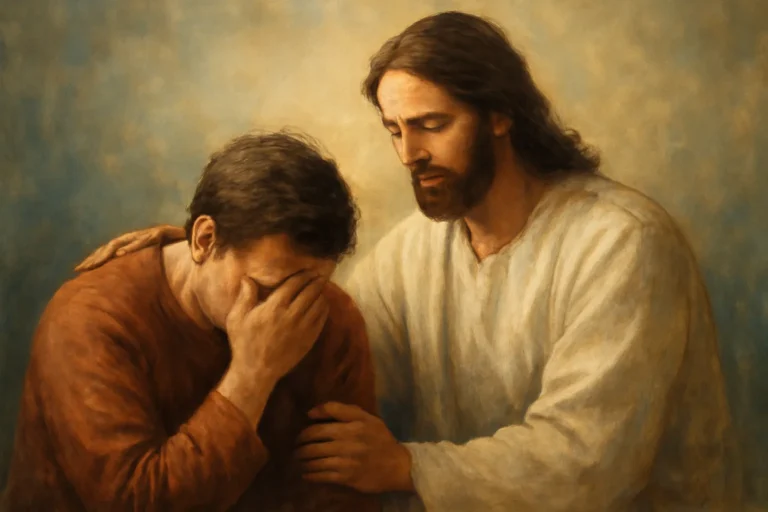

Introduction: The Unasked-For Gift
Grief is not simply an emotion to be endured; in many religious traditions it is a, sometimes paradoxical, gift that arrives without an invitation. The phrase “Grief: The Gift I Never Asked For” captures a tension that echoes through sanctuaries and living rooms alike: the knowledge that sorrow can become a doorway rather than a barrier. In this long-form exploration, we consider grief from a religious and theological perspective, tracing how communities interpret loss, how individuals encounter divine presence in absence, and how the sacred shapes, or reshapes, meaning in the midst of pain. This article treats grief as a sacred, not merely psychological, phenomenon—a liminal space in which faith, doubt, memory, and hope intersect.
The Theological Frame: Suffering as a Sacred Question
Across religious traditions, suffering has never been a neutral event. It is a theological signal, inviting interpretation, communal response, and interior conversion. The claim that grief can be a gift rests on more than optimism; it rests on the conviction that God or the divine mystery works in and through brokenness to accomplish something meaningful. The language of a “gift” is not meant to minimize pain, but to insist that pain can be transfigured.
Biblical and Scriptural Lenses on Loss and Light
In sacred scriptures, lament, mourning, and hope often appear side by side. Consider the biblical laments that begin in tears and end with trust. The gift implicit in these passages is not a cure that erases sorrow but a transformation of it into a form of discernment. In Christian faith, for example, the apostle Paul speaks of weakness becoming strength through divine power working in human frailty. This is a paradigmatic instance of grief as a crucible for grace.
Personal Narrative: When Grief Becomes Gift
The personal dimension of loss is where theory meets life in its most intimate form. To speak of the unasked-for gift is to acknowledge that sorrow arrives not as a mere inconvenience, but as a catalyst—one that unsettles routines, values, and assumptions. Many believers report that their most piercing experiences of bereavement have also become the moments when they were most open to divine presence, most attentive to the needs of others, and most aware of the fragility and beauty of life.
Grief as Teacher: Sacred Knowledge in Sorrow
What does a religious framework offer to someone who is navigating loss? Not a denial of pain, but a pedagogy of meaning. In this sense, grief can be a teacher that:
- Deepens gratitude for ordinary gifts—breathing, staying, remembering
- Sharpen’s compassion toward those who mourn
- Clarifies ultimate questions about death, justice, and divine presence
- Invites a practice of lament that is honest before God and the community
The uninvited nature of this gift does not lessen its potency. Rather, it places the recipient in a long lineage of pilgrims who found that grief, when engaged with faith, becomes a doorway to wisdom, a space where moral imagination is tried and tempered.
Religious communities have long created rituals to accompany mourning and memory. These practices serve as concrete ways to acknowledge loss, to release emotion, and to orient grief toward hope. Below are some disciplines that many traditions find helpful, along with variations that highlight how grief can be transformed within a sacred frame.
Prayerful Laments and Supplications
A lament prayer is not merely complaint; it is an honest conversation with the divine about pain, questions, and longing. It may include:
- Expressing the raw grief that words can barely contain
- Affirming trust in the divine goodness, even when the path is dark
- Seeking comfort, justice, and peace for the bereaved and for communities
Ritual Readings and Remembrance
Seasonal remembrances, liturgical readings, and symbolic acts (candles lit in memory, places of prayer for the deceased) transform private sorrow into shared memory. The gift here is communal solidarity and the sense that loss is held within a larger story of life, death, and renewal.
Sacred Silence and Contemplative Stillness
Silence is a powerful spiritual practice in grief. In sacred silence, the heart can listen for the still, small voice of the divine and the inner truth that surfaces when words fail. This stillness can become a consecration of memory, a space where grief is not drowned but held with care.
Grief is universal, yet its interpretation and management differ across religious landscapes. Here, we survey several traditions to illuminate how grief can become a unifying gift that transcends circumstance while remaining deeply particular to religious language and ritual.
Christianity: Grief as Participation in Christ’s Sufferings
In Christian theology, the cross is the paradigmatic symbol of suffering that yields transformation. Many theologians speak of participation in Christ’s sufferings as a path toward new life. Grief, then, is not simply a private burden; it is a form of discipleship—a way of walking with the crucified care of the world. The gift surfaces in:
- Hope rooted in the resurrection promise
- Charity that spills over into acts of mercy
- Memory that becomes praxis: turning mourning into justice
Judaism: The Covenant of Remembering and Lament
Jewish liturgical and ethical traditions emphasize memory (zichron) and lament (kina). The unasked-for gift in Jewish life often reveals itself as fidelity to memory—an obligation to remember the dead and to live in a way that honors that memory. The practice of sitting shiva, reciting Kaddish, and ritualized days of mourning provides a framework in which grief is both acknowledged and redirected toward responsibility for the living.
Islam: Sabr, Shukr, and the Balance of Patience
In Islamic thought, the interwoven concepts of patience (sabr) and gratitude (shukr) frame the response to loss. Grief is neither punishment nor abandonment but a signal to lean into divine wisdom. The gift here is twofold: the interior strengthening of faith and the communal obligation to support others who suffer. The rituals of prayer, remembrance (dhikr), and charity (sadaqah) provide channels through which bereavement is transformed into spiritual growth.
Other Traditions: Hinduism, Buddhism, and Indigenous Pathways
Hindu and Buddhist frameworks often emphasize impermanence and the continuity of consciousness, offering tools for grief that honor both the ephemeral and the enduring. In many indigenous and earth-centered traditions, mourning is deeply relational, anchored in landscapes, ancestors, and shared stories. Across these diverse streams, the common thread remains: grief can become a gift of memory that sustains and elevates communal life.
Grief rarely occurs in isolation. The religious community amplifies, supports, and sometimes corrects the trajectory of sorrow. When a congregation gathers to mourn, the gift of shared vulnerability is tangible: it legitimizes pain, validates questions, and strengthens bonds. The social dimension of grief offers protection against solitary despair and provides a scaffold for rituals, stories, and hopeful interpretation.
Ritualized Mourning, Communal Witness, and Public Laments
Public expressions of grief—memorial services, communal prayers, and ritualized farewell ceremonies—transform private pain into a shared testament. The gift is the solidarity that arises when a community says, in effect, “You are not alone.” This communal witness often reallocates the energy of grief toward acts of service, charitable works, or advocacy for justice.
Memorial Space: Memory as Sacred Architecture
The architecture of memory—stained glass, icons, sacred texts, and altars—functions as a material catechesis. It teaches generations how to carry loss with reverence, how to speak truthfully about pain, and how to find the glimmers of divine presence in the ordinary. In this sense, memory becomes a grace-filled discipline that sustains and disciplines the heart.
When grief is described as a gift, honest questions naturally arise. Here are some frequently asked inquiries and the theological considerations that often accompany them.
- Does presenting grief as a gift minimize the pain of loss? Not if read with nuance; it foregrounds transformation without denying suffering.
- Is the “gift” a promise of resolution or an invitation to growth? Primarily an invitation to growth, while acknowledging ambiguity.
- How can communities help without rushing the healing process? Through patient presence, non-judgment, and sustained ritual life.
- What is the role of mystery in grief? Accepting that some questions may persist while trust deepens in the divine mystery.
To keep the conversation accessible and precise, we employ a spectrum of terms related to grief. This helps capture semantic breadth and avoids reducing the experience to a single vocabulary. The following variations emphasize different facets of the unasked-for gift.
- Bereavement as the social process surrounding loss
- Mourning as the expressed, often ritualized response
- Lament as honest address to the divine and to the community
- Sorrow as interior weather—the mood that shapes perspective
- Affliction as a gatekeeper to moral and spiritual questions
- Tribute to the deceased manifested in acts of service
- Remembrance as the discipline of memory and meaning
- Consolation as a form of divine or communal comfort
Grief challenges knowledge systems. It asks new questions about divine justice, human freedom, and the purpose of suffering. In this epistemological movement, the religious seeker learns to interpret signs—in scripture, in community, and within the heart—in ways that harmonize mystery with longing. The gift here is not a final answer but a more nuanced wisdom—an epistemology rooted in humility and sustained by fidelity.
The ethical dimensions of grief are profound. Loss can cultivate virtues that sustain moral life even when consolation is scarce. Three core virtues often deepened in faith communities are:
- Compassion that moves from empathy to action toward those who mourn
- Humility before mystery and the limits of human understanding
- Stewardship of memory, time, and resources in service to the living
When grief becomes a teacher of virtue, the uninvited gift extends its invitation: to become more attentive, present, and responsible to others, especially those who suffer in silence. This is a practical expression of the Lord’s command to love one’s neighbor and to bind up the brokenhearted.
Liturgical calendars often weave seasons of grief into cycles of remembrance and hope. These rhythms acknowledge that loss is not a year-long gloom but a season within a broader pattern of life, death, and renewal. The discipline of seasonal grief can help communities plan rituals, sermons, and acts of justice in ways that honor memory while pointing toward future hope.
In Christian settings, Advent ambiance and Lent’s penitential spirit provide space for sorrow and expectation. During other faith traditions’ cycles, similar seasons emphasize repentance, reflection, and renewal. The fivefold movement—lament, confession, petition, remembrance, and hopeful anticipation—can be customized to fit local liturgies without losing the core sense that grief is a pathway to encounter with the divine.
While grief is often painful and destabilizing, many voices in religious life insist that it can heal in meaningful and lasting ways. The healing is not a denial of loss but a reintegration of memory with present life. Through this reintegration, the unasked-for gift becomes a resource for resilience, purpose, and renewed relational capacity.
- Healing through shared pain: communal compassion and solidarity
- Healing through memory: honoring the dead by living rightly
- Healing through service: turning mourning into acts of justice and care
Throughout religious history, countless stories suggest that grief can produce hope that endures beyond personal loss. These narratives often embody the paradox that sorrow and joy can coexist as two realities that shape one life. In contemporary settings, personal testimonies of someone who has weathered loss often emphasize how the deepened relationship with God, family, and neighbors persists as the central gift—the enduring sense that one is held in a larger, divine narrative.
Theological reflection helps believers translate raw experience into a framework for living. When grief arises as the uninvited guest, theology offers language to name the pain, a horizon where hope can dwell, and a vocabulary for justice that honors the dead. Theology, in this sense, is not abstract speculation but a pastoral instrument that helps individuals and communities bear loss with integrity and faith.
A robust religious approach to grief does not require premature certainty. In fact, doubt often accompanies profound faith in the wake of loss. The phenomenon of doubt within grief can be reframed as a space where sincerity, humility, and dependency on the divine grow. The unasked-for gift may include the capacity to hold paradox: to grieve deeply while preserving trust that life, memory, and justice have enduring value.
For those walking through grief, religious communities can offer practical guidance that respects both pain and faith. The following suggestions are offered with care and humility, recognizing that each person’s path is unique.
- Allow space for lament—verbalize anger, confusion, and longing.
- Cultivate a daily practice of prayer, journaling, or reflection that anchors memory in daily life.
- Engage trusted spiritual mentors who can provide compassionate listening and honest questions about meaning.
- Participate in ritual communities that honor memory, but also nourish hope through service and justice.
- Offer and receive support in practical ways—meals, childcare, and shared labor of mourning tasks.
- Protect sacred memory by creating personal rituals for anniversaries and milestones.
It is essential to name the limits of religious language. The phrase grief, the unasked-for gift can become a hopeful anchor, but it should never be used to dismiss or minimize pain. Comfort that glosses over sorrow risks becoming counterfeit consolation. True spiritual care in grief honors both the ache and the invitation to transformation, avoiding easy answers while offering compassionate presence.
If we adopt grief as a sacred practice, the path forward involves intentionality, patience, and communal nurture. The journey is rarely linear: it weaves cycles of sorrow with episodes of peace, and it invites ongoing discernment about how to live well in memory of the one who is gone.
Grief, when understood through a religious lens, emerges not as a curse but as a gift that challenges and enlarges the heart. It asks for faith that endures, hope that remains, and love that keeps alive the memory of the beloved. It invites us to become the kind of people who carry the weight of sorrow with responsibility, who transform grief into acts of mercy, and who live with the sense that life, even in its most fragile moments, is held in a larger, divine embrace.
Grief is a universal language in spiritual communities. It speaks with the old voices of lament and with the fresh voices of contemporary faith. In the end, the journey through loss is also a journey toward meaning, toward justice, toward a deeper practice of love, and toward a life shaped by the conviction that even in the uninvited season of sorrow, there is a way to live with purpose and tenderness. The gift, paradoxical though it may seem, endures: to become more fully human, more ready to listen, and more committed to the good of others because we have learned to listen to our own hearts in faith.