Small Coin, Great Faith: The Widow’s Mite Offering
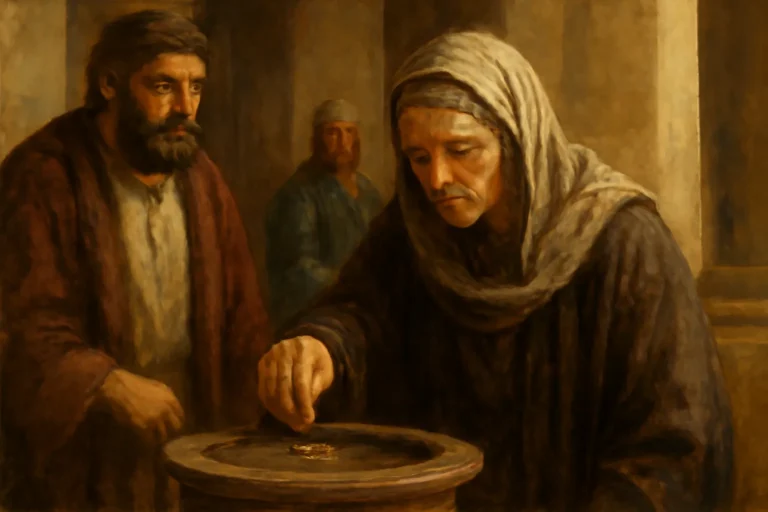
In a single moment at the Temple in Jerusalem, a lone widow quietly places two leptai into the treasury, a small coin offering that would barely register in the sight of many observers. Yet in the eyes of the Gospel narrative, this widow’s mite offering becomes a powerful emblem of heart-centered stewardship, a radical expression of trust in God that transcends quantity. This long-form reflection surveys the biblical account, its historical context, and its enduring theological implications. It invites readers to consider how a small coin, when offered in faith, can carry a message larger than its weight, a message about proportional generosity, humility before the divine, and the economy of the Kingdom.
Context and Contours: Where the Mite Fits in the Gospels
The narrative of the widow’s mite appears in the Synoptic Gospels, most prominently in the Gospel of Luke and, with a closely related parallel, in Mark. The account centers on a moment at the Temple treasury, where Jesus observes those coming to give offerings for the upkeep and life of the house of worship. The widow, described as poorest among the poor, places two lepta into the offering box. The term mite in English is a translation of the Greek lepta, a small copper coin of low monetary value in the ancient world.
In Luke 21:1-4, the sequence unfolds with Jesus watching the crowd as they contribute to the treasury, then drawing attention to the widow who gives all she had to live on. Mark’s parallel (Mark 12:41-44) echoes the same scene, though the wording and emphasis differ slightly. In both accounts, Jesus elevates the widow’s act not by the size of the gift, but by the proportional sacrifice and the context of her poverty. The juxtaposition—wealthier donors giving out of their abundance versus a poor widow giving everything—frames a crucial theological point about generosity, trust, and the way God discerns the posture of the giver.
Textual Variants and the Meaning of the Lepta
Scholars note that the Greek term lepta refers to the smallest coin in circulation at the time, often translated as mites in English Bibles. There is debate about the exact purchasing power of two leptai, but most agree that it was a meager sum—likely a fraction of a day’s wage. What matters theologically is not the economic magnitude alone but the intentional surrender of the widow. This is why some interpreters stress the distinction between amount (how much money is given) and attitude (to whom the gift is given and why).
The scene invites a comparative reading of what counts as a “great gift.” In the ancient economy, a large donation from a wealthy donor could support many temple functions, yet the widow’s small coin becomes, within the narrative, a critique of social hierarchies and a celebration of fidelity under constraint. The widow’s mite offering, therefore, is a moving study in what the Gospel writer, and later interpreters, understood as a form of devotional sacrifice that embodies both faith and radical dependence on God.
Theological Significance: What the Mite Teaches About Faith, Giving, and the Kingdom
The widow’s mite offering is more than a historical anecdote; it is a rich teaching about generosity, trust, and the economy of grace that undergirds Christian piety. At its core, the story is a meditation on how a deliberate, total offering—made from a place of poverty rather than surplus—can reveal a deeper spiritual truth: the heart of a giver matters more than the sum of the coins.
Heart over Amount: A Lesson in Proportion
Many readers confront the tension between the widow’s tiny gift and the expansive status of her act. A dominant interpretive thread in Christian ethics is that the Giver’s heart posture is what Jesus highlights. The two leptai may have been a small measure, but the widow’s spiritual economy is enormous: she offers everything she possesses, trusting that God will sustain her and the community she supports. Hence, proportional generosity emerges as a vital category for worship and discipleship. The mite offering, then, is not a suggestion to minimumize giving; it is a call to offer what we can, with full dependence on God.
Trust and Dependence: Gift as Act of Faith
The widow’s act is inseparable from the theme of trust. In giving what she cannot replace, she displays a confidence that God continues to care for her. The text invites readers to ask: Do we trust God to provide for our needs even when we must give away most or all of what we own? Theologically, this is a meditation on God’s faithfulness and the belief that God uses even the smallest offerings to accomplish meaningful ends in the community and in the larger narrative of salvation.
Historical and Cultural Context: The Widow, the Temple Treasury, and the Social World
Understanding the widow’s mite requires situating the episode within the social and religious life of Second Temple Judaism. The Temple treasury was a visible sign of communal life, worship, and financial accountability. Widows and other vulnerable groups inhabited a precarious social position, and almsgiving—both private and communal—played a crucial role in maintaining social fabric and ritual propriety.
- Temple economy: The treasury boxes collected contributions to support temple service, sacrifices, and the upkeep of sacred spaces.
- The status of widows: In many ancient societies, widows often faced economic vulnerability and limited means of support; their acts of charity could also reflect a life of faith under hardship.
- The value of the lepta: Small copper coins, representing a monetary unit that was accessible to everyday people and used in ordinary transactions.
- Religious and social norms around giving: Almsgiving, offerings, and tithes were woven into religious practice and communal identity.
The widow’s act, then, can be read as a performative Christian virtue within its cultural setting: a visible expression of personal sacrifice that challenges the spectators’ assumptions about wealth, status, and virtue. It is a scene saturated with questions about what constitutes true worship and how the faithful participate in a community whose life is sustained by gifts, prayers, and acts of mercy.
Across the centuries, theologians, pastors, and lay Christians have engaged the widow’s mite offering in diverse ways. Early church Fathers tended to emphasize the humility and faith of the widow, contrasting her with those who perform external acts of piety without interior conversion. Some patristic voices framed the mite as a call to sincere devotion that transcends outward appearances. In medieval devotional writing, the story was often deployed to illustrate the virtue of poverty of spirit and the sanctifying power of small sacrifices offered with love.
In modern times, the widow’s mite has been reinterpreted in light of debates about wealth, social justice, and Christian ethics of giving. Some theologians stress proportional giving as a corrective to those who pursue extravagant philanthropic gestures while neglecting daily acts of mercy. Others highlight the scenario as a pastoral reminder to examine the motives behind contributions: Are gifts offered in gratitude to God, or are they tokens of social status?
Patristic Echoes: From Chrysostom to Augustine
John Chrysostom and Augustine, among others, reflected on the moral rhythm of Luke’s account. Chrysostom, for example, often drew attention to the widow’s unwavering trust and the contrast with showy displays of wealth. Augustine might be read as emphasizing the interior state—love, humility, and a life oriented toward God—more than the outward liturgy itself. These voices converge on a common conviction: the gospel elevates humble generosity as a form of spiritual power that aligns the giver with the purposes of divine grace.
The widow’s mite offering remains a compelling resource for contemporary Christian formation. It challenges readers to reflect on how their own giving expresses faith, relies on God’s provision, and shapes the life of the community. It invites families, congregations, and individual believers to cultivate a rhythm of generosity that is personal, relational, and transformative.
Personal Spiritual Formation
- Practice small, intentional sacrifices: Identify a weekly act of giving that costs you something—time, money, or energy—and perform it in gratitude for God’s grace.
- Guard the motive: Cultivate an inner posture of worship rather than a visible display; let the motive be love for neighbor and fidelity to God.
- Practice anonymous generosity: When possible, give without seeking public recognition, trusting that God honors hidden acts of mercy.
Community and Corporate Life
- Encourage proportional giving in congregational budgets and missionary support, recognizing that every gift carries weight when offered in faith.
- Teach a theology of stewardship that connects personal finances with discipleship, inviting congregants to see money as a tool for love, justice, and witness.
- Model integrity in administration: Transparent handling of funds helps ensure that even small gifts are managed with accountability and care.
Ethical and Social Dimensions
- Address poverty with dignity: The widow’s example should inspire protective and compassionate care for the vulnerable in society.
- Integrate generosity with justice: Recognize that generosity is not a substitute for systemic reform, but a complement to broader acts of mercy and social equity.
- Balance simplicity and responsibility: A community may honor simple gifts while also pursuing responsible stewardship of resources for the common good.
To keep the discussion robust and accessible, the widow’s mite offering is examined through multiple lenses, each offering a semantic variation that enriches understanding:
- Theological variant: Emphasizes faith, trust, and dependence on God rather than the concrete amount given.
- Ethical variant: Frames giving as a practice of solidarity with the vulnerable and as a discipline within communal life.
- Pastoral variant: Uses the mite story to counsel believers who experience financial constraints while seeking to honor God with their resources.
- Liturgical variant: Incorporates the mite account into worship narratives, sermons, and catechetical materials as a memorable example of sacrifice and devotion.
- Socio-economic variant: Analyzes the widow’s gift within the ancient economy to glean insights about economic systems, scarcity, and the social meaning of generosity.
Across these diverse angles, the narrative maintains a powerful center: a small, faithful act can carry a weight far beyond its numerical value when offered in genuine trust and love. The mite offering becomes a paradigm for how individuals and communities can honor God with what they have, even when the resources are meager, and how God’s grace can work through humble means to accomplish extraordinary ends.
- Is the widow’s offering normative for all believers? The text is more descriptive than prescriptive; it highlights a pattern of sacrificial faith rather than a universal command to give a fixed minimum.
- Does this story encourage poverty? No, it is not an endorsement of poverty as a virtue; rather, it holds up a specific moment where trust in God is manifest in the life of a person facing economic scarcity.
- What about wealthier givers? The broader biblical witness recognizes varied forms of generosity. The key issue is the giver’s motive and dependence on God, not only the sum donated.
- How should a modern church interpret this? Churches often teach both personal discipleship and communal stewardship, urging members to give with integrity, proportion, and a mindful sense of responsibility toward those in need.
The widow’s mite offering has left a lasting imprint on Christian imagination. It appears in sermons, hymnody, devotional meditations, and theological treatises as a symbol of quiet courage, uncompromised faith, and trust in divine provision. In art and literature, the motif of the two small coins has become a shorthand for the value of inner virtue over outward status. In congregational life, the story is a touchstone for teaching about generosity that is not about prestige but about the heart’s posture before God.
In contemporary theology, the widow’s mite is often invoked in conversations about poverty and grace, about how Christians are called to participate in acts of mercy that reflect the God who hears the cry of the poor. It challenges believers to consider how their own fiduciary choices align with their professed values. If the Kingdom is characterized by a profound reversal of worldly values, then the mite offering stands as a microcosm of that reversal: the least becomes the strongest, the weak are upheld, and a single, sincere act of trust resonates beyond its visible confines.
The narrative of the widow’s mite offering invites readers to imagine faith as a practice more than a sentiment. It is best understood as a spiritual discipline in which a person responds to grace with generosity, not as a public spectacle but as a private vow made into public life. The small coin in Luke and Mark becomes a symbol of an immense trust—an invitation to all who possess even the modest means to give, to offer not merely wealth but a life oriented toward God. In this sense, the widow’s gesture is timelessly relevant, a reminder that great faith often wears humble clothes. When a believer places a mite into the treasury with faith, the entire community witnesses a living sign: that God can, and does, honor the smallest acts of love, turning them into instruments of grace, justice, and covenant faithfulness.
Ultimately, the story challenges us to measure generosity not by what we have to spare but by what we are willing to surrender in trust. It invites ongoing reflection about how each generation of believers can live with open hands before God—hands ready to receive grace and to extend mercy Gently, with dignity and hope. The widow’s mite offering is not merely a memory from a dusty temple soundtrack; it remains a living template for living faith—a model of humility, fidelity, and bold spiritual economy that speaks across centuries to those who seek to follow Jesus with integrity and compassion.
May we learn from this ancient scene to discern what counts as true worship today: humble generosity, uncompromised faith, and a reliance on God that turns even the smallest gift into a beacon of hope for a world in need.