Reap What You Sow: A Sacred Principle Across Faith Traditions
The maxim “you reap what you sow” sits at the intersection of ethics, spirituality, and daily life. It is a compact way of naming a vast cosmic pattern: the seed we plant today grows into a harvest later, often in ways we did not anticipate. In religious discourse, this idea is not merely a pragmatic proverb about gardening or agriculture; it is a theological claim about moral causation, divine order, and the formation of the soul. The seed can be a choice, a habit, a word spoken, a relation nurtured, or a system of justice put into motion. The soil—whether it is a heart turned toward God, a community shaped by covenant, or a world that bears the weight of human action—receives, cultivates, and finally reveals the fruit of our deeds.
Across biblical, historical, and religious traditions, the language of sowing and reaping serves as a pedagogical tool: it educates believers about responsibility, invites humility by acknowledging restraint and time, and offers a framework for judgment and grace. In this long-form exploration, we consider how this principle appears, how it is interpreted, and how it might guide individuals, communities, and institutions toward wisdom. We will also examine common criticisms and tensions—such as the problem of innocent suffering, the role of divine sovereignty, and the ways in which policies of social justice may hinge on an extended vision of harvest that transcends a single lifeline.
Biblical Foundations: The Law of Sowing and Reaping
Old Testament Seeds and Harvests
The Old Testament is full of agricultural imagery that doubles as moral instruction. The land itself is a teacher, a covenantal stage upon which blessings are allotted to obedience and curses to disobedience. The prophets often tether social justice to the rhythms of sowing and reaping: when a people turn from justice and generosity, the crops fail, the land languishes, and the harvest becomes a sign of divine discipline. Yet sowing and reaping in this frame is not merely punitive; it is corrective and redemptive. When communities plant fields of righteousness—by feeding the hungry, practicing fair labor, and honoring the Sabbath—garden and grove become emblems of covenant faithfulness.
- Justice and generosity are themselves seeds: they produce a harvest of peace and solidarity in a society.
- The covenantal narrative ties the fertility of the land to fidelity to God’s commandments, suggesting that spiritual weather translates into physical weather and crop yields.
- Gleaning laws and care for the vulnerable illustrate a community-wide sowing that yields communal well-being as a formal fruit of right action.
New Testament Teachings
The New Testament expands the language of sowing and reaping into the realm of new creation, personal transformation, and ethical discipline. In Paul’s letters, the refrain becomes explicit: what one sows, one reaps—not only in the next life but in the present as well. The apostle links sowing to charity, perseverance, and spiritual discipline, showing that the seeds we plant in spiritual practice—humility, prayer, generosity—yield a harvest of inner peace, resilient faith, and outward fruitfulness. Conversely, sowing to the flesh—self-centeredness, exploitation, or anger—produces a harvest of discord, harm, and spiritual death.
- Galatians 6:7-9 articulates the core principle: God is not mocked; a person reaps what they sow, with patience and steadfastness required for the harvest to mature.
- The teachings on seed faith and the mustard seed emphasize that even small, consistent acts of trust can grow into transformative outcomes over time.
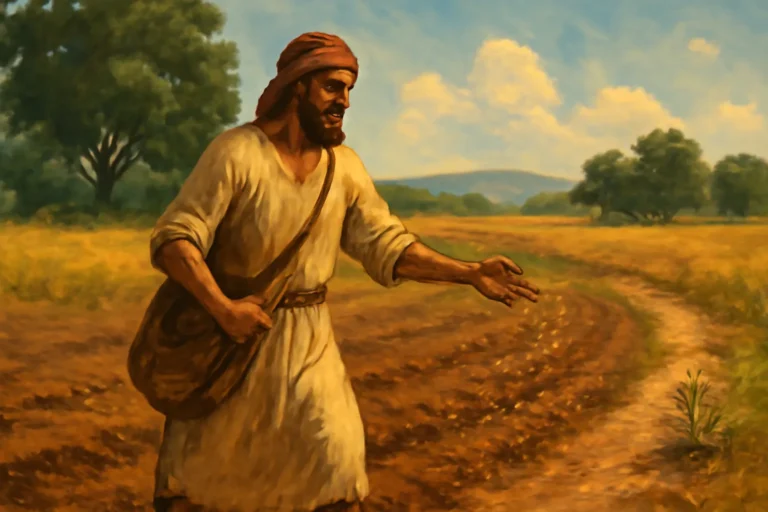
- Jesus’ parables—such as the sower and the parable of the weeds—show that the planting, growth, and final harvest involve complex processes in which God and humanity participate.
Faith, Grace, and the Boundaries of Law
A faithful reading of the biblical material recognizes that sowing is not merely a cosmic ledger; it interacts with grace and divine mercy. The Bible does not reduce all outcomes to human effort; rather, it invites believers to trust a God who can redeem even our failed seeds. In Christian theology, the cross and the resurrection add depth to the conversation about harvest: while human sowing shapes the field of existence, divine grace can transform outcomes, turning hardship into learning and loss into redemptive possibility.
Interpretive Angles: Moral Causation and Character Formation
Ethical Cores: Seed, Process, and Fruit
A central claim across religious cultures is that ethical maturity is a designable outcome of disciplined sowing. When a person intentionally cultivates virtues—such as patience, honesty, courage, and mercy—the appropriate fruit emerges in relationships, communities, and the psyche. The process of cultivation matters as much as the outcome; slow growth, steady watering, and protection from harm all contribute to resilient fruit.
- Patience in planting corresponds to resilience in harvest; immediate results are not guaranteed, but consistency matters.
- Mercy and forgiveness—when sown generously—often yield social cohesion and restored trust.
- Truth-telling and integrity sow trust that can weather adversity and misfortune.
Time, Delay, and the Spiritual Schedule
The temporal aspect of sowing and reaping is a recurring theme: harvests take time, seasons shift, and sometimes the consequences of actions are delayed. In religious thought, this timing is not random; it is embedded in the laws of providence, judgment, and grace. The sense of delay invites reflection about motive, alignment with divine will, and readiness to bear fruit when the moment is right.
Community versus Individual Harvest
Some interpretations emphasize the communal dimension of sowing. A single person’s choices can affect neighbors, families, and entire communities. Ethical planting—such as fair commerce, environmental stewardship, and civic responsibility—produces communal harvests that strengthen the common good. In contrast, harmful sowing—oppressing workers, polluting the environment, or sowing lies—can yield collective harm, even when individuals remain unaffected in the short term.
Across Traditions: Karma, Hadith, and Covenants
Hinduism: Karma as a Broader Covenant
In Hindu thought, the law of karma articulates a closely related but distinct mechanism: every action has a consequence that ripens according to the moral quality of the act. Sowing good deeds—dharma-aligned actions—cultivates spiritual progress and favorable future births. The emphasis is not only on reward and punishment within a single lifetime but on the long arc of the soul’s evolution through cycles of reincarnation. Still, the ethical aim remains clear: to choose actions that reduce suffering and promote harmony.
- In this context, action and intention are inseparable; intention colors the harvest of the deed.
- Better sowing aligns with compassion, self-control, and wisdom.
Islam: Accountability, Mercy, and the Divine Decree
Islamic teaching presents a nuanced picture of sowing and reaping within the framework of accountability to God. Believers are urged to perform righteous deeds, to refrain from harm, and to cultivate mercy and justice. The Hadith literature reinforces that deeds—whether small or great—are weighed, and that God’s mercy may temper judgment. The phrase “what you send ahead” echoes the idea that today’s actions become tomorrow’s outcomes, while acknowledging God’s omniscience and sovereignty.
Judaism: Covenant, Harvest, and Social Ethics
In Jewish thought, agricultural laws and ethical commandments (mitzvot) articulate a robust integration of personal virtue and social responsibility. The practice of leaving gleanings for the poor, the sabbatical year, and the year of jubilee present a concrete ritual ecology in which sowing and sharing secure the health of the community. The harvest, then, is not merely a private yield but a public sign of fidelity to God’s covenant and concern for the vulnerable.
Christianity: A Synthesis of Grace and Responsibility
Christian tradition repeatedly maintains that sowing and reaping operate within a dynamic tension between human agency and divine grace. The calculus includes intentional actions, repentance, spiritual gifts, and the transformative power of Christ. The harvest can be understood as personal sanctification, communal transformation, and even the spread of God’s kingdom on earth when believers live out the gospel in word and deed.
Living by the Law of Sowing and Reaping: Practical Applications
Personal Transformation: Seeds of Virtue
Individuals who aim to cultivate a life worthy of their convictions begin with intentional seed planting. This involves daily practices that shape character and relationships. Examples include:
- Prayer and contemplation as daily sowing that nurtures inner freedom.
- Generosity as a seed that multiplies into communal resilience.
- Truthfulness and integrity in speech that build trust and reduce harm.
Relationships: Cultivating Trust and Respect
Relationships thrive when the seeds of kindness, patience, and empathy are planted. The harvest appears as healthier friendships, deeper family bonds, and a more supportive community life. In conflict resolution, the principle can guide practical steps: listening first, acknowledging harm, offering restitution, and choosing reconciliation over retribution.
Work and Service: Ethical Labor, Honest Trade
In the realm of work, sowing and reaping translate into ethical business practices, fair wages, sustainable stewardship, and responsible leadership. The harvest can be seen as trust from clients, a stable workforce, and a reputation for integrity. Generosity to the marginalized, investment in education, and ethical governance are all forms of sowing with far-reaching returns.
Education and Transmission: Seeds for the Next Generation
Education is a major form of sowing. The truths we teach, the virtues we model, and the habits we cultivate in students become the seeds of future societies. The harvest includes informed citizens, compassionate leaders, and resilient institutions. An educational culture that prizes curiosity, humility, and service is itself a living testament to the practical power of sowing and reaping.
Social Justice: Sowing for a Just Society
A robust application of this principle in social issues asks: What seeds would heal a divided world? What harvest arises when communities address inequities, heal historical wounds, and invest in the common good? Sowing for justice might involve advocacy, policy reform, and intentional acts of solidarity with the marginalized. The harvest would be a more equitable, peaceful, and flourishing society.
Debates and Common Misconceptions
Determinism, Free Will, and the Problem of Suffering
Critics sometimes argue that a strict “you reap what you sow” framework is overly deterministic or insensitive to the realities of suffering beyond individual control. The religious response often emphasizes a complex interaction: human agency, cosmic justice, and the possibility of divine intervention or redemption even when circumstances seem harsh. In many traditions, the principle is tempered by the recognition that not all suffering is a direct consequence of personal action, and that God’s purposes can include restorative possibilities beyond human perception.
Prosperity Gospel Critics
Some interpretations argue that this principle has been misused to promise material wealth to the righteous or to blame the victim for misfortune. A careful reading asserts that the law of sowing and reaping concerns not guaranteed prosperity but the moral logic of cause and effect, aligned with God’s justice. In many teachings, the harvest can be spiritual, relational, or communal in nature, and cannot always be reduced to financial gain.
Grace, Mercy, and the Limits of Human Effort
Another tension centers on the balance between human effort and divine grace. The religious instinct is to say, seed without soil will fail, but soil without seed is dead as well. The fruitful life often requires both a receptivity to grace and intentional cultivation of virtue. A healthy theology of sowing and reaping holds that grace can enrich the harvest even when our seeds are imperfect, and that repentance can replant seeds that were spoiled by neglect or malice.
Contemporary Relevance: Education, Leadership, and Society
In Education
Teaching students about the law of sowing and reaping helps cultivate ethical reasoning, civic responsibility, and lifelong discernment. Curriculum designs that integrate reflection on actions and consequences encourage students to think beyond immediate outcomes and consider the longer arc of character development.
- Projects that require teamwork, perseverance, and ethical decision-making demonstrate how seeds of collaboration yield harvests of trust.
- Service-learning programs connect classroom knowledge to real-world impact, illustrating the social fruit of sowing compassion.
In Leadership and Governance
Leaders who model consistent virtue—honesty, accountability, and fairness—create organizational climates where teams can thrive. Public policy that treats the vulnerable with dignity sows solidarity, and the eventual harvest includes resilience and social cohesion. The principle reminds policymakers to think long-term, considering how today’s decisions become tomorrow’s reality.
In Social Justice and Public Discourse
Civil society benefits when conversations about justice recognize the generative power of virtuous action. Sowing peace, truth-telling, and mutual aid can transform communities in ways that outlast individual efforts. The harvest is often measured not only in material gains but in reclaimed dignity, safety, and hope.
Conclusion: Seeds for a Life of Wisdom
The proverb “as you sow, so shall you reap” or its variants across languages invites a sober and hopeful stance toward life. It challenges individuals to consider the long view: today’s choices are future’s ingredients. It invites communities to build systems that cultivate good soil for all, so that the harvest can be abundant, just, and sustainable. It also allows space for the mystery of divine grace, the complexity of human suffering, and the possibility that even broken fields can be redrawn into fertile ground.
In the end, the most durable lesson is not simply that actions have consequences but that the act of sowing itself shapes the sower. When we plant courage, mercy, truth, and fidelity, we become the kind of people whose lives themselves become the harvest of blessing for others. The spiritual economy is measured not only by personal gain but by the vitality of the soil we share with neighbors, the quality of the labor we undertake, and the hope we plant in the hearts of future generations. In that sense, the law of sowing and reaping is not a cruel ledger but a living syllabus—a curriculum of growth, faith, and neighbor-love that invites ongoing cultivation.
Remember, this principle is alive across traditions and ages: plant good things and cultivate healthy soil through intentional acts; expect a harvest that may surprise you; and give room for grace when the harvest does not match your plans. The garden of faith thrives when you sow with wisdom, tend with patience, and share the fruit with those in need.
For those who wish to carry this concept into practice, a simple benediction might guide daily life: plant kindness today, water it with honesty, protect it with courage, and share its fruit with the world. In doing so, you participate in a divine pattern that transcends generations and reveals a deep truth: when we sow with love, we become part of a harvest that nourishes all.