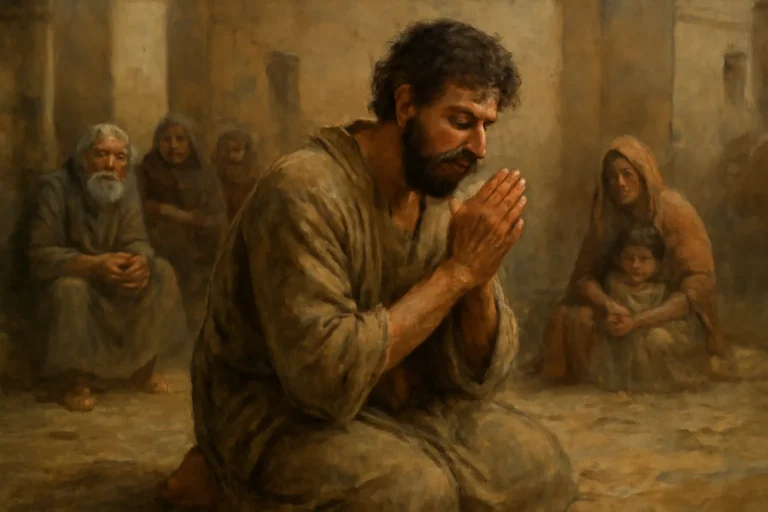
Overview: The Beatitude and Its Core Assertion
Blessed are the poor in spirit is one of the most famous and
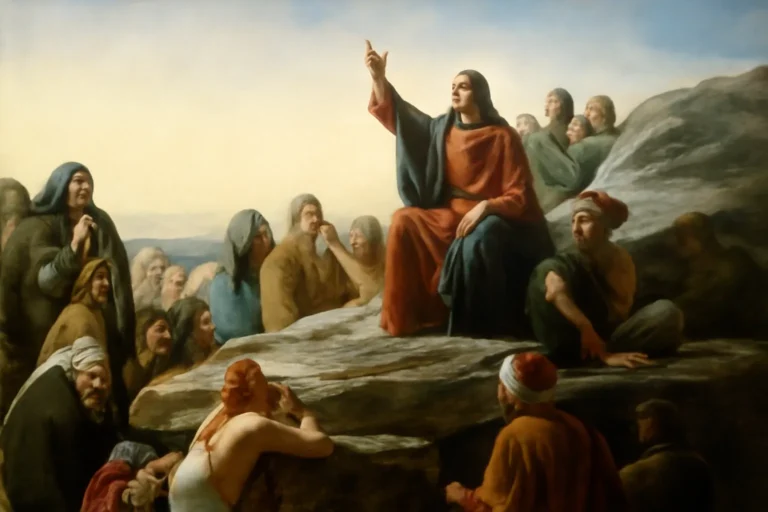
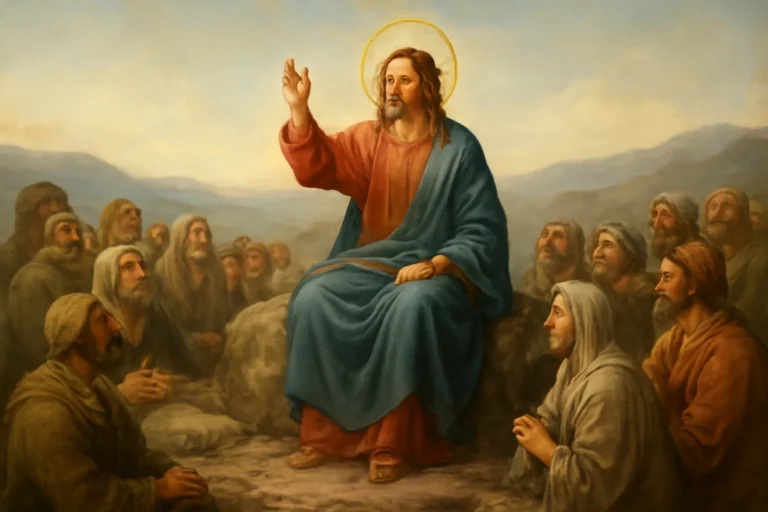
provocative statements in the Christian scriptures. It sits at the beginning of the Sermon on the Mount, a collection of teaching attributed to Jesus that has shaped Christian ethics, devotion, and theology for two millennia. The phrase invites readers and listeners into a paradox: true blessing is not found in wealth, status, or self-sufficiency, but in a posture of spiritual poverty, a humble recognition of dependence on God. The claim is not merely about emotional mood or social circumstance; it is a theological declaration about how a person stands before the divine, how one relates to grace, and how one enters the kingdom of heaven.
In every serious reading, the beatitude challenges assumptions about success, merit, and autonomy. It reframes strength as maturity of heart, a willingness to admit need, and an openness to divine provision. The phrase has inspired a long tradition of reflection on humility, trust, grace, and the transformation that occurs when a person is willing to renounce the illusion of self-sufficiency. As a theological claim, it also opens up questions about social obligation, power, and the nature of the coming kingdom. In short, to interpret blessed are the poor in spirit is to ask: How do we live as people who know we stand in need of God, and how does that knowledge shape our worship, ethics, and hope?
Foundations in the Beatitudes
Context within the Sermon on the Mount
The Beatitudes, including this opening line, appear in a broader block of teaching that frames what it means to live as a citizen of God’s reign. Positioned at the start of Matthew’s Gospel, the Beatitudes function as a compact catechism: they describe the inner dispositions, divine approval, and future realities that mark those who belong to God. The broader passage uses parallel phrases like theirs is the kingdom of heaven to anchor present humility to future fulfillment. The instruction is not a merely interior mood; it has concrete implications for how life is lived in community, how money and power are viewed, and how mercy, purity, and peace become practical hallmarks of discipleship.
Meaning of “poor in spirit” and “theirs is the kingdom of heaven”
Translators wrestle with how best to render the key terms. The Greek words point toward a poverty of spirit rather than a socioeconomic status alone. The term for “poor” is often understood in the sense of lacking wealth and resources, but paired with the phrase in spirit it emphasizes a spiritual posture: a recognition that one’s ultimate security, identity, and hope depend not on personal merit but on the grace of God. When Jesus pronounces theirs is the kingdom of heaven, he links this posture to an eschatological reality—a present alignment with God’s rule that will be consummated in the age to come. In other words, spiritual poverty is both a present trust and a future inheritance.
How poverty of spirit relates to humility, dependence, and grace
The beatitude invites readers to see humility as not only a virtue but a spiritual condition that makes room for divine action. Dependence on God is not a sign of weakness; it is the place where grace can work most fully. In many interpretive traditions, poverty of spirit is the antidote to pride, self-reliance, and the illusion that one can secure righteousness apart from God. This stance enables a person to receive God’s gifts—mercy, forgiveness, reconciliation—and to participate in the life of God’s kingdom in surprising ways: through service, compassion, and truth-telling that honors the vulnerable.
The relationship between interior disposition and social imagination
The claim has often been read in two complementary ways: as an inward disposition that transforms the heart, and as a call to ethical living toward others. The inner poverty of spirit expresses genuine virtue, which then bears fruit in outward action—humble leadership, justice-seeking, and care for those who are impoverished by circumstance. In many Christian traditions, this beatitude anchors a robust social ethic: it does not romanticize poverty but recognizes the dignity of every person and the moral obligation to address structural injustice while maintaining a posture of dependence on God.
Biblical Variants and Parallel Passages
Luke’s Beatitudes and the different setting
A parallel form of the sermon appears in Luke 6:20–23, where Jesus pronounces, “Blessed are you who are poor, for yours is the kingdom of God.” Luke’s version shifts the focus toward the poor and often emphasizes present blessing within the community. The contrast between Matthew’s “poor in spirit” and Luke’s “poor” invites careful interpretation: Luke foregrounds material poverty and the social experience of poverty, while Matthew emphasizes the spiritual posture that recognizes dependence on God regardless of outward wealth. The two accounts together illuminate a broad spectrum of blessing—both a present relief of God’s providence and a future inheritance when God’s justice is fulfilled.
Other biblical considerations and semantic breadth
In the biblical canon, related ideas surface in passages that call the proud to humility, or that celebrate God’s upside-down economy where the last are first. While not all of these texts use the exact phrase “poor in spirit,” they share a thematic kinship with the Beatitude. For example, prophecies and parables about childlike trust, dependence on divine provision, and rejection of self-righteousness align with the Spirit-centered poverty the Beatitude commends. Many scholars argue that the continuity across both testaments models a single arc: God’s favor is shown toward those who acknowledge their need for God, and such acknowledgment becomes the soil from which true righteousness grows.
Translations and semantic breadth across languages
The translation journey—from the original Greek to English, Latin, and beyond—highlights semantic breadth. Some modern translations emphasize the political and social implications; others stress the personal spiritual formation that flows from dependence on God. Regardless of nuance, the core message remains: genuine blessing arises not from self-sufficiency but from a humble reception of God’s grace, which then shapes one’s choices, relationships, and mission in the world.
Greek Lexicon and Semantic Range
The term ptōchos and its range of meanings
In the original language, the key term for “poor” is ptōchos, which can denote someone who is destitute, dependent, or marginalized economically, but in the context of the Beatitudes it is often understood more broadly as “lacking resources in a way that reveals dependence on God.” The Psalmist’s cry for help and the prophets’ appeals to mercy echo similar language, but Jesus reframes poverty as a spiritual posture that ultimately relates to allegiance—whose trust and priority are in the one true God.
The phrase ptōchoi en pneumati: “poor in spirit”
The expression ptōchoi en pneumati is frequently translated as “poor in spirit.” The prepositional phrase en pneumati (in the spirit) has sparked discussion about its exact sense: does it mean “in (one’s) spirit,” “in the Holy Spirit,” or “in spirit (as a general, inward reality)”? Most scholars favor the sense of the former: a spiritual condition of dependency and humility that is oriented toward God. Yet the broader interpretive field includes understandings that this poverty of spirit is empowered by the Spirit, that it manifests as a life lived under divine influence, and that it is sustained by ongoing grace.
How semantic range informs interpretation
This semantic range informs how communities might read the beatitude within worship, catechesis, and ethical formation. If poverty of spirit is primarily inward, it becomes a cue for contemplative practice, prayer, and self-examination. If it is also outwardly relational, it invites acts of mercy, solidarity with the marginalized, and the pursuit of justice that honors God as the ultimate Source of life. Across traditions, the breadth of this term invites faithful readers to cultivate a responsive heart rather than a purely doctrinal understanding.
Theological Interpretations through the Ages
Patristic readings: humility as the posture of grace
For early church fathers, poverty of spirit often aligned with the temperament of humility, contrition, and trust in God’s mercy. Figures such as Augustine and Gregory the Great described the Christian life as a journey from pride to humility and from self-reliance to God-reliance. The beatitude becomes a window into sanctification: a soul learns to lean on divine grace, acknowledging that salvation is a gift rather than a personal achievement. The language of spiritual poverty thus becomes a corrective to vainglory and a doorway into contemplative union with God.
Medieval to Reformation: humility, virtue, and the order of grace
In the medieval period, debates about virtue theory and divine grace gave significant weight to humility as a virtue that orients the entire life toward God. The Reformation brought renewed attention to justification by faith and the authentic experiential dimension of the Beatitudes. Across Protestant and Catholic traditions, this beatitude has been read as a call to self-examination, repentance, and a trustful appropriation of divine mercy. The Reformation also encouraged readers to distinguish “poverty of spirit” from mere economic poverty and to see both as related to a Christ-centered anthropology.
Contemporary theological perspectives
Modern theologians often emphasize the social and ecological implications of poverty of spirit. In many contexts, the phrase is read in relation to power, wealth, and privilege, challenging readers to confront structures that perpetuate inequality while maintaining a posture of dependence on God. Others stress the transcendent dimension: the kingdom of heaven is not only future but present, inviting a community shaped by mercy, truth, and reconciliation. Across traditions, the Beatitude remains a living text that continues to shape preaching, spiritual formation, and ethical decision-making.
Ethical and Practical Dimensions
Spiritual formation: disciplines that cultivate poverty of spirit
Cultivating poverty of spirit is often described as engaging practices that root a believer’s identity in God rather than in wealth, status, or personal achievement. Key disciplines include:
- Prayer as dependence: a daily habit of confession, petition, and gratitude.
- Scripture meditation that centers on God’s mercy and sovereignty.
- Fasting as a physical reminder of dependence and reliance on God’s provision.
- Communal worship that honors the dignity of every person, especially the vulnerable.
- Generosity that reallocates resources in solidarity with those who lack.
Pastoral care and humility: shepherding with vulnerability
In pastoral settings, poverty of spirit translates into leadership marked by humility, listening, and service. Pastors and lay leaders alike are challenged to cultivate a posture that is steady under criticism, open to correction, and oriented toward the flourishing of the whole community. The beatitude has often inspired churches to practice hospitality, mercy ministries, and programs that support those who are marginalized—without resorting to hype or coercion, but through patient, faithful presence.
Social justice and communal wealth: ethics in light of the kingdom
The beatitude also invites believers to engage justice with humility. It suggests that economic systems should reflect compassion, fairness, and the common good, not merely market efficiency. The kingdom of heaven vision reframes wealth as stewardship under divine governance. Thus, communities may emphasize fair wages, responsible wealth-building, and practices that protect the vulnerable, all while recognizing that the ultimate salvation and security come from God’s grace, not material abundance.
Worship, liturgy, and proclamation
In worship, this beatitude anchors a sense of God’s majesty and the need for mercy. Sermons and liturgies that emphasize dependence on God help believers experience the paradox of blessing: to be poor in spirit is to be rich in grace. Baptism, the Lord’s Supper, and baptismal catechesis often incorporate the themes of vulnerability and divine provision, inviting participants to identify with Christ who emptied himself for others.
Common Misunderstandings and Boundaries
Misunderstanding: poverty equals virtue by itself
A frequent misreading equates material poverty with spiritual virtue. While poverty of spirit includes humility before God, it is not a blanket endorsement of poverty as an automatic sign of sanctity, nor a condemnation of wealth per se. The biblical witness recognizes dignity across socio-economic statuses and teaches that God’s grace is available to all. The crucial point remains: what matters is the orientation of the heart—toward God, toward neighbor, and toward justice—more than outward circumstances alone.
Misunderstanding: humility as passive resignation
Some interpret poverty of spirit as passive resignation. But a robust reading sees humility as active trust that invites courageous discipleship: speaking truth, pursuing righteousness, and serving others with gladness. The Beatitude does not disparage action; it reframes action as grounded in dependence on God’s initiative and grace.
Boundaries: diversity within a shared vision
Across Christian traditions, there is diversity in emphasis. Some emphasize social action and justice; others highlight contemplative prayer and inner conversion. Yet all approaches share the conviction that true blessing arises from acknowledging one’s need for God and accepting God’s promise of a future kingdom where pain, oppression, and want will be transformed.
Concluding Reflections: Living as the Poor in Spirit Today
The summons to be poor in spirit invites believers into a way of life that recognizes dependence on God as the primary orientation of existence. It is not a call to withdrawal from the world but a summons to engage the world with a gospel-informed posture of trust, honesty, and mercy. In most contexts, practitioners of this beatitude cultivate a rhythm of humility and gratitude that shapes decisions about money, power, and influence. They strive to advocate for the vulnerable, cheerfully accept correction, and celebrate the sufficiency of God’s grace.
If one asks what it means to experience kingdom reality now, the Beatitude provides an answer: the kingdom is where the humble are sustained by divine provision, where mercy is practiced, where the pure in heart are formed, and where the peacemaker works toward reconciliation. In this sense, the cry of the poor of spirit is not a denial of strength but a redefinition of strength—strength seen as trust, not triumph; courage grounded in grace, not in grasping power.
For students, preachers, and lay readers alike, the study of this verse remains a living project. It invites fresh applications in prayerful discernment, in how communities structure their life together, and in the ways believers embody the gospel in contemporary culture. The blessing proclaimed in Matthew 5:3 is durable: it endures as a beacon for those who admit need, rely on God, and participate in the coming fullness of God’s kingdom—now and not yet.
In sum, to declare that blessed are the poor in spirit is to announce a radical reorientation: life is lived under grace, power is exercised through service, and the ultimate reward is the gracious reign of God breaking into creation. The text challenges every reader to examine where they place their security, and it invites a joyful, disciplined, and hopeful way forward that honors God, serves neighbor, and longs for the day when God’s justice is finally fulfilled.