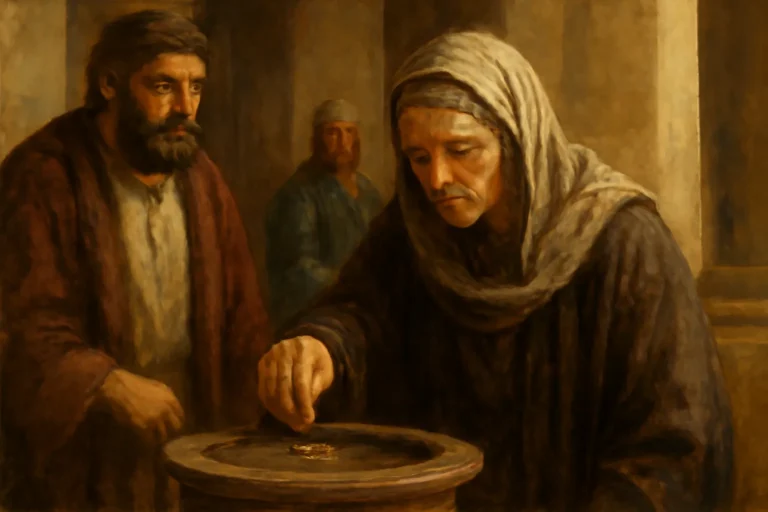
Generosity and Stewardship: Biblical Principles on Money and Giving
Money and giving are not merely transactional concerns in Scripture. They are occasions for shaping character, forming community, and aligning the heart with God’s purposes. This article surveys the Biblical perspective on money and giving, tracing a coherent arc from creation to the church age, and offering practical guidance for individuals, families, and faith communities. The aim is not to treat wealth as a mere problem to solve, but to understand wealth as a potential instrument for worship, justice, and blessing.
Foundations: God as Owner and Humans as Stewards
From the opening pages of the Bible, money and resources are framed within a larger truth: God owns everything, and humans are entrusted with responsibility to manage those resources. This framework is crucial for any conversation about generosity and stewardship. When we say that God is the owner and we are stewards, two practical implications emerge: accountability before God for how we use resources, and a calling to use resources for the well-being of others and the advancement of His purposes.
In Scripture, this is more than a financial or economic doctrine; it is a worldview. If wealth is a trust rather than a possession, then our approach to money changes. The Bible speaks often about priorities, taxation of time and talent, and the way we treat the vulnerable. Even statements about wealth absence or abundance are interpreted in light of God’s sovereignty and the call to love neighbor. In that sense, biblical money management is discipleship in action.
Old Testament Foundations: Law, Temple, and Almsgiving
The old covenant provides a robust pantry of practices and principles that illuminate how God’s people should relate to money, land, and provision.
Tithes, Offerings, and Sacred Provisions
The Old Testament presents a system of giving that sustains the Tabernacle and later the Temple, supports the Levites, and assists the vulnerable. The principle of the tithe—often understood as a tenth of produce or income—appears as a starting point for many readers. Yet the biblical portrait goes beyond a fixed percentage. It emphasizes generosity that is responsive to God’s provision, a rhythm of giving that acknowledges God as the source of all wealth.
Prominent passages invite the faithful to bring offerings as expressions of gratitude and trust. In Leviticus, Deuteronomy, and the prophetic literature, money is not an end in itself but a means to support worship, sustain the community, and extend mercy. The Bible’s sustained focus on offerings—tithe, firstfruits, and voluntary gifts—calls believers to a posture of thanksgiving and dependence on God.
Debt, Interest, and Economic Justice
Scripture also speaks candidly about the economics of debt and the humane use of interest. In the Law, there are provisions that protect the poor from predatory lending and ensure that people are not crushed by endless debt cycles. The biblical ethic emphasizes rest and release, including the Sabbatical and Jubilee frameworks, which remind Israel that wealth is not merely private accumulation but a trust that must be tempered by care for the vulnerable and the possibility of renewal for communities in debt or poverty.
Compassion for the Needy: Almsgiving as Worship
Almsgiving and care for the poor are central to the biblical economy. The Torah instructs expressions of mercy that flow from the people’s gratitude to God and concern for human flourishing. Generosity toward the marginalized is presented not as a peripheral virtue but as an integral aspect of covenant life. The call to protect widows, orphans, strangers, and the hungry is a constant rhythm, shaping how wealth should be exercised within the life of the community.
New Testament Teachings: Grace, Generosity, and the Sermon on the Mount
As the narrative moves into the life and teaching of Jesus, the Bible reframes money and giving within the light of the gospel. Wealth is not condemned as such, but it is examined through the lens of heart allegiance, trust, and the mission of God in the world.
Jesus’ Teachings on Wealth, Treasure, and the Heart
Across the Gospel accounts, Jesus speaks with clarity about where riches fit in the disciple’s life. He warns against laying up earthly treasures that fail, and he encourages laying up treasures in heaven by living in trust and generosity. The famous exhortations about storing up treasures in heaven (where neither moth nor rust destroys, and where thieves do not break in and steal) invite believers to orient their finances toward purposes with eternal impact. In parallel, Jesus teaches that money exposes the soul—where the heart is, there your treasure will be also.
Cheerful, Proportional, and Sacrificial Giving
The New Testament reframes giving through the lenses of grace, mercy, and Gospel partnership. 2 Corinthians 9:6-7 highlights the principle of proportional, cheerful giving: “He who sows sparingly will also reap sparingly, and he who sows bountifully will reap bountifully.” The motive matters as much as the amount; God loves a cheerful giver, one who gives joyfully and trusts Him with the result. The idea is not legalistic rule-following but a transformation of the heart that expresses love for Christ through generosity toward others.
Money and Mission: Supporting the Gospel
The New Testament repeatedly links financial stewardship with the advance of the Gospel. Giving supports missionaries, church leaders, and practical ministries that spread the message and meet tangible needs. The principle is not to inflate the church as an enterprise, but to recognize that money is a tool for faithful witness when used with integrity and dependence on God. The Apostle Paul’s letters encourage churches to participate in generous, voluntary offerings that align with gospel-oriented priorities.
Practices of Generosity in the Early Church
The first Christian communities modeled a radical approach to wealth and sharing. Their practices illustrate a practical outworking of biblical money management within the church body.
Communal Living and Shared Resources
The book of Acts describes believers who, after receiving the Spirit, maintained a posture of radical generosity: “All who believed were together and had all things in common” (Acts 2:44). Property and resources were held loosely for the good of the community, with people selling possessions to meet needs and support ministry. While this model is not universally universalized as a prescription for all times and places, it demonstrates the strong impulse toward shared provision and mutual care within the body of Christ.
Support for Ministers and Mission
The early church prioritized funding for those who preached the Gospel and served in leadership. The practice of “let those who preach the gospel live from the gospel” (1 Corinthians 9:14) reflects a practical stewardship ethic: money supports spiritual leadership, education, and pastoral care, enabling the church to fulfill its mission with integrity and accountability.
Ethical Considerations: Wealth, Poverty, and Justice
Money in Scripture is never abstract. It is intimately connected with justice, mercy, and the way communities treat the vulnerable. The Bible treats wealth as a potential blessing and a serious responsibility—the two sides of a stewardship coin.
Stewardship as a Holistic Discipline
Biblical money management is not merely about giving money away. It is about a holistic approach to life that includes budgeting, saving for the future, paying debts, providing for family, and using resources to honor God. The biblical view of stewardship integrates personal piety with social responsibility, encouraging believers to consider how financial decisions affect neighbors, communities, and creation itself.
Wealth and Justice
Scripture consistently challenges any economic system that harms the vulnerable or institutionalizes inequity. The biblical answer to injustice is not only personal virtue but collective action—sound governance, generous giving, and policies that promote dignity and opportunity for the poor. The Bible’s voice on money and giving thus intersects with ethics, public policy, and social transformation in ways that remain deeply relevant today.
Debt, Simplicity, and Freedom
While the Bible does not categorically condemn debt in every instance, it invites discernment and restraint. Wisdom literature often extols prudent planning and living within one’s means. A biblical approach to money emphasizes contentment, merit, and responsibility, prioritizing freedom from the bondage of debt and the ability to give when opportunity arises.
Finances are not merely an administrative arena; they are a spiritual classroom. The habits a believer forms around money—discipline, generosity, gratitude, and dependence on God—function as a training ground for spiritual maturity. The Bible teaches that money should serve God’s kingdom, not vice versa. In other words, money becomes a disciple’s test of trust and obedience.
Budgeting, Saving, and Giving
A practical approach to biblical money management includes purposeful budgeting that reflects values, intentional saving for emergencies and future responsibilities, and regular, thoughtful giving. The discipline of planning to give—whether through a proportionate program or spontaneous generosity—cultivates humility and reliance on God, not on personal wealth or control.
Tithing and Beyond: Proportional Giving
While the biblical practice of tithing is debated in contemporary circles, the underlying principle remains clear: give in proportion to what God has entrusted to you. The conversation in the New Testament centers on spirit-filled generosity rather than legalistic percentages. The goal is to cultivate a habit of giving that is deliberate, joyful, and connected to the needs and opportunities before the church and the wider world.
Practical Applications for Individuals and Families
What does the Bible say about money and giving in a concrete sense for daily life? The practical applications below translate timeless principles into everyday actions.
Develop a personal theology of money: Reflect on who owns your resources and why you give. Let the gospel shape your motives and your plan.
Create a giving plan: Decide how much to give, to whom, and with what frequency. Consider a proportional approach that aligns with your income and life stage.
Practice cheerful generosity: Seek to give joyfully rather than under compulsion. The posture of the heart matters as much as the amount.
Protect the vulnerable: Set aside resources to aid those facing poverty, illness, or crisis, especially within your local church and community organizations.
Manage debt wisely: Develop a plan to reduce high-interest or unnecessary debt so that giving and saving can grow rather than shrink.
Teach children about money: Communicate the biblical view of ownership, stewardship, and generosity so they grow up with healthy attitudes toward wealth.
Other practical steps include establishing emergency funds, contributing to missions, supporting education and healthcare initiatives, and participating in relief efforts during times of disaster. The Bible envisions money not as a mere commodity but as a tool for blessing, reconciliation, and the expansion of God’s kingdom.
Church and Ministry: Corporate Giving and Allocation
Beyond personal stewardship, the Bible addresses how communities steward financial resources together. The church, as a gathered body, bears a responsibility to manage offerings with integrity, transparency, and accountability.
Transparent budgeting: Publicly share how funds are allocated and used to honor God and serve people.
Accountability structures: Establish governance bodies and financial controls to prevent misuse and build trust.
Prioritizing mission: Allocate resources toward preaching, discipleship, mercy ministries, and community development that align with biblical priorities.
Equity and inclusion: Ensure resources reach diverse communities, including those who may be overlooked or marginalized.
Stewardship education: Teach congregants about financial faithfulness as part of spiritual formation.
In considering the question “what does the Bible say about money and giving” for churches, the emphasis is on stewardship as a communal discipline—how a faith community uses resources for worship, care, and mission, while fostering integrity and dependence on God rather than on human mechanisms of wealth and prestige.
Technology, Economy, and the Christian Conscience
In contemporary settings, digital giving, venture philanthropy, social entrepreneurship, and complex financial instruments complicate the biblical conversation about money and giving. The Bible’s core concerns—the heart’s allegiance, justice for the poor, and the integrity of one’s financial life—remain constant. Christians are invited to discern wisely, balancing innovation with faithfulness, and to ensure that modern methods advance the gospel rather than undermine the dignity and well-being of real people.
Online donations, cryptocurrency donations, and digital wallets raise questions about security, transparency, and accountability. The biblical call remains: give with integrity, trackable accountability, and a spirit that seeks God’s glory more than personal convenience. The principle of stewardship can guide believers to adopt technologies that enhance generosity and stewardship while avoiding exploitation or opacity.
Wealth as a Tool, Not a Trophy
Across the arc of Scripture, wealth is never an ultimate good. It is a tool for serving God’s purposes. Whether wealth increases or decreases, the true measure is whether life remains oriented toward love for God and neighbor. The biblical narrative invites a posture of gratitude in abundance and resilience in want, both of which fuel generosity that blesses others and honors God.
To bring the theology into concrete light, consider a few representative scenarios that illustrate the biblical teaching on money and giving.
Individual generosity in times of plenty and scarcity: A believer chooses to bless neighbors during a season of abundance, while prioritizing ongoing support for a church plant or a mission project in a resource-constrained period.
Church stewardship in crisis: A congregation reallocates funds to help disaster relief while sustaining ongoing ministry and staff compensation in a way that preserves mission integrity and fairness.
Family budgeting with spiritual priorities: A household creates a budget that includes debt repayment, savings, and a fixed percentage for charitable giving, modeling healthy financial discipline to children.
Global justice through local action: A faith community collaborates with partners to provide sustainable livelihoods, healthcare, and education in underserved regions, demonstrating that biblical generosity extends beyond borders.
These scenarios reflect the larger truth: the Bible invites believers to steward resources with wisdom, compassion, and a look to eternity, recognizing that money is a language—one that can express love, mercy, and justice when used in alignment with God’s purposes.
Frequently Asked Questions
What does the Bible say about money and giving in relation to salvation? The Bible does not teach that wealth earns God’s favor, nor that poverty earns God’s disfavor. Rather, salvation in Christ transforms attitudes toward money, turning generosity into a visible witness of faith. Money becomes a tool to live out the gospel in practical ways.
Is tithing a legal requirement for Christians today? The New Testament emphasizes cheerful, generous giving rather than rigid legalistic rules. Some Christians practice tithing as a spiritual discipline; others give proportionally, according to ability and discernment. The key value is a heart oriented toward God and toward others, not a fixed percentage alone.
How should a church handle offerings? With integrity, transparency, and accountability. Biblical principles emphasize stewardship, stewardship education, and the alignment of funds with biblical priorities—worship, discipleship, mission, and mercy.
What about wealth and social responsibility? Scripture challenges exploitation and calls for justice, mercy, and generosity toward the vulnerable. Christians are encouraged to pursue economic practices that honor God, protect dignity, and advance the common good.
How can individuals cultivate generosity in daily life? Begin with gratitude, seek opportunities to bless others, practice proportional giving, teach children by example, and pursue a lifestyle that prioritizes generosity as a spiritual discipline.
Conclusion: Generosity and Stewardship as a Way of Life
What does the Bible say about money and giving? It presents a unified vision in which wealth is a temporary stewardship under a sovereign Creator. Generosity is not a mere extra or charitable add-on; it is a core expression of life in Christ, a concrete form of trusting in God, a practice that blesses others, and a catalyst for spiritual growth. Stewardship is more than financial management; it is a discipleship posture—recognizing God’s ownership, valuing human flourishing, and seeking the advancement of God’s kingdom through prudent, compassionate, and joyful living.
As believers reflect on their own finances in light of the Bible’s teaching on money and giving, a few guiding principles emerge with clarity:
God owns everything—we are stewards accountable to Him for the use of our resources.
Generosity matters—it reveals the heart’s alignment with God and furthers the gospel and mercy in the world.
Support for the vulnerable is a consistent biblical motive—ministries, families, and communities thrive when attention is given to the marginalized.
Integrity and transparency govern financial life within the church and in personal practice, ensuring that resources honor God and serve people well.
Discipleship encompasses money—financial decisions become opportunities to trust, reflect Jesus, and participate in God’s redemptive work.
In a world where wealth can be a source of anxiety, power, or isolation, the biblical call to generosity and stewardship offers a counter-narrative: a life oriented toward God’s kingdom where money, gifts, and possessions are used to bless others, build community, and testify to the good news of Christ. By studying what the Bible says about money and giving and by applying its wisdom in concrete ways, readers can cultivate a faithful, generous, and hopeful way of living that honors God and serves neighbor.