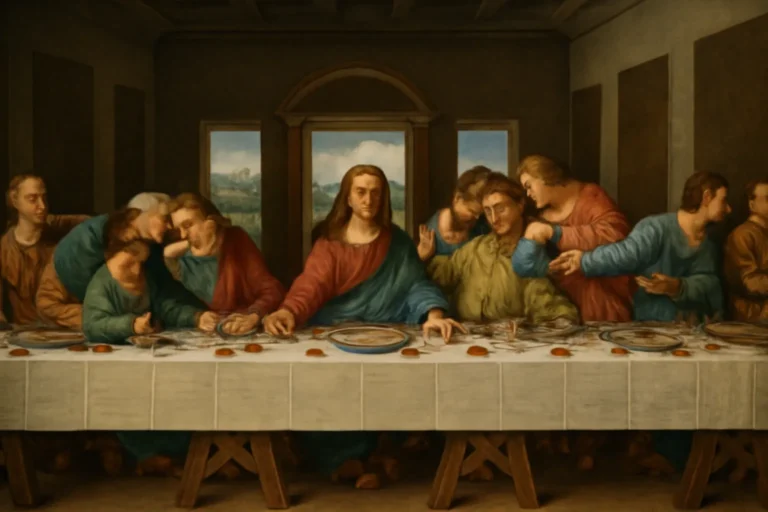
The Last Supper stands at the transitional hinge of biblical history, where Jesus’ ministry culminates in a covenantal meal that reshapes the way a people relate to God. This long-form examination invites readers to explore the event from multiple angles: historical context, scriptural narration, covenantal language, liturgical significance, and ecumenical interpretation. While the phrase the Last Supper is common in Christian discourse, theologians and pastors often speak of the Lord’s Supper, the Eucharist, the Holy Communion, or the breaking of bread—all of which point toward a single, transformative moment in which the old covenant yields to a promised succession: a new covenant in the blood of Christ. This article uses the language of theology, biblical scholarship, and pastoral reflection to illuminate how the supper Jesus shared with his disciples inaugurates a new covenant—a covenant that continues to shape worship, ethics, and the understanding of redemption across Christian communions.
To frame the discussion, this article proceeds through a series of clearly delineated sections. It attends to the historical setting, surveys the gospel narratives, analyzes the symbolism of the elements, surveys the development of Eucharistic doctrine, and closes with reflections on how the Last Supper and the New Covenant function in contemporary faith communities. Along the way, the text uses a variety of semantic expressions to refer to this pivotal meal—because the terms themselves carry nuanced meanings about participation, memory, sacrifice, and fellowship. The reader is invited to consider how these semantic variations contribute to a richer, more robust understanding of the covenant faith once for all delivered to the saints.
Framing the Last Supper within Covenant History
Historically and theologically, the Last Supper sits at the boundary between the Old Covenant fulfilled in Jesus and the New Covenant inaugurated by his death and resurrection. The concept of a covenant—God’s promise and divine fidelity to a people—shapes how readers understand this meal. In the Hebrew Bible, the word “covenant” refers to binding agreements in which God calls a people to trust, obedience, and faithfulness in exchange for blessing and protection. The New Covenant, as described in Jeremiah’s prophecy and echoed by Jesus himself, does not abolish the moral and ceremonial demands of the law; rather, it transforms them by enabling a new relationship with God through grace, mediated by the Spirit, and realized in the person of Christ.
- Jeremiah 31:31–34 offers a foundational prophetic vision of a covenant written on the heart, not merely on tablets. This passage is frequently cited in Christian reflection as the scriptural bedrock for understanding the New Covenant as intimate, interior, and transformative.
- The Last Supper narrative, especially in the Synoptic Gospels, presents Jesus as the mediator of this covenant renewal, framing the meal as both a memorial and a participation in the eschatological fulfillment to come.
- In Paul’s letters, the concept of Christ’s blood as the seal of the covenant makes a direct link between the crucifixion event and the covenantal promise, inviting communities to remember, proclaim, and re-enter the covenant through the act of the Lord’s Supper.
To say it succinctly, the Last Supper is not only a meal; it is a theological act that discloses a divine plan for humanity’s restoration. In this sense, the new covenant meal is both retrospective and prospective: retrospective in that it remembers the deliverance God achieved in the past and prospective in that it anticipates the full realization of that deliverance in the coming kingdom of God.
Scriptural Portraits: The Gospel Narratives
The four Gospels offer complementary perspectives on the event often called the Last Supper, a term that captures the final meal Jesus shares with his closest followers before his passion. While Matthew, Mark, and Luke narrate a shared outline—preparation for Passover, the institution of the covenant meal, and the institution of the Lord’s Supper as a ritual memory—John’s Gospel emphasizes a different set of motifs, such as acts of service and a high priestly discourse that frames the moment within a broader redemptive purpose.
Matthew and Mark: Passover and the Institution
In the Synoptic Gospels, the meal occurs as the Passover is celebrated. The synoptic witnesses are united in depicting Jesus as the host who breaks bread, shares wine, and declares the bread to symbolize his body and the cup to symbolize his blood given for many. The phrasing centers on the temple-informed language of sacrifice and deliverance: this is my body, this is my blood—a controversial and richly debated formula that a) anchoring the meal in sacrifice and b) inaugurating the New Covenant in his blood. The act is not merely commemorative; it is constitutive: by partaking in the meal, the disciples enter into a new mode of existence under God’s reign.
Luke: Hospitality, Remembrance, and Mission
The Gospel of Luke introduces a strong theme of hospitality and shared meals, portraying Jesus as a guest who welcomes others into the table. Luke emphasizes that the meal is mindful of the poor, the marginalized, and the observance of the remembrance of Jesus’ own ministry. The “new covenant” language appears in Luke’s version of the institution narrative, though Luke tends to foreground the communal feast as a sign of inclusion and mission. The act is presented as a community-building ritual that binds the followers together and orients them toward the coming of the kingdom.
John: Foot-washing and the New Commandment
In John 13–17, the Last Supper is not primarily narrated as a meal but as a moment of profound teaching, service, and anticipation of the cross. The foot-washing episode adds a distinctive dimension: Jesus models humble service, turning leadership into an act of love. John’s Gospel culminates in Jesus’ high priestly prayer, which is deeply covenantal in its language—desiring that his followers be united, that they be sustained by his word, and that they live in the indwelling of the Father and the Son. The New Covenant frame in John is expressed through Jesus’ ongoing relationship with the Father and the Spirit, rather than a strictly liturgical meal narrative. Yet the themes of memory, unity, and mission align with the other Gospels, reinforcing that this event functions as a covenantal turning point for the community of faith.
The New Covenant and the Old Covenant: A Covenantal Transition
The transition from the old to the new covenant is a central theological claim of Christian faith. The New Covenant is described as a gracious act of God that writes his law on the heart, enables obedience through the Spirit, and creates a people who belong to him by grace. The Lord’s Supper is the visible sign that this transition has taken place and is ongoing for Christian communities through time.
- Old Covenant compatibility: The new covenant does not erase the moral demands of the old covenant. Rather, it reorients them through love, empowerment, and a transformed heart.
- Mediator and sacrifice: Jesus acts as the mediator of the new covenant, and his body given and blood shed establish the covenant in blood, as the term suggests in Pauline and synoptic texts alike.
- Corporate participation: The supper invites the church to participate in the covenant community, recognizing that salvation is not only personal but communal, and that the church exists as the body of Christ in the world.
Across the arc of biblical interpretation, the new covenant meal is both a memory of what God did in a historical moment and a present act of faith for ongoing formation. It is, in Pauline terms, a proclamation until the Lord returns: the memorial meal declares the Lord’s death until he comes, and in that declaration, the covenant’s reality is made present for the gathered faith community.
Bread and Cup: The Sign of the Covenant
At the center of the Last Supper narrative lies the symbolic use of bread and wine (or grape juice in some traditions). The bread represents Christ’s body, broken for nourishment and healing; the cup represents Christ’s blood shed for the forgiveness of sins. The symbolism is rich and layered:
- Body and blood as a living covenant: The language of body and blood signals a deep, intimate participation with Christ, akin to sharing in the life of the crucified and risen Lord.
- Memory (anamnesis): The meal calls the church to remember Jesus’ saving acts—the Passover-like deliverance and the cross—transposing the past into the present with faith and gratitude.
- Hope and anticipation: Partaking in the Eucharistic meal expresses hope for the full realization of God’s kingdom and the renewal of all things in Christ.
Different Christian traditions emphasize various aspects of the bread-and-wine symbolism. Some stress the real presence of Christ in the elements, others focus on a symbolic memorial, and still others articulate a view of spiritual presence or a functional participation in Christ’s sacrifice. Each perspective aims to honor the central claim that the supper is a covenantal act that binds God and his people in a continuing relationship of grace and faithfulness.
Theologies and Traditions of the Eucharist: Diverse Practices, Shared Faith
Across Christian history, the practice known as the Supper of the Lord has been understood, celebrated, and doctrinally interpreted in diverse ways. While all traditions acknowledge the Last Supper as a foundational event, they diverge in how they articulate the presence of Christ in the elements, how often the meal should be celebrated, who may administer it, and what language should accompany the rite. Here is a compact survey of major strands:
- Catholic and Orthodox traditions often teach a form of real presence in the Eucharist, holding that bread and wine become, in a true sense, the body and blood of Christ during the liturgical celebration of the Lord’s Supper. The rite is sacramental, efficacious, and central to corporate worship.
- Protestant traditions range from symbolic or memorial interpretations (Zwinglian and some Reformed views) to a form of spiritual presence or a real, though non-corporeal, presence in some denominations (Lutheran or Anglican perspectives). The emphasis frequently rests on faith, proclamation, and remembrance of Christ’s saving work.
- Anglican/Episcopal and some Lutheran churches adopt a mid-position, the so-called “real presence” in a nuanced sense or an ecclesial participation that binds the community in the body of Christ.
- Evangelical and non-denominational communities often emphasize the memorial aspect and personal faith response: “do this in remembrance of me” is a summons to gratitude, obedience, and communal belonging, with varied views on the presence of Christ in the elements.
What unites these traditions is a shared reverence for the covenantal discovery at the heart of the meal. The Lord’s Supper is not merely a ritual; it is a theological act that sustains the church’s identity and mission as the people of God. The bread-and-wine rite invites believers to remember, participate, and recommit themselves to the ongoing project of God’s redemptive work in the world.
Liturgical Reflections: From the Early Church to Contemporary Practice
From the earliest days of Christian worship, the practice now called the Eucharist or the Lord’s Supper served as the centerpiece of weekly or periodic assembly. Early Christians framed the meal within a broader euchological (worship) and catechetical (instruction) program: believers learned the meanings of Jesus’ life, death, and resurrection, proclaimed the gospel, and shared in the sacred meal as a way of life—living witnesses to the covenant faith. Over the centuries, the celebration evolved in liturgical form and theological emphasis, yet the core intention remained intact: to recall, renew, and re-enter the New Covenant in Christ.
Historical development of the liturgy
- In the Patristic era, the Eucharist was central to church life, often celebrated within the context of the Sunday gathering and the catechetical instruction of new converts.
- In the medieval period, the rite became more elaborated with liturgical vestments, incense, chants, and a fixed sequence of prayers, deepenening the sense of mystery and awe surrounding the covenant meal.
- In the Reformation era, theologians revisited the meaning of the bread and cup, the nature of grace, and the authority of Scripture, leading to varied sacramental understandings and practices across Protestant communities.
- In contemporary practice, many churches emphasize a balance of reverence, participation, and accessibility, seeking to maintain continuity with historic forms while speaking to modern faith communities.
Across these shifts, the core motifs remain consistent: the call to remember, the invitation to participate, and the promise of grace mediated through the covenantal meal. The practice is thus both ancient and living, a continuity that binds church and saints to the God who keeps faith across generations.
Ethical and Ecumenical Implications
The Last Supper and the New Covenant have practical implications for Christian ethics and ecclesial life. The covenantal meal fosters a life of gratitude, humility, charity, and unity, inviting the community to live in accordance with the values of the kingdom. It also bears ecumenical significance: while Christians differ on doctrinal specifics, the shared memory of Jesus’ self-giving love calls for dialogue, mutual respect, and cooperation in mission. The supper becomes a concrete practice of reconciliation—between God and humanity, and among fellow believers who gather at the same table as brothers and sisters in Christ.
- Humility and service: Following Jesus’ example at the foot-washing, the church learns to serve both within the community and in the wider world. This ethic of service reflects the covenantal call to love one another as a visible sign of God’s reign.
- Hospitality and inclusion: The table is a place of welcome, where social boundaries are transcended in the practice of grace. The New Covenant meal invites all who believe to partake in the life of Christ, while also challenging the church to pursue justice for the marginalized.
- Memory and mission: Remembering Jesus’ saving work is not a passive act; it stirs the church toward proclamation and mission, recognizing that the covenantal life extends into the world as a witness to God’s faithfulness.
In ecumenical dialogue, the Last Supper becomes a focal point for discussions about sacraments, authority, and ecclesial fellowship. Different Christian communities affirm the centrality of the Lord’s Supper while maintaining distinct theologies—an ecumenical balance that models unity in essential matters and freedom in non-essentials. The new covenant in Christ thus shapes not only individual devotion but also the church’s capacity to bear witness to the gospel amid plural contexts.
Continuit y and Fulfillment: The Covenant Motif over Time
The Last Supper is often read as a nexus in which time, memory, and destiny intersect. The covenant motif recurs throughout the New Testament as a refrain: God’s faithfulness in delivering his people is renewed and deepened through Jesus’ death, and the community’s response—worship, allegiance, and witness—becomes the living sign of that covenantal reality. The hour of the cross does not negate the memory of the meal; rather, it completes and confirms it: the old covenant is fulfilled in the new, and the covenantal community is commissioned to live in the sure hope of the coming kingdom.
In this sense, the supper is twofold: it is a memorial of the past act of salvation and a proclamation of future fulfillment. The language of “this cup” and “this bread” serves as a perpetual invitation to participate in a living, ongoing covenantal life. The New Covenant is not a past event alone; it is a living reality that the church enters by faith, sustains by grace, and witnesses to in a broken and needy world.
Variants of the Theme: convenient Terms and Semantic Breadth
To emphasize breadth and topical resonance, this article employs a variety of terms that point toward the same core reality: the meal that inaugurates and sustains God’s covenant with his people. Readers will encounter phrases such as Lord’s Supper, Eucharist, Holy Communion, breaking of bread, and communion feast, all of which refer to the same central act through different theological emphases. The use of semantic variations helps articulate the richness of Christian tradition and invites conversation across denominations and historical periods.
- Last Supper as the theological label that anchors the event in Jesus’ last meal with his disciples before crucifixion.
- Lord’s Supper as a phrase emphasizing surrender to the Lord and the corporate meal shared among believers.
- Eucharist (from Greek eucharistein, “to give thanks”) as a term highlighting gratitude and worship in the act.
- Holy Communion as a term stressing participation in the life of Christ and in the life of the church as the body of Christ.
- Breaking of bread as an ancient description of the common meal that prefigured the Eucharist and served as a symbol of fellowship and hospitality.
Each term carries its own emphasis and history, yet the core message remains: God invites his people to remember, to participate, and to be transformed by the covenantal meal that Jesus established “in remembrance of me.” The diverse vocabulary therefore becomes a resource for teaching, preaching, and liturgical practice, rather than a barrier to understanding.
The Covenant in Prayer, Sermon, and Practice
The Last Supper and the New Covenant influence not only doctrine but also daily practice. Prayer life, preaching, and personal devotion are enriched by the memory of Jesus’ words and actions. For believers and church communities, the covenant meal informs how one prays for sustenance, forgiveness, and unity, and how one offers service to others as a tangible expression of God’s love.
- Prayer: The meal prompts prayers of gratitude, confession, and intercession, acknowledging the breaking of old patterns of division and the creation of a single, reconciled community.
- Preaching: Sermons often use the Last Supper as a lens to interpret faith, repentance, and hope—the church’s identity as a covenant people who live by grace and are sent into the world for mission.
- Devotional life: Individuals are invited into contemplative prayer and communal reflection on the meaning of Christ’s Body and Blood for personal salvation and communal responsibility.
Conclusion: The Last Supper as a Living Covenant Meal
In sum, the Last Supper and the New Covenant together inaugurate a biblical and theological trajectory that shapes Christian worship, ethics, and identity. This covenantal meal is at once a memory of God’s historical acts of deliverance, a present meal of grace that nourishes the church, and a proclamation of the future consummation of God’s kingdom. The significance of the supper rests on what it reveals about God’s character—faithful, gracious, redeeming—and what it calls the church to become: a people who participate in Christ, embody his love, and bear witness to the reality of the covenant in every age.
As you study the Last Supper and the New Covenant, consider the following questions for personal reflection or group discussion: How does the concept of covenant shape your understanding of salvation? In what ways do the bread and the cup invite you into a more obedient, loving, and hopeful life? How do different Christian traditions interpret the presence of Christ in the elements, and what can that diversity teach us about unity in essential matters of faith?
Ultimately, the Last Supper is not merely a historical event to be remembered; it is a present-day invitation to participate in the divine life. The New Covenant meal calls for humility, gratitude, and action—the kind of life that reflects the God who promises to be with his people. When communities gather around the table, they enact a foretaste of the heavenly banquet—a sign that a great fulfillment is approaching, and that the God who promised the covenant is faithful to bring it to completion.
Thus the Last Supper and the New Covenant endure as a single, living testimony of grace: a meal that binds believers to Christ, to one another, and to the mission of announcing God’s kingdom to a world in need.