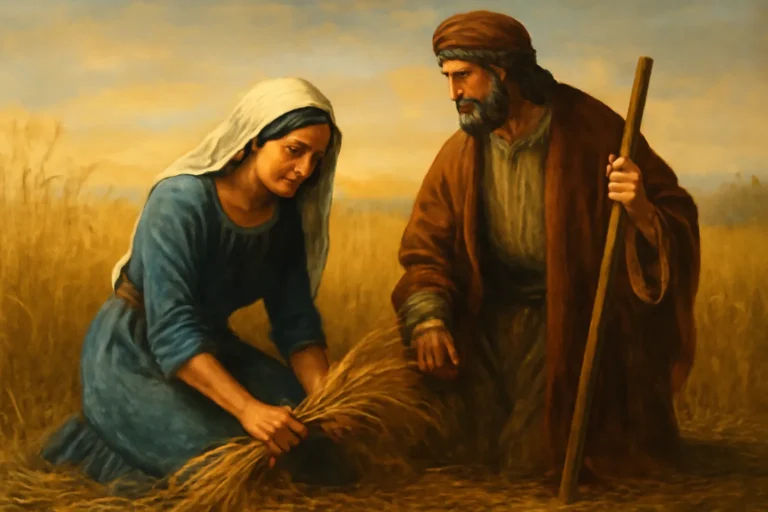
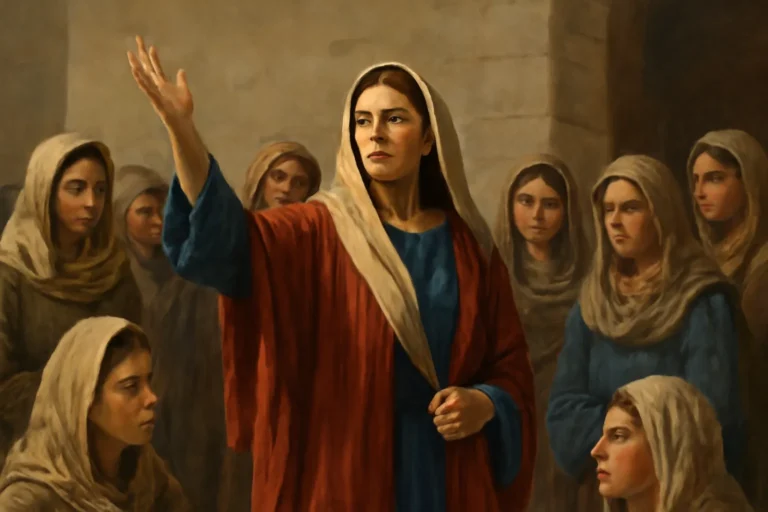
Ruth and Boaz stand at the crossroads of loyalty, hospitality, and divine providence within the biblical narrative. The story known as Ruth unfolds in the era of the judges, yet its themes reach far beyond a single historical moment. It is a compact, richly layered tale that explores how loyalty to family and faith intersects with redemption, the incorporation of a foreign woman into the people of Israel, and the unfolding of a lineage that becomes central to both Jewish and Christian traditions. In this long-form exploration, we will consider where Ruth the Moabite and Boaz the Bethlehemite fit within the biblical theology of covenant, generosity, and divine sovereignty, and how their story invites readers today to reflect on hospitality, justice, and the hope of restoration.
Historical and Cultural Context: Moabite Roots and Judahite Courts
To understand the depth of Ruth and Boaz, we begin with the world in which they move. The setting shifts between Moab, a land east of the Jordan River, and Bethlehem in Judah, a locale that would later become emblematic of the Davidic monarchy and the Messiah’s anticipated ancestral home. The Book of Ruth situates itself in a time of famine and upheaval—situations that compel families to relocate and reimagine their futures. The Moabite Ruth’s choice to accompany Naomi back to the land of Naomi’s ancestors is not merely a geographic relocation; it is a theological statement, a decision that places Ruth at the heart of the covenant community.
The cultural backdrop includes:
Gleaning laws (gleaning at the edges of fields) that provide social welfare for the marginalized, widows, and foreigners.
Levirate considerations and the broader concept of goel, or kinship redemption, which rests on the obligation and possibility of a near relative to restore a family’s standing and property.
Hospitality toward foreigners in ancient Israel, a theme that will recur in the Ruth narrative as Ruth, the Moabite, becomes an integral member of the people of Israel.
The narrative pivot occurs when Ruth, a widow who has pledged fidelity to Naomi, seeks to secure a future within the family system of Naomi’s people. In this context, Boaz appears not merely as a landowner but as a guardian-redeemer figure who embodies the ethical ideal of hesed (steadfast love) within a social and legal framework. The dynamic between Ruth and Boaz is thus both relational and covenantal, a microcosm of the larger biblical claim that loyalty to family and faith can enact tangible forms of redemption.
Literary Structure and Narrative Design: A Compact Yet Rich Tale
The Ruth narrative is compact—four chapters, a clear arc, and a careful balance of intimate moments and public acts. Yet within its modest length, it demonstrates sophisticated literary technique. The story begins with loss and displacement, moves through risk and risk-taking, and culminates in a redemptive union that secures a future not only for Naomi and Ruth but for the entire people of Israel through the Davidic line.
Some notable features include:
The use of foil characters—Naomi embodies despair and practical realism, while Ruth exemplifies devoted fidelity that transcends cultural boundaries.
Symbolic gestures, such as Ruth’s gleaning at the harvest, which culminate in Boaz’s protective intervention at the threshing floor.
A genealogical bridge that connects Ruth to David and, in Christian interpretation, to the Messiah, thereby highlighting the providential scope of the narrative.
The structure invites readers to consider how seemingly ordinary acts—gleaning for sustenance, sharing a meal, or extending a night’s hospitality at a threshing floor—can be woven into a larger story of redemption. The literary design also foregrounds the concept of divine providence working through human choices: Ruth’s decision to stay with Naomi; Boaz’s decision to redeem; Naomi’s daughter-in-law becoming an integral part of Israel’s genealogical destiny.
Themes of Loyalty, Fidelity, and Hesed: The Heartbeat of the Narrative
At the core of the Ruth narrative lies a trio of interwoven themes: loyalty, fidelity, and hesed, a Hebrew word often translated as steadfast love or loyal covenant faithfulness. Ruth’s pledge to Naomi—“Where you go, I will go; your people shall be my people; your God, my God”—is an explicit articulation of devotion that transcends tribal or national identity. This vow reframes Ruth’s identity: she moves from being a foreigner to becoming a kin-related member of Israel.
Boaz’s response to Ruth’s loyalty embodies these same themes in action. He protects Ruth at the boundary between wealth and vulnerability, supplies her needs through the law of gleaning, and, crucially, initiates the chain of redemption that makes Ruth the ancestress of a royal lineage. The two protagonists model a theology of mutual care—one that places social ethics within the orbit of divine intention.
Theatre of Hesed: Concrete Expressions
The hesed ethos in Ruth is not merely abstract virtue; it is enacted in concrete, tangible steps:
Ruth’s loyalty becomes a bridge between Naomi’s difficult past and a hopeful future.
Boaz’s generosity crosses economic distance, transforming Ruth from a gleaner into a wife and Naomi’s co-heir in the family’s destiny.
The community’s elders witness the moral weight of goel duty, confirming the legitimacy of the redemption and the rightful place of Ruth in Judah’s story.
Boaz as the Kinsman-Redeemer: Legal, Theological, and Redemptive Dimensions
A central figure in this tale is Boaz, a man whose social standing and moral character align in such a way that he becomes the archetype of the goel, the kinsman-redeemer. The legal framework surrounding Boaz’s actions is complex, rooted in an ancient Near Eastern understanding of family responsibility and property rights, yet it serves a profoundly theocentric purpose: to restore persons to the blessings of the covenant community.
Who Was the Kinsman-Redeemer?
In the Book of Ruth, the goel is a near relative who has the duty and the opportunity to redeem the familial estate and to marry the widow in order to produce an heir for the deceased. Boaz’s role as redeemer involves both legal compliance and compassionate leadership. He first ensures that a nearer relative has the opportunity to redeem Ruth’s late husband’s property; when that relative declines, Boaz steps forward as the law requires, publicly confirming his intention to redeem and to marry Ruth if the other party relinquishes his rights.
Legal Steps and Theological Significance
The story unfolds with a sequence that mirrors an ancient legal practice:
Boaz convenes the elders at the gate of the town, a formal setting for transactions and oaths.
He obtains the consent of the nearer relative, who then relinquishes his claim.
Boaz publicly seals the arrangement by a ceremonial act at the threshing floor—an act with both cultural symbolism and communal verification.
He marries Ruth, ensuring the continuity of Naomi’s family line and the preservation of the estate for Obed, Ruth’s son.
Theologically, Boaz’s actions are more than a legal transaction; they reveal the divine economy in which human decisions participate in God’s broader plan. The redemption realized through Boaz’s intercession foreshadows later biblical statistics of divine providence: a rescuing act that restores a person’s name, inheritance, and place within the covenant people.
Ruth and Boaz in the Davidic Lineage: From Bethlehem to Dynasty
The narrative culminates in a genealogical bridge that connects Ruth and Boaz to David. Obed, the son of Ruth and Boaz, becomes Naomi’s grandson and the grandfather of David. This linkage converts the Ruth narrative from a standalone romance of loyalty into a foundational prelude to the royal lineage that defines much of Israel’s biblical history. For readers in the Christian tradition, this lineage gains further significance as part of the messianic expectation, with Jesus described in the New Testament as a descendant of David—an implicit claim that the messianic figure inherits the same open invitation to the nations that Ruth embodies.
The genealogical record emphasizes the inclusion of a Moabite woman in the genealogical of Israel’s greatest king. It raises important theological questions: How does God’s promise to Abraham—“in you all the families of the earth shall be blessed”—unfold in a narrative that begins with loss and foreignness? The Ruth-Boaz narrative answers with a resounding affirmation: the covenant community welcomes the foreigner who embraces its faith, and divine blessing flows through the unlikely channels of human fidelity and redemptive action.
Character Studies: Ruth, Boaz, and Naomi as Moral Poets
Individual portraits in this tale illuminate enduring moral and spiritual truths. Ruth, Boaz, and Naomi are not mere types; they are living portraits of virtue under pressure, each offering a distinct lens through which to read loyalty and redemption.
Ruth: The Moabite Who Becomes an Israelite in Faith and Commitment
Ruth is introduced as a daughter-in-law of Naomi, yet she quickly becomes a central moral protagonist. Her journey is not simply about marriage; it is about transformation—of identity, belief, and allegiance. Ruth’s decision to stay with Naomi, to adopt Naomi’s people and Yahweh as her God, is presented as an act of extraordinary courage and humility. The Moabite woman who once might have been considered marginal becomes the vessel through which Israel’s story is redefined. When Ruth’s faith is put to the test by hunger and social risk, she chooses to act with integrity and self-forgetting love.
Boaz: Generosity, Courage, and the Law-Driven Compassion of a Goel
Boaz embodies a blend of economic standing and ethical sensitivity. He uses his resources, not merely to protect himself or his property, but to safeguard Ruth’s dignity and Naomi’s survivability. His response to Ruth’s presence at the edge of the field is not merely hospitality; it is a deliberate alignment with the laws of gleaning and the ethic of hesed. Boaz’s actions demonstrate how wealth, when oriented to justice, becomes a vehicle for restoration. He respects the near relative’s legal prerogatives, but ultimately empowers Ruth and Naomi by fulfilling his goel duties with integrity and openness to God’s purposes.
Naomi: The Ancestress of Hope and the Bridge Between Despair and Redemption
Naomi’s arc is equally instructive. In the beginning, she interprets her life through the lens of loss. Yet she is not a passive recipient of misfortune. Her counsel, her strategic engagement with the goel process, and her ability to recognize God’s provision in the form of Boaz’s generosity reveal a nuanced portrait of faith under pressure. Naomi’s transformation—from bitterness to quiet trust—helps readers understand the complexity of human resilience and the patient work of God in guiding a family toward blessing.
Ruth and Boaz in Jewish and Christian Traditions
The Ruth narrative has been read and re-read within multiple religious traditions, each offering fresh insights about loyalty, inclusion, and salvation.
In Jewish Tradition: Liturgy, Rabbinic Reflection, and the Power of Conversion
In Judaism, Ruth is often celebrated as an exemplar convert who encountered the God of Israel and chose to embrace the covenant. The story is read in various liturgical contexts, including special readings on festivals that emphasize divine provision and harvest abundance. Rabbinic commentaries tend to highlight Ruth’s conversion as a profound testament to the ethical center of the Torah: to welcome the stranger, to share one’s bread with the vulnerable, and to pursue righteousness beyond ethnic boundaries. The figure of Ruth the Moabite thus becomes a bridge between nations, a living model of turning toward the God of Jacob from a distant land.
In Christian Tradition: A Foreshadowing of the Messiah and the Kinsman-Redeemer
Christian interpreters have long read Ruth alongside the New Testament as a prefigurement of Christ’s salvific work as the ultimate goel. The portrait of Boaz as redeemer has been applied polyphonically to depict Jesus as the redeemer who turns sorrow into family, exile into inclusion, and law into grace. The Ruth narrative is thus often taught as part of Christology and soteriology, underscoring the idea that the Messiah’s lineage includes outsider figures who respond in faith. The opening chapters of Ruth become, for Christian readers, a case study in how God’s purposes unfold through faithful obedience, moral courage, and the steadfast love that binds generations.
The story of Ruth and Boaz offers a robust framework for contemporary faith communities. Its ethical themes translate beyond the ancient world into practical guidance for hospitality, social justice, and communal responsibility.
Hospitality to the Stranger
Ruth the Moabite’s presence in Israel challenges readers to rethink boundaries around inclusion. In modern contexts, this invites congregations to examine how welcome and belonging are defined and enacted. The example of Ruth and Boaz invites a robust ethic of hospitality, not merely as a personal virtue but as a communal practice that sustains vulnerable people and blesses the community as a whole.
Gleaning as Social Welfare
The gleaning laws, as depicted in Ruth, illuminate an ancient model of social welfare embedded within a religious economy. Today, the principle speaks to the obligation to care for the marginalized, to protect the dignity of the vulnerable, and to ensure access to resources so that no one falls through the cracks. The Ruth narrative invites readers to reflect on how modern faith communities structure relief, food security, and employment support with compassion and justice.
Redemption and Reconciliation
Boaz’s role as goel demonstrates how redemption can be both personal and communal. By purchasing the land and uniting Ruth with the family, he embodies the idea that restoration involves multiple generations and that a single redemptive act can ripple outward to heal a family line and a people. For modern believers, this offers a template for tackling intergenerational harm or broken relationships: fidelity to God’s purposes, patient action, and a willingness to make space for others in the covenant community.
Ruth and Boaz in Liturgy, Art, and Cultural Memory
The Ruth narrative has continued to resonate in liturgical settings, religious art, and cultural memory. Its themes of loyalty, resilience, and divine providence have inspired hymns, sermons, and devotional pieces that celebrate the courage of Ruth and the benevolence of Boaz. The story’s cadence—from famine and loss to harvest and blessing—offers a template for how communities can narrate their own journeys of hardship, faith, and restoration.
Conclusion: The Enduring Promise of Loyalty and Redemption
The tale of Ruth and Boaz endures because it holds up a vision of faithfulness that transcends boundaries. Ruth’s devotion to Naomi, Boaz’s protective generosity, and the genealogical culmination in the Davidic line converge to form a narrative architecture in which loyalty leads to restoration, inclusion, and hope. This is not merely an ancient story about two people who found each other; it is a theological meditation on how God works through ordinary lives to accomplish extraordinary ends. In a world that often asks who belongs and who does not, the Ruth-Boaz narrative answers with a clear, compelling yes: the covenant community is a space where foreigners can become kin, where legal obligations can be transformed by compassionate action, and where redemption is not a private consolation but a public act that blesses generations to come.
As readers, we may carry away several durable lessons:
Hospitality and inclusion are essential to the life of faith and the integrity of the covenant community.
Fidelity to family and faith can catalyze transformative outcomes for individuals and households alike.
Redemption is a communal project—as much about preserving memory and lineage as about restoring the individual.
God’s providence often works through people who respond with courage to risk and vulnerability.
In the end, Ruth’s famous vow—“Your people shall be my people; your God, my God”—is not simply a private statement of allegiance. It becomes a public declaration that the God of Israel is inviting the nations into a shared story of mercy and salvation, a drama in which Boaz’s embrace of Ruth foreshadows the broader divine embrace of all who cling to the God of Abraham, Isaac, and Jacob.