
Holy Week Timeline: A Comprehensive Guide to the Passion of Christ
The Holy Week timeline is a compact yet profound guide through the events
that culminate in the crucifixion and that begin the celebration of the resurrection.
Across Christian traditions, this sequence—from the triumphant entry into Jerusalem to the
empty tomb—serves not only as a calendar of rites, but as a narrative structure for
contemplation, devotion, and theological reflection. In different cultural contexts, this
narrative is known by several semantic variants—the Passion Week, the Easter Week,
or Semana Santa—yet the core story remains centered on the last days of Jesus’ earthly
ministry, his obedience to the Father, and the invitation to participate in his victory over
sin and death.
This article presents a detailed exploration of the timeline of Holy Week in
its canonical form, while also paying attention to interpretive layers across Catholic,
Orthodox, Anglican, and Protestant traditions. Readers will encounter a blend of
historical memory, liturgical practice, theological significance, and devotional
patterns that help believers connect ancient events with present faith. The content uses
a range of terms—Passion narrative, Passion chronology, Easter sequence, Semana Santa timing—to emphasize how the same
sacred sequence is understood in different languages and settings.
Understanding the Framework: Core Concepts of the Holy Week Timeline
Before moving through the daily sequence, it is helpful to outline a few key ideas that shape the
holy week chronology across traditions:
-
Passion and Palm Sunday: The opening act of Holy Week centers on Jesus’
“kingly” entry into Jerusalem, greeted by crowds with branches and hosannas. This moment
introduces the narrative arc of acclaim and confrontation that will unfold in the
following days. -
Confrontation in the temple and prophetic discernment: Several days in
Holy Week highlight Jesus’ authority being tested, including teachings in the temple, the
fulfillment of prophecy, and responses to conspiracy against him. -
The institution of the Last Supper and the practice of the
outsized significance of service—not only the meal but the foot-washing motif that
Jesus introduces as a model for his disciples. -
Agony and arrest in the Garden of Gethsemane, where Jesus prays with
acutely human longing and yet perfect obedience to the Father’s will. -
Trials and crucifixion: The sequence moves toward the crucifixion
and the deep meaning of atonement, sacrifice, and redemption within Christian theology. -
Resurrection expectation and the turning point at the empty tomb, which
gives birth to a time of witness, proclamation, and decisive doctrinal reflection in early
Christian communities. -
Liturgical colors, readings, and prayers: Each day of Holy Week carries
its own set of symbols, scriptural readings, and ceremonial acts that help the faithful join
in the narrative with tangible signs.
The following sections present a day-by-day map of the timeline of Holy Week, with
attention to variations in dating, emphasis, and practice across different Christian communities.
Where relevant, I include scholarly notes on historical context, as well as pastoral guidance for
personal devotion and communal worship.
Key liturgical words and concepts
- Processional entries and blessings for Palm Sunday.
- Foot washing and the mandatum command to love and serve.
- Last Supper as the institution of the Eucharist in many traditions.
- Gethsemane vigil and the cup of suffering imagery.
- Stations of the Cross in some devotional practices (especially on Good Friday).
- Paschal mystery—the overarching Christian claim that through the passion, death, and
resurrection, God’s plan of salvation is fulfilled.
Palm Sunday and the Entry into Jerusalem
The first major marker of the Holy Week timeline is the triumphal entry, often observed on
Palm Sunday. In the Gospel narratives, Jesus rides into Jerusalem on a
donkey while crowds proclaim him as king, waving palm branches and shouting
phrases of welcome. This event has been interpreted in multiple ways:
-
The fulfillment motif: Jesus presents himself as the anticipated Messiah,
fulfilling ancient expectations while reframing the messianic project through humility and
sacrifice. -
The contrast between earthly expectations of triumph and the coming
passion that will redefine victory in terms of service and self-gift. -
The liturgical significance: Many churches begin Holy Week with processions,
liturgies, and preaching that foreground the drama of reception, rejection, and the
foreshadowing of the cross.
In many traditions, Palm Sunday inaugurates a week of intense attention to
Jesus’ teachings and encounters. The accounts emphasize public acclamation, but they also
anticipate the growing tension with religious authorities and the crowds that will demand
crucifixion. The day invites believers to reflect on the meaning of true kingship—a
leadership characterized not by coercion but by service, mercy, and truth.
Liturgical practices on Palm Sunday
- Processions with palm branches and often a blessing of the palms.
- Scriptural readings focusing on Jesus’ entry and the crowd’s response.
- Hymns that emphasize praise, confession, and anticipation of the cross.
- A sermon that connects the crowd’s cry “Hosanna” with the invitation to worship Christ as the Lord of life.
Holy Monday and Holy Tuesday: Early Holy Week Reflections
Holy Monday: Temple cleansing and prophetic teaching
In various chronologies of the Passion timeline, Holy Monday marks
the moment when Jesus cleanses the Temple and teaches with sharpened, prophetic
authority. The cleansing scene, in which moneychangers and merchants are challenged or expelled,
is often read as a decisive public action that exposed the commercial and spiritual corruption
of the temple leadership. The narrative emphasizes righteous indignation joined with concern
for prayer and worship.
The temple controversy on this day provides a bridge between the crowds’
acclaim on Palm Sunday and the increasing opposition Jesus faces from religious authorities.
The lessons drawn by theologians include
the necessity of purity in worship, the critique of exploitation in sacred space, and the
call to accountability before God.
Holy Tuesday: Contemplation of prophecy and the seeds of betrayal
On Holy Tuesday, some traditions place emphasis on Jesus’ teachings about
the end times, judgment, and faithful discipleship. The scriptural readings often present
Jesus addressing questions about the future, parables about stewardship, and warnings
against hypocrisy. For many Christians, this day invites a deeper meditation on the
seriousness of faithfulness and the consequences of choices in light of God’s plan.
Devotional life on these days frequently includes meditate-on-scripture exercises, brief
sermons, and opportunities for confession and prayer. In communities with active liturgical
calendars, the two days are treated as a continuum in which the tension between commitment to
God and the pressures of worldliness is highlighted.
Holy Wednesday: The Spy Narrative and the Sound of Silence
Spy Wednesday and the anointing at Bethany
Spy Wednesday is often associated with Judas Iscariot’s decision to betray
Jesus, marking a turning point in the narrative arc of the Passion chronology. While the Gospel
accounts differ in emphasis, the day invites reflection on obedience, fidelity, and the moral
complexity of human choices in the face of divine invitation.
In some traditions, the notable event of anointing at Bethany occurs around
this phase, highlighting themes of honor, sacrifice, and the perfumed preparation of Jesus for
his death. The juxtaposition of costly perfume poured on Jesus’ feet and the impending burial
adds a visceral layer to the theological message: the kingdom comes not through mere display but
through a self-giving love that anticipates divine transformation.
Theological commentators often use this day to discuss theology of anticipation:
how early events point forward to the cross, how acts of devotion become signs of ultimate
surrender, and how ordinary acts (anointing, hospitality) acquire cosmic significance within
God’s salvific plan.
Maundy Thursday: The Last Supper, Foot Washing, and the Garden
The Last Supper and the institution of the Eucharist
The Maundy Thursday service centers on the Last Supper, traditionally
understood as the moment when Jesus instituted the Eucharist. In many liturgical
celebrations, congregations partake of the bread and the cup, remembering Jesus’
command to “do this in remembrance of me.” The term maundy derives from
Latin mandatum, referring to Jesus’ instruction that his followers love one another as he has loved them.
The foot-washing rite accompanies the meal in several traditions, serving as a visible
enactment of servanthood and humility. The combination of sacramental sharing and humble service
in this rite invites participants to enter into the self-gift that characterizes the heart of
Christ’s mission.
Agony in the Garden and the Arrest
After the meal, Jesus withdraws with his disciples to the Garden of Gethsemane, where he prays
in distress and surrender. The biblical accounts emphasize Jesus’ solicitude for
his followers, his reliance on the Father, and his ultimate resolve to endure suffering for the
sake of humanity. The arrest that follows—driven by nightfall and betrayal—marks a shift from
public ministry to private testimony before authorities.
For believers, Maundy Thursday helps frame the night-before trial as a lived drama of
obedience under pressure. It also invites contemplation on themes of community, fidelity,
and the delicate balance between human weakness and divine strength.
Practical reflections and liturgical patterns
- Communal observances may include a cofession of sins and a renewal of baptismal vows.
- Prayer vigils or Watch services at the altar of reposition or in the church nave.
- Contemplative music that underscores the gravity of the moment and the tenderness of the Father’s will.
Good Friday: The Passion, Sacrifice, and the Cross
The crucifixion narrative as the centerpiece
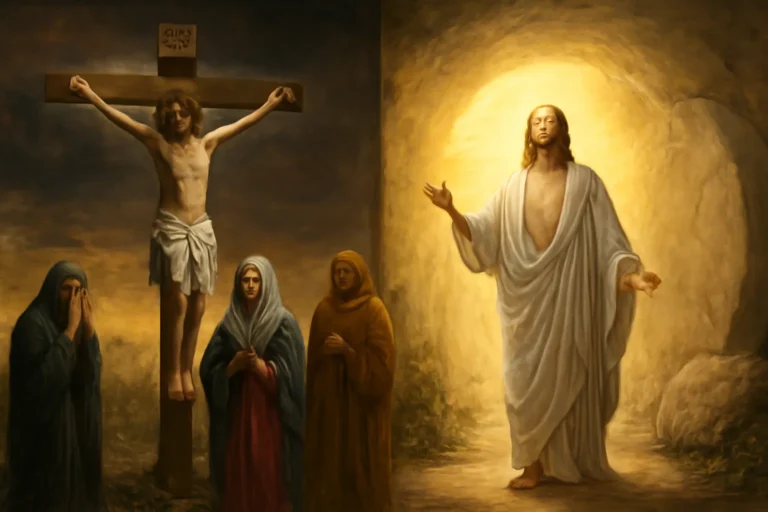
Good Friday is the solemn day on which the Passion narrative reaches its
climactic point: Jesus’ crucifixion, death, and burial. Across Christian liturgical calendars,
this day is marked by quiet reverence, stark symbolism, and a deliberate absence of festive
elements. The cross stands at the center of reflection, symbolizing the cost of redemption and
the depth of divine mercy expressed in suffering.
The theological meaning of crucifixion in Christian thought includes ideas of
substitutionary atonement, victory over sin, and the revelation of God’s love. Scholarly inquiry
often engages with how these doctrines developed in early Christian communities and how they were
framed by scripture, liturgy, and pastoral care.
Liturgical practice and devotion on Good Friday
In many traditions, the day includes a Solemn Liturgy, a veneration of the
Cross, and readings from the Passion narratives. The service may include a time for
intercessory prayers, confession, and Holy Communion in some denominations, though some
communities observe Communion solely at Maundy Thursday or on Easter Eve.
Traditional elements also include a period of silence, the singing of hymns that emphasize the
cruciform love of Christ, and the carrying of a cross along a procession route in some places.
The purpose is to accompany Christ in his suffering and to prepare the heart for the triumph of
Easter Sunday.
Points of theological reflection
- The atonement achieved through the cross as the center of salvation history.
- The reconciliation of humanity with God and with one another.
- The call to discipleship: walking in faith and justice even when the way is dark.
Holy Saturday: Waiting, Vigil, and the Tomb
The quiet interval between crucifixion and resurrection
Holy Saturday is a day of stillness in many liturgical calendars, inviting
contemplation of the moment when Jesus lay in the tomb. The silence of the tomb has
symbolic weight: it points to the mystery of death, the awaiting of God’s redemptive work, and
the anticipation of resurrection.
In some Christian liturgies, this day features readings that emphasize expectation, faith, and
the hope that darkness is not the final word. The vigil of Easter begins to dawn as night
yields to morning, preparing the church for the first proclamation of the empty tomb.
Vigil practices and symbols
- Evening vigils with readings, prayers, and a gradual return of light.
- Sanctuary lights and candles symbolizing the coming of dawn and the triumph of life over death.
- Quiet contemplation on the mysteries of salvation and the mercy of God in suffering.
Easter Day: The Resurrection and the Triumph of Life
The empty tomb and the proclamation of new life
The centerpiece of the timeline of Holy Week culminates on Easter Sunday,
the day when the church announces and celebrates the victory of Christ over death. The
resurrection is understood as the definitive act that confirms Jesus’ identity as the Son of
God and inaugurates new creation. The paschal mystery—Christ’s passion, death, and resurrection
—receives its climactic proclamation in Easter worship.
Across traditions, Easter Sunday is marked by festive liturgy, joyful hymns, and powerful
readings that focus on the empty tomb, encounters with the risen Jesus, and the commissioning
of the faith community to bear witness to the resurrection in daily life.
Celebration patterns and theological emphasis
- Alleluia returns to the liturgy with renewed fervor after a period of penitence.
- Readings trace appearances of the risen Christ and the commission to proclaim the gospel to all nations.
- The Easter alleluia and vibrant music symbolize the joy of salvation and the hope of new life.
While the concrete practices differ—ranging from sunrise services to dawn vigils—the Easter
celebration universally asserts that Christ’s resurrection reshapes time, history, and human
life. The sequence from Palm Sunday to Easter Sunday thus forms a contiguous arc that invites
believers to participate in the drama of salvation, to examine their own lives in light of the
gospel, and to join in the mission of sharing the good news.
Variations Across Traditions: How the Timeline Adapts
The holy week timeline is not a monolith. While the basic structure is common,
different Christian traditions emphasize particular moments, rites, or readings, producing
diverse but complementary pictures of the same sacred season.
Catholic, Orthodox, and Anglican perspectives
In the Catholic tradition, there is a strong emphasis on the paschal mystery
and the liturgical year’s coherence. The Eucharist and the veneration of the Cross on Good
Friday are central, with solemn processions, solemnities, and the Easter Vigil as an
authoritative culmination of Holy Week.
The Orthodox Church often organizes Holy Week with intensive personal
and communal prayer, distinctive hymns and motifs, and a sequence that leads into the
Holy Pascha (the Easter celebration) with its own unique night vigil and liturgical structure.
The Anglican and other Protestant communities frequently blend
historic liturgy with local cultural expressions, maintaining core elements like Palm Sunday
processions, Maundy Thursday communion, Good Friday devotion, and Easter celebrations, while
varying in the form and length of each service.
Regional and cultural variations
In Spanish-speaking cultures, the Semana Santa tradition often features elaborate
processions and public acts of devotion with statues and float processions, creating a vivid and
highly social expression of the passion narrative. In the Philippines, Mexico, Italy, and parts of
Latin America, communities mobilize deep devotional life and public ritual during the Holy Week
as a shared family and neighborhood undertaking.
Other regions, including parts of Africa, Africa-influenced churches, and North American
congregations, reflect a cross-cultural blend: a strong sense of reverence, a focus on social
justice themes arising from the passion narratives, and a creative engagement with music, art,
and media that bring the story into contemporary life.
Theological Threads: Big Concepts in the Holy Week Timeline
Redemption through suffering
A central thread in the Passion timeline is the conviction that God’s mercy is
most fully revealed through the vulnerability of Jesus’ suffering. The cross is not merely a
symbol of pain; it is the instrument by which grace reaches humanity. This theological claim
has been elaborated in various theological traditions, but the core idea remains: love is
manifested most profoundly when it bears pain for the sake of others.
Love as the foot-washing standard
The foot-washing rite on Maundy Thursday becomes a powerful symbol for
Christian ethics. It reframes leadership as service, humility as strength, and community life
as a perpetual practice of mutual care. The ritual challenges believers to embody the mandatum
of Christ in ordinary life—at home, in workplaces, and in public life.
Resurrection as the hinge of history
The Easter proclamation does more than announce a single event; it claims a new axis of time:
life conquers death, and God’s power defeats despair. The resurrection invites believers to
interpret human history from the vantage point of hope, justice, and transformative love.
Hope in the midst of sorrow
The timeline of Holy Week offers a theological pedagogy of sorrow that yields to hope. The
crucifixion stages grief with honesty, while the resurrection delivers a counter-narrative of
life. This arc teaches the faithful to lament, trust, and witness in ways that transform both
personal experience and social reality.
Scriptural literacy and catechesis
Reading the Passion narratives alongside liturgical remembrance forms a rhythm of catechesis:
believers are invited to encounter the Gospel in multiple modes—narrative scripture, ritual
action, and communal confession—so that doctrine, devotion, and discipleship are mutually reinforcing.
Practical Implications: How to Observe the Holy Week Timeline
For individuals and households
Individuals and families can engage the Holy Week sequence through deliberate daily
devotion, scripture reading, and prayer practices. Some ideas include:
- Daily brief reflections on the day’s event within the timeline, paired with a short prayer.
- Moments of silence and contemplation in front of art or a cross image.
- Participation in a weekly liturgy or small-group study that tracks the
narrative from Palm Sunday to Easter Sunday.
For churches and worship communities
Churches often design Holy Week worship calendars that align with their jurisdiction and
tradition. Common practices include:
- Palm Sunday processions and opening hymns that set the thematic tone.
- Tenebrae or other solemn services on Holy Week evenings for contemplative
focus on the Passion narratives. - Maundy Thursday communion and, where possible, a watch of prayer.
- Good Friday cross-veneration and a carefully prepared liturgy of the cross.
- Easter Vigil or sunrise services that celebrate the Resurrection with light,
baptismal rites, and the proclamation of victory over death.
Educational and pastoral applications
Beyond weekly worship, the Holy Week sequence serves educational aims:
it teaches biblical literacy, cultivates a theological imagination
for reading scripture in light of salvation history, and fosters a pastoral imagination
oriented toward mercy, justice, and unity in the body of Christ.
Seminaries, catechetical programs, and lay study groups can use the timeline of Holy Week
as a framework for teaching about Christ, salvation, and the church’s mission in the world.
Modules may cover the historical development of Passion narratives, the interpretation of the
cross, and the implications of resurrection for Christian ethics.
Historical and Scholarly Perspectives: Reading the Timeline
Historical-critical context
Scholars examine the Holy Week sequence with attention to its social, political, and religious
contexts in first-century Palestine and in the subsequent centuries of Christian memory. The
chronology shows how communities wove together a variety of sources—Gospel texts, liturgical
traditions, and devotional practices—into a cohesive framework for worship, identity, and
proclamation. This scholarly approach highlights differences in the ordering of events and the
ways in which the passion narratives were interpreted to speak to early Christian audiences.
The unity of salvation history
Across scholarly and devotional writings, the Holy Week timeline is often read as a
catechetical device that presents salvation history in a compact form. The arc—from
Palm Sunday to Easter Sunday—offers a narrative through-line that helps believers connect
the life of Jesus with God’s overarching plan for humanity.
Pastoral care and doctrinal clarity
For pastors and teachers, an accurate and meaningful presentation of the timeline helps
congregants engage with the doctrines of atonement, grace, and the resurrection without
reducing mystery to formula. The journey through Holy Week invites thoughtful questions about
faith, doubt, repentance, and hope in light of Christ’s work on the cross and his triumph over
death.
Conclusion: The Living Story of the Holy Week Timeline
The timeline of Holy Week is more than a calendar; it is a living narrative
that sanctifies time and invites believers into a shared drama of faith, hope, and love. By
walking through the days—from the entry into Jerusalem to the empty tomb—the Church
remembers, restates, and re-embodies the core convictions of Christian faith. The
Passion narrative and the surrounding rituals encourage a posture of worship
that sees in suffering a path to redemption, in humility a form of authority, and in
resurrection a source of joy that shapes life, ethics, and witness.
Whether spoken as a single continuous stream or celebrated through diverse local customs—be
it a quiet personal devotion, a formal liturgy, a public procession, or a multi-sensory
vigil—the Holy Week sequence remains a powerful invitation to encounter Christ in his
paschal mystery. It calls the faithful to a disciplined openness to God’s word, a
commitment to service, and a hopeful readiness for Easter joy.