
Overview: The figure commonly known as Doubting Thomas
The figure historically identified as Doubting Thomas occupies a distinctive corner of Christian thought. He is the apostle who becomes a focal point for discussions about faith and doubt, the relationship between evidence and belief, and the complex dynamics of encountering the risen Christ. In traditional Christian memory, Thomas the Apostle is both the quintessential skeptic and, paradoxically, one of the first to confess a high Christology when confronted with the reality of the Resurrection. When we say “Doubting Thomas” we invoke not merely a single emotional moment, but a cluster of questions that have animated religious education, liturgy, theology, and art for nearly two millennia.
This article surveys the biblical narrative, historical context, doctrinal interpretations, and contemporary applications of the Thomas tradition. It treats the subject not as a simple label but as a living conversation about how a religious person can wrestle with uncertainty while remaining within a faith community that proclaims the Resurrection. Throughout, you will encounter semantic variations on the same core figure: the Apostle Thomas, Thomas the Twin, the skeptical disciple, the one who asked for a tangible sign, and the believer who makes a powerful profession of faith.
The biblical core: where the story begins
The primary source for the figure often called Doubting Thomas is the Gospel of John, though echoes of doubt and belief appear in other Gospels as well. In John 20:24–29, the narrative unfolds after the Crucifixion and the Resurrection. The apostle Thomas is not present when Jesus first appears to the other disciples in the locked room. He voices a frank skepticism: “Unless I see in his hands the print of the nails, and place my finger into the mark of the nails, and place my hand into his side, I will never believe.” In the Classical English text, this is rendered as a strenuous demand for evidential verification.
Later, when Jesus appears again to the gathered disciples, he invites Thomas to touch him: “Put your finger here, and see my hands; and put out your hand, and place it in my side. Do not disbelieve, but believe.” The apostle Thomas responds with a decisive and profound confession: “My Lord and my God!”
The pace and poise of this exchange have made the “scene of doubt” a pedagogical cornerstone. Thomas is neither simply condemned for disbelief nor merely lauded for faith; his demand is integrated into a broader pedagogy about the relationship between faith, sight, and trust.
Historical and literary context: why a doubter appears in the gospel narrative
The appearance of a skeptical disciple in the Johannine tradition serves several purposes. First, it reflects the early Christian community’s struggle to articulate a creed centered on a Theological Mystery—the Resurrection of Jesus—within the demanding arena of human experience and empirical inquiry. Second, it offers readers a mirror in which their own questions can be held: if the disciple who walked with Jesus can doubt, then readers who lack immediate encounter may still approach belief with integrity rather than retreat into cynicism.
From a literary point of view, the portrayal of the antagonistic dynamic—doubt confronting revelation—creates dramatic tension. The narrative cadence moves from exclusion and absence (Thomas not being present at the first post-resurrection appearance) to intimate encounter (Jesus’s bodily resurrection and Thomas’s direct invitation to verify the wounds) to doctrinal confession (the exalted title, “My Lord and my God”). This arc is frequently echoed in other scriptural and post-biblical texts as a model for how communities grow through a process of testing, reaffirmation, and worship.
Character and identity: who is Thomas the Apostle?
The figure commonly identified as the Apostle Thomas is also known as Thomas the Twin (from the Aramaic name associated with twin). This sobriquet has invited speculation about lineage and memory: was he a twin in a literal sense, or is the designation a literary device signaling a particular symbolic role within the apostolic circle? Regardless of origin, the name grounds a sense of individuality within the broader apostolic group.
Across Christian traditions, this Thomas is described as a missionary who travels beyond Judea to spread the message of Jesus. In some traditions, he is associated with crossing cultures and bringing the gospel to parts of India, where his memory survives in local Christian communities. The globalization of his legend contributes to the broad sense that his initial doubt did not hinder a durable, transformative faith. In other words, the figure’s trajectory—from doubt to confession—offers a model for believers who encounter uncertainty while pursuing a credible and transformative faith.
Interpretive traditions: how theologians understand the episode
Traditional Christian exegesis: doubt as a stage on the path to belief
The classical reading treats Doubting Thomas as a prelude to a mature faith that is not afraid to ask for signs yet ultimately yields to an act of worship. The lingering question in many early catechetical writings centers on whether belief in a risen Christ must be grounded in sensory verification to be authentic. The narrative, however, consistently prioritizes the climactic confession—addressed directly to Jesus—as the highest expression of faith: a recognition that Jesus is not merely a human teacher but the risen Lord and God incarnate.
Eastern Orthodox perspective: sanctification through encounter and revelation
In Eastern Christian thought, the episode with the apostle Thomas is often discussed in the context of the Incarnation and the reality of the Resurrection as a living, ongoing encounter with the divine. The drama does not encourage blind credulity; rather, it invites believers into an experiential faith that is tested by contact with the risen Christ. The saint’s exclamation—“My Lord and my God”—is revered as a profound christological confession that arises from a direct confrontation with the divine in the physical world.
Roman Catholic and Protestant reflections: faith, reason, and the psychology of belief
Within Catholicism, the Thomas episode has served as a touchstone for discussions about the harmony of faith and reason, the meaning of sacramental signs, and the pedagogy of belief through touch and encounter. For some Protestant interpreters, the emphasis falls on the epistemology of faith: belief grounded in the testimony of the apostles and the witness of the Resurrection, rather than a purely empirical demonstration. Across these streams, the episode has been a durable resource for articulating how grace and human inquiry interact.
Theological themes and debates sparked by the Thomas narrative
Faith and doubt: a theodicy of trust
A central question is whether doubt is a sin or a stage. The Gospel portrait suggests that doubt can coexist with a genuine desire to encounter the divine. Authentic doubt in the narrative is not condemned by Jesus; instead, it is gently confronted and redirected toward a fuller expression of faith. This has often been cited as a pastoral invitation: it is possible to bring one’s questions into the presence of God and still move toward worship.
Evidence and belief: the place of sign and witness
The Thomas scene foregrounds the classic debate about what counts as evidence for faith. For Thomas, physical verification—wounds in the hands and side—provides the necessary confirmation. For the community that proclaims the Resurrection, the bedrock evidence is the testimony of witnesses, the transformed lives of the disciples, and the experience of communal worship. The tension between material signs and spiritual trust remains pertinent for discussions of scientific epistemology, apologetics, and pastoral counseling.
Resurrection testimony and christology
The episode crystallizes a high christology. When Thomas exclaims “My Lord and my God”, he attributes to Jesus both lordship and divinity in a way that shapes the trajectory of Christian confession. Theologically, this moment consolidates the sense that Jesus is not merely a remarkable rabbi or a moral exemplar but the one who has conquered death and stands in a unique relationship with the Creator.
Role in liturgy, devotion, and sacred art
Liturgical commemorations and devotional practice
Various Christian traditions have commemorated the Apostle Thomas with feasts, prayers, and devotional readings that highlight both his doubt and his faith. In some calendars, Thomas’s feast functions as a reminder that perseverance in seeking truth is valued in the life of faith. The liturgical approach often emphasizes the moral: faith is strengthened not by denying doubt but by engaging it in the light of the Resurrection.
Iconography, symbolism, and literature
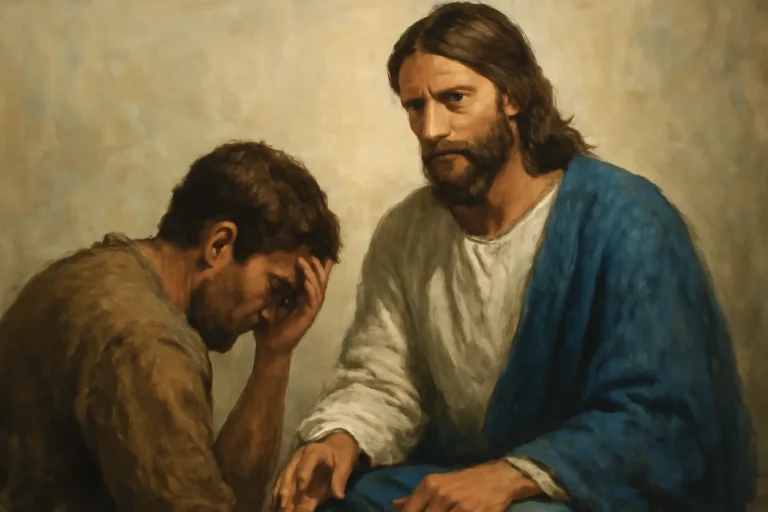
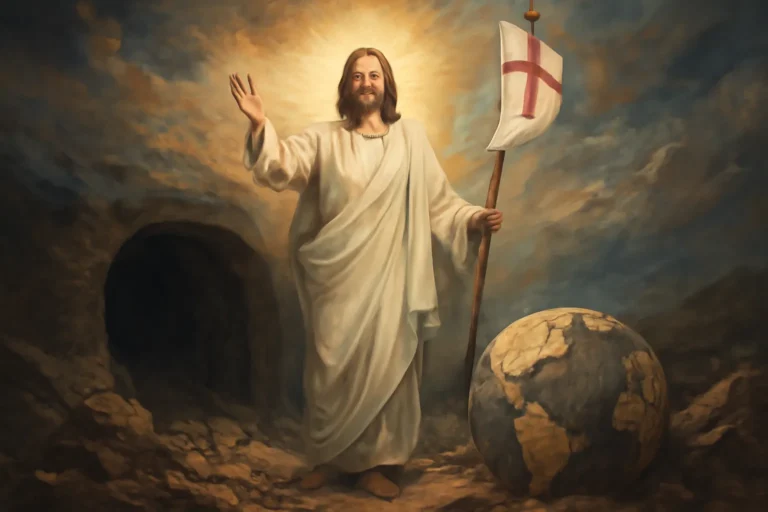
In Christian art, Thomas is sometimes depicted as a figure in the tension between the seen and the invisible: the wounded Christ beckoning touch, and the disciple who needs to probe reality. The symbolism of the wounds—print of the nails and the pierced side—has become a powerful emblem in contemplative piety. In literature, the Thomas legend has served as a narrative device for exploring how a skeptic becomes a believer, a transformation that can illuminate modern debates about evidence, trust, and spiritual longing.
Theology and epistemology: what can Thomas teach about faith today?
Epistemology of faith: knowing what we cannot empirically prove
The Thomas narrative raises enduring questions about what it means to know God. In the modern academy, debates about epistemology—how we know what we know—are often framed around variables such as evidence, testimony, and rational inference. The Christian hermeneutic offered by the scene suggests that knowledge of God may require more than sensory data; it may demand a response of trust that is tested by lived experience and communal worship.
Faith, doubt, and spiritual formation
A key takeaway for religious education is that spiritual formation involves a dynamic interplay between doubt as a reasonable stance and faith as a confident trust. Thomas’s arc—rational hesitation, encounter, confession—maps a model for discipleship: inquiry, encounter, worship, and mission.
Theological implications for ecumenism and interfaith dialogue
Common ground and distinctive claims
In ecumenical conversations, the Doubting Thomas figure functions as a bridge between traditions that value evidence and those that emphasize mystery. Across denominational lines, the insistence on a bodily Resurrection, the acceptance of testimony, and the call to obedience in faith are shared motifs. The episode invites interfaith dialogue about how communities interpret signs, revelations, and experiences of the divine.
Interreligious reflections on doubt and trust
In broader religious discourse, the theme of doubt is universal. The Thomas story resonates with philosophical and religious reflections about fidelity under trial and the patient pursuit of truth. The figure’s trajectory encourages humility in pastoral care and openness to questions from seekers who approach faith with earnest curiosity.
Historical reception: how early Christians and later writers treated the episode
Early patristic readings and catechetical material
The early church fathers frequently used the Doubting Thomas narrative to illustrate the proper ordering of belief and knowledge. By emphasizing the moment of confession—“My Lord and my God!”—they highlighted how a believer, having touched the wounds of Christ in the imagination or through experience, can rightly worship and declare the divinity of Christ.
Medieval and Renaissance perspectives
In medieval scholastic thought, the Thomas episode informed debates about whether physical signs are necessary for belief and how miracles function as warrant for faith. The Renaissance raised questions about how the apostle’s doubt should be interpreted against the backdrop of human reason flourishing in a period of rediscovered classical inquiry.
Contemporary education: teaching about Doubting Thomas in churches and classrooms
Religious education curricula
Modern catechetical programs often present the Doubting Thomas narrative as a case study for faith formation. Students are invited to discuss questions such as: What counts as evidence for belief? How does one encounter Jesus in daily life? What does it mean to proclaim Jesus as Lord and God in a pluralistic world?
Homiletics and sermon construction
In sermons, preachers frequently use the Thomas story to address contemporary doubt among congregants. The message often emphasizes that skepticism need not be the end of faith but a doorway to a more mature confession. The pastoral emphasis is on gentle invitation, patient discernment, and a clear articulation of the faith’s central claims.
Common questions about the Doubting Thomas figure
- Was Thomas uniquely skeptical, or did all the disciples struggle to understand the Resurrection?
- Does the insistence on physical touch undermine or reinforce the doctrine of faith?
- What is the significance of Thomas’s proclamation, “My Lord and my God” in the broader Christology of the New Testament?
- How do different Christian traditions interpret doubt within the path to belief?
- What lessons does the Thomas narrative offer for scientific or rational inquiry in religious contexts?
Practical implications for personal faith and community life
- Encouraging honest questioning: Communities should welcome questions as part of faith formation and not compel premature certainty.
- Balancing signs and testimony: The episode invites a balanced approach to evidence, joining personal encounter with communal witness.
- Fostering worship that acknowledges mystery: The confession “My Lord and my God” points to the mystery of the divine, which remains beyond complete rational capture.
- Incorporating tactile or experiential language in pedagogy: While not all contexts allow physical examination, the symbolic language of touch can be used in reflective practices and liturgical acts.
Variations on the theme: semantic breadth and topical relevance
Throughout different periods, scholars and teachers have kept a keen eye on the multiple facets of this biblical moment. Readers encounter numerous semantic variants connected to the central figure:
- Thomas the Twin as a metaphor for relational identity within a diverse apostolic collection.
- The sceptical disciple whose inquiry punctures assumptions and invites fresh revelation.
- The apostle who seeks proof but ends in radical worship—and thus becomes a paradigm for experiential faith.
- The wounded witness whose name is associated with the wounds of Christ as a tactile sign of resurrection reality.
- Thomas the missionary in later traditions, symbolizing cross-cultural bearing of the gospel and the transformation of doubt into mission.
Educational summaries: key takeaways for students and scholars
- Primary source: The core narrative appears in the Gospel of John, where Thomas’s doubt gives way to a bold confession.
- Confessional turn: The climactic utterance, “My Lord and my God,” functions as a definitive Christological statement within the Johannine framework.
- Pedagogical value: The story demonstrates how faith develops through questioning, encounter, and proclamation.
- Interdisciplinary relevance: The episode informs theology, biblical studies, philosophy of religion, pastoral care, and even literary analysis.
- Cultural impact: The Doubting Thomas motif has shaped art, music, and literature across centuries, illustrating how a single narrative can influence diverse cultural expressions.
Reflection prompts for personal study or small groups
- What aspects of Thomas’s journey resonate with your own experiences of doubt and faith?
- In what ways can the invitation to touch or verify the risen Christ be understood as a metaphor for spiritual encounter today?
- How does the confession “My Lord and my God” influence your understanding of Jesus’s identity?
- What role do communal witnesses and testimonies play in forming belief in your faith community?
- Which tensions between empirical evidence and theological truth do you find most challenging, and how might they be addressed in a constructive way?
Conclusion: the enduring relevance of the Doubting Thomas narrative
The story of the Apostle Thomas remains a vital touchstone for both believers and scholars. It is not merely a historical anecdote about a single moment of doubt but a durable lens through which Christians reflect on faith, truth, and encounter. By examining Thomas’s journey—from doubt to confession, from absence to presence, from hesitation to worship—the church invites all faithful people to cultivate a stance that is at once honest about skepticism and steadfast in trust. This balance—between questioning and worship, between evidence and mystery—continues to shape the life of faith in communities around the world.
Additional resources for deeper study
If you wish to explore further, consider the following categories and recommended starting points:
- Biblical studies: commentaries on the Gospel of John, with attention to John 20:24–29 and related passages.
- Theology and doctrine: essays on Christology, faith and rational inquiry, and the nature of belief in the life of the church.
- Liturgy and devotion: resources on feasts, prayers, and devotional practices connected to the Resurrection accounts.
- Art and culture: studies of how Doubting Thomas has been depicted in art, music, and literature across centuries.
In sum, the Doubting Thomas narrative endures not because it resolves every question about belief, but because it courageously raises the questions that matter most: Who is Jesus? How does God reveal the divine presence? And what does it mean to respond with worship when faith meets the unknown?