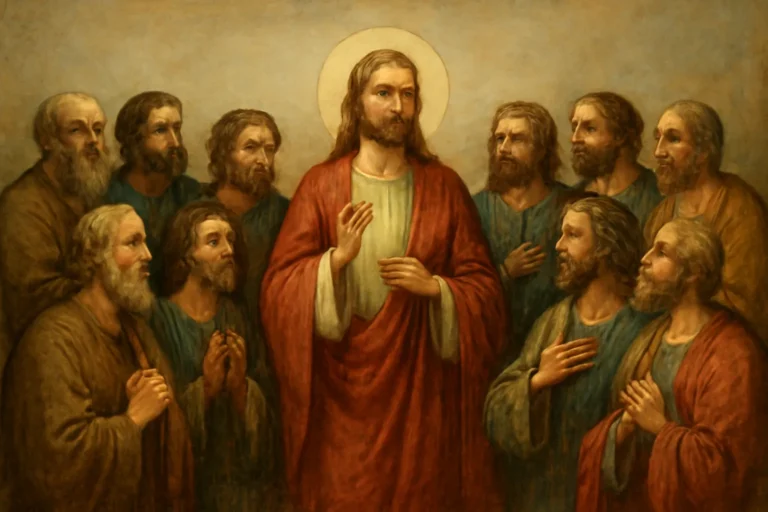
Salt of the Earth, Light of the World: A Theological Exploration of Matthew 5:13
The phrase “You are the salt of the earth” belongs to the opening salvo of Jesus’ Sermon on the Mount, a teaching segment that unfolds across Matthew 5–7. In the brief, potent sentence of Matthew 5:13, the gospel writer places a prophetic and practical charge upon a people who would soon bear witness to the kingdom of God in a world that was both riven by power and perplexed by meaning. The paired image that follows—“But if salt has lost its taste, how shall its saltiness be restored?”—is not merely a culinary metaphor; it is a moral diagnosis and a theological invitation. Salt, in the ancient world, served crucial roles: flavoring food, preserving meat, purifying, healing, and even signaling covenant relationship. When Jesus calls his followers the salt of the earth, he is linking their identity to those ancient functions in a way that is ethically demanding, spiritually hopeful, and deeply practical.
The phrase “Light of the world” that often accompanies the later verse, Matthew 5:14, enlarges the same vision. Light is not invisibility but visibility; it is given not for private comfort but for public illumination. In the same sermon, Jesus frames the disciple’s vocation as a form of public testimony: to reveal truth, to guide, and to sanctify the common life. This article surveys the semantic breadth of these metaphors, their historical-cultural background, how they have been interpreted through history, and what they mean for faith communities today. While the emphasis here is theological and exegetical, the reflections are intended to be applicable to personal formation, church life, and social witness.
Historical and Theological Context
To understand Jesus’ salted and illuminated commission, it helps to situate it within the cultural ecology of first-century Palestine and the broader scriptural arc of Israel’s identity as a people called to be a sign and instrument of blessing.
Salt in the Ancient World
- Preservative and preservative-like power: In an era without reliable refrigeration, salt was essential to slow spoilage and curb decay, especially for meat and fish. The metaphor of a preserving community would resonate with audiences who understood the fragility of life and the fragility of communal ethics.
- Flavor and sustenance: Salt enhances taste and makes nourishment more fulfilling. The disciples’ presence could thus be imagined as bringing a richer moral flavor to human relationships and civic life.
- Purification and healing: Salt had associations with purification rites and healing practices in various ancient Near Eastern and Mediterranean cultures. The metaphor thus carries a dimension of moral cleansing and restorative justice.
- Covenant symbolism: In certain scriptures, salt signifies an enduring, binding relationship between God and his people—a binding that requires faithfulness, integrity, and a steadfast witness.
Light in the Cultural Imagination
- Illumination and truth: Light is a symbol of knowledge, divine presence, and clarity. In a world of spiritual confusion, light signals a reliable orientation toward what is good, true, and beautiful.
- Visibility and accountability: Light makes the visible obvious. While this can invite admiration, it also invites scrutiny—hence the charge that the world should not hide or obscure the light.
- Guidance and direction: Lamps and torches point the way in darkness, offering direction to travelers. A community seasoned by light thus becomes a resource for those seeking moral and spiritual navigation.
Exegesis of Matthew 5:13: The Salt Clause in Depth
The Greek text of this verse presents a succinct claim with a provocative second clause. The form “You are the salt of the earth” asserts a present, ongoing identity for Jesus’ followers. The second clause—“but if salt has lost its taste, how shall its saltiness be restored?”—uses a rhetorical question to emphasize that the efficacy of salt depends on its unique property, a property that is at risk of being forfeited if the salt degenerates.
Several interpretive angles illuminate the meaning:
- The essential virtue: The saltiness is not merely a quality to be admired; it functions practically. In this reading, the disciples’ mission is to sustain moral discernment, civic integrity, and gracious influence in the world around them.
- Qualifier and warning: The question “how shall its saltiness be restored?” functions as a warning. If disciples forfeit their distinctive influence, they risk becoming irrelevant, marginalized, or merely ceremonial.
- Positive vocation: The metaphor carries a positive imperative: the community must manifest the virtue that it embodies, rather than merely claim it in theory.
The phrase “earth” (gē) or “world” in this context conveys more than soil or planet; it communicates the inhabited order—the common life of society. The mission of salt, then, is to operate within this order for the sake of justice, mercy, and truth. The surrounding context of the Sermon on the Mount emphasizes ethical and spiritual formation: humility, righteousness, mercy, purity of heart, peacemaking, and integrity in practice. The salt metaphor thus anchors the ethics of the kingdom in everyday life—families, workplaces, neighborhoods, and public square.
It is also important to acknowledge that some translators render the phrase as “you are the salt of the earth,” while others render a variant that emphasizes saltiness or taste. Regardless of the translation, the core idea remains: a distinctive influence that preserves, flavors, and purifies. A useful way to engage the language is to think of salt not only as a spice but as a principled influence that makes moral life more resilient under pressure.
Salt Metaphor: Functions and Theological Implications
Preservation and Moral Ecology
One of the earliest moral intelligences in this metaphor is that of preservation. The community of Jesus is called to resist the ethical decay that accompanies violence, exploitation, and indifference to the vulnerable. The salt of the earth does not disengage from public life; it engages with it in a way that sustains life and curtails decay. This has practical implications for social ethics: protective laws, fair labor practices, inclusive care for the marginalized, and a culture that rejects cynicism and corruption.
- Justice as seasoning: The church’s witness adds a moral flavor to debates about fairness, equity, and the common good.
- Righteousness as preservation: When communities pursue justice in humility, they create conditions in which people can flourish, thereby slowing the moral rot that comes from exploitation and oppression.
- Countercultural resistance: The salt of the earth often must stand against prevailing winds of power and privilege, offering a different palate for life in God’s world.
Flavor and Formation of Community
The taste of a faithful community is not merely about individual virtue but about communal formation. Salt’s function as a flavor enhancer suggests that Christian presence should refine social interactions, cultivate generosity, and cultivate what theologians call “habitual virtue.” The formation of character—gentleness, integrity, courage, and mercy—acts not only as private enrichment but as public savor.
- Hospitality as seasoning: A church that practices radical welcome adds “taste” to social life by embodying hospitality that reflects God’s inclusive love.
- Mercy as savor: Practical mercy—feeding the hungry, comforting the afflicted, standing with the oppressed—adds a distinctive flavor to the moral landscape.
- Witness in ordinary time: Saltfulness is most visible in everyday choices—how we treat coworkers, neighbors, strangers, and the vulnerable.
Light Metaphor: Radiance, Visibility, and Moral Clarity
The companion metaphor—“You are the light of the world”—appears in the continuation of the Beatitudes and commands. Light embodies revelation, direction, and non-retreat. The image of a lamp on a stand in Matthew’s Gospel (Matthew 5:15) is a natural extension of the salt metaphor: a people whose influence is outward, visible, and essential to the welfare of others.
From Private to Public Witness
Historically, Christians have understood the call to be light as a mandate to live publicly for justice and the truth of God’s kingdom. Light does not seek attention for its own sake; it exposes error, reveals beauty, and invites participation in a shared blessing. The public dimension of Christian witness includes education, healthcare, advocacy for the vulnerable, and cultural renewal that echoes the gospel’s transformative power.
- Public integrity: A community that lives with moral clarity earns trust and serves as a stable signpost in a complex public sphere.
- Truth-telling as liberation: Light unmasks deception and fosters a climate where truth can flourish without fear.
- Hopeful brightness: The church’s witness offers a vision of healing and restoration that sustains believers and draws outsiders toward the good news.
Ethical Implications of Visibility
Visibility is a double-edged sword. The same light that guides can also attract scrutiny and opposition. The early Christian communities faced hostility precisely because their light exposed the moral compromises of the surrounding culture. Yet visibility remains essential: a hidden gospel is a distorted gospel. The imperative is not to attract attention for its own sake but to draw attention to truth, to mercy, and to the glory of God.
- Public worship and witness: Corporate worship shapes a light that shines into the public square through acts of service, ethical living, and courageous testimony.
- Social creativity: The church’s liturgical life, education, and arts can illuminate beauty, justice, and truth in ways that resonate across generations.
- Distrust of quietism: A spirituality that retreats indoors or withdraws from engagement deprives the world of its saltiness and light.
Theological Interplay: Salt and Light Together
The pairing of salt and light in the Sermon on the Mount presents a harmonized vision of discipleship. Salt flavor promotes ethical communities; light illuminates the path toward righteousness. Together, they offer a comprehensive picture of the Christian vocation: a people whose life-ways preserve life, nurture virtue, and disclose the God who is love.
Several themes emerge when reading these images in tandem:
- Integral discipleship: The calling combines inner transformation with outward impact. A moral life that is merely private loses its social dimension; a public life detached from personal sanctification risks legalism or self-righteousness.
- Holistic witness: The church’s work touches individual hearts, families, neighborhoods, schools, workplaces, and political life—not merely a private devotional realm.
- Hopeful realism: The metaphor acknowledges fragility (salt can lose its savor, light can be hidden) while entrusting believers with the vocation to sustain and recover what decays and obscures.
Historical Interpretations and Traditions
Across church history, various traditions have emphasized different aspects of the salt and light imagery. From patristic exegesis to medieval moral philosophy, through the Reformation and into modern theological debates, these metaphors have helped Christians articulate their call to ethical living and public witness.
Patristic and Medieval Reflections
Early church writers often connected salt with the covenantal faithfulness of Israel and the new covenant community, viewing the church as the custodian of a covenantal integrity that seasons and sustains. Light was often portrayed as a symbol of transcendent truth made knowable through revelation in Christ. In patristic readings, the salt metaphor sometimes underscored the church’s responsibility to maintain fidelity to the gospel amid surrounding temptations, while the light metaphor encouraged bold proclamation and charitable action as a shared path to God.
Reformation and Post-Reformation Voices
Reformers frequently highlighted the ethical dimension of the Sermon on the Mount, insisting that true faith produces tangible righteousness. Salt and light became loci for debates about the relation between faith and works, grace and obedience, the church’s social obligations, and the believer’s public witness. In many reformational and post-reformational writings, the images were used to defend social ethics and mission-minded church life—evangelism expressed not only in words but in deeds that honor God and serve neighbor.
Contemporary Applications: How Salt and Light Shape Modern Faith Communities
In today’s religious landscape, the call to be the salt of the earth and the light of the world translates into concrete practices within churches, ministries, and individual lives. The image invites churches to cultivate ethical discernment, hospitality, and communal resilience, while encouraging believers to translate belief into action—into acts of service, advocacy, and cultural renewal.
Salt-Infused Community Life
- Ethical leadership: Leaders who model integrity, transparency, and accountability preserve trust and model godly conduct for others.
- Economic justice: Christian communities engage with issues of wage fairness, poverty alleviation, and responsible stewardship of resources as a living flavor that the world can taste and see.
- Hospitality and inclusion: A salt-like culture welcomes the outsider, demonstrating that the gospel is for all and that difference can be a source of enrichment rather than division.
Light-Driven Public Witness
- Advocacy for the vulnerable: When a church speaks for the marginalized—refugees, the poor, victims of oppression—it embodies the liberating potential of light.
- Education and dialogue: Teaching the faith with humility and intellectual honesty helps illuminate truth in ways that respect plural perspectives while offering a coherent vision of reality.
- Aesthetic and cultural renewal: Through arts, music, literature, and public discourse, Christian communities can contribute to a culturally luminous environment that reflects beauty, justice, and mercy.
The phrase “earth” in Matthew 5:13 invites reflection on our relationship to the inhabited world and to creation. The salt of the earth is a literal and metaphorical stance toward the material world: it preserves not only communities but also the ecological fabric of life. Christians are called to care for the created order, to resist destructive practices, and to promote sustainable, compassionate stewardship. The call to be light likewise has ecological resonance: truthful stewardship involves clarity and courage in addressing systemic injustices, climate ethics, and the care of vulnerable beings.
In modern sociocultural climates where secularism, relativism, and consumerism often shape values, the salt and light metaphor invites believers to be credible witnesses: not just in controversy but in the daily rhythm of life—honesty in speech, kindness in action, justice in policy, and hope in hardship. The aim is not to dominates but to serve; not to condemn but to invite others into a shared, good life under God.
Practical Theological Considerations
When translating ancient metaphors into contemporary praxis, several practical questions arise for pastors, lay leaders, and educators. How do we cultivate a church that is recognizably salt and visibly bright in a pluralistic city? What disciplines support a life of preserve-ment and illumination? The following reflections are offered as starting points for congregational life and personal formation.
Discipleship Pathways
- Catechesis on the Sermon on the Mount: Regular study of Jesus’ ethical teachings helps believers understand the narrow way of discipleship and the expansive love that sustains it.
- Spiritual disciplines: Prayer, fasting, and contemplative practices cultivate inward renewal that radiates outward through acts of service and mercy.
- Community accountability: Small groups and mentors provide accountability for living consistently as salt and light, in speech, conduct, and decision-making.
Mission and Service
- Service as witness: Service programs that address food insecurity, education access, healthcare gaps, and housing instability express saltiness in tangible ways.
- Dialogue and cultural engagement: Engaging with culture—media, entertainment, politics—through a lens formed by scripture helps illuminate truth and shape public conversation toward justice.
- Environmental stewardship: Caring for creation is a form of faithful witness that honors the Creator and safeguards the common good for future generations.
Glossary of Key Terms and Concepts
To aid understanding, here is a compact glossary of some terms frequently encountered when exploring salt and light imagery in Matthew.
- Saltiness: The distinctive, functional quality of salt—its ability to flavor, preserve, and purify—applied metaphorically to the character and influence of believers.
- Preservation: A primary implied function of salt; in theology, it often points to moral conscience and resistence to corruption.
- Illumination: The function of light; in theology, it refers to truth-telling, revelation, and guiding others toward what is good and true.
- Covenant Salt: A biblical concept linking salt to an enduring, binding relationship with God (e.g., in some covenantal contexts salt is a sign of perpetual fidelity).
A Call to Freedom: The Faithful Life as Public Witness
The call to be salt and light is a call to a faithful life that renders moral and spiritual discernment in the everyday. It is a call not merely to personal virtue but to a form of public witness that promises healing, justice, and beauty in a world that often prizes power over mercy or costless affirmation over costly love. The Sermon on the Mount thus reframes the ordinary, transforming a range of human activities—speech, work, relationships—into a coherent street-level gospel. This is where theory meets practice, where theology becomes ethics, and where grace becomes habit.
Conclusion: Living as Salted, Lit by the Light
In the end, the image of salt and light challenges believers to embrace a vocation that is both humble and transformative. You are the salt of the earth invites a sober realism about how fragile moral influence can be; You are the light of the world invites a hopeful ambition to reveal the beauty and truth of God’s reign. Taken together, these metaphors urge a holistic form of discipleship—one that preserves what is right, seasons life with love and justice, and shines in a world that desperately needs both discernment and hope.
For readers who wish to explore this topic further, consider engaging with a combination of historical-commentary sources, contemporary sermons, and theological commentaries that explore how salt and light have been interpreted in various Christian traditions. Reflecting on these questions can help individuals and communities discern how best to live out the calling of being salt of the earth and light of the world in today’s complex and changing world.
Further Reading and Reflection (Suggestions)
- Study guides on the Sermon on the Mount (Matthew 5–7) that connect syllogisms of ethics to practical church life.
- Commentaries on the Gospel of Matthew that address the historical-cultural background of salt and light imagery.
- Writings on Christian ethics, public witness, and social justice from diverse theological traditions.