Introduction: Wrestling with Calamity and the Emergence of Hope
In the prophetic book of Habakkuk, readers encounter a rare form of spiritual dialogue: a
frank, intimate conversation between a messenger of the divine will and God Himself,
conducted not from certainty but from perplexity, not from triumph but from lament.
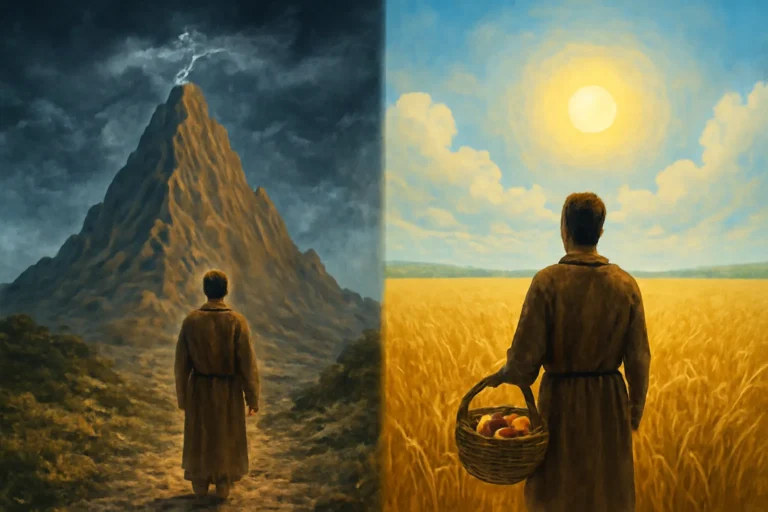
Hope amid calamity does not arrive as a polished conclusion but as a
patient growth in trust. Habakkuk does not pretend that calamity is easy to endure
or that injustice is simple to explain; instead, he models a covenant response that
transforms bewilderment into steadfast faith. This article surveys Habakkuk’s dialogue with God,
explores the theological channels through which hope arises in the midst of crisis, and
considers how his patterns of questioning, waiting, and worship translate into a robust
spiritual formation for readers today.
The Historical and Literary Context of Habakkuk
The Book of Habakkuk is nestled in the late-Judahite prophetic corpus, addressing a
people who face political turbulence, moral decline, and looming foreign power. Though
the exact dating is debated, most scholars place Habakkuk in the late 7th century BCE,
during a period of upheaval just before the Babylonian upheavals would reshape the
Near East. The prophet is not a mere oracle-bearer who issues statements about distant
events; rather, he enters into a dynamic conversation with God, bringing his own
confusions, questions, and petitions into the hearing of the divine throne.
Structurally, Habakkuk is characterized by a dialogic pattern: a first lament from the
prophet, a divine reply, a second lament, and a second divine reply, followed by a
concluding prayer/psalm that reframes suffering within a larger theological horizon. The
book’s distinctive shape allows readers to witness a spiritual journey that begins with
bewilderment and ends with worship and a clarified trust in God’s purposeful sovereignty.
Habakkuk’s Dilemma: The Two Dialogues with God
Dialogue One: The Complaint — “How Long, O Lord?”
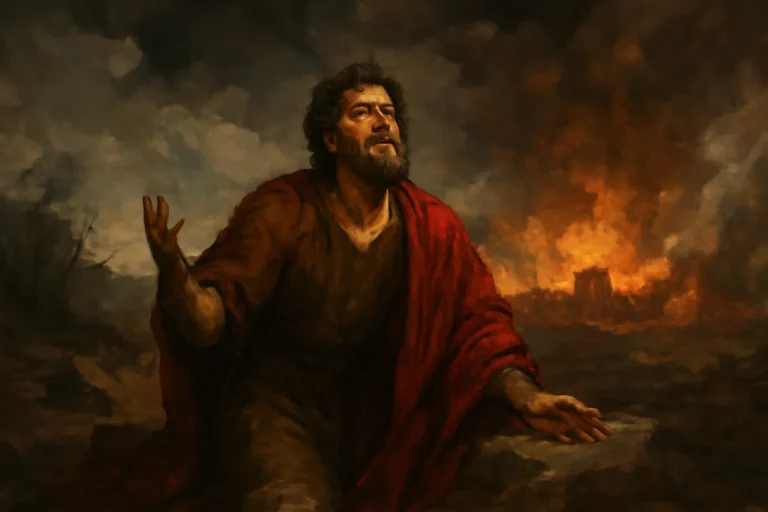
In the opening scene, Habakkuk articulates a perennial human question in the face of
injustice: where is justice when violence fills the land? He laments the
prevalence of wrongdoing, the pervasiveness of corruption, and the appearance that the
devoted suffer while the guilty prosper. The prophet’s first cry is not merely a
complaint about specific events; it is a cry for moral and cosmic coherence. He
confronts God with a twofold distress: the visibility of wickedness
and the opacity of divine timing. The cry “How long, O Lord, shall I call for help, and
you will not hear?” is not merely rhetorical; it is a substantive challenge to
expectations about how God rules the world.
The response that follows in the text is not a gentle dismissal but a startling
disclosure: God declares that injustice will be judged through a foreign power—the
Babylonians. This is a difficult announcement, for the question of why God would use
a more oppressive force to discipline Israel seems paradoxical and troubling. The
prophet’s initial reaction is a mix of shock, sorrow, and cautious humility. He asks for
further clarity, and the dialogue becomes a crucible in which the character’s spiritual
posture is tested.
Dialogue Two: The Word — A Vision and a Clarified Agenda of Justice
In the second movement of the book, God’s reply reframes the issue. He does not erase
Habakkuk’s perplexities; rather, He offers a perspective that transcends immediate
circumstance. The divine message unfolds in several interlocking strands:
- Divine sovereignty: God remains in control even when events appear chaotic.
- Judgment and discipline: The wicked will not go unaccounted for, though the means and timing may be difficult to fathom.
- The call to faith: The righteous will live by faith, a principle that becomes central to Habakkuk’s evolving hope.
- Providential purposes: God’s purposes are not exhausted by a single crisis but unfold in a larger arc of redemption.
The second dialogue culminates with a powerful promise and a reframing of the prophet’s
task. Habakkuk is invited to observe, trust, and enact worship in a way that aligns
with God’s larger purposes. The divine answer is not a bare resolution of every
immediate detail; it is a theological invitation to see through the crisis with a shifting
but steadfast confidence.
Theological Themes: Core Motifs in Habakkuk’s Dialogue
The Sovereignty of God and the Problem of Evil
A central theological thread in Habakkuk concerns the sovereignty of God. The book
does not erase the reality of evil; rather, it redefines how evil is understood within a
God-who-is-just framework. Habakkuk’s questions assume that God is good, holy, and
just; therefore, the troubling aspect is not the idea of a far-off, indifferent deity
but a God who orders history in ways that are sometimes inscrutable. The claim is not
that God becomes the author of calamity but that calamity can serve a divine pedagogy—
a transformation of the faithful through exposure to divine wisdom and discipline.
Righteousness, Faith, and Covenant Loyalty
The declaration that “the righteous shall live by his faith” anchors Habakkuk within a
long line of biblical thought about justification and fidelity. This theme is not a
simple justification by intellectual assent; it is a lived trust that continues through
crisis. Faith, in Habakkuk, becomes a dynamic posture that binds human obedience to divine
revelation. The faithful person does not pretend certainty in the face of ambiguity; he
or she chooses to cling to God’s promises even when the immediate circumstances test
endurance.
Worship as a Response to Knowledge of God
Habakkuk’s final posture—worship—emerges not as an afterthought but as an active,
formative discipline. The prophet’s prayer/psalm (often called Habakkuk 3) casts the
crisis within a liturgical frame: awe before divine power, reverence for God’s works, and
confidence that God’s itineraries include a future hope. Worship becomes a channel by which
uncertainty is transmuted into reverent trust.
How Habakkuk Finds Hope Through Calamity: Modes of Resonant Trust
Honest Dialogue as a Pathway to Trust
One of Habakkuk’s most formative features is his candor before God. Rather than
suppressing doubts, he articulates them with clarity. This honesty does not diminish faith;
it alchemizes fear into a disciplined inquiry that seeks alignment with God’s purposes. The
practice of naming questions aloud—“Why is this happening?” “How long must this endure?”—
becomes an exercise in spiritual honesty, which paradoxically deepens certainty about
God’s character. The willingness to engage in courageous dialogue is, in itself, a form
of hope.
Divine Reproof and Comfort as a Double Helix
God’s responses do not always deliver immediate comfort; often they bring a corrective
reorientation. Habakkuk learns that his own expectations about timing and mechanism may
be too narrow. Yet alongside correction comes reassurance: God sees beyond the present
trouble, and His purposes for righteousness will prevail. This dual cadence—reproof
followed by reassurance—becomes a durable form of hope that is not premature but
mature.
Visionary Faith: The Role of Prophetic Vision in Generating Hope
Habakkuk’s hope is not purely emotional; it is anchored in a vision of God’s
eventual deliverance and justice. Vision here means more than a scene; it is a divine
perspective that reframes time, history, and human possibility. When a prophet is shown
a broader horizon, the consequences of present calamities become intelligible within a
larger arc of divine redemption. Hope, then, is partly a matter of “seeing” as God sees.
Discipline of Waiting: The Spiritual Patience of Faith
Waiting is not passive in Habakkuk; it is active trust. The prophet learns the value of
patient expectancy, knowing that God’s timing is not a human calendar. This waiting
grows into a robust confidence that God’s promises are not suspended by present
catastrophes but proceed with deliberate steadfastness. The discipline of waiting
cultivates endurance, gratitude, and a deeper reverence for the slow work of God in
history.
Worship as the Culmination of Hope
The final flourishes of Habakkuk reveal that authentic hope is inseparable from radiant
worship. When the prophet recounts the might of God and the resulting trust, he points to
a theological anthropology: human beings flourish most fully when they inhabit a God-centered
life. Worship moves from being a response to crisis to a habit that sustains life in crisis,
forming a resilient faith that can endure unspeakable events without surrendering to despair.
Habakkuk’s Hope in Practice: Practical Theological Reflections
Heuristic Principles for Personal and Communal Faith
The Habakkuk narrative offers several principles that can be translated into daily
spiritual practice. The following points are not exhaustive but provide a map for how
individuals and faith communities might cultivate hope amidst calamity.
- Question honestly: Name your questions before God rather than burying them. Honest enquiry can sharpen faith rather than corrode it.
- Hold intention with humility: Acknowledge the limits of human understanding while remaining open to divine revelation.
- Anchor in divine character: Let the attributes of God—holiness, justice, mercy, faithfulness—frame your interpretation of events.
- Cling to the righteous path: Embrace faith as the core of how you live, especially when outcomes seem uncertain.
- Worship through crisis: Build a practice of worship that persists beyond fast-moving crises and shapes your response to adversity.
The Communal Dimension: Habakkuk and the Faith Community
Habakkuk’s dialogue is not conducted in isolation; it has a communal texture. In the
biblical narrative, the prophet’s insights and prayers are carried into corporate worship,
public lament, and national reflection. The crisis and its resolution become a shared
vocabulary for a people who must navigate the pressures of power, violence, and social
decay. The communal dimension of hope reminds readers that faith is not only a private
transaction with God but a public trust that informs civic life, moral discernment, and
mutual care.
Interpretive Lenses: How Different Traditions Read Habakkuk’s Dialogue
In Jewish Tradition
Jewish interpreters have often seen Habakkuk as speaking into a historical moment of
crisis and as modeling the virtue of faithful wrestling with God. The theology of
divine judgment paired with a call to righteous living resonates with the prophetic
conscience that Justice is not merely a private virtue but a public imperative bound
to God’s covenant faithfulness.
In Christian Theological Reflection
In Christian interpretation, Habakkuk is frequently read as foreshadowing New Testament
themes about faith, eschatological hope, and the paradox of suffering in a world under
sin and frailty. The refrain that the righteous live by faith acquires a transformative
emphasis: faith is not simply knowledge of God’s power but trust in God’s fidelity in
Christ, where even calamity can be interpreted in light of ultimate salvation.
In Contemporary Ethical Discourse
Modern readers often find the Habakkuk text relevant for talking about political
violence, structural injustice, and the moral responsibilities of communities under
duress. The dialogue offers a language for critical questioning—how to hold leaders
accountable, how to respond to tyranny, and how to maintain hope when human plans
appear insufficient before the magnitude of historical forces.
Implications for Today: Living the Habakkuk Experience in a Modern World
Personal Piety and Public Witness
The Habakkuk model invites believers to cultivate a personal piety that is also a
public witness. The honest questioning, patient waiting, and steadfast worship are not
private retreats but spiritual practices that empower faithful engagement with society. In
a world where calamities—natural disasters, wars, social upheavals, pandemics—press in on
daily life, Habakkuk’s approach provides a robust template for responding with truth, mercy,
and resilient hope.
Liturgical Renewal and the Shape of Prayer
The book’s emphasis on a prophetic prayer (Habakkuk 3) suggests a model for modern
liturgy that interweaves lament with praise, complaint with confidence, and petition
with trust. A liturgical cycle that includes communal lament, intercession, and grateful
worship can nurture a spiritual temperament in which hope is not an
episodic feeling but a sustained posture.
Ethical and Social Responsiveness
When calamity arises, communities must ask what justice requires in concrete terms. The
Habakkuk framework invites a multi-layered response: acknowledge the harm, confess
complicity where relevant, pursue reform, and seek restorative strategies that align
with divine justice. The prophet’s dialogue thus becomes a catalyst for ethical action that
is both hopeful and responsible.
Practical Takeaways: How to Apply Habakkuk’s Dialogue in Daily Life
- Name your questions openly with God and trusted mentors; do not suppress genuine concerns.
- Trust in divine sovereignty even when circumstances seem chaotic or incomprehensible.
- Maintain faith as a practice: faith is not a one-time decision but a daily posture that sustains through trial.
- Engage in courageous worship: cultivate worship that speaks honestly to God about pain while confessing trust.
- Hold to a vision of hopeful justice: allow God’s promises of righteousness to inform your moral decisions and civic life.
- Foster community resilience: share questions, prayers, and acts of service in a community that prays and acts together.
Closing Reflections: The Enduring Message of Habakkuk
Habakkuk’s dialogue with God offers a durable, counterintuitive pathway to hope in the face of calamity. The prophet begins in perplexity, and the dialogue does not erase that perplexity; instead, it transforms it into a disciplined trust. The ultimate message is not that all mysteries are resolved but that the God who orders history—who is holy, just, and merciful—invites humans to live by faith, to worship in the midst of suffering, and to bearing witness to a future in which justice is vindicated and mercy triumphs.
In today’s context, where people grapple with a flood of crises—personal grief, communal strife, global upheaval—the Habakkuk model remains potent. It offers not a simplistic pep talk but a robust theology: to be human is to wrestle with the tension between catastrophe and hope; to be faithful is to persist in dialogue with God; and to persevere is to anchor one’s life in a God who promises that light can break into darkness, that righteousness can endure, and that a faithful people can endure, worship, and witness even when the horizon seems clouded.
Glossary: Key Terms for Readers New to Habakkuk
- Prophetic dialogue: A conversational exchange between a prophet and God, used here as a literary and spiritual device to explore divine purposes and human response.
- Faithful living: An ongoing commitment to trust and obedience, especially when circumstances challenge understanding.
- Lament: A form of prayer that openly expresses grief, disappointment, or anger before God, with the aim of moving toward insight and restoration.
- Divine justice: The moral order of God’s governance, which includes judgment against injustice and mercy toward the afflicted.
- Visionary hope: A confident anticipation shaped by divine revelation that transforms present experience into a hopeful expectation.
As readers close the pages, the invitation remains clear: bring your questions to God, await the unfolding of divine purposes with patient trust, and let the discipline of worship shape your response to a world in turmoil. Habakkuk’s dialogue is not a blueprint for easy answers but a framework for a resilient, faithful life—one that can endure calamity, hold fast to the truth of God’s character, and emerge with a renewed sense of purpose and a deeper wellspring of hope.