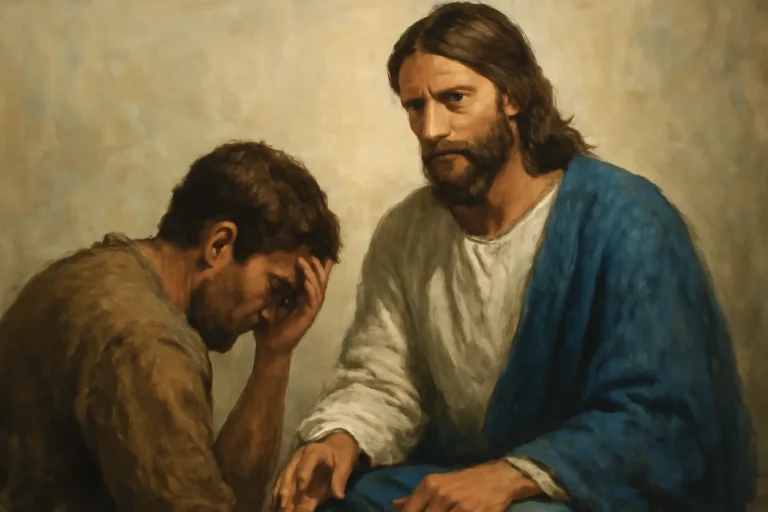

Introduction: Embracing the Question of Faith with Compassion
In the landscape of religious life, the question of hope for those who doubt, wander, or betray trust is not a marginal topic but a central initiatory gate. The phrase hope for the faithless and the unfaithful invites us to imagine a spiritual ecology in which doubt is not a dead end but a doorway—a threshold to greater understanding, humility, and possibility. This article offers a comprehensive meditation on how diverse traditions illuminate the path from uncertainty to renewed fidelity, how communities respond to waywardness with mercy, and how individuals cultivate inner resilience when belief falters.
The aim here is not to settle debates about doctrinal correctness but to explore the ethical and pastoral horizons that arise when hope is extended to people in transitional spaces: those who question, those who hesitate, those who have fallen short of an ideal, and those who have sometimes acted in ways that distance them from a given faith community. Throughout, the focus remains spiritual formation, grace, and the practical wisdom that sustains faith communities that wish to educate, welcome, and reform without erasing the moral seriousness of fidelity.
Historical Perspectives on Hope for the Doubtful
Early Christian Understandings: The Parable of Return and the Boundless Giver of Grace
In the earliest centuries, the Christian imagination framed hope for the faithless within the grammar of repentance and forgiveness. The parable of the prodigal son remains a luminous archetype: a wayward child squanders inheritance, returns in humility, and receives an unearned embrace. The story teaches that mercy precedes merit and that the road back is marked by contrition, reception, and reinvigorated purpose. For early Christians, hope for the faithless was inseparable from the conviction that no one is finally defined by failure, but all may be redefined by grace.
Yet this hope was not naïve. It carried a seriousness about repentance and ethical transformation. Communities built structures—confession, accountability, baptisms, and catechesis—that supported the reentry process. The aim was not to excuse harm but to restore spiritual health while maintaining correctives to prevent a return to harm. In this sense, hope for the faithless was paired with a robust sense of mission: to nurture an environment where doubt could be honestly voiced, questions could be wrestled, and love could prevail over suspicion.
Judaism and the Question of Teshuva (Repentance): Returning to the Path
In the Jewish tradition, the concept of teshuva—literally turning back—offers a powerful framework for thinking about hope for the unfaithful. Teshuva is not a single act but a lifelong habit of turning toward God, toward others, and toward one’s higher aspirations. It acknowledges human frailty while inviting decisive action: recognizing harm, feeling contrition, making restitution where possible, and recommitting to ethical living. The hope embedded in teshuva is communal as well as personal; communities are called to be compassionate mentors who accompany the repentant along the pathway of renewal.
Jewish interpreters often emphasize that hope for the faithless is inseparable from the covenantal promise that God does not abandon the faithful even when they falter. The liturgical and ethical literature repeatedly enjoins the faithful to receive the returning, to hear their confession with patience, and to create climates where renewal is plausible and credible. In this light, the unfaithful person is not cast out as a permanent liability but offered a chance to re-knit the broken strands of relationship with God and community.
Islamic Perspectives on Mercy and Repentance: The Door Always Open
In Islamic theology, the emphasis on tawbah—repentance—conveys a consistently hopeful anthropology of human capacity. The Qur’anic voices repeatedly assert that God’s mercy is expansive and that those who turn away from sin with sincerity may be forgiven. The ethical architecture of tawbah includes regret for the harm done, cessation of the wrongdoing, and a firm intention not to return to the sin. Importantly, hope for the faithless in Islam is not mere sentiment; it is anchored in a divine pedagogy that guides individuals to reform, plus institutions that offer guidance, accountability, and spiritual companionship.
The conversation about the unfaithful in Islamic thought often includes a distinction between ignorance and willful denial, between the struggle of the heart and the stubbornness of the ego. Even when communities see harm caused by betrayal, a healing ethos can prevail, promoting restorative justice, reconciliation, and patience. The temper of hope in Islamic discourse thus combines humility with moral seriousness: belief can be renewed, but it requires sincere effort, patience from others, and a sustained rhythm of prayer.
Theological Themes of Hope for the Faithless
Grace, Mercy, and the Boundaries of Forgiveness
Across religious traditions, the central theological claim that often anchors hope for the faithless is the existence of grace—an unmerited gift that invites transformation even when earned status is questioned. In Christian theology, grace is often described as the decisive gift that makes conversion possible, overcoming the inertia of sin. In its most robust forms, grace does not erase accountability; it reframes it, turning guilt into an impetus for moral and spiritual growth. In other traditions, analogous ideas—mercy, compassion, divine forbearance—play similar roles in making space for the unsettled believer.
A common thread is the claim that a benevolent power is more generous than human fear allows. The consequence for practice is a posture of humble welcome toward the uncertain and an insistence that belief, if it matures, should be celebrated as a shared achievement, not a solitary triumph. When communities embody grace, they model a countercultural ethic: that even the wayward are subjects of possibility, not perpetual objects of judgment.
Repentance, Conversion, and the Road Back
The pathway from doubt to faith is rarely linear. Theologically, the process often involves stages: awakening to a need for change, assessment of one’s life and beliefs, sincere contrition, a recommitment of will, and renewed practice. Spiritual traditions describe these stages with different emphases, yet the underlying logic is familiar: doubt prompts inquiry; inquiry births conviction; conviction prompts ethical action; and ethical action sustains gratitude and reinterpretation of one’s prior beliefs.
A robust understanding of the road back recognizes the role of community as a tutor in virtue. Communities can provide safe spaces for honest questioning, offer reliable reasoning, and nurture practices that support consistent growth. The idea of conversion is not a single act but a continuum—an ongoing deepening of faith that respects the complexity of human experience and respects the dignity of each person along the way.
Contemporary Reflections: Pastoral Care for the Doubter
Pastoral Principles for Extending Hope
In modern religious communities, pastoral care for the faithless or unfaithful should balance invitation with accountability, warmth with truth-telling, and liberality with faithful boundaries. A few guiding principles can help:
- Judicious hospitality: welcome the questioning individual without pretending that every doubt is unworthy of attention, while also inviting responsible commitments to growth and community life.
- Transparent dialogue: encourage dialogue about doubt, skepticism, and belief, ensuring safety for vulnerable voices and protecting the integrity of the shared tradition.
- Holistic nourishment: offer spiritual practices, intellectual resources, and emotional support that address the whole person—heart, mind, and community ties.
- Accountability tempered by mercy: maintain ethical boundaries, address harm where present, and distinguish between reform of conduct and the rejection of dignity.
- Pathways to re-engagement: create clear, compassionate paths for re-engagement with worship, sacraments, study, and service, recognizing that renewal is often incremental.
Communal Practices that Foster Hope for the Doubting
Communities can cultivate a climate in which trust is rebuilt between the faithful and the faithless. Some practical measures include:
- Structured question-and-answer forums that allow frank exploration of doubts.
- Mentor-led study groups that examine scripture, tradition, and contemporary challenges.
- Anonymous avenues for sharing experiences of harm, to be addressed with seriousness and care.
- Regular, liturgical reminders that hope does not require erasing pain but invites healing through truth-telling.
- Programs that pair newcomers or returning members with seasoned practitioners who model patient discernment and hopeful expectation.
Ritual, Memory, and the Re-Entrant
Rituals play a crucial role in shaping the psychology of return. Whether through confession, penitential seasons, or forgiveness-focused rites, rituals help the community reframe memory: old sins are not erased but transformed into narrated experiences that educate and caution. The unfaithful person may come to understand a faith not as a set of prohibitions but as a living friendship with God and with a people who believe that hope is a practice, not a mere sentiment.
Interfaith and Interdisciplinary Prospects: Broadening the Compass of Hope
Hope for the Doubtful Across Faith Traditions
The question of how to hold hope for those who are skeptical or disenchanted is not exclusive to one tradition. In many religious communities, humane doctrines emphasize forgiveness, moral restoration, and common good. For example, Buddhist traditions often stress awakening through the recognition of suffering and the cultivation of compassion; Hindu and Sikh pathways celebrate inner reform and righteous action; and Jain communities emphasize nonviolence and self-purification as doors to greater truth. Across these languages of faith, the generous posture toward the doubtful shares a common ethical ground: belief should be strengthened by integrity and aided by mercy.
Psychology, Ethics, and the Social Script of Hope
Interdisciplinary insights can illuminate how faith communities become capable of hope for the faithless and the unfaithful in concrete ways. Psychology invites us to understand doubt as a signal rather than a defect, a prompt to reexamine assumptions and to seek supportive relationships. Ethics provides a map for balancing justice and mercy, ensuring that accountability does not descend into punitive alienation. Sociology and anthropology remind us that faith communities are evolving cultures; they must adapt to new languages of belief, new social spaces, and new forms of belonging—all without sacrificing core commitments.
Common Myths and Misconceptions about Hope for the Unfaithful
- Myth: Hope for the faithless means endorsing harm or letting grievances go unaddressed. Reality: genuine hope preserves accountability while inviting genuine repentance and transformation.
- Myth: Doubt is the opposite of faith. Reality: doubt can be a catalyst for deeper faith when engaged with integrity and communities that protect honest inquiry.
- Myth: The unfaithful should be excluded to maintain purity. Reality: exclusion may stabilize a boundary, but it often weakens the moral and spiritual fabric of the whole community; inclusion offers a more robust healing trajectory.
- Myth: Reconciliation is a one-time event. Reality: reconciliation is a process that unfolds in time, requiring patient listening, sustained trust-building, and consistent practice.
Practical Applications: Liturgical and Spiritual Practices
Personal Prayer for the Doubtful
Individuals seeking hope for the faithless can cultivate prayers that name questions without coercing certainty. A simple framework includes confession of where belief falters, gratitude for what remains trustworthy, petition for insight, and a pledge to act with integrity in daily life. Such prayers acknowledge the pain of unsettled faith and invite a patient, ongoing encounter with grace.
Communal Worship and Reconciliation
Communities can structure worship to include spaces for lament, confession, and tangible acts of reconciliation. Services might feature liturgical elements that name doubt as a legitimate participant in the life of faith, followed by opportunities for restorative practices, such as mutual blessing, laying on of hands in prayer for renewal, or a liturgy of forgiveness that invites the faithless into a renewed relationship with the sacred and with fellow worshippers.
Rituals of Forgiveness in Different Traditions
Ritual acts that symbolize returning to spiritual health can serve as powerful teachers of hope. For instance, symbolic releases from guilt, public commitments to repair harm, or ceremonial reintegration into worship communities reinforce the message that the journey back is possible—and valued. By giving tangible signs of renewal, these rituals transform abstract statements about mercy into lived experience for the faithless and the faithful alike.
A Vision of Renewed Faith for All Seekers
The central claim of this long-form reflection is simple but demanding: hope for the faithless and the unfaithful is not a passive wish but an active vocation. It calls religious communities to cultivate environments where questions are honored, where failure is neither celebrated nor hidden, and where grace leads to moral and spiritual nourishment. This vision is not indifferent to harm or injustice; rather, it is a compassionate realism that requires courageous leadership, patient listening, and a disciplined commitment to growth.
In practice, hope for the faithless translates into a durable architecture of belonging that respects the tension between fidelity to tradition and the imperative to welcome the broken. It invites believers to embody the paradox that faith can endure even when belief is unsettled, and that unfaithfulness can, through transformation, become a source of renewed fidelity not only for the individual but for the community as a whole.
Final Reflections: The Literature of Return and the Promise of Transformation
Across centuries and traditions, the literature surrounding the return of the wayward has functioned as a spiritual technology for healing. Writings, sermons, poems, and theological treatises alike have served to translate the experience of being faithless into a grammar that makes room for hope, while also preserving the integrity of the faith tradition. The core insight remains: hope for those who doubt or betray is most robust when it is paired with sincere repentance, responsible action, and a community prepared to walk beside the returning person with patience and courage.
In closing, may this exploration inspire readers, scholars, and practitioners to cultivate and sustain hope for the faithless and the unfaithful in ways that are truthful, transformative, and deeply human. When belief is tested, when trust is strained, and when the heart trembles before mystery, the practice of hopeful discipleship can become a beacon—guiding individuals toward renewed faith, healthier communities, and a shared horizon in which doubt itself is a doorway rather than a dead end.