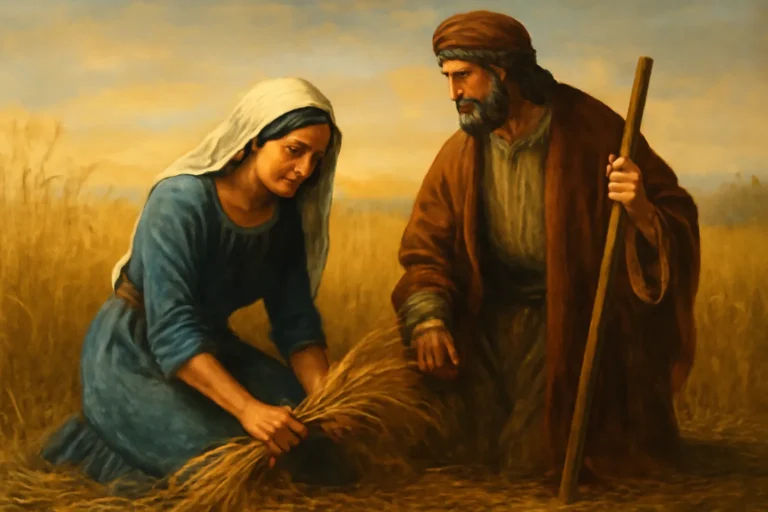
In the biblical narrative, a name often whispered with reverence and scholarly curiosity is Rahab. She stands at the threshold of a story about conquest and covenant, where the fear of the God of Israel collides with ancient political power and the fragile hopes of a marginalized woman. Rahab is remembered not merely as a figure of intrigue or a peripheral character but as a catalyst for a larger movement: the inclusion of Gentiles into the redemptive purposes of Israel and, by extension, into the divine drama of salvation history. This article surveys the figure from multiple angles—historical, theological, ethical, and devotional—and invites readers to consider how her example may illuminate contemporary faith, repentance, and the lived experience of hospitality toward the stranger.
The topic of Rahab the heroine of faith is a doorway into several enduring questions: How does an individual’s trust in the God of Israel alter the trajectory of a community? In what ways can courage, even when it springs from a place of vulnerability, reframe a city’s fate? And what does it mean to be saved by faith that is demonstrated in action? Across centuries, theologians and believers have engaged these questions by listening to Rahab’s voice, reading her actions, and tracing the thread that links her story to the broader arc of redemption. The purpose here is not to reduce Rahab to a mere emblem but to engage thoughtfully with her narrative as a living source for faith, ethics, and hope.
Rahab in the Biblical Narrative
Rahab in Joshua 2:1-21: A Foretaste of Faithful Hospitality
The core of Rahab’s renown begins in the second chapter of the Book of Joshua. When Israel’s new leaders arrive at Jericho, they send spies into the fortified city. Rahab, a resident of Jericho, becomes their unexpected ally. She hides them on the roof, deceives the messengers of Jericho’s king, and negotiates a remarkable safeguard: a scarlet cord and a declaration that the spies must be spared when Jericho falls.
Hospitality and risk: Rahab risks her own life to protect the spies, choosing to align with a God she has heard about rather than align with the prevailing powers of her city.
Profession and reputation: Biblical tradition sometimes refers to Rahab as a harlot or a woman of the night, a designation that has sparked ethical conversations about judgment, mercy, and social marginalization. In the narrative, her social position becomes a lens through which divine mercy operates across boundaries of class and ethnicity.
Scarlet thread: The red cord she uses to signal her home to the spies becomes a symbol of protection, covenant, and continuity between Rahab’s household and the God of Israel.
The language of faith in action emerges powerfully here. Rahab does not merely profess belief in Israel’s God; she demonstrates trust through concrete deeds that affect the safety of her family and the survival of a people who would, in time, become her spiritual kin as well. This combination—faith coupled with action—is a recurring theme in later reflections on her life.
Rahab’s Courage and the Fall of Jericho (Joshua 6)
The narrative continues with the fall of Jericho. Rahab’s household survives the city’s destruction because she stayed true to her oath and safeguarded the envoys. Though the spies had to rely on a precarious line for a short period, Rahab’s recognition of the God of Israel becomes a decisive signal within the larger conquest.
Faith, Works, and Grace: Interpreting Rahab in Hebrews and James
The New Testament reclaims Rahab in a forceful, affirmative way. In Hebrews 11, she is listed among the hall of faith, a roster that includes patriarchs and prophets who lived by trust in God’s promises. The author of Hebrews highlights Rahab’s willingness to align with Israel’s God, acknowledging that her actions validated her faith.
In James 2, Rahab appears in a discussion about faith and deeds. James emphasizes that faith without works is dead, using Rahab’s harboring of the spies as a case in point: her trust in God is manifested in courageous, practical obedience. The pairing of Rahab’s belief with a demonstrable choice offers a model for readers who wonder how belief translates into behavior, and how divine mercy is experienced through ethical courage.
Salvation History and the Inclusion of the Gentiles
Rahab’s inclusion in the people of Israel foreshadows a broader, transformative tension in salvation history: the invitation of non-Israelites into the people of God. Her story anticipates later biblical developments in which the mercy of the Lord extends beyond ethnic boundaries, inviting all who respond in faith to participate in God’s covenantal life.
Rahab as Model of Faith: Key Dimensions
Trust as Action
Rahab’s trust is not merely a mental assent to a divine reality; it is a trust expressed through concrete deeds. She negotiates, deflects danger, and acts in a way that preserves life. Modern readers can see in this model a call to align belief with responsible action, especially when faced with moral uncertainty or risk to vulnerable others.
Hospitality Toward the Stranger
The hospitality Rahab extends to the spies stands as a foundational example of trusting relationships across borders of power and culture. The phrase hospitality to strangers is a biblical virtue with broad implications for social ethics, refugee care, and interfaith dialogue in contemporary communities.
Rahab’s status as a marginalized member of Jericho—the city’s residents might not have viewed her as a resource for national survival—transforms into a radical instance of courageous leadership. Her example invites readers to consider how those on the social margins can play decisive roles in the divine purposes that transcend human expectations.
Faith and Identity Transformation
The arc from Rahab’s home under the scarlet cord to her place in the genealogies of Israel and, in Christian tradition, in the lineage of Messiah, illustrates a powerful transformation of identity: from a local resident to a recognized participant in the people and purposes of God. This shifting identity highlights one of the biblical themes of redemption: that belonging to the people of God is not predetermined by birth alone, but is catalyzed by faith expressed in deeds.
Redemption and Covenant: Theological Implications
The Scarlet Cord as Covenant Symbol
The scarlet cord Rahab uses to mark her dwelling functions as a visible sign of protection and covenant. The color red, in biblical symbolism, often points toward life, atonement, and the blood of sacrifice. In Rahab’s story, the cord becomes a sign that God’s mercy extends even to the households of outsiders who demonstrate faith.
Rahab’s inclusion into the people of Israel challenges simplistic views of purity and inclusion. It underscores that the covenant community can be open to those who align themselves with the God of Israel in a posture of repentance and fidelity. The narrative thus contributes to a broader biblical teaching: God’s mercy is directed toward the faithful who respond with hospitality, integrity, and trust, even if they come from outside the ethnic or religious boundaries of the former community.
One of the most discussed aspects of Rahab’s story is the ethical tension surrounding the spies’ concealment and Rahab’s alleged deception to protect them. The text does not condemn Rahab for protecting the spies; rather, it records her actions as a manifestation of faith that aligns with God’s purposes. This raises important questions for readers: How does divine approval interact with morally ambiguous actions? How should communities interpret Rahab’s choices in light of the moral complexities present in ancient warfare narratives?
Rahab in Jewish and Christian Traditions
Rabbinic and Patristic Reflections
Across Jewish and Christian interpretive traditions, Rahab is viewed through lenses of mercy, inclusion, and the transformative power of faith. In rabbinic literature, her story is a reminder that trust in the God of Israel has tangible effects on communal safety and spiritual lineage. In early Christian writings, Rahab’s example resonates with Gentile inclusion and the radical expansion of the gospel beyond Israel.
The Gospel of Matthew explicitly connects Rahab to the line of Jesus, making her one of the few women named in the genealogy of Christ. This linkage elevates her from a historical figure to a representative of the broader movement of God’s salvation through faith that changes identities and destinies.
New Testament References and Thematic Echoes
Hebrews 11: Rahab among the Faithful
In Hebrews 11, Rahab is included in the roll call of faith. The author highlights that she did not perish with those who refused to trust in God’s plan, because she welcomed the spies in peace. This inclusion places Rahab among a community of witness that transcends gender, social status, and national origin, affirming a universal dimension to the faith that sustains God’s people.
James 2: Faith and Works in Rahab’s Example
James 2 cites Rahab as an exemplar of faith that is proven through action. The pairing of Rahab’s declaration of belief with her decision to protect the spies serves as a practical demonstration that genuine faith cannot be separated from responsible, courageous action when life and righteousness are at stake.
Matthew 1: The Genealogical Connection
Rahab’s role in the genealogy of Jesus is an emblem of the way God works in history: by inviting the unexpected and elevating the humble, Rahab’s presence in the lineage of Christ points to a redemptive pattern in which the outcast becomes an ancestor of divine purposes fulfilled.
Ethical and Moral Reflections
Deception, Morality, and Divine Mercy
The ethical tension surrounding Rahab’s deception invites thoughtful examination. It challenges readers to weigh the sanctity of life and the protection of the vulnerable against the moral complexity of deception in extreme circumstances. The biblical witness treats Rahab’s actions as a sign of divine favor toward a person of faith when it is exercised in solidarity with God’s plans. This raises essential questions for contemporary ethics: When is deception justifiable in the service of a higher good? How should communities discern when a morally ambiguous action is acceptable within a covenantal framework?
Hospitality as Moral Imperative
Rahab’s story foregrounds hospitality as a moral imperative with deep spiritual significance. Opening one’s home, offering shelter, and protecting the vulnerable—even at personal risk—are not merely social niceties; in the biblical view, they are acts that align with God’s mission to bless all nations through faith and mercy.
Marginalized Voices in Sacred History
Rahab’s inclusion in salvation history invites a broader reflection on how marginalized voices contribute to the divine narrative. Her testimony helps readers recognize the value and agency of those who sit on the margins of power, reminding communities of the radical inclusivity at the heart of the biblical message.
In today’s world, where migration, displacement, and cross-cultural exchange are daily realities, Rahab’s example offers a compelling template for welcome: risk-aware hospitality that respects human dignity, honors commitments, and seeks the common good without diminishing justice.
Faith with Works in a Pluralistic Context
The synergy of faith and action that Rahab embodies can inform how communities teach and practice religious life. It serves as a reminder that belief is not a private sentiment but a public witness that should shape decisions about how to care for neighbors, how to respond to oppression, and how to respond to fear with courageous integrity.
Inclusion and Ethical Leadership
Rahab’s trajectory from a marginalized figure to a recognized contributor to the people of God invites church communities and religious groups to cultivate inclusive leadership and to affirm the dignity and potential of those who might be overlooked by conventional power structures.
Reading the Bible with Compassion
A compassionate reading of Rahab’s story encourages readers to approach sacred texts with humility and discernment. It invites contemporary believers to explore how a single life can illuminate a broad spectrum of divine intent—mercy, justice, faith, and the invitation to belong within God’s unfolding plan.
Iconography, Liturgical Use, and Cultural Reception
Artistic and Theological Depictions
Across centuries, theologians and artists have drawn Rahab as a symbol of faith’s boldness and the transformative power of grace. In sermons, poetry, stained glass, and iconography, Rahab’s scarlet thread often appears as a visual reminder of covenantal salvation and the unmerited mercy extended beyond traditional boundaries.
Liturgical Reflections
In some Christian traditions, Rahab is commemorated during seasons that emphasize redemption and the inclusion of the nations. Her example can enrich sermons on hospitality, courage, and the paradox of grace—how God uses the unlikely instruments to fulfill divine plans.
Contemporary Relevance
The narrative remains relevant for contemporary readers who seek practices of fair mercy, justice, and hospitality in a world that often values security over solidarity. Rahab’s story offers a counterpublic moral vision: a call to trust in God’s promises and to act for the welfare of others, even when doing so entails risk.
Conclusion: Remembering Rahab’s Legacy
Rahab’s legacy endures because it transcends a single moment in a distant past. It speaks to the enduring power of faith that becomes action, of hospitality that crosses barriers, and of mercy that includes the most unexpected participants in God’s saving work. By reading Rahab as more than a historical footnote—by recognizing her as a heroine of faith and redemption—contemporary believers can glean a holistic vision of what it means to trust the God who saves, blesses, and invites all nations to join in the story of grace. The scarlet thread she hung in Jericho remains a compelling image: a sign that faith, when embodied in courageous deeds, binds generations together in the possibility of new life. The question for each reader is whether we, too, will embody Rahab’s courageous trust, extending welcome to the stranger, defending the vulnerable, and living out a faith that works through love.
In closing, let us reflect on Rahab as a teacher in the school of faith: a person who, from a precarious position, became a conduit for blessing. Her life invites us to consider how our own stories—our choices, our risks, and our acts of hospitality—may intersect with the divine narrative in ways that bless neighbor and family alike, and that affirm the universal scope of God’s mercy. May we learn from Rahab to welcome the other, to act with courage, and to place our trust in the God who makes a way where there seems to be no way.