Introduction: The Ascension as a Pivotal Moment in Christian Faith
The Ascension of Jesus into heaven stands as a defining event in the Christian narrative, marking the transition from the earthly ministry of Jesus to his ongoing and present work from the heavenly throne. This moment, often celebrated as a feast connected to the season of Easter, is more than a concluding scene of the gospel drama; it is a theological hinge that opens a window into the mysteries of God’s plan for creation, history, and humanity. Across generations and diverse Christian traditions, believers have described the subida of Christ to the Father as a potent symbol of victory, mediation, and anticipation—an event that inaugurates the era of the Spirit, inaugurates the era of the church’s mission, and confirms the cosmic reign of the risen Lord.
In this long-form reflection, we explore the ascent of Jesus into heaven from multiple angles: the biblical accounts, the doctrinal meanings, the liturgical and devotional practices that grow from it, and the ways in which this event shapes Christian ethics, eschatology, and communal life. We will use diverse verbal forms to refer to the subject—the Ascension, Christ’s ascent to heaven, the heavenly departure, the Lord’s enthronement, and the exaltation of the risen one—to emphasize both the unity and breadth of its meaning across time and tradition.
Biblical Foundations: Accounts and Passages
New Testament Narratives
The primary sources about the ascent of Jesus into heaven come from the canonical narratives in the Acts of the Apostles and the Gospel of Luke. In the Gospel tradition, the event is narrated as a moment when the resurrected Jesus blesses his disciples and is carried up from their sight, disappearing into a cloud and leaving the disciples with the sense that they have witnessed the beginning of a new age. In the Acts of the Apostles, the ascension of Jesus into heaven is framed as a decisive turning point after which the disciples gaze upward as two figures (angels) remind them that the Lord will return in the same way.
Luke 24:50-53 describes Jesus leading his followers to Bethany, lifting his hands, blessing them, and then being taken up into heaven, while they worship him and return to Jerusalem filled with joy and praise.
Acts 1:9-11 presents a vivid scene where Jesus is carried up as the disciples watch, and two angels announce that he will return in the same way they saw him depart.
Other New Testament reflections connect the ascent with gospel proclamation, with phrases that situate the event alongside the Resurrection and the sending of the Spirit at Pentecost.
Foreshadowing and Theological Echoes
The ascent of Jesus into heaven is often interpreted in light of Old Testament typology and the broader arc of salvation history. The prophetic imagination of Israel looked forward to a time when God would vindicate the righteous and establish justice in the world. The heavenly departure of Jesus is read by many theologians as the moment where the risen Messiah assumes a cosmic reign, seated at the right hand of the Father, interceding for the world and guiding the Church through the Spirit. This sense of glorification and enthronement is tied to the expectation that Jesus, who ministered with compassion and truth on earth, continues that divine work from a place of ultimate authority.
Theological Significance: Exaltation and Kingly Rule
Exaltation and Coronation
The ascent to heaven is frequently interpreted as the exaltation of Christ, a coronation that signals the completion of the incarnation’s drama and the inauguration of his universal Lordship. In this sense, the Ascension is not a withdrawal but a relocation of Jesus’ presence—no longer limited to a particular time and place, but reigning with divine authority over all creation. The imagery of enthronement echoes ancient near-Eastern conventions of kingship, yet in Christian theology it is uniquely characterized by humility, sacrifice, and love.
Christ’s ruling through the Spirit: The Ascension makes possible the Spirit’s gift to the church, enabling leadership, empowerment, and mission.
Intercession and mediation: From the heavenly throne, the exalted Christ intercedes for believers, sustaining them in weakness and guiding their pilgrimage.
Hope of return: The same event that marks Christ’s enthronement also anchors the expectation of his future return, a future consummation of all things.
Intercession and Mediation
A central dimension of the Ascension is that Jesus becomes the mediator between God and humanity in a new way. The author of Hebrews frames this reality with language about Jesus serving as a high priest who has passed through the heavens, now serving in the heavenly sanctuary. In this sense, the ascent into heaven underwrites the ongoing spiritual work of intercession, consolation, and advocacy that believers experience in prayer. The heavenly mediator is neither distant nor detached; rather, he is present as the source of grace, mercy, and truth in every age.
Christology: The Person and Work
Identity and Mission Post-Resurrection
The ascent to heaven reframes the identity of Jesus in a way that emphasizes both his humanity and his divinity in a culminating way. As the risen Lord who ascends, Jesus remains truly God and truly human. The two natures are not separated by an absence but united in a new kind of presence—one that transcends spatial limits while inviting intimate relationship with the Father and the Spirit. This is not merely a cosmic event; it is a personal, relational truth that shapes Christian devotion and ethics.
Pedagogy of the Ascension
The narrative of Jesus’ ascent also offers a pedagogical model for the church. First, there is a movement from appearance to absence—an invitation to faith, obedience, and mission in the absence of the visible one. Second, the event invites responsibility: the church is commissioned to be witnesses to all nations, starting from Jerusalem and expanding outward. The Ascension thus becomes a classroom for discipleship, showing how love, truth-telling, and service carry forward into the world through the Spirit-empowered community.
Liturgy and Spiritual Practice: Celebrating the Ascension
Traditions of Worship
Across Christian communities, the Ascension is celebrated with liturgical rites, readings from Scripture, sacred music, and prayers that center on Christ’s heavenly reign and his ongoing presence through the Spirit. In some traditions, the feast is observed on the fortieth day after Easter, while other churches mark it on a Sunday closest to that date. The liturgical calendar often colors the season with white or gold to signify victory and triumph, contrasting with the somber tones of penance that accompany other feasts.
Devotions for the Season
Devotional practices surrounding the Ascension of Jesus into heaven typically emphasize two themes: the wonder of Christ’s exaltation and the call to faithful mission. Common practices include prayers that acknowledge Christ’s intercession, meditations on the promises of Jesus regarding the Spirit, and the reception of the Eucharist as a visible sign of fellowship with the risen Lord who now reigns from the heavenly throne.
Prayers for guidance and strength in mission, acknowledging Christ’s ongoing leadership over the church.
Scripture meditations on passages like Luke 24 and Acts 1 that bridge Resurrection and Pentecost.
Contemplations on the nature of heaven, the Father’s dwelling, and the promise of Christ’s return.
The Ascension and Eschatology: What It Means for the End Times
Consummation and Hope
The ascent to heaven is deeply connected to eschatological expectations. If the risen Jesus ascends to the Father and is enthroned as Lord over all, then the Church is invited to live in the tension of already-not-yet: already witnessing the reality of God’s reign through the mission of the Spirit, not yet realizing the full fulfillment of all things. The promise of return—“he will come again” imagery—frames the church’s hope and urgency, shaping prayer, ethics, and worship.
Judgment, Resurrection, and Renewal
The heavenly ascent interacts with other strands of Christian hope: the promise of future resurrection of the dead, the ultimate vindication of the righteous, and the renewal of creation. The ascent does not remove Jesus from history; it relocates him into a cosmic arena where divine sovereignty, justice, and mercy converge. The church reads the Ascension as the inauguration of a new era in which human history is drawn into God’s eternal plan.
Historical and Cultural Context
Early Christian Reflection
In the earliest Christian communities, the belief in the heavenly ascent of Jesus served as a corrective to various expectations: some communities anticipated a purely earthly kingdom, while others worried about a loss of Jesus’ presence after the Resurrection. The Ascension clarified that Jesus would be present in a new way—through the Spirit and through the mission of the church—while continuing to govern history from a position of divine authority. The shared memory of the ascent also helped Christians recognize the continuity between Jesus’ ministry in Galilee and his ongoing reign in heaven.
Hellenistic and Jewish Echoes
The language and imagery surrounding the Ascension of Jesus into heaven resonate with both Jewish expectations about a Davidic king who rules from a heavenly throne and Hellenistic notions of divine rulers who govern the world. The Christian reinterpretation of these motifs emphasizes the paradox of a suffering, crucified Messiah who now reigns as the exalted Son of God. This synthesis of visions contributed to a robust sense of mission and to the development of creeds that confessed Jesus as Lord and Christ.
Interpretations Across Traditions
Roman Catholic Perspective
In Catholic theology, the Ascension is closely linked with the mystery of the Eucharist, the role of Mary in heaven, and the ongoing reality of the Church as a pilgrim people. The exalted Christ is seen as the universal head of the body, with his reign manifest through the sacraments, the teaching authority of the Church, and the work of the Holy Spirit in believers. The feast is celebrated with a sense of triumph and with an invitation to renewed missionary zeal.
Orthodox Perspective
The Orthodox tradition emphasizes the continuity of the event with the Second Coming, the dignity of the resurrected body, and the divine light that surrounds Christ in his heavenly enthronement. Iconography often depicts the Ascension with emphasis on the divine radiance and the Apostles looking upward in reverent expectation. The ascension is not viewed merely as a historical moment but as a living reality that shapes liturgical life and spiritual contemplation.
Protestant Perspectives
Among Protestant communities, the ascent is commonly understood as confirmation of Jesus’ lordship and as a catalyst for the Spirit’s descent at Pentecost. Emphasis is often placed on the twofold fulfillment of Christ’s work: he defeats sin and death through resurrection and then empowers the church to bear witness to the gospel through the Spirit. Various denominations articulate different liturgical expressions, but all recognize the Ascension as a turning point that redefines salvation history and the church’s mission.
The Ascension in Art, Music, and Literature
Artistic Representations
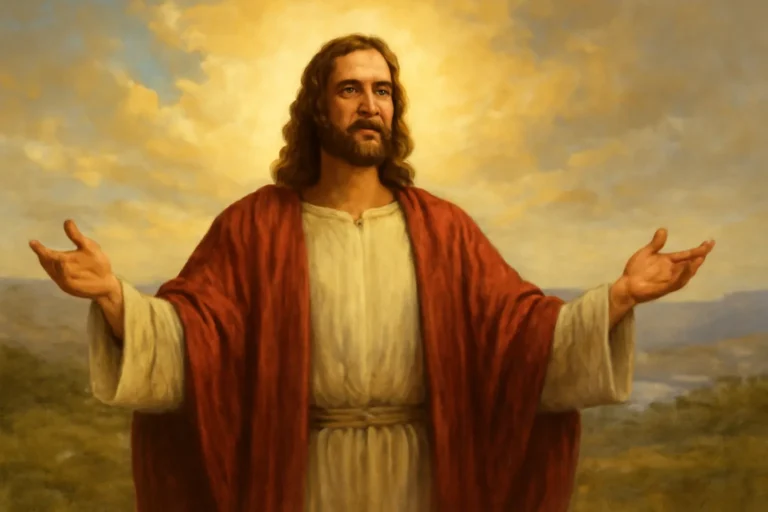
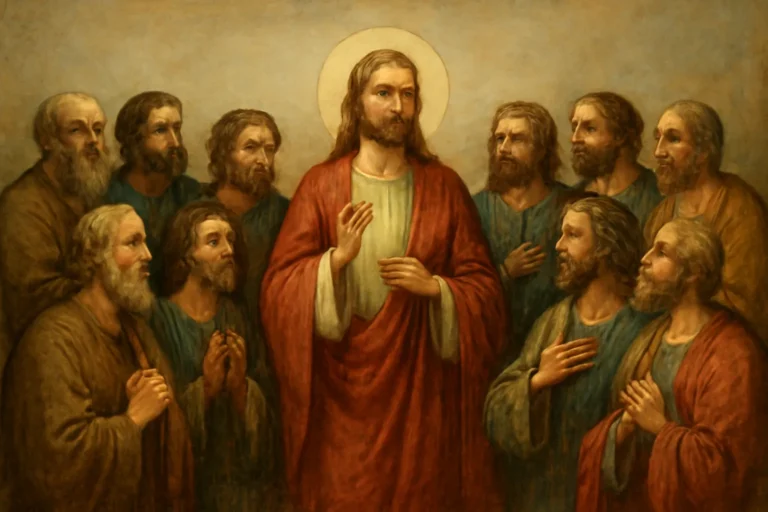
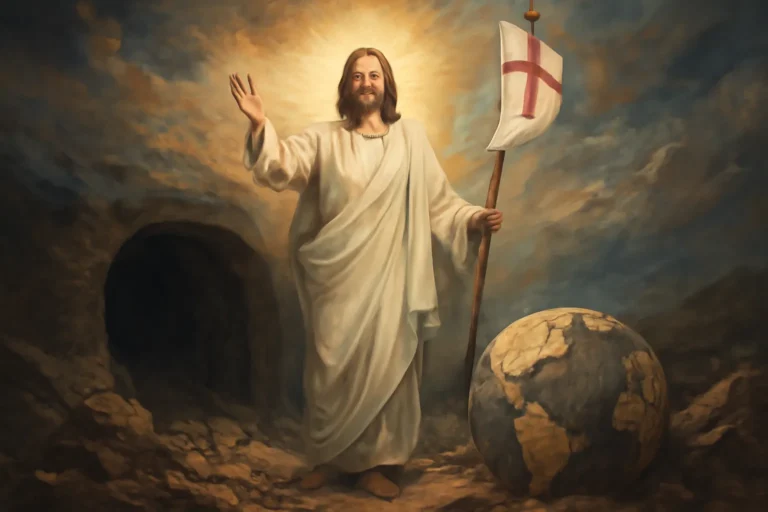
Throughout the centuries, painters and sculptors have sought to capture the moment of the heavenly ascent, balancing the awe of the divine encounter with the human gaze of the disciples. These works often depict a bright cloud, the presence of angels, and the risen Christ in a posture of blessing or ascension. Artistic treatments invite viewers to reflect on the mystery of God’s presence beyond visible space and time.
In music, the Ascension has inspired an expansive repertoire—from medieval hymns to contemporary liturgical compositions. Chorales, motets, and anthems have celebrated Christ’s enthronement and intercession, while modern sacred songs often foreground themes of mission, hope, and divine sovereignty.
Literary Reflections
In Christian poetry and prose, the ascent is a recurrent motif used to explore the tension between divine transcendence and intimate relationship with God. Writers have used the imagery of rising and drawing near to the Father to articulate experiences of grace, longing, and trust in God’s plan for humanity.
Common Questions and Clarifications
Is the Ascension the same as the Resurrection?
No, though they are closely related events in the Christian narrative. The Resurrection refers to Jesus’ rising from the dead, while the Ascension refers to his departure from earth to heaven where he continues to rule and intercede. The two events are often paired in biblical storytelling and theology, showing both victory over death and a new mode of presence and authority.
What is meant by Jesus’ return to the Father?
The language of returning to the Father highlights the relational dimensions of the Son’s mission. It reflects the fulfillment of Jesus’ earthly work, his ongoing intercession, and his appointment as the universal head of the church. It also anchors the expectation that he will come again in glory to judge the living and the dead, bringing the entire creation into fulfillment.
The Ascension and Pentecost are closely linked in Christian faith. The Ascension makes possible the sending of the Spirit at Pentecost, which inaugurates the church’s mission with power and grace. In this sense, the heavenly ascent enables the Spirit’s empowering presence among believers, guiding the church’s witness to the world.
What pastoral lessons does the Ascension offer
Pastorally, the Ascension invites believers to live with hopeful expectation, courage in mission, and confidence in Christ’s ongoing governance. It challenges fear of absence with trust in a living Lord who rules from heaven, and it calls communities to be witnesses who extend the love of Christ to the world through service, generosity, and proclamation.
The Ascension of Jesus into heaven marks more than a conclusion to Jesus’ earthly appearances. It signals the beginning of a new phase in God’s redemptive work—an era in which the risen Lord reigns with all authority, the Spirit is poured out to empower the church, and believers are invited to participate in God’s mission with courage and hope. By contemplating the heavenly ascent, Christians gain a renewed sense of purpose: to proclaim the gospel to every corner of the earth, to live as witnesses of a faith that transcends the visible, and to anticipate Christ’s return with fidelity and love. The ascent is, therefore, not just a historical memory but a living reality that shapes doctrine, worship, and daily life in communities around the world.
As you reflect on the many dimensions of this event—the glorification, the enthronement, and the ongoing intercession—you may find a unity emerging: the Ascension binds together faith in the risen Christ, trust in the Spirit’s presence, and a fervent call to mission. In that sense, the ascent of Jesus into heaven remains a timeless invitation to participate in God’s unfolding story—today, tomorrow, and for all ages.