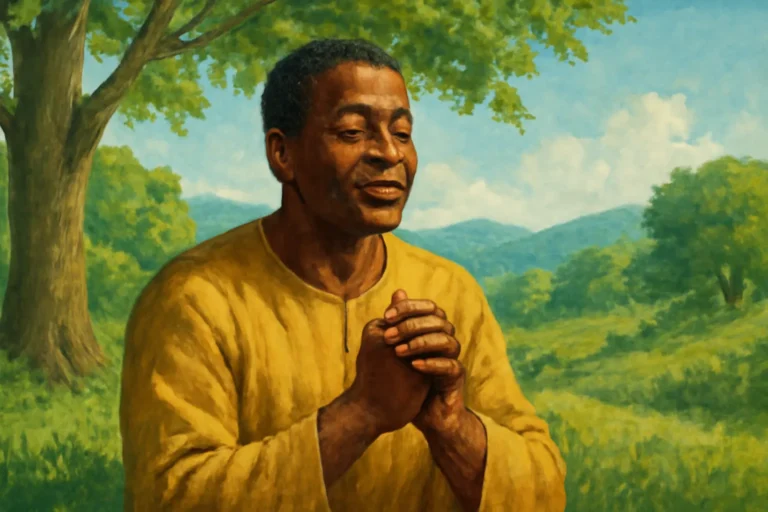

The Certainty of God’s Promises is a theme that has shaped lives, communities, and civilizations. It touches every corner of religious reflection—from the quiet moments of personal prayer to the grand debates of theological schools. In this article, we survey the foundations, the biblical anchors, the interpretive traditions, and the practical implications of believing that what God says is true, trustworthy, and ultimately fulfilled. The topic is not merely cognitive assent; it is a living disposition that reorients time, memory, desire, and action toward the divine word that endures forever.
The Foundations of the Certainty of God’s Promises
Scriptural integrity and the character of the speaker
At the heart of any discussion about the certainty of divine promises is a conviction about the source of those promises. If God is the speaker, then the reliability of his word is not reducible to human verification but rests on the integrity of the speaker. In the biblical witness, God’s speech is dependable because it reflects the immutability and faithfulness of the divine nature. The Bible repeatedly frames God as a being whose character makes his promises trustworthy even beyond the apparent evidence of present circumstances. When the Psalmist declares that “the word of the Lord is right” (Psalm 33:4), or that God’s promises never fail (1 Samuel 15:29), these are not merely poetic affirmations but claims about reality itself.
Divine immutability and steadfast love
Two attributes consistently invoked to account for the certainty of God’s promises are immutability and steadfast love. If God’s nature does not change and God loves precisely in the way that corresponds to the good, then the content of God’s promises does not hinge on changing circumstances or shifting human response. The Church Fathers and later theologians often summarized the logic this way: what God purposes in eternity cannot be frustrated by time. This conviction gives believers grounds to trust that even delays or apparent failures do not indicate that the promises have failed, but that they are being worked out in a larger, divine chronology.
Reliability through covenants and oath-bound assurances
God’s promises are commonly framed within the language of a covenant—an oath-bound, binding arrangement that creates a relationship with consequences and expectations. In Scripture, a covenantal framework carries with it a binding guarantee: to bind oneself to a promise is to commit to the fulfillment of that promise in due season. The covenantal structure provides a juridical and relational basis for certainty. When God swears, the New Testament says, “he is not man, that he should lie” (Numbers 23:19; Titus 1:2). The certainty of God’s promises is thus supported by a triad: the integrity of the speaker, the immutability of the speaker’s character, and the binding force of the covenant in which promises are made.
Biblical Foundations: Promises Across the Covenants
Major biblical promises and their continuity
Across the biblical narrative, God makes promises in various contexts—to individuals, families, tribes, and the international community. The continuity of divine promises across the covenants helps explain a robust sense of certainty for faithful readers. Read as a unified arc, these promises point toward a consummation in which God’s purposes are fully realized. The central strands include:
- The Abrahamic promises—blessing to the nations, a son through whom redemption would come, and land as a sign of blessing (Genesis 12:2-3; 15:18-21).
- The Davidic promises—an enduring throne and the establishment of righteous rule through a descendant of David (2 Samuel 7:12-16; Psalm 89).
- The Prophetic promises—a future restoration, the bending of peoples toward peace, and the writing of God’s law on the heart (Jeremiah 31:31-34; Ezekiel 37-39).
- The New Covenant promises—the internal transforming work of the Spirit, forgiveness of sins, and intimate knowledge of God (Jeremiah 31:31-34; Hebrews 8:6-13).
Within these strands, the certainty of God’s promises is not merely found in the rhetoric of a moment but in the trajectory of salvation history. The prophetic witness anticipates a future reality, the fulfillment of which metamorphoses human life and reshapes communities according to God’s purposes. The New Testament, in particular, treats Jesus as the climactic fulfillment of these promises, with the fulfillment motif becoming a hermeneutical key for how believers interpret present experience in light of divine promises.
Promises fulfilled and anticipated in Scripture
The literate reader encounters a sequence of fulfilled and anticipated promises that reinforce confidence. For instance, the promise to Abraham about becoming a blessing to the nations finds partial fulfillment in the spread of the gospel, while its ultimate fullness is linked to the edenic restoration and the new creation. The promise-fulfillment pattern is not mere repetition; it is a pedagogical device that teaches trust through historical and eschatological dimensions. The biblical authors often point to both satisfied expectations and confident anticipation, inviting readers to trust not only what has already happened but what God has declared will happen.
Theological Perspectives on the Certainty of God’s Promises
Reformed and Calvinist emphasis: assurance as a gift tied to divine sovereignty
Within reformed theology, the certainty of God’s promises is closely linked to the sovereignty of God and the adequacy of Christ’s work. The doctrinal emphasis is often on perseverance of the saints and the assurance that those who are in Christ will be kept by the power of God. The question is not whether promises exist, but whether individuals in faith will endure to the end. This perspective emphasizes that security is grounded in God’s faithfulness, not in human merit. Scriptural anchors such as Romans 8:38-39, Philippians 1:6, and Hebrews 13:5 are used to articulate the reliability of God’s purposes and the eventual realization of those promises in the life of the believer and the church.
Arminian and Wesleyan currents: conditional assurance and active faith
In Arminian and Wesleyan traditions, the certainty of God’s promises is often framed in terms of human response—faith, repentance, and perseverance. Here, assurance is real but starts with God’s initiative and is sustained through obedience and ongoing trust. The idea is not that human effort earns God’s promises, but that ongoing faith and experiential trust are the means by which the promises are appropriated in daily life. Key texts include passages on faith working through love (Galatians 5:6) and perseverance as a continual choosing of trust, even in trial. Proponents emphasize that God’s promises are available to all who receive them by faith and that assurance can grow as believers test God’s faithfulness in concrete, lived experience.
Catholic and Orthodox perspectives: sacramental and communal dimensions of certainty
Within Catholic and Orthodox traditions, certainty about God’s promises often meets a communal and sacramental horizon. The Church’s life—its sacraments, liturgical prayers, and apostolic succession—offers a means by which God’s promises are mediated and confirmed. The belief is not merely that private conviction suffices, but that the divine promise is safeguarded and transmitted through the Church’s ministry. The sanctifying grace received in the sacraments is understood as a tangible sign of God’s steadfast faithfulness, and the Christian enters into a communal memory that anchors hope in God’s redemptive work. In this sense, certainty in these traditions is both personal and ecclesial, mediated through tradition and ordained ministry as part of the living body of Christ.
Experiencing Assurance: The Human Dimension
Faith as receptivity to divine testimony
Experience of the certainty of God’s promises begins with receptivity—an open posture before God’s word. Faith is not a private revelation alone; it is a response to the testimony of God about himself and about his promises. The biblical picture of faith often includes elements of hearing, pondering, and choosing to trust. When the hearer receives the divine message, a transformation begins—hope rises, courage grows, and a new orientation toward life and time emerges. In this sense, the certainty of God’s promises is an experiential reality that unfolds as faith deepens.
Prayer, meditation, and the discipline of memory
Prayer and meditation on Scripture are common channels through which believers encounter the reliability of God’s word. The practice of memory—recalling what God has spoken and what he has already accomplished—serves as a reservoir from which current trials draw strength. Memorized promises become a spiritual toolkit for endurance, enabling believers to resist despair and to frame present difficulties within the larger arc of God’s redemptive plan. The discipline of memory, when joined with hopeful expectancy, anchors a robust confidence that God’s promises will find their ultimate fulfillment.
Obedience and perseverance as signs of certainty
Certainty is not an abstract sentiment but a lived reality that expresses itself in obedience and perseverance. The believer’s conduct—humility, justice, mercy, patient endurance—becomes the visible fruit of trust in God’s word. This does not imply that works save us; rather, it indicates that trust in God’s promises reshapes action. When people orient their lives toward God’s stated purposes, their decisions reveal the deep confidence that God’s intention for humanity is reliable and true. When hardship comes, the faithful can still move forward, guided by the conviction that God’s promises will not falter.
Challenges to Certainty: Suffering, Delay, and Doubt
Why do promises seem delayed or hidden in hardship?
One of the most common tests of certainty arises in the face of pain, injustice, or long-awaited outcomes that do not materialize as expected. Suffering can tempt believers to doubt God’s faithfulness or to interpret delay as evidence that the promises have failed. The robust Christian response recognizes the tension between the already-present reality of the kingdom and the not-yet-fully realized fullness of creation. In such moments, the biblical tradition invites readers to hold two things together: honest lament and confident trust. The language of lament is not a denial of God’s promises but a disciplined form of trust by which one asks God to align present experience with divine purposes.
Faith and doubt: a dynamic not a barrier
Doubt, in many theological frameworks, is not the opposite of faith but sometimes a companion on the path of authentic trust. When doubt arises, the path forward often involves recollection of God’s past faithfulness, communal support, prayer, and engagement with Scripture. The goal is not to eradicate doubt instantly but to move toward a more mature confidence that can withstand unanswered questions and mysterious timing. A mature posture toward uncertainty preserves the core conviction that God’s character remains trustworthy even when human experience cannot fully explain the reasons behind a delay.
Practical Implications: How to Live in Light of God’s Promises
Memory and reminder: cultivating a life of hope
Practical steps to inhabit the certainty of God’s promises include cultivating memory: keeping an ongoing record of answered prayers, moments of divine provision, and the ways God has shown faithfulness in the life of the church. Memory tools could be journals, liturgical texts, or digital records that people revisit during times of struggle. By revisiting these reminders, believers re-anchor themselves in the trajectory of divine faithfulness and reinforce the confidence that God’s promises endure beyond individual circumstances.
Community discernment: learning to trust together
Isolation often magnifies doubt, while healthy community fosters assurance. The Christian life is not a solitary enterprise; it is a shared journey in which the community offers encouragement, correction, and perspective. In practical terms, this means participating in communal prayer, worship, Bible study, and accountability relationships. When communities reflect on God’s promises together, they often see new angles of reassurance and learn to interpret their experiences through the lens of divine faithfulness. This communal dimension highlights that the certainty of God’s promises is reinforced not only by personal experience but by the tested wisdom of the community of faith.
Scripture-led spiritual discipline: breath, rhythm, and expectancy
Regular engagement with Scripture—readings that awaken memory, highlight prophecies, and reveal Christ as the fulfillment—helps believers align their inner life with the certainty of God’s word. The disciplines of Bible reading, guided meditation, and prayerful reflection create a rhythm in which expectation becomes a steady posture rather than a sporadic burst of optimism. A sustained rhythm of encounter with the divine promises shapes the heart toward perseverance and patient expectation.
Ethical living as a manifestation of trust
Trust in God’s promises has ethical implications. When a person trusts that God’s purposes will prevail, they are called to live in ways that reflect God’s priorities: justice for the oppressed, mercy for the vulnerable, humility before God, and fidelity to truth. The certainty of God’s promises thus becomes a motive for ethical action—not merely a comfort to endure suffering, but a catalyst for courageous, compassionate living in a fragile world.
Common Questions about the Certainty of God’s Promises
Is certainty the same as certainty of salvation?
There is a nuanced distinction between the certainty of God’s promises in general and the assurance of salvation specifically. Many traditions teach that one may be certain about God’s overarching promises (such as the promise to redeem, renew, and restore creation) while remaining uncertain about one’s personal status before God in a given moment. Others affirm a confident assurance of salvation grounded in the work of Christ and the Spirit, conditioned on faith and perseverance. The conversation often centers on what grounds certainty provides and how faith matures into experiential assurance without negating the ongoing need for repentance and dependence on God.
What about promises that seem unfulfilled in history?
Believers routinely encounter what might be described as “unfulfilled promises” within history. In such cases, theological frameworks typically distinguish between the unfolding of promises in time and the eventual complete realization of God’s plan. The tension can be interpreted as a call to trust in God’s timing, to participate in God’s mission in the present, and to hold fast to the conviction that God’s purposes cannot be thwarted by human circumstance. A careful reading of Scripture often reveals that delayed fulfillment serves larger purposes—purification, maturity, and the shaping of a people who live by faith rather than by sight.
How does one distinguish genuine promises from wishful thinking?
Discerning genuine promises from hopeful wish requires careful theological method and a disciplined approach to Scripture. Generally, biblical promises come with divine revelation that coheres with God’s character and historical acts of redemption. They point toward concrete outcomes that align with God’s will for creation and human flourishing. Group discernment, exegesis, and the study of the narrative arc of Scripture are practical tools to avoid conflating personal desires with divine declarations.
Conclusion: The Living Reality of Divine Certainty
Across traditions and disciplines, the certainty of God’s promises remains a central anchor for life in faith. It is not a static claim but a dynamic reality shaped by the divine attributes of faithfulness, love, and immutability, and by the covenantal pattern that binds God to his word. The biblical story, interpreted through various theological lenses, invites followers to trust deeply, to hope with patience, and to live in a way that reflects the confidence that God’s promises will be realized. In practice, certainty becomes a framework for meaning: it gives direction to prayer, resilience in hardship, integrity in moral choices, and hopeful anticipation of a world renewed by the divine word.
As we navigate the complexities of faith, it is helpful to remember two guiding truths. First, God’s promises are true because God is faithful, and faith attends to that truth with humility and perseverance. Second, the certainty of divine promises is not mere assurance about the future; it shapes the present—transforming how we love our neighbors, how we forgive, how we endure, and how we embody a hopeful witness in a world longing for trustworthy truth. In this light, the certainty of God’s promises is not a speculative doctrine but a lived reality that sustains the weary, strengthens the weak, and invites all people into a hopeful future that God has prepared.
Appendix: Quick references for further study
- Genesis 12:2-3; 15:18-21 — The Abrahamic covenant as foundational promise
- 2 Samuel 7:12-16 — The Davidic covenant and the promise of an enduring throne
- Jeremiah 31:31-34; Ezekiel 36-37 — The New Covenant and the transformation of the heart
- Hebrews 6:13-20; Hebrews 13:5 — God’s oaths and the security of the believer
- Romans 8:28-39; Romans 11:29 — The steadfastness of God’s plan and gifts
- John 14:1-3; 1 Corinthians 1:9 — Jesus as the fulfillment and the guarantee
In closing, the certainty of God’s promises invites a lifelong journey: to listen attentively to the divine word, to allow it to reorder our desires, to trust through trials, and to live with a hopeful, practical expectation of God’s redemptive work in the world. The promises of God are not a distant horizon but a present reality that grounds our faith and calls us into a future shaped by divine faithfulness. May this certainty sustain you, nourish hope, and empower love as you walk in the light of God’s steadfast word.