The figure of Jesus, known to many as the Messiah or the Christ, intersects with the
ancient institution of the Sabbath in a way that has shaped theological reflection across
two millennia. The Sabbath, a rhythm woven into Jewish life and sacred memory, stands at the crossroads of
divine command, creation theology, liturgical practice, and the prophetic critique of human tradition. For
Christians, the question of how the Lord of the Sabbath relates to the Rabbinic framing of rest
and mercy has been central to debates about law, grace, and the meaning of Jesus’ mission.
This article surveys the biblical narrative, theological interpretation, and historical development surrounding Jesus’ relationship to the Sabbath (often called Shabbat in the Jewish idiom) and tracks how
early Christian communities understood the shift from a Saturday day of rest to a Sunday gathering around the
Resurrection, sometimes described as the Lord’s Day. Along the way, we will encounter key texts,
interpretive tensions, and practical implications for readers today who want to honor rest, mercy, and faith
without reducing observance to mere obligation.
The Sabbath in the Biblical and Jewish Context
The Sabbath originates in creation narrative and covenantal memory. In the book of Genesis the Creator rests on the
seventh day, and in the Decalogue the people of Israel are commanded to keep a weekly day of rest
as a sign between God and his people. In Judaism, the Shabbat is more than a private quarterly or annual holiday:
it is a social, spiritual, and liturgical pattern that shapes family life, worship, and civil relations.
For Jesus of Nazareth, the Sabbath was not a negligible backdrop but a dynamic field for
discerning the intentions of God’s law. The Gospels repeatedly place the itinerant teacher in situations that
bring the purpose of the Sabbath into sharper relief: mercy over ritualism, healing over
overadministration, and the interpretation of rest as life-giving.
Shabbat, Mercy, and Creation’s Rhythm
Creation completeness: The Sabbath highlights that creation has a planned cadence—work followed by rest, blessing followed by contemplation.
Covenant sign: The day of rest functions as a covenant sign, reminding Israel of God’s deliverance from Egypt and his ongoing provision.
Rest as praise: The Sabbath as a time for worship, gratitude, and trust in God’s sovereignty.
Gospels and the Quests on the Sabbath
The Synoptic Gospels (Matthew, Mark, Luke) recount several episodes where Jesus engages with the Sabbath,
challenging rigid interpretations and redirecting attention toward mercy, human need, and the heart of divine command.
The Gospel of John, while less courtroom in format, echoes the same concern: to reveal in Jesus a deeper,
life-giving Sabbath fulfilled in his person.
Key Episodes Where the Nazarene Interprets the Sabbath
Across the Gospels, the Messiah is depicted not simply as a doer of miracles on a sacred day but as
one who redefines what counts as true service to God on the Sabbath. This reframing occurs in a
constellation of stories, sayings, and debates that have shaped Christian ethics and pastoral practice.
Disciples Plucking Grain: Needs, Work, and Mercy
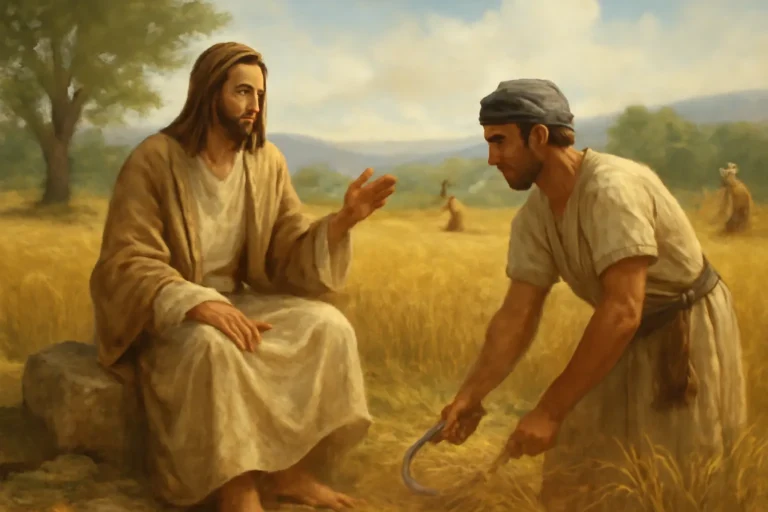
In Matthew 12, Mark 2, and Luke 6, the disciples pick grain as they pass through fields on the Sabbath.
The Pharisees object, claiming that such activity violates the day. Jesus responds with a decisive claim: “The Sabbath was made for man, not man for the Sabbath” (Mark 2:27). This utterance signals a
reorientation: the Sabbath exists to serve human flourishing, not to enslave people to a formal system.
Healing on the Sabbath: Mercy Over Legalism
Healing episodes—many in which Jesus restores sight, mobility, or health on the Sabbath—frame his
mission as restoration and mercy. In some stories the healing provokes controversy; in others it
yields awe. The Gospel writers present Jesus as challenging the boundaries that prevent mercy from flowing to
those in need. The net effect is a portrayal of the Sabbath as a day that invites compassion and action in the
service of human dignity.
Jesus explicitly declares his authority over the Sabbath in passages such as “For the Son of Man is Lord of the Sabbath” (Matthew 12:8). This claim affirms that Jesus embodies the
divine intention of the day itself and stands as the interpretive key for understanding how rest, mercy,
and worship converge in his person.
Controversies and Clarifications
The dialogic pattern—Jesus teaches, his opponents debate, witnesses affirm or challenge—serves a pastoral and
theological purpose: to distinguish between essential moral aims and colateral rules. The Gospel narratives do not
simply condemn ritualism; they invite readers to discern the spirit of the law, which is love, mercy, and
human flourishing.
Theology of Fulfillment: Jesus, Law, and the Sabbath
A central question for Christian theology is how Jesus relates to the Mosaic law and the
command to observe the Sabbath. The Gospel writers present a nuanced portrayal: Jesus does not abolish
the Sabbath but reinterprets it in light of his mission. The phrase “fulfillment” appears as a key
theological move: the Sabbath is not replaced by a new, unrelated practice but completed in the person and
work of the Son of God.
Fulfillment and the Law: A Hermeneutic of Continuity and Transformation
The New Testament speaks of Jesus as the one who fulfills the Law and the Prophets. In this sense, the Sabbath
remains a divine gift, yet its ultimate meaning is found in the person of Christ. The theological claim is not
merely about obedience to a calendar but about locating rest, worship, and mercy in the one who brings
reconciliation with God. Early Christian teachers would articulate this as a shift from a day-centric rule to a
Christ-centered rhythm.
Hebrews and the Christian Concept of Rest
The Epistle to the Hebrews speaks of a heavenly rest and invites believers to enter God’s rest through faith
in Christ. This text suggests a spiritual rest that transcends a single day. Yet in Christian practice, that rest
is expressed through daily obedience to the will of God, corporate worship, and a hopeful longing for the
future rest associated with the final fulfillment of the kingdom.
Continuity for the Community of Faith
Across centuries, theologians have debated how the Sabbath relates to Sunday worship, the liturgical pattern of
Christian communities, and the broader spiritual discipline of worship. The core of the discussion remains: to
honor God on a regular cadence, to show mercy to the poor and afflicted, and to cultivate a rhythm of trust in
God’s provision and sovereignty.
The Lord of the Sabbath and the Transition to Sunday Worship
A distinctive development in Christian history is the shift from a Sabbath-centered rhythm to a weekly pattern
of gathering on the first day of the week, commonly identified with the Resurrection of Jesus. This shift has
deep roots in early Christian practice and is reflected in historical sources, liturgical patterns, and doctrinal
reflections.
First-Day Gatherings in the Early Church
The apostolic communities often met on the first day of the week, a practice associated with the day Jesus rose
from the dead. Scriptural hints include 1 Corinthians 16:2, where Paul instructs believers to set aside an offering
on the first day of the week. Luke’s Acts also records the early believers gathering for teaching and fellowship
on the first day, signaling a pattern that embraced the Resurrection as the defining event of the new people of God.
Worship and the Lord’s Day
By the second and third centuries, Christian writers describe Sunday as the “Lord’s Day,” a title that
foregrounds the central reality of the Christian faith: the living Christ who conquers sin and death. While
Sabbath-keeping among Jewish Christians persisted in some communities, the broader church associated Sunday with
liberation through Christ and the ongoing experience of worship, teaching, and sacramental life.
Historical Markers: Degrees of Continuity and Change
The transition from Shabbat to the Lord’s Day was not a single, uniform reform but a gradual process marked by
theological reflection, pastoral care, and ecclesial governance. Some traditions maintained a strong sense of
continuity with the Sabbath, while others emphasized freedom in the Spirit to shape weekly worship around the
Resurrection. Across diverse Christian landscapes, the central claim remained: the Christ event reframes the
rhythm of community life toward a weekly celebration that anchors hope in the risen Lord.
Denominational Perspectives on the Sabbath Today
Across Christian traditions, understandings of the Sabbath vary. Some communities emphasize a strict Sabbath
observance inspired by Jewish practice; others resist any calendrical rigidity, prioritizing the spirit of rest
and mercy in daily life. Still others hold to a Sunday-centric pattern as a legitimate, historically rooted form
of Christian worship. The differences reflect theological emphases about creation, grace, freedom in Christ, and
the aim of spiritual formation.
Traditional Catholic and Orthodox Approaches
In Catholic and Orthodox contexts, Sunday is the primary day of communal worship, with the Eucharist serving as a
central act of rest and thanksgiving. The Sabbath is not ignored but interpreted through the lens of Christian
life in Christ, emphasizing rest in God, charity, and the sanctification of time within a liturgical year.
Protestant and Evangelical Perspectives
Protestant communities often stress the liberty of the believer and the sufficiency of Christ for salvation,
while still upholding a weekly rhythm of worship and works of mercy. Some groups, such as Seventh-day
Adventists, intentionally retain a Saturday Sabbatarian pattern as a deliberate continuation of the Jewish
calendar, arguing that biblical command remains binding in a way that respects the explicit divine gift of the day.
Messianic and Jewish-Christian Voices
Within movements that seek to honor the Jewish roots of Jesus, there is ongoing dialogue about how the Sabbath
is observed in a messianic framework. These voices often advocate continuity with Israel’s rhythms while
interpreting the life of Jesus as the fulcrum for understanding how rest and worship are realized in the
community formed by faith in the Messiah.
Practical Implications: Observing, Honoring, and Interpreting the Sabbath Today
The question of how to practice the Sabbath in contemporary life invites a synthesis of reverence, mercy, and
discernment. Rather than a mere checklist, a faithful approach considers the Sabbath as a spiritual rhythm
that shapes relationships with God, neighbors, and creation.
Mercy as the Heartbeat of Sabbath Practice
A recurrent theme across the Gospel narratives is that mercy leads the way on the Sabbath. When Jesus
heals, feeds, or counsels on the day of rest, the underlying motive is restoration and compassion. This suggests
that contemporary believers should pursue mercy in tangible ways—feeding the hungry, visiting the vulnerable,
supporting caregivers, and advocating for systems that reduce needless hardship on those who are burdened.
Worship, Prayer, and liturgical rhythm
The Sabbath invites a discipline of prayer, Scripture reading, and communal worship. For some, this means a
dedicated time of rest from work to entrust daily concerns to God, for others, it may involve a more expansive
contemplative practice that includes service and mission as a form of worship.
Work and Rest in a Modern Economy
In modern life, the question of what constitutes “work” on the Sabbath is nuanced. The core aim is not
legislation for its own sake but the cultivation of a condition in which human beings experience freedom
and care for the poor, the sick, and the marginalized. Communities often articulate this through
sabbatical cycles, rest breaks, or designated times of shared meals, study, and mutual support.
Ethical Considerations
The Sabbath can also inform Christian ethics in public life: policies that protect workers, promote humane hours,
and encourage restorative justice reflect the Sabbath’s spirit of welfare and stewardship. The aim is not legalism
but the cultivation of a life oriented toward God’s purposes in justice and mercy.
Contemporary Theological Reflections on the Sabbath
Modern theologians continue to wrestle with how to articulate the relationship between Jesus, the Sabbath, and the church’s mission. Some emphasize the continuity of God’s intention for a blessed
rest in creation, insisting that the Sabbath remains a moral and spiritual beacon. Others highlight the freedom
experienced in Christ, arguing that sabbatical rest is fulfilled in the abiding presence of the Spirit and the
daily call to love one’s neighbor.
Rest is not merely an absence of activity but a virtue that fosters trust, gratitude, and honest dependence on God.
In this sense, the Sabbath becomes a teacher of virtue, encouraging believers to order their lives toward God’s
sovereignty and to reorient time around worship, family, and generosity.
Christology and Ecclesiology
The Christological center of the Sabbath discussion asks whether Jesus, the Son of God, embodies a restful rule
for creation. Ecclesiologically, the church is invited to embody a community marked by hospitality, mercy, and
worship that resembles the rhythms of the early churches in Acts—sharing, teaching, breaking of bread, and
praying together on Sundays and, sometimes, during special Sabbath observances.
Interfaith Dialogue about Sacred Time
A broader discourse on sacred time invites respectful engagement between Christian and Jewish communities. The
Sabbath remains a shared heritage in which deep questions about identity, covenant, and divine mercy can be
discussed with humility and fidelity. Such dialogue can illuminate how different faith communities honor God
through rest, worship, and social justice.
Conclusion: Rest, Mercy, and the Jesus-Shabbat Horizon
The relationship between Jesus and the Sabbath reveals a dynamic interplay between
divine holiness and human need, between the law’s integrity and the mercy that fulfills it. The Gospel witness
presents the Son of God as the Lord of the Sabbath, one who brings a deeper understanding of rest, a
refreshed interpretation of the law, and a compassion that seeks healing and justice. The transition toward Sunday
worship in many Christian traditions is not a rejection of the Sabbath but a re-centering of time around the risen
Christ, whose resurrection history becomes the defining horizon for corporate worship and spiritual formation.
For contemporary believers, the task is to cultivate a balanced and sensitive approach to
rest and mercy that honors the biblical witness while responding to present-day needs. The Sabbath, in its various
forms, challenges communities to honor God with time, to serve the vulnerable with mercy, and to remember that
true rest is found not merely in stopping work but in living in alignment with God’s purposes—now and into the
age to come.
Supplementary Reflections: Textual Anchors and Thematic Threads
Selected Biblical Passages for Further Reading
Genesis 2:1-3 — The creation rest as a divine pattern and blessing
Exodus 20:8-11 — The Sabbath commandment and its rationale
Deuteronomy 5:12-15 — The Sabbath in the covenant renewal context
Mark 2:23-28 — “The Sabbath was made for man” and implications for mercy
Luke 6:1-11 — Healing and controversy on the Sabbath
Matthew 12:1-14 — Lord of the Sabbath and the parable-lesson about mercy
Hebrews 4:9-11 — Rest as a theological motif in the new covenant
Acts 20:7 — The first-day gathering as a marker of the early church
1 Corinthians 16:2 — On the first day of each week, offerings and communal life
Revelation 1:10 — The Lord’s Day as a present Christian hope
To cultivate semantic breadth, this article has used variations for core terms: Jesus, the Nazarene, the Christ, the Son of God, Son of Man, Yeshua, and the Master; for the Sabbath: Sabbath, Shabbat, rest day, Lord’s Day, weekly day of worship.
These paraphrases help connect conversations across traditions and time, while maintaining a coherent thread
about divine intention, human flourishing, and the meaning of rest in the biblical story.