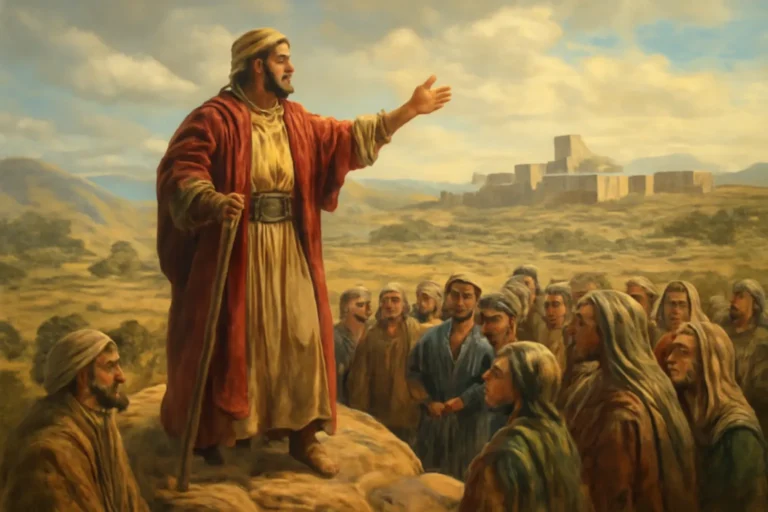
Leading with Wisdom: Lessons from Women Leaders in the Bible
Across the pages of Scripture, women appear not only as caregivers or supporters but as leaders of discernment, courage, strategy, and spiritual authority. Their leadership stories span multiple genres—prophecy, governance, exile, migration, ecclesial ministry, and domestic stewardship—each offering a different model of wisdom for communities of faith today. This article collects and analyzes the leadership narratives of several biblical women, emphasizing the variations of leadership they exemplify and the principles that endure when leadership is exercised with integrity, humility, and devotion to God. The aim is not to isolate these figures as relics of ancient times, but to illuminate how their decisions, boldness, and compassion can inform contemporary leadership within religious communities, scholars’ classrooms, and devotional practice alike.
Throughout this exploration, we will encounter a spectrum of leadership forms: prophetic leadership that speaks truth to power; royal diplomacy that navigates political currents with wisdom; entrepreneurial and entrepreneurial-like leadership that mobilizes resources; and caretaking leadership that builds resilient communities. The recurring thread is wisdom in action, a combination of knowledge, ethical judgment, and courage in the face of complexity. readers will notice that the lessons in leadership drawn from biblical women often hinge on the way they cultivate trust, empower others, and align action with theological vision.
Deborah: Leadership, Prophecy, and Strategic Courage
Context: crisis, charisma, and covenantal authority
In the book of Judges, Deborah stands at a historical moment marked by chaos and oppression. The people cry out for deliverance, and God raises a leader who marries civil authority to prophetic voice. Deborah is introduced not merely as a judge or magistrate but as a trusted voice of revelation who interprets the signs of the times and articulates a path forward. The biblical portrait emphasizes that wisdom in leadership is inseparable from a relationship with God, from which arises both prudence in planning and courage in execution.
Leadership attributes in practice
Discernment in identifying the right moment to mobilize the military and the people, recognizing when delay would be costly and when action would require communal participation.
Strategic collaboration with Barak, the military commander, while maintaining an authoritative voice that guides the course of events.
Prophetic legitimacy—Deborah’s role is legitimized not by mere charisma but by alignment with divine will, demonstrating that credible leadership in the biblical sense blends spiritual authority with practical governance.
Resource mobilization—she counsels and empowers others to act, ensuring that logistical and moral resources are in place for victory and safety.
Conciliatory boldness—even as she speaks decisive words, Deborah seeks to preserve the unity of the tribes and the people, recognizing the cost of division in times of crisis.
One of the most compelling lessons from Deborah’s leadership is that bold action guided by wisdom can yield strategic victories, especially when courage is paired with consultation and communal discernment. Her leadership model suggests that authority is not merely about issuing commands but about discerning the moment, guiding the community toward a God-honoring course, and ensuring that victory results in lasting reform rather than permanent cycles of revenge or exploitation.
Contextual discernment—leaders must read their moment well, distinguishing between danger and opportunity, and between personal ambition and communal welfare.
Public prophetic voice—speaking truth with care to power, while inviting accountability and participation from others.
Collaborative governance—balancing individual initiative with collective responsibility to sustain faith communities through trials.
Thus, Deborah’s example remains a canonical touchstone for leadership with vision and fidelity. Her story invites leaders to cultivate a posture of listening to God, while guiding people through complex political and ethical landscapes with measured courage.
Esther: Leadership through Courage, Diplomacy, and Communal Risk
Context: exile memory, royal platform, and existential threat
Esther’s narrative unfolds in the Persian empire, a setting of political intrigue, cultural plurality, and danger for the Jewish people. As queen, Esther is placed into a position of influence she did not seek and must navigate moral risk with tact. Her story emphasizes that leadership wisdom often involves careful timing, risk assessment, and communal solidarity, especially when personal safety or status might be compromised for the sake of others.
Courageous discernment—Esther chooses to reveal her identity not out of impulse but in a deliberately chosen moment that serves the common good, demonstrating how discernment shapes brave action.
Strategic quiet leadership—she uses personal leverage—her status, her beauty, and her influence with the king—in non-flamboyant ways that achieve disproportionate impact.
Collaborative risk—by inviting Mordecai and the Jewish community to fast and pray, she aligns practical strategy with spiritual preparation, showing that leadership flourishes at the intersection of action and devotion.
Protection of the vulnerable—Esther’s intervention saves the lives of a marginalized people, embodying a ethic of communal responsibility beyond oneself.
The Esther narrative reframes political engagement as a locus of moral leadership, where wisdom is exercised through restraint, timing, and humility. Her example teaches that not every bold act must be loud; sometimes leadership is a patient, honor-bound choice to steward a moment for the sake of the many who cannot protect themselves.
Impact today: leadership lessons in courage and advocacy
Kairos leadership—recognizing the opportune moment to act, rather than forcing action prematurely.
Ethical risk-taking—entering dangerous arenas not for personal gain but to safeguard others.
Community advocacy—leading in a way that builds solidarity and resilience among marginalized groups.
Esther’s leadership voice echoes a timeless principle: true wisdom can be quiet but transformative, and courage, when aligned with purpose and prayer, becomes a force multiplier for a people’s safety and dignity.
Ruth: Leadership by Loyalty, Integrity, and Social Renewal
Context: loss, migration, and covenantal loyalty
Ruth’s journey from Moabite widow to maternal ancestor of David centers on a personal decision that has broad social and theological significance. Her fidelity to Naomi, her adoption of Naomi’s people and God, and her steadfast labor in unfamiliar terrain model a form of leadership grounded in relational integrity, practical action, and community renewal. The book of Ruth demonstrates how leadership emerges in the crucible of exile, economic precariousness, and cross-cultural encounter.
Leadership attributes in practice
Loyalty as leadership—Ruth’s commitment to Naomi becomes a social investment in the life and future of their household and clan.
Industry and initiative—gleaning in the fields and cultivating networks show leadership through diligent work, foresight, and the building of sustainable relationships with landowners and community members.
Social integration—her decision to remain with Naomi, adopt Naomi’s people, and participate in their rites is a leadership choice that expands the tribe’s boundaries and resources.
Redeeming generosity—Boaz’s favorable response to Ruth’s ethic of care highlights how leadership can be fostered through acts of generosity that create social capital and protection for the vulnerable.
Ruth’s leadership is less about commanding authority and more about cultivating trust, creating capacity, and weaving a new social fabric that honors covenant fidelity. In this sense, her story offers a powerful paradigm of leadership as relational economy—a way of guiding a people by investing in ongoing kinship, community welfare, and spiritual allegiance.
Miriam, Huldah, and the Prophetic Chorus: Women Who Speak Truth, Teach, and Guide
Miriam: Leadership through prophetic witness and communal song
Miriam, sister to Moses, steps into leadership as a prophetic voice within the Exodus generation. Her role is multifaceted: she is a prophetess, a singer, and a strategist in the early life of Israel. The narrative presents Miriam as a pioneer among women who exercise spiritual authority in public spaces, leading with a combination of courage, song, and communal memory. Yet her story also contains cautionary elements about the dangers of pride and rivalry, reminding readers that leadership wisdom includes accountability and humility.
Huldah: Leadership through authoritative textual discernment
In the reign of Josiah, Huldah the prophetess serves as a crucial conduit of divine instruction to the king and the people. She receives a revelation, confirms its authenticity, and helps guide the reform of religious practice. Huldah’s leadership is exemplary for its textual integrity and its practical governance—she does not seek power for its own sake but provides trustworthy discernment that shapes national reform. Her presence demonstrates that prophetic leadership can be a stabilizing force in times of renewal.
Together, Miriam and Huldah illustrate a broader biblical motif: women serving as trusted voices in communal discernment, every one contributing to the collective memory, ethical instruction, and spiritual direction of the people of God.
Impact today: prophetic leadership in communities of faith
Prophetic discernment—recognizing moments when a community needs reform, correction, or renewal, and communicating that with integrity.
Public worship leadership—leading through song, testimony, and worship that shapes communal identity and devotion.
Scriptural governance—engaging the sacred text as a living resource for decision-making and ethical standards.
These figures remind modern readers that prophetic leadership is not confined to a single gender or era; it is a spiritual authority expressed through faithful service to God and to the community.
Lydia, Priscilla, and Phoebe: Ecclesial Leadership in the New Testament
Lydia: Leadership through hospitality, entrepreneurship, and mission support
In Acts, Lydia stands out as a successful businesswoman whose conversion catalyzes a cluster of leadership acts within the early church. Her purple-dye trade becomes a metaphor for leadership that elegantly combines economic stewardship with spiritual hospitality. She offers her home as a place for worship and deliberation, hosting Paul and his companions and enabling the spread of the gospel in a concrete, communal space. Lydia’s leadership demonstrates that strong Christian leadership can be cultivated in the marketplace and that economic agency can synergize with spiritual authority to sustain a faith community.
Priscilla (with Aquila): Co-teaching, mentoring, and doctrinal clarity
Priscilla and Aquila model co-leadership in the early church, showing how a married couple can share responsibilities in teaching, mentoring, and refining doctrinal understanding. They welcome a rising teacher, Apollos, and provide correction in a manner that preserves dignity and fosters growth. Their example highlights several key leadership virtues: humility in mentorship, commitment to doctrinal accuracy, and team-based ministry that multiplies effectiveness beyond what one person could accomplish alone.
Phoebe: Leadership through service, logistical trust, and letter-bearing ministry
Phoebe is described as a deacon or minister and as a trusted courier who carries the letter to the Romans. Her leadership encompasses service leadership—carrying heavy responsibilities, initiating networks, and bridging communities by bearing messages of support and instruction. She embodies the principle that service and governance can be inseparable in the life of a faith community, and that women can exercise institutional leadership through reliable stewardship and faithful communication.
Impact today: women in ecclesial leadership and governance
Hospitality as leadership infrastructure—homes of leaders can function as gathering places for worship, teaching, and community organizing.
Mentorship and doctrinal fidelity—leaders who invest in others’ growth strengthen the whole movement by promoting sound teaching and healthy leadership pipelines.
Administrative governance—the role of trusted messengers and stewards in shaping the direction and unity of faith communities.
Through Lydia, Priscilla, and Phoebe, the biblical narrative affirms that women contribute substantially to the institutional and missional vitality of churches, demonstrating that leadership effectiveness is enhanced by collaboration, sound theology, and practical service.
Anna: Discernment in the Temple, Hope for the Messiah
Context: faithful endurance in anticipation
Anna the prophetess appears in Luke’s Gospel as an elderly, devout woman who meets the infant Jesus and recognizes him as the long-awaited Messiah. Her leadership is less about institutional power and more about discernment and faithful expectancy—a posture of prayer, fasting, and service that sustains the community in waiting and hope. Anna embodies a particular form of leadership that is characterized by patient watchfulness and prophetic discernment exercised in the ordinary spaces of worship and daily devotion.
Leadership attributes in practice
Prayerful vigilance—habits of devotion that heighten discernment and nurture spiritual sensitivity to God’s movement in history.
Hopeful proclamation—sharing a confident witness about God’s salvation, encouraging others to trust in God’s promises.
Community reassurance—where elders and prophets provide stabilizing words that bless the community and orient its expectations toward the coming kingdom.
Anna’s leadership teaches that spiritual discernment grounded in persistent prayer becomes a catalytic force for communal hope, even in the context of political or social uncertainty.
Naomi: Domestic Wisdom, Social Strategy, and Generational Leadership
Context: loss, exile, and the reformation of kinship ties
Naomi’s leadership unfolds within the intimate sphere of the household but resonates outward in social and religious reform. Her guidance to Ruth, and her strategic counsel about future kinship arrangements, demonstrate leadership that is both pragmatic and deeply ethical. Naomi’s persona exhibits how domestic leadership can radiate outward, shaping community structures and covenantal life.
Strategic mentorship—coaching Ruth through cultural norms and religious commitments, enabling Ruth’s transformative alliance with Boaz and the Israelite community.
Ethical realism—seeing the social and economic realities of their precarious situation and guiding Ruth toward sustainable futures.
Generational stewardship—passing down wisdom learned through hardship to the next generation, thereby sustaining communal memory and resilience.
Naomi’s leadership speaks to the quiet power of elder wisdom in the household and beyond. Her practical intelligence, rooted in care and ethical judgment, demonstrates that leadership is not only about public offices but also about shaping character, relationships, and long-term welfare.
Core Lessons in Leadership: A Synthesis Across Biblical Women
What all these leaders teach about leading with wisdom
While each of these figures comes from distinct times and settings, their leadership wisdom converges around several durable principles that are applicable to faith communities today. The following synthesis highlights core competencies and ethical commitments that recur across the biblical narratives of women leaders:
Discernment and prophetic alignment—to lead wisely is to align one’s actions with divine direction while listening to the signs of the times and the needs of the people.
Courage tempered by care—bold action is vital, but it is most effective when it protects the vulnerable and honors the common good.
Strategic collaboration—leadership rarely operates in isolation; teams, households, and communities function best when leaders cultivate partnerships across differences.
Hospitality and resource stewardship—generous hospitality and prudent management of resources can create fertile ground for ministry, mission, and reform.
Ethical persuasion and mentoring—the ability to teach, correct, and empower others gently builds sustainable leadership pipelines and faith formation.
Public witness with humility—truth-telling and reform efforts must be contextualized with humility, accountability, and a shared theological vision.
Hopeful renewal—leadership in a biblically framed context invariably points toward renewal, restitution, and a future oriented toward divine purposes.
In a broader sense, these biblical women reveal that leadership is not monolithic. It is a tapestry of roles—prophetic, royal, entrepreneurial, ecclesial, domestic, and communal. Each thread offers a pattern of leadership wisdom that can be translated into contemporary religious life, sermons, curricula, and spiritual disciplines. The variations in leadership styles among these women invite modern readers to honor diverse gifts, to encourage participation, and to cultivate an inclusive culture of discernment that recognizes leadership in multiple spheres of life.
Practical Frameworks: Translating Biblical Wisdom into Contemporary Leadership
Framework 1: Discernment-informed decision-making
Study the context with humility, acknowledging complexity and power dynamics.
Seek multiple voices from within the community to prevent unilateral decisions.
Pray or reflect theologically to ensure choices align with shared commitments and ethical standards.
Communicate clearly, inviting accountability and feedback from stakeholders.
Framework 2: Courage that protects and respects the vulnerable
Identify risks to the vulnerable and name them openly.
Develop a plan with safeguards that minimize harm while pursuing just outcomes.
Offer courageous leadership that invites others into action and solidarity.
Review outcomes and adjust as needed to maintain ethical integrity.
Framework 3: Mentorship, collaboration, and sustainable leadership
Acknowledge the leadership potential in others, regardless of age or background.
Establish mentoring relationships that nurture theological literacy and practical competence.
Foster collaborative governance structures that distribute responsibility and empower voices across communities.
cultivate a culture of learning, feedback, and mutual accountability.
Conclusion: Toward a Vision of Wisdom-filled Leadership
The stories of Deborah, Esther, Ruth, Miriam, Huldah, Lydia, Priscilla, Phoebe, Anna, Naomi, and others illustrate a robust, theologically grounded and historically diverse portrait of leadership in the biblical world. They illuminate leadership as service, wisdom, and faithfulness rather than as mere authority or personal achievement. Their narratives encourage contemporary religious communities to embrace a pluralistic, inclusive, and ethically rigorous understanding of leadership—one that honors prophetic voices, embraces collaborative ministry, and sustains the common welfare through acts of courage, mercy, and stewardship.
Ultimately, the recurring theme in the leadership these women embody is that wisdom is tested in action—in moments of crisis, in the negotiation of power, in the care of the marginalized, and in the formation of the faith community’s future. Leading with wisdom means listening first, speaking truth with love, and acting toward the flourishing of the entire community under God’s guidance. By studying these biblical leaders, both scholars and practitioners gain not only historical understanding but practical wisdom for today—a compass for navigating ethical challenges, cultural tensions, and spiritual opportunities in the life of faith.