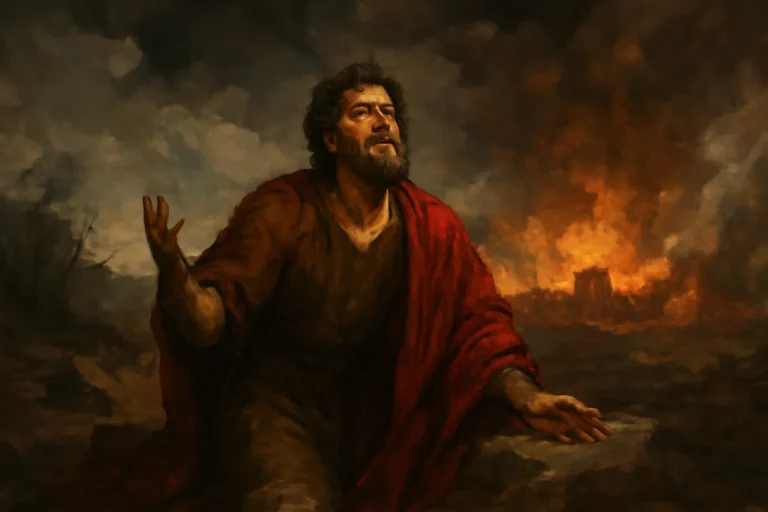

Overview: The Prophet Isaiah in the Biblical Canon
Who was Isaiah in the biblical narrative rests at the intersection of history, prophecy, literature, and faith. The prophet Isaiah—known to Jewish and Christian readers as a towering figure in the Hebrew Bible—appears as a voice of judgment and mercy, a visionary commentator on the fate of Judah, and a messenger who points toward a joyful hope beyond catastrophe. This long-form exploration treats Isaiah as a multifaceted figure: a historical actor in 8th-century BCE Judah, a literary author whose book spans centuries, and a theological symbol whose influence stretches across religious traditions. In examining who Isaiah was, we must read him both as the person behind the prophecies and as the enduring symbol that later communities used to articulate their own experiences of exile, restoration, suffering, and salvation.
In Jewish and Christian traditions alike, the prophet Isaiah is not merely a historical figure isolated in an ancient scroll. He is a path through which readers encounter the problem of evil and the promise of redemption, the critique of social injustice, and the call to holiness. The breadth of Isaiah’s book—its poetic richness, its courtroom judgments, its consolation oracles, and its visions of a universal future—resonates with the deepest questions about God, humanity, and history. The question who was Isaiah in the Bible thus invites us into a layered conversation about authorship, reception, and interpretation across time and faith communities.
Biographical Frame: Who Was Isaiah in the Bible?
To begin with the basics, Isaiah the prophet is described as “Isaiah, son of Amoz” in the opening lines of the book that bears his name. This simple identification—Isaiah, son of Amoz—establishes a personal frame. It signals a familial and social identity within the prophetic circle of Judah, the southern kingdom of Israel. The phrase is not merely genealogical; it anchors the reader in a concrete historical and cultural context: a Jerusalem-centered milieu during a time of political upheaval, imperial pressure from Assyria, and religious reform movements, all of which shape the prophet’s message.
Who was Isaiah apart from his father’s name becomes clearer when we situate him in history. The traditional dating places the prophet Isaiah in the 8th century BCE, during the reigns of kings Uzziah, Jotham, Ahaz, and Hezekiah. This places him in a critical moment when the Kingdom of Judah faced existential threats, internal social corruption, and the looming power of a resurgent Assyrian empire. In this frame, Isaiah the prophet speaks to communities negotiating loyalty to the Davidic covenant, fidelity to Yahweh, and the fate of the nation under imperial ambitions. Contemporary readers encounter the question who is Isaiah by recognizing him as more than a political advisor; he is a spiritual guide who interprets events through the lens of divine revelation.
There is also a scholarly conversation about the unity of the book named after him. Some readers and interpreters hold that the entire collection is the work of a single author, while others distinguish between “Proto-Isaiah” (roughly chapters 1–39), “Deutero-Isaiah” or “Second Isaiah” (chapters 40–55), and “Trito-Isaiah” or “Third Isaiah” (chapters 56–66). In this analytic framework, the prophet Isaiah is both a historical figure and a composite literary personality, whose writings reflect evolving circumstances—from pre-exilic warnings to exile-era consolation to post-exilic visions of return and renewal. The result is a more nuanced answer to the question, who was Isaiah when we consider the text’s multiple voices, editors, and historical horizons.
Historical Context: The World of Judah and the Making of a Prophet
To understand who Isaiah was in a living sense, we should sketch the political and religious world in which he operated. The kingdom of Judah in the 8th century BCE was surrounded by expanding powers—the Assyrian empire to the north and east, with pressure from Egypt and other polities. A central concern of the prophet’s message is how to respond to the threat of external conquest while remaining faithful to the covenant. The judgments pronounced in parts of Isaiah reflect the prophet’s perception that social injustice, ritual complacency, and political duplicitousness undermine the people’s fidelity to Yahweh. The moral seriousness of Isaiah’s warnings is inseparable from his calls for repentance, reformation, and trust in divine providence.
In terms of social setting, the prophet’s oracles address not only kings and national leaders but also urban elites, merchants, farmers, and ordinary citizens. The book repeatedly emphasizes the faithful conduct of justice, mercy, and humility. In this light, the prophet Isaiah is portrayed as a mouthpiece who calls the community to live according to the ethical demand of the covenant, even when political circumstances tempt an easier path of compromise or survival by expedient alliances. The result is a robust vision of holiness that includes personal piety, social ethics, and national vocation alike.
Literary Structure and Thematic Arcs
Proto-Isaiah: Chapters 1–39
The opening blocks of the Isaiah corpus present a courtroom drama in which God contends with the stubbornness of Judah and Jerusalem. In these chapters, who Isaiah was emerges as a prophetic witness who denounces ritualism detached from ethical action. The book’s early oracles include judgments against the people for oppression and deceit, warnings about reliance on foreign alliances, and the stark invitation to repentance. Within Proto-Isaiah, readers encounter memorable passages such as the call narratives, the sign of Immanuel in 7:14, and the visionary experiences that reveal the holiness and sovereignty of God. The material in these chapters often merges prophetic oracles with political commentary, a stylistic choice that underscores the connection between moral integrity and national destiny.
In terms of thematic content, the days of the Lord as a day of judgment and the possibility of divine deliverance appear together. The prophet’s voice is animated by a tension between judgment and mercy, a dynamic that foreshadows the later tension between exile experience and consolation. The prophetic ethic in this section emphasizes radical trust in God over political maneuvering, a point of reference for generations that would read Isaiah’s words in both personal devotion and public worship.
Deutero-Isaiah: Chapters 40–55
The second major segment of Isaiah, commonly called Deutero-Isaiah, shifts from a courtroom tone to a tone of profound consolation. This section rises in the voice of a messenger who proclaims that the exile will end and that God’s presence remains with a suffering people. The famous words “Comfort, comfort my people” (40:1) inaugurate a new era of hope. The person whom readers identify as the prophet Isaiah here often becomes a symbolic figure of the exile itself—a spokesperson for the community’s longing for restoration. This shift signals a broader theological development: the idea that God’s redemptive action can unfold even through historical catastrophe, preserving a faithful remnant that will become a light to the nations.
Among the most influential components of Deutero-Isaiah are the so-called Servant passages, which present a figure—the Servant of the Lord—who suffers in order to bring salvation. The Servant songs have been read in multiple ways across traditions, including as collective Israel, as a righteous remnant, or as a specific servant figure in prophetic drama. These passages later became central to Christian interpretive traditions that see in the Servant a prefiguration of Jesus, while Jewish readings often emphasize the Servant’s role in the nation’s suffering and in the eventual restoration of Israel. When we reflect on who Isaiah was, these chapters broaden the sense in which the prophet embodies the paradox of a suffering people who are nevertheless called to trust in God’s ultimate justice.
Trito-Isaiah: Chapters 56–66
The final portion, Trito-Isaiah, moves from the exile generation’s return to a renewal of covenant life in a home that is reconstituted physically and spiritually. This section engages questions of temple reform, purity, and the inclusion of foreigners and new immigrants into the people of God. It foregrounds a more inclusive horizon—one in which the light of salvation extends beyond Judah to the nations. The book’s later chapters address the rebuilding of the community, the reorganization of worship, and moral exhortations that apply ancient wisdom to post-exilic concerns. In this arc, readers encounter the sense that who Isaiah was includes not merely the prophet who spoke in his own day, but a legacy-bearer whose words continue to shape the people’s identity in continuity with past covenants and future promises.
Key Theological Concepts in Isaiah
- Holiness of God and the cry, “Holy, holy, holy” in Isaiah 6:3, which frames the prophet’s commission and the normative atmosphere for prophetic hearing.
- Judgment and mercy intertwined: Isaiah repeatedly portrays judgment as a necessary purification that clears the way for intercession, healing, and a future restoration.
- The Day of the Lord as both catastrophe and revelation—an event that unmasks human pretensions and brings divine governance into clear view.
- Messianic hope and the expectation of a future righteous king who embodies justice and peace.
- Servant motifs—the Servant of the Lord is a key interpretive node for reading Scripture as a whole, connecting suffering with mission and salvation with suffering.
- Light to the nations—a teleological vision in which Israel’s vocation becomes a beacon for all peoples, a theme that resonates in both Jewish and Christian readings.
- New creation imagery—visions of a future where creation itself experiences renewal, justice, and peace in a renewed order.
Prophetic Call and Vision: The Call of Isaiah (Isaiah 6)
The central moment in who Isaiah was as a prophetic figure is his calling: the vision in Isaiah 6, often summarized as the priestly and prophetic encounter with the divine throne-room. In this scene, the prophet sees the Lord seated on a high and lofty throne, with seraphim around, calling out, “Holy, holy, holy is the Lord of hosts.” The encounter culminates in a cleansing of the prophet’s lips with a burning coal, after which Isaiah receives his commission: a voice asks, “Whom shall I send?” and the response, “Here I am; send me.” This narrative anchors Isaiah’s identity as a servant-speaking instrument of God’s word. The dramatic gestures—coal on lips, divine commissioning, a mission that begins with purification—offer a paradigmatic portrait of prophetic vocation that has shaped later Jewish and Christian conceptions of calling, ministry, and truth-telling in the face of power and peril.
Servant Songs and the Suffering Servant
Isaiah 42:1–9
The first Servant Song presents a figure endowed with the Spirit who will bring justice to the nations with steadfast faithfulness and a humble demeanor. This passage foregrounds the paradox of power in service: a figure who brings about justice not by coercive force but through a quiet fidelity that captures a non-violent sovereignty. Interpreters in both Jewish and Christian traditions read the Servant as a corporate symbol of Israel or as a righteous individual; Christians have often affinited this Servant with Jesus’ life and mission, especially in his suffering and public ministry.
Isaiah 49:1–13
In this second song, the Servant speaks of being formed from the womb for a mission to the nations, a universal vocation that extends beyond Israel’s borders. The imagery of a light to the nations expands the prophet’s horizon from a localized covenant community to a global audience. This broadening undergirds the prophetic agenda: the God of Israel is a God who seeks the healing and restoration of all peoples, not merely of Judah. In reading this text, interpreters have noted the tension between a suffering agent and a victorious envisagement—a tension that models a dynamic, often paradoxical, pathway to redemption.
Isaiah 50:4–9
The third poem advances the Servant’s experiences of tenderness and endurance in the face of opposition and suffering, including verbal abuse and physical peril. The Servant’s steadiness under persecution expresses a theological claim: fidelity to God can survive the most testing circumstances and, in time, contribute to divine deliverance. This passage also raises questions about the relationship between knowledge of God’s will and the cost of obedience, inviting readers to consider what it means to trust a God who acts in hidden ways through wounded vessels.
Isaiah 52:13–53:12
The climactic fourth Servant Song presents a graphic depiction of suffering as a path to healing for others. The figure endures injustice and affliction, yet through his wounds a transformative effect occurs: the Servant bears the sins of others and achieves a kind of victory through humiliation. This late poem has had an immense influence on Christian theology, where it is interpreted as the prefiguration of Christ’s atoning death and resurrection. In Jewish readings, the suffering described is often read as emblematic of the nation’s own suffering or of a righteous remnant within Israel who bears the burden for the community. Regardless of interpretive stance, the Servant Songs function as a powerful literary and theological anchor for discussions about suffering, identity, and vocation in the prophetic tradition.
Messianic Prophecies and Christological Readings
One of the most widely debated questions in the study of Isaiah is how to interpret the passages that Christians often call messianic prophecies. The question of who Isaiah was becomes entangled with how later faith communities understand Jesus the Messiah. The passage in Isaiah 7:14—“Behold, a virgin shall conceive and bear a son, and shall call his name Immanuel”—is cited in Christian tradition as a herald of the Bethlehem event in Jesus’ life, while Jewish readers commonly interpret this passage within a different historical and theological frame. The notion of an Immanuel figure, or the expectation of a future anointed king who will restore justice and peace, has always been central to Christian appropriation of Isaiah alongside its Jewish readings that emphasize covenant fidelity, exile, and return rather than the immediate political fulfillment of a messiah figure in the classical sense.
In Christian exegesis, the most influential strand reads the Servant Songs as prefiguring Jesus’ suffering, death, and redemptive mission. This Christological reading is supported by New Testament writers who quote Isaiah to interpret Jesus’ ministry and the meaning of his crucifixion. However, within Judaism, the same texts inspire a different trajectory: they are read in light of Israel’s suffering, prophetic testimony, and hope for a future era of universal peace and divine justice. The ongoing dialogue about these texts demonstrates how who Isaiah was in early Christian communities and in ancient Israel continues to be debated, reinterpreted, and mobilized for ongoing faith formation. The interpretive conversation about Messiah figures in Isaiah thus reveals the breadth of the prophetic message and its capacity to generate rich theological reflection across centuries.
Isaiah in Exile and Return: Political and Exilic Context
The prophetic book also speaks to a crucial historical experience: exile. While the classic timeline places Isaiah’s direct activity before the largest exiles, Deutero-Isaiah’s voice emerges in a context of Babylonian exile and Persian imperial politics. The narrative arc then expands to include the Persian king Cyrus the Great, who would issue edicts allowing the return of exiles and reconstruction of the Temple. In this sense, who Isaiah was expands to include not only a prophetic voice in the 8th century BCE but also a symbol of enduring hope in the face of displacement. The post-exilic chapters (Third Isaiah) speak to reconstituting religious life, governance of the community, and a renewed sense of mission in a wider world. The emergence of a rebuilt temple, the leadership of priests like Joshua and Zerubbabel, and the religious reforms that followed all belong to the broader arc within which Isaiah’s language continues to inform the community’s sense of vocation and destiny.
Influence in Jewish and Christian Traditions
Across the centuries, readers have found in the prophet Isaiah a resource for both worship and ethical reflection. In Judaism, Isaiah is treated as a central prophetic voice whose admonitions against social injustice, corruption, and idolatry remain relevant in liturgy and ethical discourse. The weekly Haftarah readings (the prophetic portions appended to the Torah reading) include substantial passages from the book of Isaiah, ensuring that the prophet’s voice remains part of communal life and memorized tradition. The prophetic call to righteousness, the emphasis on divine justice, and the invitation to trust in God in difficult times become a persistent part of Jewish religious consciousness.
In Christian tradition, Isaiah serves as a bridge between the Hebrew Bible and the New Testament. The gospel writers cite prophetic language from Isaiah to interpret Jesus’ life and to frame the meaning of his mission. Advent and Christmas seasons in many Christian liturgies rely on Isaiah’s imagery for anticipating the coming of the Messiah and the restoration of creation. The Christian appropriation of Isaiah emphasizes not only the figure of the Messiah but also the broader themes of redemption, forgiveness, and universal peace. The interpretive reach of Isaiah, therefore, is expansive—encompassing theology, liturgy, ethics, and mission in ways that show the enduring resonance of the prophet’s words.
Isaiah in Liturgy, Art, and Culture
Beyond the academy, the voice of the prophet Isaiah has inspired poets, composers, painters, and dramatists. The biblical text’s artistry—its parallelism, its crescendos of judgment and consolation, its richly symbolic visions—lends itself to creative expression. In worship, verses such as “The people who walked in darkness have seen a great light” (Isaiah 9:2) become ballast for preaching and song. The image of a light arising in darkness has universal appeal, resonating in religious and secular contexts alike. In visual arts, Isaiah’s imagery—visions of a holy mountain, visions of peaceable kingdoms, the Servant’s anguish—has been echoed in iconography and modern art, enabling new audiences to approach the ancient text through a contemporary lens. This cultural vitality demonstrates that who Isaiah was is not a closed biography but a living corpus that continues to be read, taught, and cherished across communities and generations.
Interpretive Debates: Authorship, Date, and Textual Variants
One of the central scholarly conversations about Isaiah concerns authorship and dating. The unity of the book has long been debated by scholars. Some propose a single author, while many argue for a composite work produced by multiple authors over a wide chronological range. The terms Proto-Isaiah, Deutero-Isaiah, and Trito-Isaiah reflect this scholarly framework. Critics of the single-author view point to linguistic shifts, historical allusions to events after the presumed lifetime of the 8th-century BCE prophet, and theological developments that suggest broader authorship across different communities and periods. Proponents of the multi-author model see Isaiah’s call narratives, the evolution of Servant Songs, and an increasingly inclusive horizon in the later chapters as evidence for a lived tradition that matured through exile and return.
Textual variants add another layer of complexity. Differences between the Masoretic Text and the Septuagint, for instance, can affect how one understands prophetic announcements, messianic expectations, and the precise scope of future restoration. In reading who Isaiah was, scholars emphasize careful philology, archaeology, and comparative biblical studies, while believers often rely on tradition to interpret the text’s meaning for faith and practice. The ongoing conversation about authorship and textual variation demonstrates how the prophet’s legacy remains dynamic and open to reinterpretation in light of new discoveries and interpretive frameworks.
Practical and Theological Reflections
What does it mean to read the prophet Isaiah today? A few practical and theological threads include:
- Ethical fidelity as a core theme: Isaiah insists that true worship requires justice, mercy, and humility in social life as well as ritual fidelity.
- Hope in the midst of suffering: The exile and return narratives remind readers that faithful communities persevere even when circumstances seem overwhelming; this is a central message for communities facing hardship.
- Universal vocation: The light to the nations motif invites readers to see the divine plan as inclusive, inviting all peoples into the knowledge of God’s justice and peace.
- Messianic expectation and its interpretive breadth: The various readings of the Servant songs demonstrate how ancient texts can be read in multiple ways that shape different faith communities’ beliefs about salvation and the nature of God’s redemptive action.
- Prophetic ethics for today: Isaiah’s critique of oppression and bribery in leadership speaks to ongoing concerns about governance, social equity, and the treatment of the vulnerable in any era.
Theological Portrait: What Kind of God Emerges from Isaiah?
Across its voices, the prophet Isaiah presents a robust and transformative portrait of God. Yahweh is shown as holy and majestic, yet intimately involved with human affairs; as righteous and just, yet patient with a stubborn people; as a God who disciplines, but also a God who acts to redeem. The book’s theological arc—judgment that purifies, consolation that sustains, and sanctification of a community that can become a beacon to others—creates a comprehensive framework for understanding divine action in history. For readers, this theological portrait offers both a blueprint for ethical living and a patient hope for a future when created order is renewed in justice and peace. In tracing who Isaiah was, one encounters a theology that unites worship, ethics, and eschatology into a coherent, if challenging, vision of God’s purposes in time and eternity.
Closing Reflections: The Enduring Significance of Isaiah
In reviewing the life, message, and legacy of the prophet Isaiah, one discovers a figure whose influence extends far beyond a single historical moment. Isaiah’s words—whether read as prophetic warning, compassionate consolation, or visionary invitation—continue to shape religious practice, interpretive horizons, and spiritual imagination. The question who was Isaiah thus invites us to hold together multiple strands: the historical figure who spoke to 8th-century Judah, the literary composite that bears witness across centuries, and the enduring symbol of a faith community’s hope for justice, mercy, and universal peace. As readers today engage with Isaiah’s texts, they encounter a living conversation about what it means to inhabit a world marked by power and vulnerability, to seek righteousness in the face of discouragement, and to trust in a divine future in which the earth is filled with the knowledge of the Lord as the waters cover the sea. In this sense, Isaiah remains not only a historical prophet but a perennial teacher about faithfulness, endurance, and wonder before the mystery of God’s purposes in history.
Glossary: Helpful Terms and Concepts
- Servant Song — the poetic passages describing the Servant of the Lord, a figure whose identity has been interpreted variously as Israel, a righteous remnant, or an individual servant; later Christian readings often identify this figure with Jesus.
- Immanuel — the name meaning “God with us,” associated with a prophetic sign in Isaiah 7:14 that has been read in multiple ways historically and theologically.
In sum, the question who was Isaiah in the Bible yields a multilayered answer: Isaiah is a historical figure who spoke into real political and religious emergencies, a literary voice whose book moves through judgment to mercy to eschatological hope, and a theological symbol that invites every generation to consider how to live justly, worship faithfully, and hope passionately for a world renewed by God’s peace. The prophet Isaiah, in this expansive sense, remains a central torchlight for faithful inquiry, ethical reflection, and spiritual devotion.