
Understanding Incarnation: From Doctrine to Daily Life
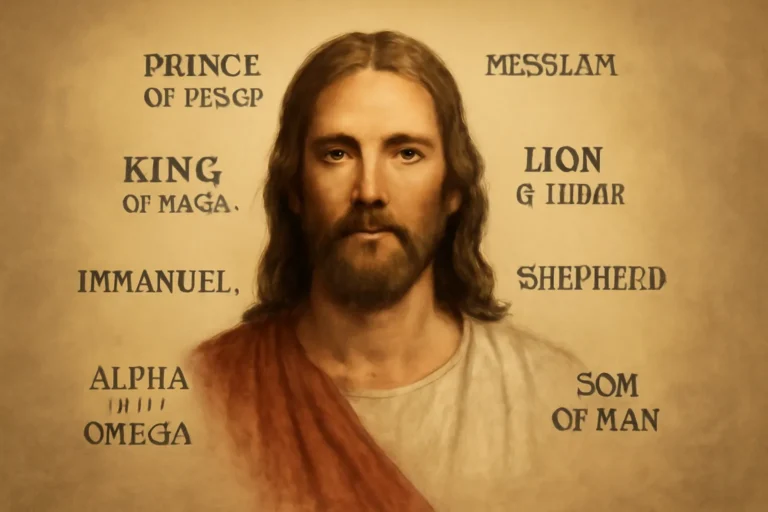
The word incarnation is most widely recognized in Christian theology as the assertion that the divine Word
became flesh in the person of Jesus of Nazareth. Yet the religious imagination that centers on incarnational reality extends far beyond a single creed or moment in history. In its deepest register, incarnation names a truth about how the sacred enters time and matter, how the eternal makes itself tangible, and how human beings become capacious vessels for the holy. This article explores embodied presence as a dynamic, lived reality—one that infuses everyday life with meaning, purpose, and responsibility.
When people ask what incarnation means in daily life, they are not asking for a single doctrinal definition but for a practice of presence—a way of attending, acting, and belonging that recognizes the divine spark in ordinary moments. Embodiment is not merely a physical fact; it is a theological posture that reads hunger and fatigue, generosity and anger, joy and lament as occasions for meaning-making. The shift from abstract belief to concrete action is the hinge of incarnational spirituality: to become flesh for one another is to become a channel through which love, mercy, justice, and truth take form.
In this sense, incarnation can be read as a call to cultivate a life in which mind, heart, and hands work together. It invites a holistic discipline—a steady attention to the body as a sacred site, a willing vulnerability in community, and a courageous fidelity to mercy in social life. Throughout the pages that follow, we will survey how incarnation appears in worship, ethics, health care, family life, art, and public witness; how it negotiates tradition and modernity; and how it can be practiced by people from diverse religious backgrounds who still find themselves drawn to the *embodied presence* at the heart of faith.
Embodiment in Sacred Texts and Tradition
New Testament foundations
In Christian thought, the heartbeat of incarnation is the claim that the divine Logos took on human nature. This is not primarily a remote metaphysical statement but a claim about God’s affinity for material life: God enters the world in a particular time, place, and body, with vulnerabilities that invite trust and transformative relationship. The Gospel narratives present incarnation as a doorway into a life that intertwines teaching, healing, and companionship. In daily terms, this implies that the sacred is not distant or abstract but proximate and actionable—present in meals with friends, healing touch, and acts of hospitality that welcome the stranger.
Theologically, this has led to a robust sense that the body matters, not as an ornament or inconvenience, but as the primary theater in which God’s purposes unfold. The embodied life of Jesus is read as a model for how communities should live: with courageous compassion, patient endurance, and a disciplined openness to grace in the ordinary. Incarnational reading of scripture, then, asks interpreters to attend to how stories of flesh, breath, and movement reveal God’s longing to be present among people—especially the marginalized, the poor, and the overlooked.
Patristic and medieval reflections
Across the centuries, theologians and mystics developed rich vocabularies to describe incarnation in daily life. The concept of the body as a sanctuary or sacrament of God’s presence recurs in patristic writings and medieval spirituality. Early church fathers often linked incarnation with the practice of avoiding self-centeredness and choosing humble service, seeing Christ in the faces of the least of these. In medieval piety, the imagination of daily life as a conduit for grace became a central impulse: care for the sick, stewardship of the poor, and prayers offered in ordinary settings—kitchens, workshops, markets—were not secondary but central to faith.
The incarnational imagination also fed the church’s emphasis on rituals and sacraments that render the spiritual visible in tangible acts. The sacraments—baptism, Eucharist, confession, and marriage—were historically understood as not only signs but means by which grace enters the physical world. The body’s participation in these rites attests to a larger truth: God’s life is enacted in embodied reliability, in a community that gathers, shares, and witnesses.
Non-Christian perspectives on incarnation
While the term incarnation is rooted in Christian discourse, many religious and philosophical traditions echo a related insight: that the sacred does not merely dwell in abstract ideas but in living presence encountered through everyday acts. Hinduism speaks of the divine as vibhuti or avatar, appearing in particular forms for the sake of guidance and liberation. Buddhism emphasizes compassion and wisdom embodied in the Bodhisattva path, where enlightenment is conducted in the world through mindful actions. In Sikhism, service (seva) and the memory of the divine presence in the community articulate a lived spirituality that seeks to manifest the divine will through practical deeds. Across these streams, the common thread is clear: sacred reality presses into ordinary life, inviting practitioners to embody faith through concrete choices, relationships, and responsibilities.
Incarnation as Everyday Presence: Practices and Disciplines
What it looks like to live incarnationally
Embodied presence in daily life involves more than occasional acts of kindness. It is a settled orientation toward others that shapes how we work, rest, and relate. At its best, incarnational living makes space for the divine in the bustle of ordinary tasks and relationships. This requires a blend of intention, skill, and humility: to listen deeply, to steward the body’s energy, and to recognize the sacred in shared meals, in the fatigue of caregiving, and in the question of what it means to be faithful in a changing world.
In practical terms, this can be seen in routines that keep faith alive in the home, workplace, and community:
- Hospitality as a spiritual discipline: opening spaces for strangers, guests, and neighbors, and seeing hospitality as a form of worship that invites the divine to dwell among us.
- Caregiving as vocation: attending to children, elders, and the vulnerable with patience, respect, and tenderness as a concrete form of love.
- Work as worship: recognizing labor—whether in classrooms, clinics, factories, studios, or offices—as a space where dignity is affirmed and goods are created for the common good.
- Prayer in motion and embodied contemplative practices: integrating breath, posture, and silence into daily routines to keep consciousness oriented toward the sacred amidst distraction.
- Ritual fidelity in ordinary times: creating small daily rituals that mark transitions, such as a mindful pause before meals or a family blessing at bedtime, which sanctify common life.
The embodied spiritual disciplines described here are not a set of rigid rules but a language of attention. They invite us to notice the ways the sacred breaks through in ordinary interactions: a colleague’s look of fatigue and a word of encouragement; a child’s question that unsettles a settled assumption; a neighbor’s need that requires a step beyond convenience. Each moment becomes an opportunity to answer the question: What does it mean to bring the divine presence into this moment with care?
Worship beyond the walls
A central claim of incarnational spirituality is that worship is not confined to a building or a service. Worship becomes the rhythm of daily life when people orient their actions toward love, justice, and truth. This means that preaching, singing, or ritual at the center of a faith community should translate into mission, outreach, and service in the surrounding neighborhood. In this view, every ordinary activity—cooking for others, mentoring youth, repairing a home, listening to someone in crisis—can become liturgical acts that honor the divine presence.
Education as formation
Incarnational education treats learning as a practice that shapes character as much as it imparts information. It foregrounds relational teaching, mentorship, and experiential inquiry that help students see how beliefs translate into living choices. In classrooms and catechetical settings, the embodied dimension of education emphasizes moral formation, empathy training, and the cultivation of virtue as much as cognitive mastery. The aim is not merely to accumulate facts but to form souls capable of discernment, courage, and compassion in the face of real-world challenges.
Embodied Ethics: Social Justice and Community Life
The claim that God is present in the body has powerful implications for how communities understand justice, mercy, and political responsibility. If incarnation means that the sacred meets us in flesh-and-blood reality, then social structures that harm the vulnerable become a moral crisis. Incarnational ethics asks how systems—economic, political, educational, healthcare—either sustain or undermine the dignity of each person. It pushes communities to translate creed into policy, to translate ritual into reform, and to translate compassion into concrete, measurable acts of care.
- Solidarity with the marginalized: recognizing that the divine presence may be most evident where society is most forgetful of the vulnerable, and placing practical priority on policies that protect the weak.
- Peace and reconciliation: pursuing conflict transformation that honors the humanity of adversaries and seeks restorative outcomes rather than punitive ones.
- Economic justice: advocating for fair wages, dignified work, and access to essential services, understanding that economic systems shape the body’s life opportunities and vulnerabilities.
- Environmental stewardship: recognizing the body’s dependence on a healthy creation and acting to protect the land, water, and air that sustain life for all generations.
An incarnational approach to justice is not merely about systems but about persons inside those systems. It invites a posture of humble leadership that listens before acting, learns before assuming, and partners before imposing. The aim is a common life in which every voice is valued and the vulnerable are protected, so that the flourishing of the whole community becomes the measure of success.
The Body as Sacrament: Theological Perspectives
Sacramental imagination in daily life
Theologies that emphasize the body as a sacrament of grace extend beyond liturgical settings. They claim that the divine is not simply revealed in doctrinal statements but made present through ordinary acts: feeding the hungry, visiting the sick, comforting those who grieve, and standing with the oppressed. In this sense, the body is a means of grace, a tangible conduit through which compassion becomes real and accessible to others.
Healing and the incarnation
Healing, in incarnational thought, is not limited to the eradication of symptoms. It encompasses a holistic restoration of relationships, meaning, and purpose. The embodied healer tends to the physical, emotional, social, and spiritual dimensions of a person. This requires humility and tact, because healing often occurs within a complex web of personal history, cultural context, and community dynamics. Engaging in healing as an incarnational practice means seeing the patient not merely as a problem to solve but as a person to accompany on a shared journey toward wholeness.
Limitation and vulnerability as teachers
An honest discussion of incarnation acknowledges that embodiment comes with limits. To be truly embodied in faith is also to acknowledge frailty, dependence, and the possibility of failure. The Incarnate One, in Christian memory, embodies ultimate self-giving, and the church often learns that true presence is tested in moments of trial. By embracing vulnerability—admitting when one does not know, when one cannot fix everything—communities model a trustworthy form of leadership and kinship that resonates with the experiential truth of many people today.
Incarnation Across Traditions: Shared Echoes and Distinctives
While the language of incarnation is most closely associated with Christianity, the impulse to meet the divine in everyday life is a universal feature of many religious traditions. Across the spectrum, we see a convergent pattern: the sacred is not distant, but near; not theoretical, but practical; not abstract, but embodied. In that sense, the incarnational impulse can serve as a bridge for interfaith dialogue and collaborative action in a pluralistic society.
- Hinduism: the idea of avatars, divine descent in specific forms, inspires a belief that the sacred can become tangible in particular bodies and circumstances, guiding ethical living in family, work, and community service.
- Buddhism: compassion and wisdom are to be embodied in daily conduct, with mindfulness and ethical discipline shaping how one treats others and navigates suffering.
- Sikhism: seva (selfless service) and simran (remembrance of the divine) translate into practical acts of care, justice, and communal responsibility that ground faith in daily labor and social engagement.
- Judaism: the command to repair the world (tikkun olam) and to sanctify daily life through ritual, study, and acts of loving-kindness echoes the incarnational impulse in concrete, communal forms.
Such shared echoes highlight a common insight: the sacred manifests in ordinary life when believers translate belief into service, when doctrine becomes duty, and when personal piety becomes public mercy. The distinctive shapes—what counts as service, what rituals look like, how authority is exercised—vary, but the underlying energy remains: the divine endeavors to draw near through human agents who answer with fidelity, courage, and tenderness.
Challenges and Tensions: Incarnation in a Secular Age
Living out an incarnational vision in contemporary society presents a series of challenges. Modern life often emphasizes efficiency, privacy, and instrumental rationality, which can threaten the fragility and vulnerability that incarnational life requires. Technology creates new possibilities for connection, yet it can also foster superficial engagement or distraction that undercuts the depth of embodied relationships. Secular and plural settings may resist sacramental language, yet the need for authentic presence remains acute as people hunger for meaning, belonging, and moral clarity.
- Body image and vitality: pressures around appearance, productivity, and youth can distort how communities value embodied life, reducing persons to usability or performance rather than sacred companionship.
- Public life and pluralism: discerning how to bear witness to one’s convictions while honoring the dignity of others who hold different beliefs is a constant test of incarnational integrity.
- Economism and alienation: when work becomes a purely economic calculation, the spiritual dimension of labor risks being eclipsed, even as people still crave purpose that transcends monetary gain.
- Crisis and trauma: in times of collective suffering—pandemics, displacement, conflict—the practice of embodied presence requires courage, solidarity, and practical care that can outstrip personal resources.
The response to these tensions is not to abandon incarnational language but to deepen its practice. It means cultivating communities where vulnerability is respected, where care is accessible, and where truth-telling is joined with mercy. It also means recognizing that the body’s limits can be teachers, revealing the need for interdependence, mutual aid, and intentional collaboration across lines of class, race, and culture.
Practical Pathways: How to Cultivate Incarnational Living
For readers seeking to translate the concept of embodiment into measurable, daily habits, here are practical pathways that can be adopted at various life stages and in different contexts. The aim is to cultivate a habit of presence that grows in depth and breadth over time, becoming less about performance and more about faithful companionship with others and with the divine.
- Start with personal formation: cultivate a daily routine that includes a short time of reflection, Scripture or sacred reading, and a quiet moment of gratitude. Centering the self helps the heart stay open to others’ needs.
- Cultivate attentive listening: practice listening not to respond but to understand. In conversations, give space for silences and dignity to the other’s experience.
- Practice embodied hospitality: invite someone into your home or into your life in a way that honors their humanity, security, and dignity. Hospitality is a way of saying, “You belong here.”
- Engage in daily acts of service: a consistent pattern of small acts—checking in on a neighbor, helping a colleague with a burden, volunteering in a community project—builds a climate of care that extends beyond grand gestures.
- Attend to the body with compassion: nutrition, sleep, movement, and rest deserve priority because vibrant health enables generosity and presence with others.
- Integrate justice into daily decisions: examine how choices in shopping, consumption, and civic life affect the vulnerable. Let conscience inform behavior, not just belief.
- Practice reconciliation and mercy: when conflict arises, initiate conversations that seek understanding, apology, and healing, even at personal cost.
- Embed ritual into rhythm: design small rituals that mark transitions—morning prayers, a family blessing, a bedtime reflection—that anchor the day in awareness of the sacred presence.
- Engage with art and beauty: support or create expressions—music, poetry, visual art—that translate interior faith into outward beauty and invitation.
- Live vocationally with integrity: whether in the home, school, hospital, studio, or factory, see work as a form of service and a site where grace can be offered and received.
These pathways are not universal prescriptions but intentional approaches that can be adapted to diverse circumstances. The key is consistency, imagination, and a willingness to let daily life become a school for discernment, mercy, and courage.
Conclusion: Living as People of Embodied Presence
To speak about embodied presence is to affirm a vision in which faith is not an abstract creed but a concrete, resilient way of living together. It is a way of reading the world that sees the sacred in the ordinary and recognizes the divine in one another. The incarnational life invites communities to practice humility and courage, to hold together truth and mercy, and to translate belief into acts that heal, nourish, and liberate. It is a challenging path, especially in times of fragmentation and disruption, but it is also a path of transformative hope: a way of becoming more fully human by becoming more truly present to God and to neighbor.
In the end, incarnation is less about a moment of arrival than a daily apprenticeship in becoming faithful witnesses to the pervasive presence of the sacred. Whether in a quiet home, a bustling hospital, a lively classroom, or a marginalized street corner, the embodied life of faith asks us to show up with courage, tenderness, and integrity. By doing so, we participate in a long-standing tradition that sees the body as a vessel of grace, a living temple wherein the divine life is made known, cared for, and shared with others. May we all cultivate that presence more deliberately, more deeply, and more joyfully, until our daily acts become a luminous testament to the truth that the divine life does not remain distant but walks among us, clothed in our own human days.