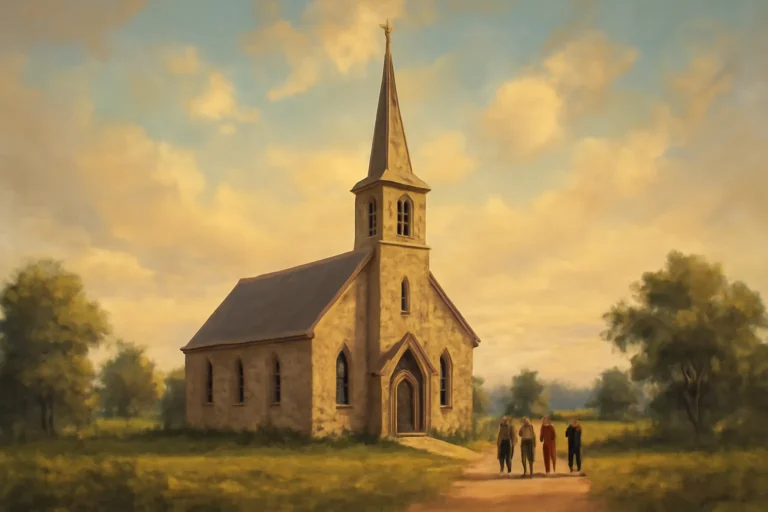
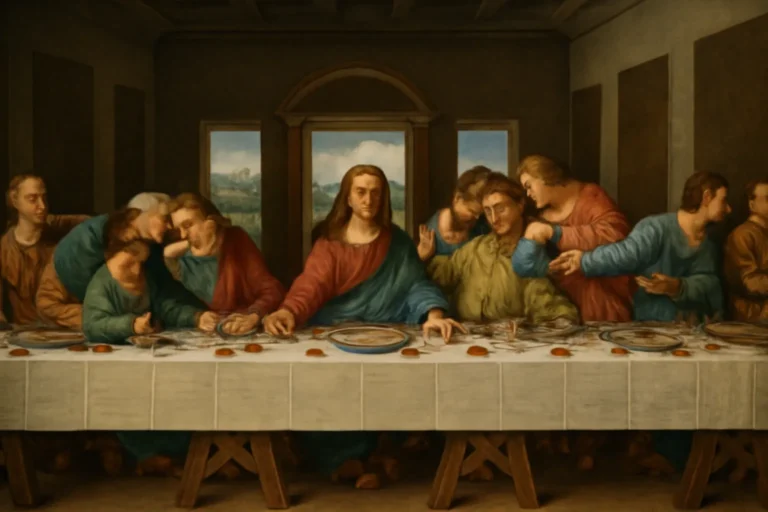
On the Church is a topic that traverses time, place, and culture, touching the core of how communities imagine the sacred, how they gather, and how they bear witness in the world. This article offers a broad, comprehensive meditation on the church in its many forms and tones: as ecclesia, as a congregation, as a body of believers, as a sanctuary and temple of the living God, and as a missionary communion that is called to embody justice, mercy, and hope. It is written for readers who want more than a definition; it invites reflection on the living practices, the doctrinal roots, the historical development, and the contemporary challenges that shape how the church exists and acts in the world.
From the perspective of faith, history, and practice
The word church travels across languages and traditions, yet it retains a powerful, sometimes paradoxical, core meaning. In its most ancient sense, the ecclesia denotes an assembly called together. In Christian usage, that assembly becomes more than a mere meeting: it is the chosen people who respond to God’s voice, the Body of Christ composed of diverse members who are united in faith and baptism. The church is not primarily an institution to be controlled, but a community to be transformed and sent.
There are many ways to describe the church, and semantic breadth matters in order to avoid reducing the church to a single form. In one sense the church is a people—loved, criticized, chastened, and renewed by God. In another sense the church is a gathering of worshipers who offer praise, lament, confession, and thanksgiving. In still another sense the church is a fellowship that educates, nourishes, and equips its members for service. Across these senses, a unifying claim persists: the church exists where the faithful, through the Spirit, are knit together in Christ for the world’s good.
To speak of the church is to speak of a covenantal community—a people who profess a shared allegiance and who bear the responsibilities that flow from that allegiance: worship, teaching, discipline, and witness. Yet the church is also a pilgrim company—never perfectly complete, always being made new, always asking, in varying ways, what it means to follow the crucified and risen Lord in a changing world.
The Church as People — a gathered people whose identity rests in the baptismal inclusion into Christ’s new humanity.
The Church as Body — a metaphor that emphasizes interdependence, diversity, and a shared life.
The Church as Community of Worship — a fellowship whose rhythm is shaped by prayer, praise, and the sacraments.
In exploring what the church is, it is also essential to distinguish between the Church as churches in particular places—parishes, congregations, and denominations—and the Church as the universal, invisible, mystical, and missionary body of Christ across time. Both are legitimate and necessary lenses for understanding how the church exists in history and in eternity.
Historical Trajectories: From the Early House to Modern Assemblies
Early Christian Communities and the Emergence of Meaning
In the earliest centuries, the church formed around believers who confessed Jesus as Lord and who received baptism into a shared life. The early assemblies gathered in homes, in catacombs, and in public spaces, learning from the apostles’ teaching, sharing meals, and praying together. From these humble origins grew a multiform ecclesia—churches that would become distinct in geography, culture, and language yet united by a common confession and mission. In the writings of the apostolic fathers, we encounter the idea that the church is a community of truth and a custodian of the apostolic witness.
Patristic Synthesis: Orthodoxy, Unity, and Mission
As the centuries unfold, the church develops a more explicit theology of the one holy catholic and apostolic church. The Fathers wrestle with issues of unity, episcopal order, sacramental life, and the proper relationship between church and civil power. The concept of the church as the visible society of believers—one, holy, catholic (universal), and apostolic—begins to take shape in pastoral letters, creeds, and liturgical forms. The church comes to see itself as a guardian of tradition but also as a teacher of the faith, seeking to hand on the gospel in ways that remain faithful to the core proclamation while responding to new questions posed by new cultures and languages.
Medieval and Reformational Shifts: Institutions, Spirituality, and Renewal
The middle ages bring forth monumental architectural, scholastic, and liturgical achievements. The church becomes a central social and cultural force, shaping education, charity, and governance. Yet it also faces critique and reform: calls to rediscover the gospel, to correct abuses, and to re-center the church’s life in Christ. The Reformation of the 16th century marks a turning point in which the church begins to define itself through Scripture, grace, faith, and the priesthood of all believers. Denominations arise with different configurations of church government, worship, and discipline, yet many share a common longing for fidelity to the gospel and for a more robust witness in the world.
The modern era brings unprecedented theological pluralism and geographic reach. The church becomes a transnational, multi-ethnic, and multilingual community. Ecumenical movements seek to recover unity while honoring difference, recognizing that the church’s mission includes both concord and witness across confessional boundaries. The spread of Christianity to new continents, the growth of urban congregations, and the rise of digital church life are transformative forces that illuminate the church as global fellowship and local embodiment of the gospel.
Across these centuries, the church has been tested by wars, plagues, migrations, and cultural revolutions, yet it persists as a countercultural community that invites repentance, mercy, and reconciliation. The narrative of the church is not a static empire but a living organism—ever reforming in response to God’s ongoing self-disclosure in history.
Theological Foundations: Ecclesiology and Practice
Ecclesiology: The Study of the Church
Ecclesiology is the disciplined inquiry into the nature, mission, and governance of the church. At its core, it asks: What is the church? How does it relate to Christ as its head? What is the church’s mission in the world? And what is the church’s hope for the age to come? A robust ecclesiology asserts that the church is both visible and invisible: visible in the concrete life of worship, sacraments, and community, and invisible in the sense of being spiritually bound to Christ by the Spirit, transcending human divisions, and participating in the divine life.
Two classic axes recur in ecclesiological reflection: institutional order and spiritual communion. The church may organize itself through structures of leadership and governance (pastors, elders, bishops, councils, synods), yet its essential vitality rests in the Spirit’s action—gifting individuals for ministry, empowering prophetic witness, and drawing people into healthier, more merciful ways of life. The balance between order and freedom, law and grace, tradition and renewal, remains a defining negotiation for any community claiming the name of Christ.
Sacraments, Worship, and the Life of Prayer
Worship is the church’s language of gratitude, lament, confession, and praise. The sacraments—baptism and the Lord’s Supper (often called Eucharist or Holy Communion)—are outward signs of inward grace, visible means by which the congregation participates in the saving work of Christ. The way sacraments are interpreted, administered, and celebrated reveals much about a church’s ecclesiology—for instance, how it understands grace, community, and authority. Worship styles vary widely, from solemn liturgy to vibrant praise, yet all forms strive to orient the heart toward God, cultivate remembrance of the gospel, and form the people into a commission for mission.
Another pillar of ecclesial life is discipleship: the ongoing process of becoming more like Christ in heart, mind, and action. This growth takes place through preaching and teaching, small-group fellowship, spiritual disciplines (such as prayer, fasting, contemplative time), and living out one’s faith in daily work and relationships. In this sense the church is not merely a school for doctrine but a workshop for virtue, a community where the gospel shapes character and behavior, producing mercy, justice, humility, and courage.
Leadership, Authority, and Accountability
Authority in the church is multifaceted. It includes scriptural authority—the word of God as the norm for faith and life. It includes communal authority—the discernment of the people of God through the Holy Spirit and the wisdom of leaders. It includes moral authority—the call to holiness and responsible stewardship. Healthy church life requires checks and balances, transparent governance, and a culture of accountability that keeps the flock from harm and the leaders from power misuse. The goal is a community where leadership serves the congregation, and the church’s vitality is measured not by growth alone but by the depth of love, justice, and reconciliation practiced within and beyond its walls.
Worship, Community Life, and Daily Practice
Worship as Formation
Worship is more than aesthetics; it is spiritual formation. When the congregation gathers, it enters into a shared drama of belief and longing, retelling the gospel through word and symbol. Music, liturgy, preaching, and the visual arts all participate in shaping the heart toward God. A church’s worship style—whether contemplative, celebratory, or prophetic—reframes the community’s familiar stories and reorients citizens toward love of God and neighbor.
Community Life: Fellowship, Education, and Service
Beyond Sunday they connect in fellowship, care for one another, and engage in service. The parish or local church commonly sustains:
Christian education for all ages, from catechesis to secular-societal learning that bears gospel critique and joy.
Pastoral care for the sick, grieving, isolated, and marginalized.
Social witness that confronts injustice and advocates for the vulnerable.
Missional activity that seeks the good of neighbors near and far, through acts of mercy and proclamation of hope.
The parish or congregation becomes a center for life-transforming relationships, where catechesis is not confined to doctrine but embodied in care, hospitality, and shared meals. It is through these everyday acts that the church demonstrates the gospel’s relevance to family life, work, and public life.
Sacramental and Missional Balance
In healthy churches, there is a balance between the sacraments and the outward mission. The church’s life becomes a rhythm: nourish people with grace-filled rites and teachings, then release them into the world to embody mercy, justice, and reconciliation. The same Spirit who unites believers in baptism also equips them to bear witness to the gospel in diverse contexts—schools, hospitals, neighborhoods, and digital spaces.
The Church and Society: Ethical Witness and Social Hope
Narrating a Moral Vision
One of the most enduring contributions of the church to public life is its ability to offer a moral horizon grounded in the dignity of every person made in the image of God. The church’s ethical witness often centers on:
The sanctity of life and the protection of vulnerable persons.
Justice for the poor and marginalized, including hospitality to strangers and refugees.
Care for creation—stewardship of resources, climate justice, and sustainable practices.
Truth-telling, justice, and peaceful reconciliation in conflict situations.
Education and Cultural Stewardship
Historically, the church has been a patron of education, scholarship, and the arts. Christian institutions have interpreted reality through the lens of faith, offering a distinctive lens on science, philosophy, literature, and history. The church’s educational mission is not merely to transmit information but to cultivate discernment, virtue, and the capacity to love truth and live it out in everyday life. In diverse contexts, the church supports literacy, catechesis for children, theological training for pastors, and lay education for all ages to widen access to wisdom that fosters human flourishing.
Church, State, and Civic Life
Questions about the relationship between church and state recur across traditions and eras. A wise approach emphasizes liberty of conscience and freedom of worship, while also acknowledging the church’s right to advocate on matters of justice and the common good. The church does not seek political power for its own sake, but it does seek to shape public life by offering a counter-narrative to cynicism, by advocating for the vulnerable, and by reminding societies of their moral obligations to God and neighbor.
Diversity within Unity: The Global Church
Ecumenism and Ecclesial Diversity
Across the globe, the church manifests a remarkable diversity of liturgical forms, governance structures, and cultural expressions. Catholic, Orthodox, Protestant, Pentecostal, and independent churches each offer distinctive gifts to the wider faith community. This diversity is not a threat to unity if unity is understood as common confession in Christ and shared witness to the gospel. The aim of ecumenical dialogue is not uniformity but solidarity in mission, mutual learning, and a deeper grasp of the mysteries of grace.
Local Expressions: Parishes, Congregations, and Networks
In a given city or region, parishes and congregations often reflect the surrounding culture while maintaining a shared faith. Some communities emphasize liturgical continuity and sacramental richness, others highlight preaching and social action, others emphasize charismatic worship and spiritual gifts, and yet others cultivate contemplative life and monastic-inspired disciplines. All of these forms contribute to a broader fellowship of churches that, while not indistinguishable, testifies to the dynamic, pervasive work of God in the world.
Migration, Diaspora, and the Church’s Global Reach
Migration patterns have endowed the church with new languages, music, and taste for hospitality. Immigrant communities carry their own expressions of worship and spirituality, enriching the overall tapestry of the church while also challenging older institutions to welcome and integrate newcomers. The diasporic church becomes a bridge between homeland and host society, bearing witness to the gospel in pluralistic settings and often playing a pivotal role in humanitarian aid, education, and cultural exchange.
Contemporary Challenges and Opportunities
Voice, Credibility, and the Digital Age
The internet and social media have transformed how the church communicates, evangelizes, and disciplines itself. On the one hand, digital platforms offer extraordinary opportunities for global mission, education, and community building. On the other hand, they pose risks—misinformation, sensationalism, and pressures toward performance. The church’s response is to cultivate discernment, humility, and charity online, while preserving a robust standard for truth, integrity, and pastoral care in virtual spaces as well as in physical settings.
Violence, Trauma, and the Call to Mercy
Instances of moral failure and abuse within church settings call for transparent acknowledgment, accountability, and redress. A community that seeks to be faithful to Christ cannot recoil from truth-telling or from reform. Healing becomes an essential part of witness—reconciliation with victims, safeguarding reforms, and systems that prevent harm while restoring trust. The broader aim is not mere containment of scandal but the renewal of character, leadership, and structures so that mercy is credible and justice is real.
Many churches understand their mission to extend beyond personal salvation to the transformation of society. This entails not only preaching a gospel of forgiveness but also embodying a gospel of social healing: anti-poverty initiatives, education access, healthcare advocacy, environmental stewardship, and cultural reconciliation. The challenge is to articulate a compelling, compassionate, and coherent vision that honors both the transcendence of God and the immanence of God’s love at work in the world.
Sustainability and Intergenerational Faith
The church’s vitality depends on the cultivation of faith among younger generations while respecting and learning from elder wisdom. This requires adaptable programs, accessible language, and a hospitality that makes space for doubt as well as conviction. A sustainable church is one that can pass on the gospel without compromising its integrity, one that trains leaders who can navigate change with courage and humility, and one that holds fast to core beliefs while remaining open to fresh expressions of faith.
Ritual Depth and the Spiritual Life
The Center of Worship: Word and Sacrament
In many Christian traditions, the preaching of the word and the reception of the sacraments stand at the center of weekly gatherings. The sermon, the Psalmody, the prayer of intercession, and the sacramental rites converge to form a single drama: God’s self-disclosure, humanity’s response, and the church’s mission to the world. The rhythm of worship shapes the day, the week, and the year, marking seasons like Advent and Lent with a sense of pilgrimage toward Easter, Pentecost, and the coming of the Kingdom.
Prayer and Spiritual Formation
Prayer is not a private hobby but a corporate discipline that sustains the church’s life. It binds the community to God, aligns it with the Spirit’s guidance, and sustains it in mission. Spiritual disciplines—silence, confession, scripture reading, contemplation, and acts of service—serve as steady practices that nurture a heart tuned to God’s voice and a life shaped by God’s love.
Catechesis, Doctrine, and Hospitality
Doctrine matters because beliefs shape behavior. The church’s teaching ministry aims to form a coherent and gracious Christian imagination: who God is, who Christ is, what the church is, and how believers relate to the world. Yet doctrine is not sterile: it is practiced in daily hospitality, care for neighbors, and robust evangelism that invites others into the grace of God without compromising integrity or truth.
Concluding Reflections: The Church as a Living Community
Across centuries and across continents, the church remains a living fellowship of broken people being made新—made new—by the power of grace. Its identity lies not in perfect systems or flawless history but in a shared confession that Christ is Lord, in a common life that embodies mercy, and in a mission that seeks the renewal of all things. The church, in its varied forms, is called to witness to the reality of God’s reign by small acts of love that accumulate into a global chorus of hope.
Ultimately, the Church is a mystery and a project: a mystery because God’s work surpasses human comprehension; a project because God invites human beings to participate in the divine renewal of creation. This dual character challenges the church to maintain humility while pursuing bold faith, to preserve continuity with the apostolic tradition while embracing new forms of expression, and to pursue justice in a world that often prioritizes power over mercy. The Church’s future depends on a generation willing to listen to the Spirit, to learn from the past, and to dream a future where love of God and neighbor shapes all institutions, all communities, and all daily life.
In summation, the various faces of the church—the assemblies, the sanctuaries, the bodies, the parishes, and the networks—point to a common truth: worship is the atmosphere of life; service is the engine of mission; grace is the motive of transformation. When we speak about the Church, we speak of a living communion that is less about an address or a building and more about a people who live as a sign of God’s kingdom here and now, while longing for its fullness in the age to come. May this living community be ever faithful to its Lord, courageous in its witness, and generous toward the world it has been sent to bless.
Glossary and Quick References
Key Terms
Ekklesia (Greek): often translated as church, meaning an assembly or gathering called by God.
Eucharist / Holy Communion / Lord’s Supper: the sacrament of sharing bread and cup in remembrance of Christ’s death and resurrection.
Body of Christ: a metaphor for the unity and interdependence of believers in Christ.
Parish: a local church community within a geographic area, often with defined pastoral leadership.
Ecclesiology: the systematic study of the church’s nature, organization, and mission.
Mission: the church’s sending and proclamation of the gospel to the world.
Suggested Further Readings
The Nicene-Constantinopolitan Creed
The Apostles’ Creed
Texts on church-state relations in historical and theological perspectives
Modern ecumenical statements on unity and mission
Contemporary works on ecclesiology and pastoral leadership