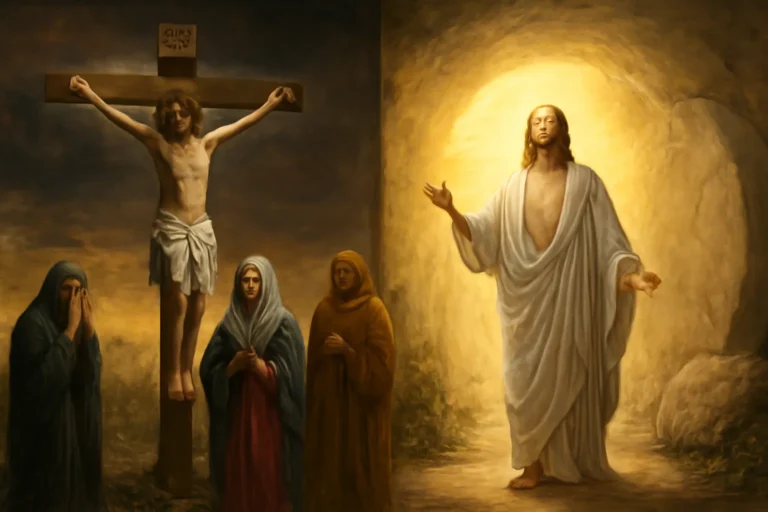

In the religious imagination, the figure traditionally identified as the Roman prefect of Judea who presided over the trial of Jesus stands at a paradoxical crossroads of power, faith, and interpretation. The name Pontius Pilatus—often rendered in Latin as Pontius Pilatus or simply Pilate in various translations—functions as a hinge between the imperial world and the religious world that surrounded the Christ event. This article explores the multifaceted figure commonly called Pontius Pilatus in scholarly and devotional discourse, tracing his historical role, his appearances in the Gospel narratives, and the enduring theological implications that stem from his involvement in the Passion narrative. Throughout, we will attend to the semantic breadth of the name variants—Pilatus, Pilate, Pontius Pilatus, and the shorter Pilate—to emphasize how language itself shapes the way this figure is understood within different communities and times.
Who Was Pontius Pilatus? Identity, Title, and Nomenclature
The question “who was Pontius Pilatus?” invites more than a biographical sketch. It invites a meditation on how a political office becomes a theological symbol and how a single bureaucratic figure becomes a common focal point for discussions about justice, authority, and responsibility within the Christian narrative. In the New Testament and in early Christian literature, the office most often associated with this figure is that of a prefect (Latin: praefectus) or, later terminology suggests, a procurator in the Roman administrative system. The exact title is subject to scholarly nuance: some sources preserve the pre-70s distinction between a praefectus of Judea and a procurator later in the empire, while others use the broader term governor for simplicity. In Christian memory, the individual is repeatedly called Pontius Pilatus (the Latin form of his name), a designation that anchors him in imperial governance while not erasing the moral considerations surrounding his actions during the trial of Jesus. Across languages and centuries, other spellings appear: Pilate (a shortened form used in some translations), Pontius Pilatus (the full Latin form), and occasionally Pilate as a literary abbreviation. Each variant carries cultural and interpretive freight, signaling different audiences and devotional or scholarly aims.
- Pontius Pilatus emphasizes the formal Roman name and official identity.
- Pilate or Pilatus mirrors a concise, almost colloquial usage in many English translations and in liturgical settings.
- Pontius Pilatus with the Latin morphology foregrounds the ancient Roman context and the historical authenticity many readers seek in sacred narratives.
- In theological discussions, this figure is often referred to as the governor or the prefect, underscoring his administrative role rather than his personal virtue or flaws.
Beyond the nomenclature, the question of his identity intersects with how communities understand power, justice, and divine sovereignty. In many Christian traditions, the name Pontius Pilatus functions as a placeholder for the moment when political calculation collides with spiritual truth—a collision that has inspired sermons, hymns, theological treatises, and ethical reflections for two millennia. The narrative arc around this figure is as much a theological map as it is a historical account, inviting readers to consider how institutional authority answers to higher claims of justice and conscience.
Historical Context: The Office, the Jurisdiction, and the Judean Landscape
The Roman Administrative Framework in Judaea
To understand the figure of Pontius Pilatus, one must situate him within the Roman administrative framework that governed Judea after its incorporation into the empire. Judea was a region of special status, marked by a delicate balance between imperial authority and local religious and political sensitivities. The Romans employed a system of governors, procurators, and prefects to maintain order, collect taxes, and oversee the provincial administration. The precise title and powers of the official most closely associated with the trial of Jesus shifted over time, but in the early decades of the first century, the office that supervised Judea in the imperial apparatus often carried the responsibility for capital punishment and for maintaining public order in the volatile capital region around Jerusalem. In this setting, Pontius Pilatus emerges as a representative figure of imperial governance—an administrator who had to navigate the constraints of Roman law, the expectations of the local populace, and the immense symbolic stakes tied to any challenge to Roman sovereignty or to Jewish messianic anxieties.
Scholars emphasize that the officer’s power was never absolute; it was bounded by imperial directives, local political rivalries, and the perilous possibility of popular unrest. The clash between the Romans’ procedural norms—legal forms, due process, and the appearance of justice—and the immediacy of a crowd demanding a controversial sentencing offers a compelling case study in how state authority meets religious symbolism. The narrative surrounding Pontius Pilatus therefore invites attention to the limits of political power, the moral pressures of leadership, and the complexities of governance in a conquered land where religious sensibilities ran deeply through everyday life.
Evidence from the Material Record: The Pilate Stone and Other Inscriptions
Our portrait of the historical Pilatus is shaped not only by the Gospel accounts but also by extrabiblical evidence that anchors his historicity in the wider Roman world. The best-known archaeological artifact is the so-called Pilate Stone, an inscription discovered in the 20th century (often associated with Caesarea Maritima) that bears the claims: “Pontius Pilatus, Prefect of Judea”. This inscription provides a tangible link to the historical figure and helps anchor the Gospel portrait in a real office holder who did exist within the Roman administrative system. The discovery has often been cited in discussions about the reliability of the New Testament accounts, while scholars also acknowledge the limits of a single inscription for reconstructing the full scope of Pilatus’ governance, his policies, and his personal attributes.
In addition to the Pilate Stone, classical authors provide complementary but non-identical portraits of the political climate. The Roman writers Tacitus and Josephus—though not always agreeing on every detail—offer crucial testimony about the era of crucifixion and the governance of Judaea under Roman rule. Tacitus, in his Annals, recounts that Christus, whom Christians call the Christ, was executed by Pontius Pilatus during the reign of Emperor Tiberius. Josephus, in his Antiquities of the Jews, discusses Pilatus in connection with various public actions and administrative measures that demonstrate the complexity of his governance. These sources do not replicate the Gospel narratives verbatim, yet they collectively contribute to a historical sense of who the person was and what the office entailed.
Philo of Alexandria, another important source, provides a pointed critique of the governance in Judaea under Pilate. Philo’s accounts emphasize the violence and heavy-handedness of certain measures, which has led scholars to consider how Pilate’s reputation for political hardening and administrative severity might have influenced how the Gospel writers depicted him. Taken together, these considerations remind readers that the figure of Pontius Pilatus sits at the crossroads between imperial power and local religious life, a convergence that is precisely what makes the trial narrative so theologically provocative.
The Trial Narratives in the Gospels: A Comparative Reading
The four canonical Gospels offer overlapping yet distinct portrayals of the encounter between Jesus and the Roman prefect. The trial stories are not identical in every verse, and the differences illuminate the unique theological emphases of each Gospel writer. In this sense, the person of Pontius Pilatus functions within a broader liturgical and doctrinal texture that includes the portrayal of Jesus, the role of Jewish leadership, and the crowd’s response. The variations in language, sequence, and emphasis invite readers to engage in careful exegesis about the nature of justice, power, and divine purpose in the Passion narrative.
Charges, Process, and Political Pressures
Across the Gospel accounts, the initial charges presented to Jesus revolve around the claim or implication of political rebellion. The exact wording changes by tradition, but the underlying tension remains: a man accused of challenging the political status quo and, in the eyes of the religious authorities, of subverting the settlement that Rome expected to preserve. The phrases used by the accusers differ: some texts emphasize a claim to kingship (which could be seen as a challenge to Caesar), while others highlight perversion of the people or subversion of the Jewish faith. In all formulations, the imperial governor is portrayed as weighing the political risks of any verdict against the demands of the local leadership and the potential for unrest among the populace. This dynamic—between political calculation and moral judgment—makes the trial a hinge point for a broader meditation on justice under empire and the ways in which religious truth is interpreted by secular power.
In several Gospel traditions, Pilatus is portrayed as a cautious administrator who seeks to avoid direct responsibility for a death sentence whenever possible. Yet his actions also reveal a political calculus: the risk of riots, the fear of Roman discipline, and the pressure from local authorities who frame Jesus’ fate as a matter of public order. The narrative then moves toward a dramatic climactic moment in which Pilatus offers the crowd a choice: to release Jesus, whom many consider righteous, or to release a known criminal—an option that historically has been interpreted as a political move to appease the leaders and the crowd. The inclusion of Barabbas as a contrasting figure underscores the moral ambiguity in the decision and invites readers to reflect on the human costs of political expediency.
In John’s Gospel, the dialogue between Jesus and Pilatus features a more explicit interrogation of Jesus’ identity and mission. This version emphasizes the tension between the governor’s factual blindness to spiritual truth and the spiritual truth that Jesus embodies. The famous line where Pilatus asks, “What is truth?” has often been understood in theological exegesis as a sign of human epistemic limitation in the face of transcendent revelation. In Luke and Matthew, the emphasis is more on the political theater—the crowd’s cries, the symbol of the crowd’s complicity, and the ritual aspect of the judgment scene depicted by the washing of hands. The different emphases across the Gospels offer a nuanced portrait of the prefect’s role within the Passion narrative and highlight the interpretive richness of early Christian communities as they told the story in ways that resonated with their own concerns and traditions.
Washing of the Hands, Guilt, and the Concept of Responsibility
One of the enduring images associated with Pontius Pilatus is the ritual washing of hands, a physical gesture that has become the emblem of disavowal and moral ambiguity. This gesture—explicitly or implicitly present in various Gospel traditions—makes the point that the governor seeks to declare personal innocence while allowing the sentence to stand. The phrase “I am innocent of this man’s blood” echoes in liturgical recollection and devotional meditation, and in many Christian communities it becomes a mnemonic for the broader debate about human responsibility in the face of injustice. Theologically, the moment has been interpreted in different ways: some readers see it as a tragic misstep that reveals a governor constrained by political realities rather than a man of decisive moral courage; others understand it as a deeply paradoxical act that preserves life by avoiding a direct confrontation with death, yet still yields a catastrophic outcome for Christ and for humanity’s salvation history.
These moments are also cultivated in art, music, and hymnody. The figure of Pilate functions as a focal point for meditations on human agency, conscience, and the possibility of courage in the face of political pressure. The textures of the Gospel narratives invite believers to explore questions about where power resides, how truth is discerned, and how communities of faith interpret political realities within the framework of divine revelation. The figure of Pontius Pilatus thereby becomes not only a historical person but a symbol—an archetype of the tension between public order and prophetic truth.
Non-Canonical Traditions and Later Christian Literature
Beyond the canonical Gospels, early Christian literature and later devotional writings extended and sometimes reinterpreted the figure of the governor who presided over Jesus’ trial. These texts often reflect earlier traditions that sought to fill in gaps, explain motives, or provide a more dramatic or edifying portrayal of Pilate’s involvement. The result is a rich tapestry of legendary material and interpretive prose that has shaped popular understandings of the event in various Christian communities.
Apocryphal and Pseudepigraphal Accounts
In some apocryphal traditions, the account of the trial and the fate of Jesus is embellished with dramatic dialogues, dreams, and moral exhortations. The Acts of Pilate, sometimes called the Latin or Syriac Acts of Pilate, presents a narrative in which Pilate’s wife, Claudia Procula, dreams a troubling dream about Jesus and urges Pilate to spare him. While these traditions are not included in the canonical New Testament, they have circulated in Christian communities and influenced devotional imagination. Other apocryphal texts circulating in late antiquity and the early medieval period amplify Pilate’s interior conflict, sometimes endowing him with moments of contrition or awe that are not present in the canonical accounts. These expansions reveal how early believers and later readers sought to comprehend the moral and spiritual dimensions of the event, sometimes attributing to Pilate a more sympathetic arc or foregrounding the humanity of a man caught between political necessity and moral judgment.
In addition, the Creedal formulations—such as the phrasing found in the Apostles’ Creed and the Nicene Creed that Jesus was suffered under Pontius Pilate—have had a profound influence on how the figure is imagined in Catholic, Orthodox, and Protestant liturgies. The language emphasizes that the crucifixion occurred under a named Roman authority, situating the event within a historical frame while preserving its theological claim about the Redemptive Passion. The presence of Pontius Pilate in credal formulae has, over centuries, become a theological reminder of the intersection of history and faith, the human decision-making process and the divine plan of salvation that Christians understand as ultimately unfolding through the cross and the resurrection.
Historical Reception: Pilatus Across Time and Tradition
Over the centuries, the figure described by the Latin form Pontius Pilatus has been received by theologians, poets, painters, and composers as a complex symbol of judgment and moral responsibility. The way Pontius Pilatus is read has depended on theological tradition and historical scholarship, as well as on the political and cultural climates of different eras. In Byzantine and Latin Christian art, Pilate is often depicted as a representative of imperial power who yields to political pressure, while some Protestant traditions have emphasized the moral ambiguity of his choice, sometimes highlighting the possibility of personal responsibility even when public authority imposes a decision. The figure is also a staple in sermons focusing on justice, conscience, and the danger of allowing fear or political considerations to override moral clarity. In liturgical contexts, references to Pontius Pilate point readers and worshippers toward the paradox of the judge who, in some accounts, finds no guilt and nonetheless becomes a channel through which the divine plan of salvation advances.
Theological Implications: From Historical Figure to Theological Symbol
The figure of Pontius Pilatus serves not only as a historical marker but as a theological mirror. The Gospel accounts invite a reflection on the problem of innocence and guilt, the role of authority, and the mystery of divine providence. Theologically, several threads run through the interpretation of Pilate’s actions:
- Authority and accountability: Pilate’s position highlights the tension between political power and moral discernment. The narratives ask whether genuine justice requires more than procedural compliance and whether a governor can remain detached from the moral weight of his decisions when confronted with a righteous person.
- Complicity and crowd dynamics: The crowd’s cries and the exchange with Barabbas illuminate the communal dimension of culpability. The text invites believers to consider the degree to which communities—or factions within communities—shape outcomes and how leaders respond to collective pressure.
- Divine sovereignty and human freedom: The crucifixion, framed within the broader story of salvation, suggests that human actions, even those grounded in political calculation, participate in a larger divine purpose. In this sense, Pilatus’ verdict becomes a locus for exploring how God’s plan works through human history without absolving human choices from responsibility.
- Soteriological reflections: The cross is central to Christian soteriology, and Pilatus’ role is interpreted in various ways—from moral caution to tragic failure to a participant in a mystery beyond comprehension. The diversity of interpretations underscores how different Christian communities articulate salvation as both a historical event and a theological truth.
Across traditions, the name Pontius Pilatus remains a conduit for discussions about justice under political rule, the dangers of sensationalism and mob dynamics, and the profound claim that redemption enters history through acts that are as human as they are divinely significant. The theological conversation surrounding this figure thus remains vibrant, inviting ongoing meditation on governance, truth-telling, and the moral economy of faith in the public square.
Pilatus in Early Worship, Liturgy, and Creed
The presence of Pontius Pilatus in liturgical life and doctrinal formulae reflects the long arc of Christian memory. In early worship, the Passion narratives were recited and elaborated as the central proclamation of the Gospel. The mention of Pontius Pilatus in creedal language—most prominently in formulations that speak of Jesus’ suffering under him—serves to anchor the mystery of the cross in a concrete historical frame while preserving its universal spiritual significance. The martyrdom of Jesus, ascribed to the decree of an earthly judge, becomes for worshippers a sign of the triumph of divine justice through weakness, humility, and obedience to a higher order of truth. The rhetoric of the creed—though it names a Roman official—points toward a larger theological claim: that history is not merely the record of human power but the arena in which God’s redemptive purposes unfold in time.
In medieval and modern theological imagination, the figure is also a focal point for sermons that address political authority and the moral responsibility of rulers. Preachers have used the emblem of Pontius Pilatus to teach about the limits of power, the temptations of expediency, and the obligation to act with integrity even when facing political cost. The emblematic nature of the governor who must respond to both local authorities and a crowd makes him a compelling teacher for lay and clerical audiences alike. For many believers, Pilatus becomes a figure of human frailty and a reminder that justice, while often contested, remains the vocation of leadership under God’s sovereignty.
Ethical and Spiritual Reflections: Lessons from the Trial
Beyond historical reconstruction, the Pilate narrative invites contemporary reflection on ethical leadership, responsibility, and the way societies adjudicate disputes. Several recurring themes emerge as timeless lessons:
- Responsibility beyond convenience: The tension between public safety and moral truth challenges leaders to weigh consequences and to resist merely following the crowd when conscience demands a higher standard.
- Truth-telling under pressure: The trial text invites readers to ask what it means to tell the truth when political or social pressures are intense and the cost of truth-telling may be high.
- Cruciform humility: The narrative reframes power as something that should be exercised with humility in the face of a greater mystery—divine love demonstrated through sacrifice.
- Mob dynamics and accountability: The crowd’s role—whether in the endorsement of a death sentence or in the spectacle of punishment—offers a grim caution about how mass sentiment can override justice, while also underscoring the responsibility of individuals within a community to challenge wrongdoing.
- Hope within lament: Even within the crucifixion story, the Christian tradition reads a move from abandonment to resurrection, suggesting that even tragic failures can become instruments of a more profound hope for humanity.
These reflections show how the figure of Pontius Pilatus persists not merely as a historical curiosity but as a lens through which to examine how faith communities interpret political life, moral courage, and the mystery of divine action in a world governed by power and fear. The legacy of Pilate thus extends into ethical debates about governance, justice reform, and the responsibilities of citizens and leaders to pursue truth and mercy in public life.
Modern Scholarship: Reassessing the Historical Pilatus
In contemporary academic study, Pontius Pilatus is often treated with a cautious sobriety that acknowledges both the historical residue of his office and the theological significance attributed to him by religious communities. The broad consensus among scholars is that the figure aligns with a real historical person who held a Roman provincial office in Judea, commonly described as a prefect or governor around the first quarter of the first century CE. The existence of non-biblical references—paired with archaeological corroboration such as the Pilate Stone—supports the conclusion that the Gospel writers were referring to a known public official whose Roman title was connected to Judea’s governance in that period.
Yet, historians distinguish between the historical Pontius Pilatus and the theological Pilate of faith. The latter, a character who emerges from the Gospel narratives and later Christian tradition, is shaped by interpretive communities that read the Passion as a divine drama of universal significance. The historical figure’s actions—whether seen as prudent governance or as political capitulation—are weighed against a broader assessment of his career and the political culture of the time. Modern scholarship often explores questions such as: What was Pilatus’ attitude toward Jewish religious authorities? How did imperial policy toward Judea constrain or empower him? What do his public acts and responses to pressure reveal about Roman administrative practices, and to what extent does the Gospel portrayal reflect theological aims rather than a strict documentary record?
The scholarly conversation further recognizes the limits of our sources. While the Pilate Stone anchors the name and office in a physical artifact, it cannot reconstruct all aspects of Pilatus’ personality, motives, or day-to-day governance. In this sense, the reader is invited to approach the figure with caution, appreciating the historical value of the artifacts and texts while acknowledging the interpretive layers introduced by centuries of religious devotion, liturgical use, and scholarly debate. This balanced approach—recognizing both the historical footprint and the theological weight—helps prevent oversimplified judgments and invites a more nuanced understanding of the man who presided over a trial with profound consequences for countless believers across different ages.
Pilatus and the Christian Imagination: A Soteriological Perspective
From a Christian theological standpoint, Pontius Pilatus becomes more than a mere historical actor in a distant epoch. He has been read as a symbol of human accountability within the divine drama of salvation. The Passion narrative, including the trial, is traditionally understood as part of God’s salvific plan, which unfolds through human decisions, divine sovereignty, and the mystery of grace. The figure of Pilate, in this frame, becomes a focal point for reflecting on how power intersects with mercy, how truth confronts political expediency, and how redemption can emerge from situations that seem to close off possibility and hope.
Some theologians emphasize the humility and restraint demonstrated by Jesus in the face of institutional power, presenting the passage as a model for how believers should respond to coercive structures with fidelity, mercy, and nonviolence. Others highlight the moral complexity of Pilate’s choice, suggesting that moral life often includes ambiguous moments in which the path forward is unclear and the ultimate questions of truth and justice require discernment beyond fear and calculation. The varied theological responses to Pontius Pilatus illustrate how a single narrative event can generate diverse spiritual insights and ethical guidance for people living in different contexts and cultural moments.
Liturgical and Devotional Engagement with Pontius Pilatus
In liturgical settings, Pontius Pilatus appears in creedal formulations, Passion narratives, and sermon texts across Christian traditions. The repetition of the name across centuries—whether spoken aloud during a Good Friday service or reflected upon in quiet meditation—invites believers to consider the moral dimensions of political action, personal conscience, and communal responsibility. In epitaphs, hymns, and lectionaries, the figure of Pontius Pilatus becomes a theological symbol that invites faithful reflection on the nature of truth, the cost of leadership, and the meaning of justice in a world where power and faith sometimes collide.
For devotional readers, the pilgrimage through the Passion story often includes a renewed emphasis on compassion for those who bear responsibility for wrongdoing as well as for those who suffer injustice. The narrative invites a posture of ethical seriousness toward political life, urging believers to consider how they would respond in moments of moral uncertainty. The figure of Pilate thus functions not only as a character in a scriptural episode but as a spiritual companion for readers who seek to understand how courage, mercy, and accountability can co-exist in a complex public life.
Conclusion: The Enduring Significance of Pontius Pilatus
The figure who presided over the trial of Jesus—whether termed Pontius Pilatus, Pilate, or Pontius Pilatus—remains a central and provocative presence in religious thought. He is a historical office-holder whose actions are embedded in a larger political system, yet he also occupies a symbolic space within the Christian narrative that asks enduring questions about authority, truth, responsibility, and divine purpose. The Pilatus figure thus encapsulates a tension that is as old as the Gospel itself: the human struggle to reconcile political necessity with moral truth, to navigate the demands of public order while remaining faithful to a higher law of justice and mercy, and to trust that history, however dark its episodes, can be read in light of faith’s ultimate hope.
Pontius Pilatus invites readers to hold together multiple dimensions—historical, literary, theological, and ethical—without reducing them to a single interpretation. In doing so, this figure continues to challenge believers to examine their own commitments as they engage with the complexities of power, responsibility, and witness in the contemporary world. Whether approached as a historical official or a symbol of civil authority, the person popularly identified as the Roman prefect of Judea who presided over the trial of Jesus remains a potent reminder that faith and history, truth and power, can intersect in ways that illuminate both the past and the present. And in that intersection, the enduring question remains: how will we respond when confronted with difficult truths that demand justice, mercy, and courage in equal measure?