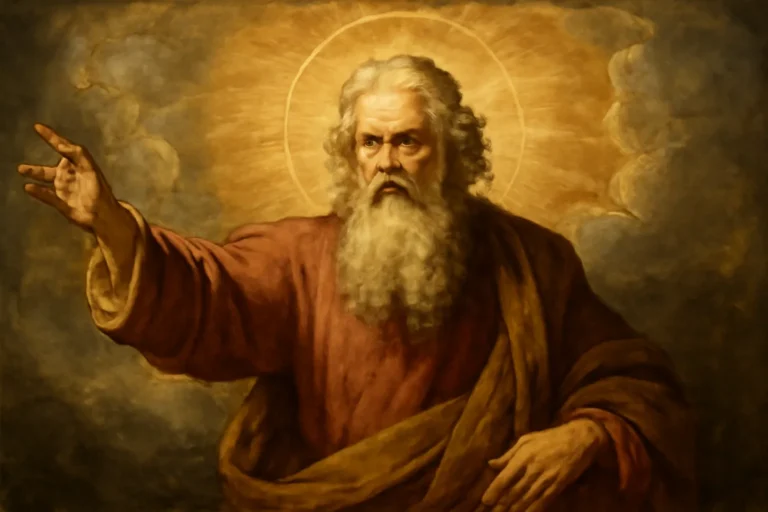

The Question of Creation and The Creator
In religious discourse, the term The Creator functions as a focal point for
much of what humanity seeks to understand about existence, purpose, and destiny. Across
traditions, the idea of a divine source or originator of the cosmos is articulated through
a spectrum of concepts: a personal God who speaks, a distant
Deity who sustains, a universal Divine principle that undergirds all
being, or a cosmic Creator whose acts are recounted in sacred texts and ritual life.
This long-form article surveys the religious landscape around the figure of the Creator, with
a focus on how different faith communities conceive of the divine origin of all things, how
revelation and worship respond to that origin, and how philosophical reflection — from
classical theism to contemporary theology — grapples with questions about necessity, freedom,
and the problem of evil. The discussion moves through sacred scriptures, philosophical
arguments, historical developments, and lived religious experience. It also considers how
interfaith dialogue reframes the question of the Creator in a pluralist world.
The Names and Faces of the Divine
One notable feature of religious thought is the use of multiple names and titles for the
divine reality identified as the Creator. Names carry not only linguistic variety but also
theological nuance: they indicate relation, action, attributes, and the mode of contact
between the sacred and the human community.
- God as a general designation in many Western and global contexts, a term that can
indicate a supreme, personal, and transcendent being who creates and governs the world. - Yahweh or YHWH, the biblical name for the God of Israel in Judaism and
Christian reception, often associated with covenant, holiness, and historical acts of
liberation. - Jehovah as a traditional rendering used in some Christian circles, highlighting
a personal name of the divine in fusion with the Hebrew Bible. - Allah, the Arabic term for the sole God in Islam, understood as the Creator of all
that exists, who transcends all images while drawing near through revelation and mercy. - El Shaddai, a biblical epithet emphasizing fullness, nourishment, and protective power
in some Jewish and Christian traditions. - Theos and Deus, Greek and Latin terms found in Hellenistic and Western
theological contexts, often used in philosophy and systematic theology to discuss the divine
nature and action. - Brahman, the ultimate reality in many schools of Hindu thought, understood by some as
the source of all that is, of which the universe manifests as multiple forms and experiences. - Ishvara, a personal form of the divine in certain Hindu theologies, conceived as a
creator-god who stands within the cosmos yet remains distinct from it. - Paramatma, the supreme soul in Advaita and other streams of Hindu reflection, a
way some teachers describe the divine presence permeating all life.
Across religious traditions, the names of the Creator are inseparable from
descriptions of attributes: eternal, omniscient, omnipotent, merciful, just, and life-giving.
In many contexts the Creator is not only the source of cosmic order but the subject of prayer,
devotion, and moral instruction. To speak of the Divine as the ground of being is to
acknowledge that the ultimate reality may be conceived more as relationship and action than as an abstract
principle alone.
The use of varied appellations mirrors a broader theological aim: to approach the sacred in ways that
are meaningful within distinct communities. For some, the Creator is primarily a personal
interlocutor who invites trust and obedience; for others, the Creator is a cosmic principle that sustains
existence and order. For still others, the divine is a mystery beyond full comprehension, yet capable
of revelation that humans can recognize and respond to in faith.
The Creator in Sacred Texts
Sacred scriptures across civilizations illuminate different aspects of the Creator’s work: origin of the
world, governance of history, and the ethical demand placed on creatures who live within creation. The
following subsections sketch a few high-level contours from major traditions, noting common ground while
respecting distinctive language and imagery.
Judaism: The God of Israel and the Covenant
In Judaism, the Creator is conceived as the one true God who spoke the world into existence and
who binds the people of Israel through covenant. The biblical portrayal emphasizes a God who
creates, liberates, and commands with justice. The name Yahweh (often rendered as
the Lord in translation) is associated with covenantal fidelity, revelations at Sinai, and a
moral order that invites human cooperation in achieving righteousness.
The Creator in this tradition is not merely a force but a person who remembers promises, judges
communities, and calls prophets. The ethical dimension is central: humans are invited to live in
ways that reflect divine holiness, compassion, and mercy. In liturgical life and study, the
Creator’s deeds are rehearsed through praise, lament, and gratitude, creating a spiritual memory that
sustains the people through suffering and triumph alike.
Christianity: The Creator, Word, and Spirit
Christian thought expands the category of the Creator through the doctrine of the Trinity and the
incarnational claim that the Word became flesh. In this framework, the Creator is
not only the source of existence but the active agent of redemption. The prologue of John’s Gospel, for
example, identifies the Logos as present with God in the beginning, through whom all things
were made, and who later enters history in the person of Jesus Christ.
The Christian articulation often involves creation ex nihilo — creation out of nothing — and a
sustained relationship with the Creator through the life of faith. The Lord is
imagined as a sovereign who rules with justice and mercy, whose love culminates in a salvific
event and whose ongoing presence in the Spirit animates the Church and the world.
Islam: The One Who Created and Sustains All
In Islam, the Creator is Allah, the One and Only, whose sovereignty includes
creation, maintenance, and guidance. The Qur’an presents Allah as the origin of the heavens
and the earth, the one who articulates law and mercy, and who judges human deeds with perfect
wisdom. The attribute khaliq (the Creator) appears alongside Rabb (the Lord, the Sustainer)
and Rahman (the Merciful), highlighting a relational dynamic between divine benevolence and human
responsibility.
In Islamic theology, the Creator is not distant but near through signs, revelations, and the
prophetic tradition. Prayer, ritual practice, and ethical conduct are understood as ways of aligning
human life with the divine will as expressed in revelation and natural revelation. The Creator’s
unity is a central doctrinal pillar, guiding Muslim belief and practice across cultures and
centuries.
Hinduism: Brahman, Ishvara, and Diverse Theologies
Hindu traditions offer a rich spectrum of conceptions about the source and action of the divine. Some
schools describe a singular, impersonal reality called Brahman, the ultimate, unchanging
source of all that exists. Other streams describe a personal form of divinity, Ishvara, who
presides over creation, sustains it, and responds to human prayer within the cosmos.
The Creator in Hindu thought can be imagined as the One who reveals divine play (lila) through
countless manifestations. In temple worship and philosophy, the Creator is recognized in myriad
forms — as Vishnu the preserver, Shiva the destroyer, or through various compassionate aspects such as
Mahalakshmi or Saraswati — each expressing a facet of the same ultimate reality.
Sikhism and Other Traditions: The Creator’s Presence in Everyday Life
In Sikh thought, the Creator is described as Ek Onkar, the One and the
Creator of all, who pervades the universe and sustains the human spirit. The divine presence is sought through
daily prayer, ethical discipline, and service to others, so that the human being can realize a
harmonious relationship with the divine will. Similar reverence for the Creator appears in other
religious families, including Jain and Zoroastrian communities, where the divine order is expressed
through righteous conduct and cosmic balance.
Across these sacred texts, a unifying theme emerges: the Creator is both initiator and endowment,
source and goal, mystery and encounter. The variations in language and ritual reflect a shared
longing to know the origin of all things and to align life with a transcendent purpose.
Philosophical Perspectives on the Creator
Philosophers and theologians have long wrestled with how to think about a Creator who may be
transcendent of the world, yet intimately involved in its life. Several traditions offer
enduring lines of reasoning that illuminate both belief and critique.
Theism, Axiom, and Divine Action
Classical theism affirms a personal, intelligent, and purposeful Creator who brings about
existence and upholds it through a sustained act of governance. The divine omniscience, omnipotence, and
omnipresence figures prominently in debates about how a perfect Creator can relate to a world
that includes pain, wrongdoing, and freedom.
Deism, Panentheism, and Beyond
Deism suggests a Creator who winds up the universe and then steps back, leaving creation to operate
according to natural law. In contrast, panentheism holds that the divine pervades all things while
also transcending them, implying a continuous relationship between Creator and creation. Some process
theologians emphasize divine becoming in time, arguing that the Creator is not static but dynamic within
the unfolding of the cosmos.
Attribution, Freedom, and the Problem of Evil
A perennial challenge concerns the existence of suffering in a world governed by a benevolent
Creator. Theodicies explore whether pain is a consequence of human freedom, a test, a veil for a deeper
plan, or a mystery that lies beyond full human comprehension. These discussions often distinguish
between God’s will and human agency, while seeking to preserve the goodness and
majesty attributed to the Creator in sacred literature.
Language and Limits
A practical concern is how language about the Creator can point to a reality that exceeds human
vocabulary. Metaphor, symbol, poetry, and liturgical repetition all serve as hermeneutical tools to
express reverence, awe, and longing. The use of negative theology (apophatic approach) and positive
attributes can both illuminate different dimensions of the Divine, even as the ultimate mystery remains.
Creation and Cosmology: The Creator in the Physical World
The relationship between religious belief and modern cosmology has been a site of lively
discussion. Some thinkers insist that science and faith describe complementary aspects of the same
reality, while others argue that scientific explanations of the origin and order of the universe do not
require a theological presupposition. Yet many religious communities find the concept of a
Creator to be compatible with scientific understanding, seeing creation as a history of
unfolding events initiated by the Divine and guided toward a meaningful end.
- Cosmology and contingency: If the universe began from a quantum fluctuation or a cosmic
singularity, the question remains as to what, if anything, lies beyond creation itself. The
Creator is often posited as the necessary source of contingency, grounding the existence of the
entire cosmos in a form of ultimate cause. - Teleology and purpose: Some theistic frameworks insist that the cosmos exhibits
teleological features — that is, order, purpose, and direction — which reflect intention in the mind of the
Creator. Critics may challenge teleology, yet many believers find in natural laws, beauty, and
coherence a sign of creative intelligence. - Moral order and creation: The Creator is frequently connected with moral law, virtue, and
justice. Sacred narratives often place humans at the center of a relationship with the divine, inviting
a responsive life that aligns with cosmic integrity and communal flourishing.
The dialogue between science and faith about the Creator is ongoing. Some scholars emphasize
empirical humility: science explains how; religion asks why. Others articulate a more integrated view,
where scientific discovery becomes a way to glimpse the grandeur of the Creator’s handiwork and the
moral implications of living within a created order.
Worship, Prayer, and Ethical Faithfulness
The Creator is encountered not only through abstract doctrine but through concrete practices of
worship, daily conduct, and communal life. In many communities, prayer services, liturgical songs,
fasting, pilgrimage, and acts of charity express devotion to the divine Source who sustains all
existence.
Ritual Practices across Traditions
Across populations, the sense of approaching the Creator is mediated by ritual life:
- Jewish liturgy centers on praise of God and the remembrance of covenant acts, with daily prayers
that orient the day toward the divine will. - Christian worship ranges from sacramental acts such as baptism and the Eucharist to meditative prayer and
communal liturgy, all oriented toward recognizing the Creator’s grace. - Islamic prayer (salah) structures the day as a rhythm of remembrance where the Creator is invoked
in the call to prayer and the posture of worship.
Ethics and Virtue
A major strand of religious discourse about the Creator concerns ethical life: What does it mean to
live in alignment with the divine will? In many traditions, moral behavior is not merely a rule set
but a response to the Creator’s mercy, justice, and compassion.
Charity, honesty, care for the vulnerable, humility, and the stewardship of creation appear as
practical expressions of reverence toward the divine reality recognized as the Creator.
Providence, Covenant, and Mission
In Christian and Jewish theologies, providence refers to the ongoing care of the Creator for the world
and its history. The concept of covenant emphasizes the intimate relationship between the Creator and a
chosen people, a bond that implies mutual fidelity and shared mission. In Islam, the idea of
a divine plan is often linked to a universal moral order that calls for justice, mercy, and
accountability before the Creator.
Interfaith Encounters around the Creator
In a global era, encounters among communities that speak of the Creator’s reality have become
both challenging and fruitful. Respectful dialogue invites mutual understanding while recognizing
theological differences. A core aim of interfaith conversation is to discover common ethical ground, such as
the dignity of every person, the sanctity of life, and the responsibility to heal the world.
Common Ground
- The belief that the universe is not arbitrary but knitted into a purposeful order.
- The conviction that human beings are answerable to a transcendent source beyond themselves.
- The call to mercy, justice, and peace as reflections of the Creator’s will.
Points of Divergence
Differences appear in how the Creator is described: as personal and immanent, as transcendent and
unseen, as a divine presence that can be known through revelation or through natural law. Some traditions
stress a personal relationship with the Creator through worship and prayer; others emphasize the Creator
as a universal principle that binds the universe together in harmony. These variations are not merely
terminological; they shape how communities think about authority, scripture, and the nature of salvation.
Practical Ecumenism
Practical ecumenism asks how communities can collaborate for common good while preserving their distinctives.
Programs in education, humanitarian aid, and interfaith service projects provide spaces where people can
explore the Creator’s will in the life of society. In these settings, listening, humility, and shared labor
often become expressions of reverence toward the divine source.
The Creator in Modern Thought
The last two centuries have seen a broad spectrum of responses to the idea of a Creator. Some thinkers
have maintained classical theistic belief while others have proposed alternatives that preserve moral and existential
commitments without asserting a personal deity. In contemporary theology, several streams deserve attention.
Reformulations in Theistic Thought
Various theologians argue for a robust theism that remains relevant to modern scientific and ethical concerns.
They emphasize divine immanence — the Creator’s presence within creation — and divine action that can be
discerned in history, nature, and human experience. The language of covenant, justice, and
mercy continues to guide moral reflection, pastoral care, and public engagement with
social issues.
Deism, Natural Theology, and Secular Reflections
Some thinkers distinguish between a Creator who sets the universe in motion and a person who actively
governs it. This position allows for a sense of wonder about creation while leaving room for secular ethics
grounded in human reason and communal flourishing. Even within secular contexts, discussions about the Creator
frequently surface when addressing the origins of morality, meaning, and purpose.
Process Theology and Dynamic Creation
Process thought offers a dynamic vision of the Creator who interacts with creation in time, changing in
response to the world’s evolving reality. In this view, the divine is not a distant clockmaker but an
ever-present partner in the ongoing drama of existence. Such an approach aims to honor both divine unity and
the reality of change within creation.
The Creator and Revelation: How Messages Come
A central question in religion concerns how humans come to know the Creator. Across traditions there are
various paths: revelation through sacred texts, natural theology that reads the order of the world, and
the lived experience of communities in ritual and service.
- Scriptural revelation includes canonical texts believed to be inspired or given by the Creator to a
chosen people or messenger. - Natural revelation refers to knowledge about the Creator that can be apprehended through
observation of the created order, conscience, and the sense of beauty and moral responsibility. - Prophetic and visionary experiences offer an encounter with the divine in which a messenger or
seer discerns the Creator’s will for communities in crisis or transition.
The interpretive task across traditions is to discern authentic revelation from human limitation.
Theological communities debate issues such as the authority of scripture, the relative weight of tradition,
and the role of reason in understanding the Creator’s truth. In all cases, the aim remains to foster
fidelity to the Creator’s intention for justice, compassion, and the flourishing of life.
Ethical and Social Implications of Belief in a Creator
Belief in the Creator has profound implications for ethics, social life, and public policy. When a divine
source is affirmed, communities often ground their laws, social norms, and charitable initiatives in a
perceived divine will. This can inspire remarkable acts of generosity, care for the vulnerable, and a shared
sense of responsibility for the common good.
Justice, Mercy, and the Public Square
The Creator’s call to justice frequently appears as a demand for a fair distribution of resources,
protection for the weak, and a defense of human dignity. Religious traditions mobilize communities to
address poverty, inequality, and oppression, often arguing that such work is a form of obedience to the
divine purpose for human beings.
Rituals, Identity, and Social Cohesion
Shared worship and ethical commitments help maintain coherence within religious communities, forming
bonds that sustain believers across generations. The Creator becomes a common reference point that unites
diverse voices in prayer, celebration, and remembrance.
Ethical Critique and Reform
Critics within and across traditions may challenge inherited norms, asking whether particular laws or
practices faithfully reflect the Creator’s will. The dynamic nature of religious life means that
communities continually re-examine texts, traditions, and living practices to align more closely with a
vision of justice, compassion, and stewardship that many believe the Creator intends.
Conclusion: A Living Dialogue About the Creator
The figure of the The Creator remains a living topic, not only in doctrine but in
daily life, in prayer, in social action, and in intercultural conversation. The multiplicity of names
— God, Allah, Yahweh, Brahman, Ishvara, and beyond —
testifies to a desire to approach the divine reality from many angles. Yet beneath the diversity lies a
shared horizon: to encounter the source of all that is with reverence, to respond with ethical and
compassionate living, and to maintain a hospitable space for inquiry that honors both faith and
reason.
In studying the Creator, scholars and lay readers alike are invited to cultivate
discernment, humility, and gratitude. Whether one speaks of the Divine as a personal
Lord who relates to creation through covenant and prayer, or as a universal principle that grounds
existence and moral order, the search for meaning binds communities together. The ongoing
conversation between revelation and reason, between tradition and reform, is a sign that
humanity remains engaged with the deepest questions: Why are we here? What is our duty toward one
another and toward the world? And who is the Creator who holds not only the cosmos but also the
future of humanity in loving hands?
As religions continue to interact in the 21st century, the figure of the Creator can function as a
shared frame for dialogue, ethical action, and spiritual growth. In that spirit, the journey toward
understanding the divine source that initiates and sustains all things becomes not merely a doctrinal
venture but a communal project of care, wisdom, and hope.